> ## Content Index
> Fetch the complete content index at: https://hyperallergic.com/llms.txt
> Use this file to discover other available public pages before exploring further.
# Early Christians Would Have Found the Met Gala Gaudy
- URL: https://hyperallergic.com/early-christians-would-have-found-the-met-gala-gaudy/
- Published: 2018-05-15T12:52:07.000Z
- Updated: 2025-11-24T15:55:32.000Z
- Description: A historian of early Christianity with a specialty in religious dress considers how the Metropolitan Museum's recent gala and new Costume Institute exhibition might align with or offend early Christian sensibilities.
- Author: Kristi Upson-Saia
- Tags: Opinion, Costume Institute, Metropolitan Museum Gala, Metropolitan Museum of Art, #wp, #wp-post, #image-position-hidden, #Import 2025-11-18 14:37 (2018)
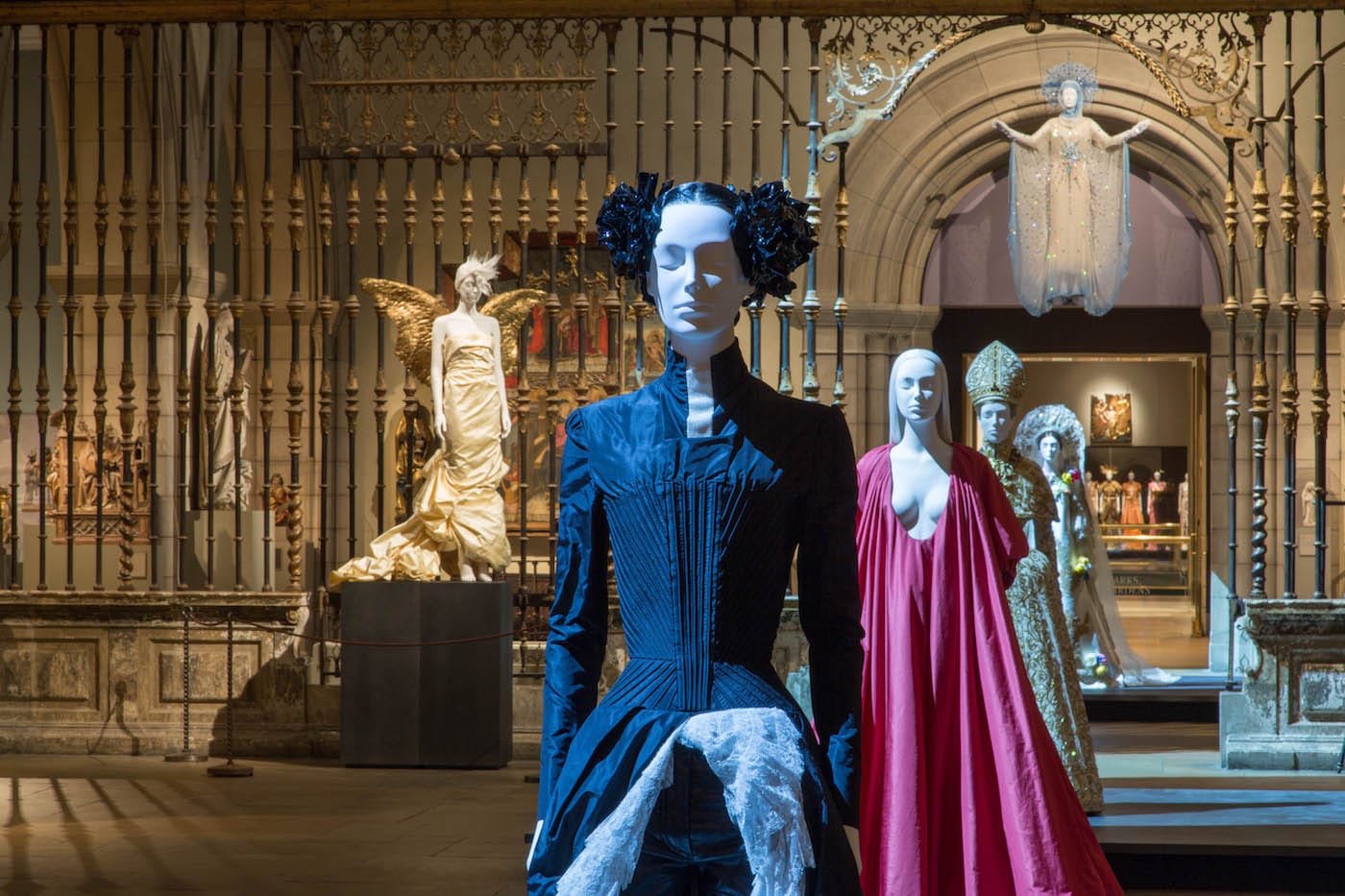
Installation view of Heavenly Bodies: Fashion and the Catholic Imagination in the Medieval Sculpture Hall (all photos © the Metropolitan Museum of Art unless indicated otherwise)
The 70th annual [Met Gala](https://www.vogue.com/slideshow/met-gala-red-carpet-live-celebrity-fashion?ref=hyperallergic.com) once again exceeded expectations for over-the-top fashion, spectacle, and pageantry. The theme of this year’s ball was “Heavenly Bodies,” with individual looks referencing papal garb ([Rihanna](https://www.vogue.com/slideshow/met-gala-best-dressed-celebrity-red-carpet-fashion?ref=hyperallergic.com#3) in John Galliano), clerical vestments ([Taylor Hill](https://www.vogue.com/slideshow/met-gala-red-carpet-live-celebrity-fashion?ref=hyperallergic.com#91) in Diana von Furstenberg, [Helen Lasichanh](https://www.vogue.com/slideshow/met-gala-red-carpet-live-celebrity-fashion?ref=hyperallergic.com#139) in Chanel), saintly halos ([Janelle Monáe](https://www.vogue.com/slideshow/met-gala-red-carpet-live-celebrity-fashion?ref=hyperallergic.com#38) in Marc Jacobs, [Solange Knowles](https://www.vogue.com/slideshow/met-gala-red-carpet-live-celebrity-fashion?ref=hyperallergic.com#52) in Iris van Herpen, [Amber Heard](https://www.vogue.com/slideshow/met-gala-red-carpet-live-celebrity-fashion?ref=hyperallergic.com#117) in Carolina Herrera), angels ([Gigi Hadid](https://www.vogue.com/slideshow/met-gala-red-carpet-live-celebrity-fashion?ref=hyperallergic.com#61) in Atelier Versace, [Katy Perry](https://www.vogue.com/slideshow/met-gala-red-carpet-live-celebrity-fashion?ref=hyperallergic.com#103) in Versace), and icons ([Stella Maxwell](https://www.vogue.com/slideshow/met-gala-red-carpet-live-celebrity-fashion?ref=hyperallergic.com#71) in Moschino).
Last week, the companion exhibition, [*Heavenly Bodies: Fashion and the Catholic Imagination*](https://www.metmuseum.org/exhibitions/listings/2018/heavenly-bodies?ref=hyperallergic.com), opened to the public, showcasing a collection high-fashion inspired by Christian clothing, art, and architecture, alongside ecclesiastical vestments and accessories on loan from the Vatican. The common thread that ties together all the of these items is the elaborate ornamentation, meticulous fabrication, and lavish expense of the one-of-a-kind garments for which the Metropolitan Museum’s Costume Institute has come to be known.
Although many [drooled over the red carpet looks](https://www.racked.com/2018/5/7/17329546/met-gala-red-carpet-2018?ref=hyperallergic.com) and are [awestruck by the exhibition](https://www.wsj.com/articles/heavenly-bodies-fashion-and-the-catholic-imagination-review-a-gift-from-the-sartorial-gods-1525907633?ref=hyperallergic.com), some are complaining about what they see as the tastelessness — and even offensiveness — of the theme. Piers Morgan, for instance, [criticized the Met](http://www.dailymail.co.uk/news/article-5703953/PIERS-MORGAN-Met-Islam-Jewish-themed-hell-break-loose-disrespect-religion.html?ref=hyperallergic.com) for making light of a religion held dear by many.
As a historian of early Christianity with a specialty in religious dress, I think that Christians of the past would praise the Met organizers, curators, and designers for highlighting the role dress has played in the history of Christianity, while — along with contemporary religious critics — snubbing the Met for particular choices that indeed would have offended their religious sensibilities.
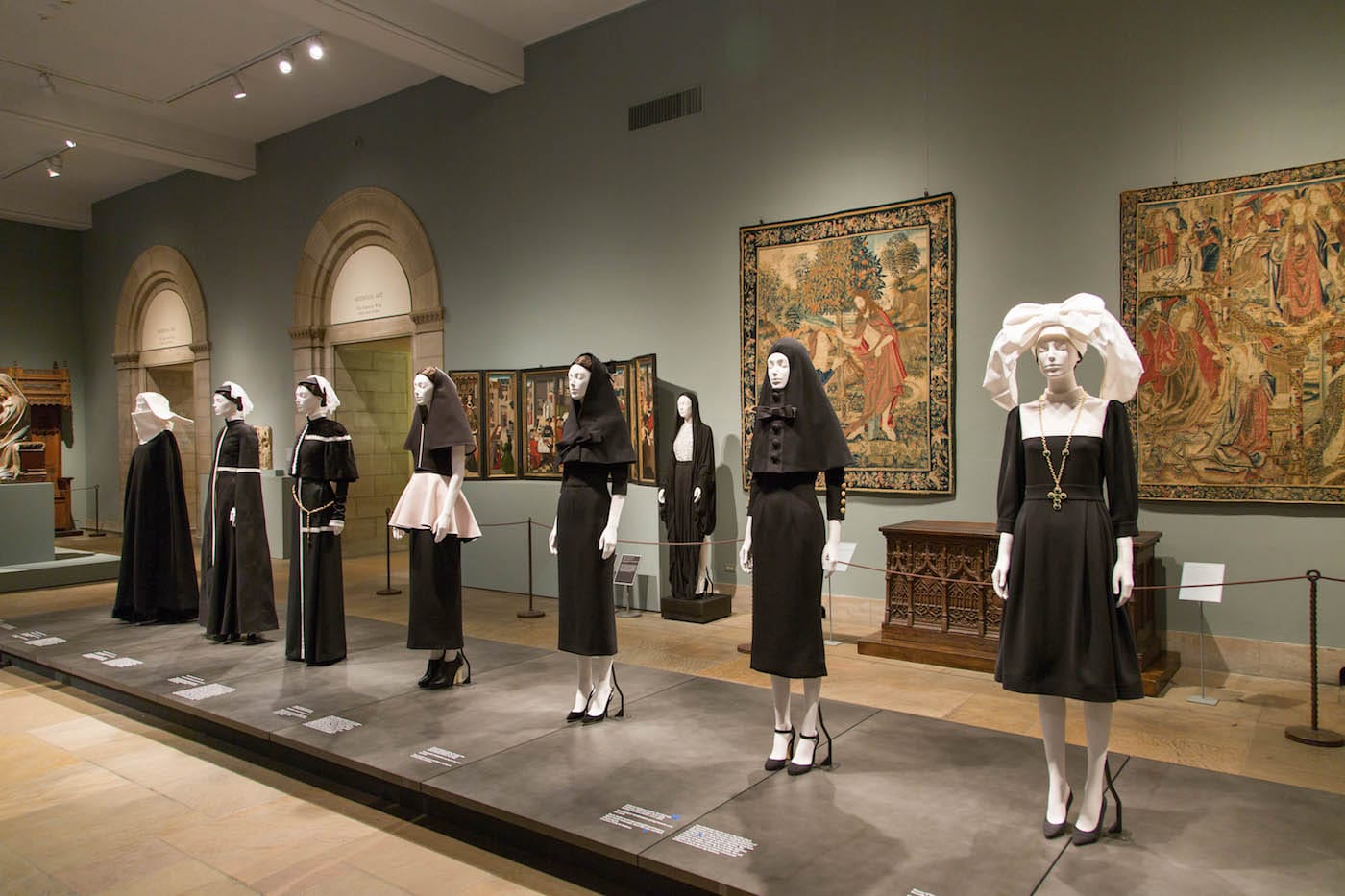
Installation view of Heavenly Bodies: Fashion and the Catholic Imagination in the Medieval Sculpture Hall
On the one hand, early Christians would agree with the Met exhibition and gala organizers about the importance of dress as a primary mode through which individuals have long expressed their religious identity, commitment, and piety. Across early Christian sources, moments of conversion or of taking monastic vows were regularly marked by dramatic changes in garb that visibly signaled one’s new identity as a person of faith. In the words of [4th–5th century Christian writer Jerome](http://www.ccel.org/ccel/schaff/npnf206.v.CXXX.html?ref=hyperallergic.com), one’s appearance “put on display who one really was.”
On the other hand, the particular form and pageantry of the garments on display at the Gala and the exhibition deviate markedly from those through which early Christians communicated their religiosity. First and foremost, early Christians dressed *down*, not *up*. In an effort to express disdain for worldly luxury and attachments, and to live rather in anticipation of the world to come, they forsook ornamentation, fineries, and elaborately decorated or dyed garments, and rather donned the plain and simple clothing of the poor. Fourth century Christian Demetrias, for instance, was [reported](http://www.ccel.org/ccel/schaff/npnf206.v.CXXX.html?ref=hyperallergic.com) to have cast aside her “valuable necklaces, costly pearls, and sparkling gems” in favor of a “cheap tunic, which she covered over with an even cheaper cloak.” Early Christians would thus find the pomp and circumstance of the Met looks unthinkable within the parameters of their standards of religious piety.
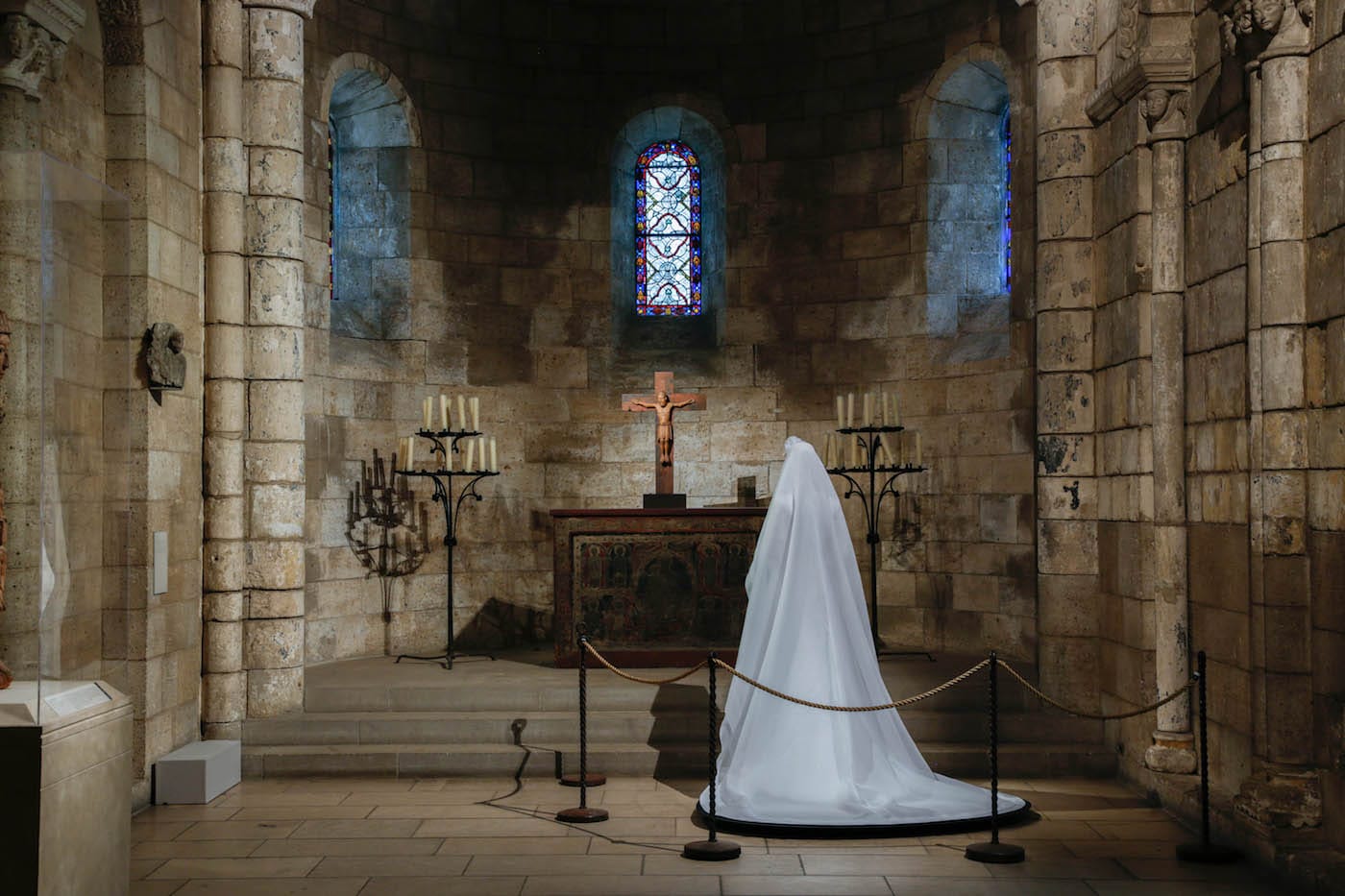
Installation view of Heavenly Bodies: Fashion and the Catholic Imagination in the Langon Chapel
The monastic-inspired garb at the Gala (worn by, for example, [Greta Gerwig](https://www.vogue.com/slideshow/met-gala-best-dressed-celebrity-red-carpet-fashion?ref=hyperallergic.com#27)) and at the Met Cloisters galleries ([seen here](http://gothamist.com/2018/05/10/heavenly%5Fbodies%5Ffashion%5Fcatholic%5Fphotos.php?ref=hyperallergic.com#photo-1)) would have been particularly nonsensical for early Christians who vowed to live a life of simplicity and poverty as preconditions for wholehearted devotion to God. One of the first acts of a Christian entering a monastery was to exchange his or her personal attire for the standard uniform shared by every member of the community. Common clothing flattened distinctions of class and rank and cultivated equity among the monks. Monastics’ sartorial principles of commonality and community stand in sharp contrast with the Met’s high fashion statements that are instead prized for their rarity and that serve to enhance—rather than minimize—the distinction between classes: the celebrities and wealthy elite who don these extravagant designs and the ordinary people for whom such clothing is well out of reach.
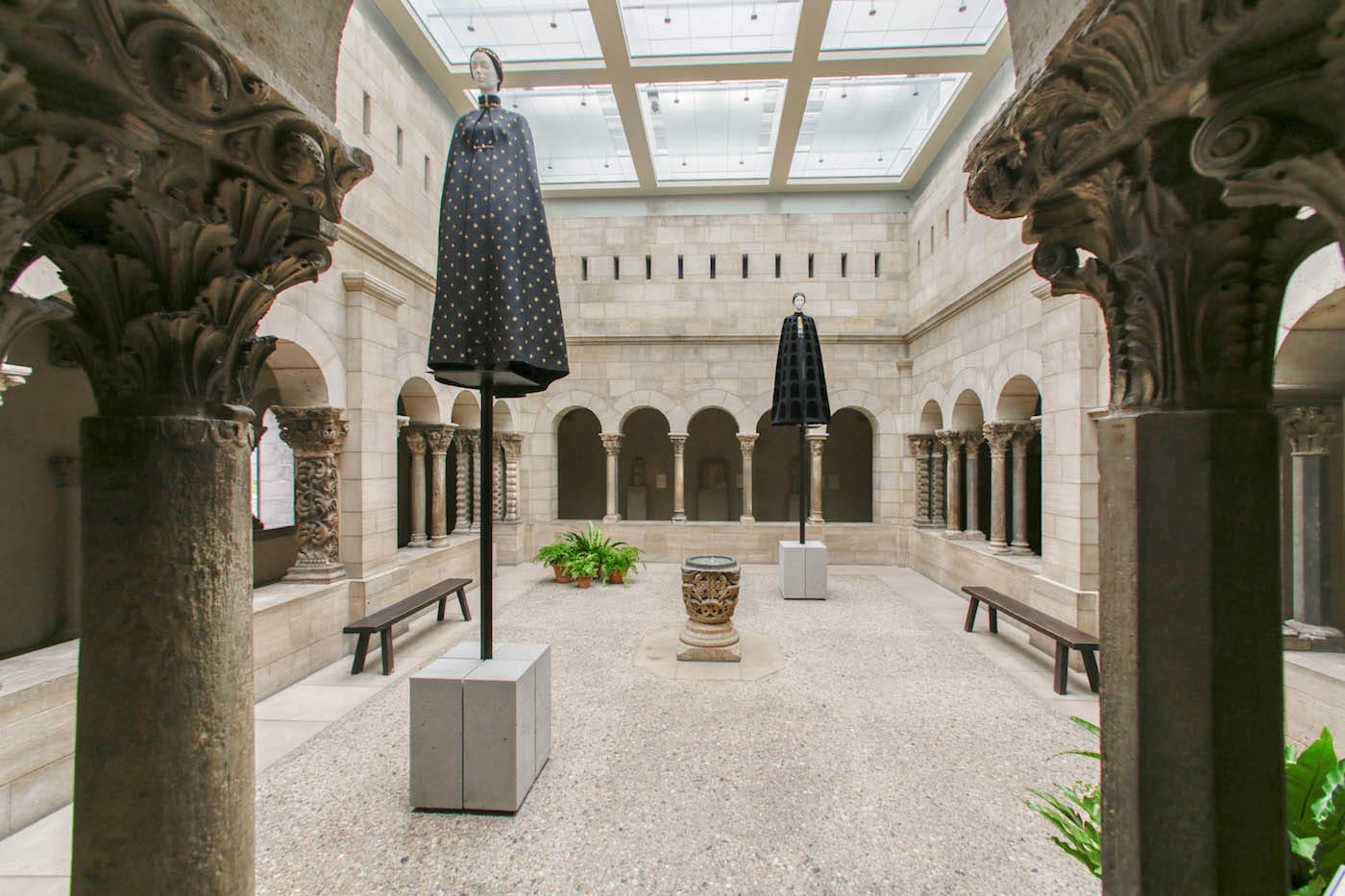
Installation view of Heavenly Bodies: Fashion and the Catholic Imagination in the Saint-Guilhem Cloister
Finally, while in recent years men on the red carpet have begun to step it up, the Met Gala and exhibition are largely occasions to highlight women’s fashion. The featured designers firmly situate their creations through typically feminine forms, shapes, and ornamentation. Yet early Christian women monastics—who elicited controversy precisely for their repudiation of feminine identity and dress, preferring instead to dress in men’s garb—would have turned up their noses at such design choices. For women monastics, renouncing the world included a rejection of marriage and family. And since for them gender functioned only to define the partner of a married couple who fathered or mothered children, many ascetic women imagined themselves to have exceeded their femininity altogether, and they communicated this by dressing in men’s garb. Further, because virtue was masculinized and vice was feminized, their cross-dressing likewise communicated their extraordinary piety, superior to that given them by nature.
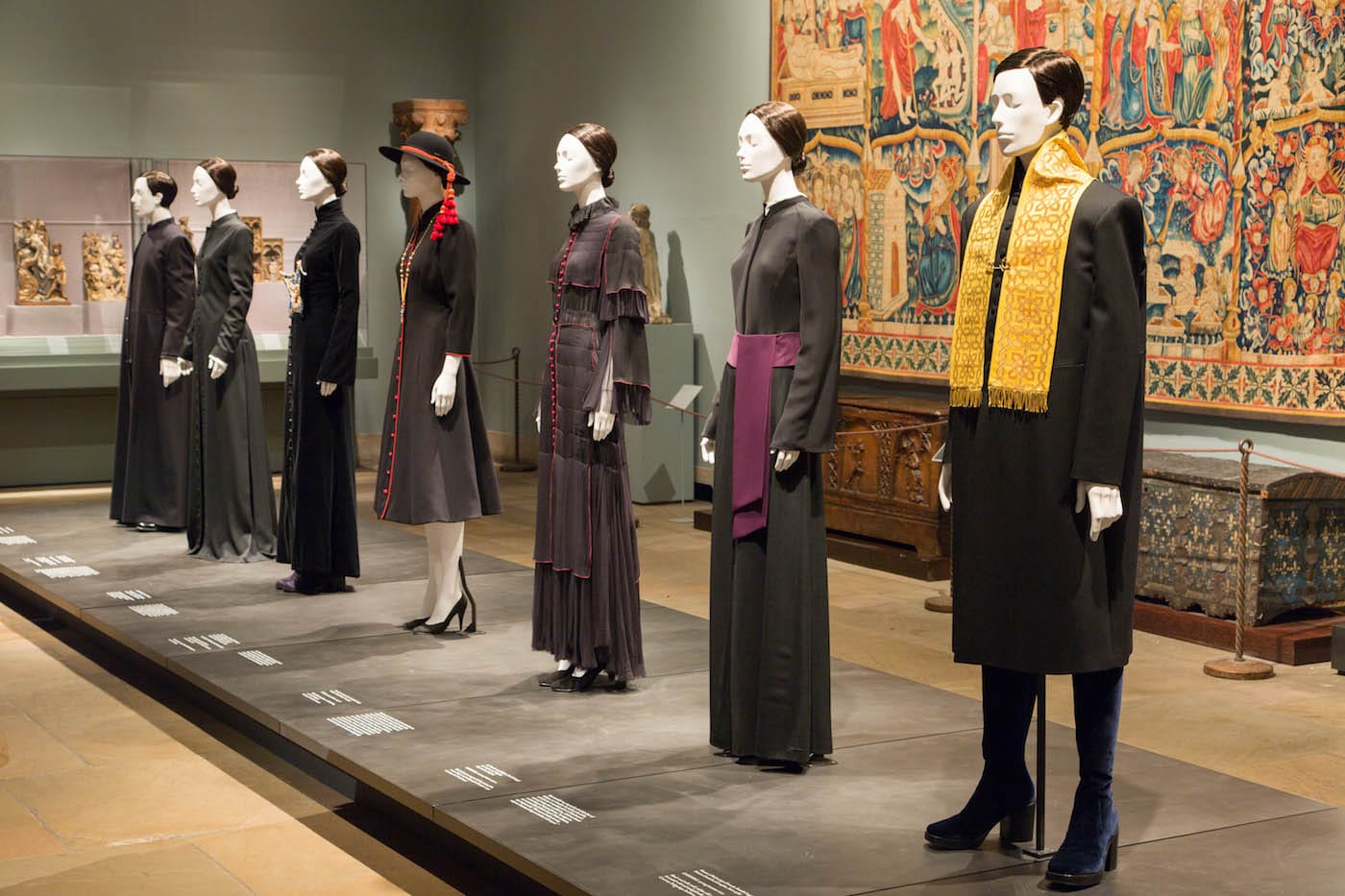
Installation view of Heavenly Bodies: Fashion and the Catholic Imagination in the Medieval Sculpture Hall
Were early Christians tapped to curate the fashion for the Met exhibition, they would showcase painfully coarse tunics that inspired reflection on and penitence for the sinful state of humanity; they would cover every inch of their model’s body to inhibit viewers’ sexual arousal; and they would highlight menswear. Were they asked to style celebrities for the Gala, they would likely advise them to skip the red carpet, trading the fame to be gleaned from appearances alone for merit earned through mundane acts of charity. Such piety would surely amount to sacrilege in the eyes of fashion critics and paparazzi.
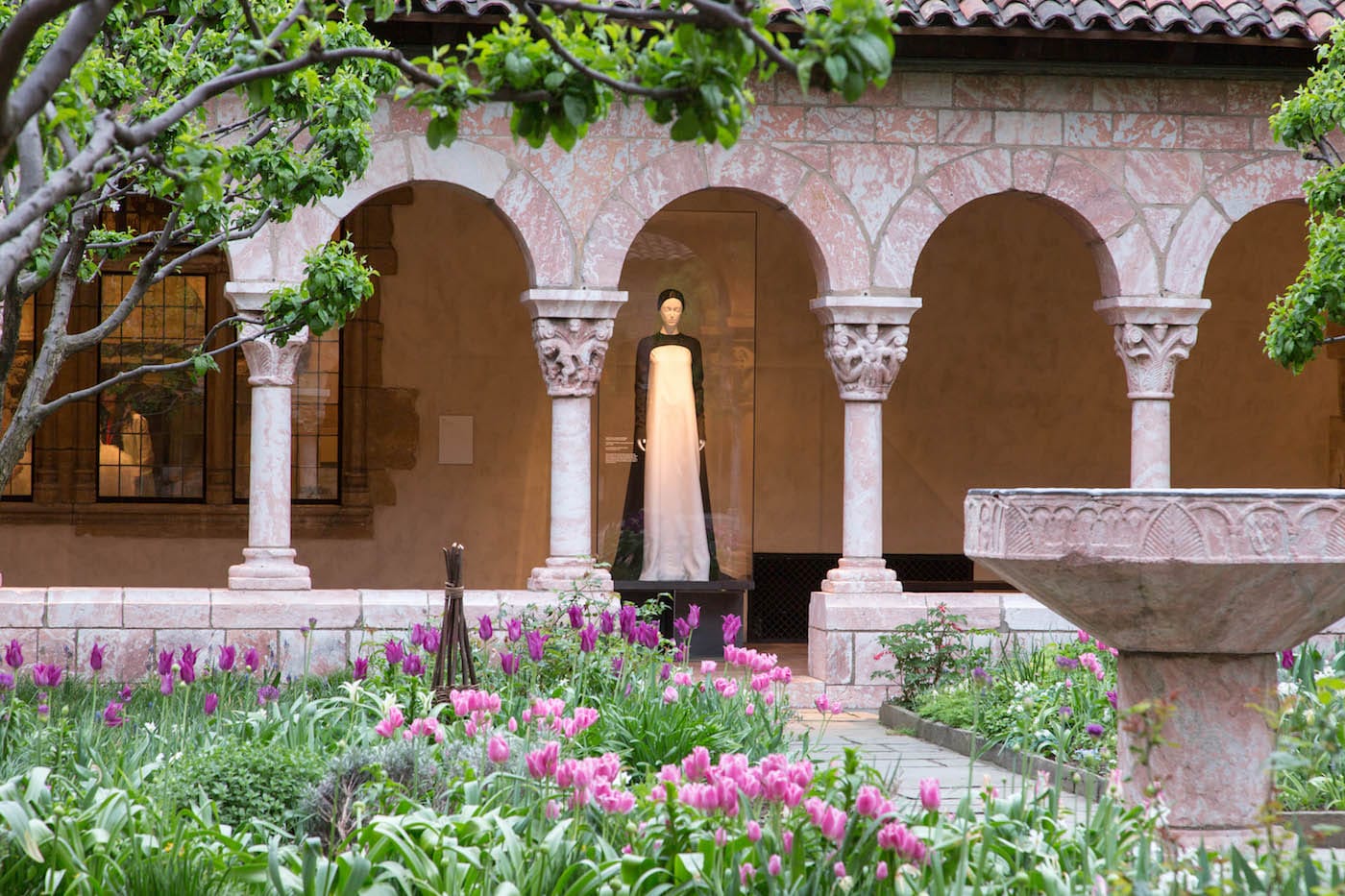
Installation view of Heavenly Bodies: Fashion and the Catholic Imagination in the Cuxa Cloister
[Heavenly Bodies: Fashion and the Catholic Imagination](https://www.metmuseum.org/exhibitions/listings/2018/heavenly-bodies?ref=hyperallergic.com) *continues through October 8 at the Met Fifth Avenue (1000 Fifth Avenue, Upper East Side, Manhattan) and the Met Cloisters (99 Margaret Corbin Drive, Fort Tryon Park, Manhattan).*