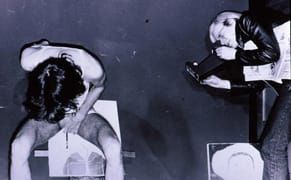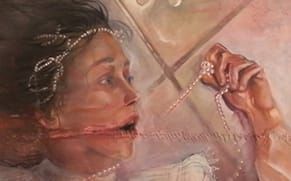
Despite my longtime interest in New York art from the 1970s, I somehow never imagined delving into an artistic process called, quite literally, “rectal realism.” However, last week, I found myself in a small room at the Gershwin Hotel at “Fresh Faces from the 1970s” a film screening and discussion, watching artist Neke Carson painting “I love you” with a paintbrush shoved in his butt.
Continue Reading → 
With the permanent invasion of art fairs into the art world economy like a plague, most galleries, no matter how cutting-edge or avant-garde, seem to believe (whether from actual or perceived necessity) that they must participate in all of the increasingly frequent art fair seasons. This endless stream of fairs forces smaller galleries that show conceptual, abstract, or experimental work into a setting devoid of context, stripping the art of its desired impact or importance. While I’m certainly not the first to point this out, nowhere was it more noticeable recently than at NADA New York.
Continue Reading → 
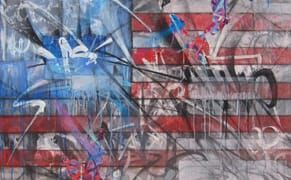
From hard-edged, angular, and zig-zagging lines inspired by graffiti tagging styles to thick, swooping curved lines reminiscent of calligraphy, Opera Gallery’s Saber & Rostarr exhibition sets up a fascinating and fruitful comparison between two artists who combine street culture and aesthetics with more traditional abstraction.
Continue Reading → 
Meandering the dim halls of Hunter College’s admittedly hideous MFA Studio Building in Hell’s Kitchen for their recent MFA Open Studios, peering into every open door I could find, I expected to be fascinated by the selection of emerging artists contained within the small, often shared studios — but I did not anticipate being consistently blindsided by the artists’ unexpected plays with the hidden, the participatory, and the startlingly witty.
Continue Reading → 
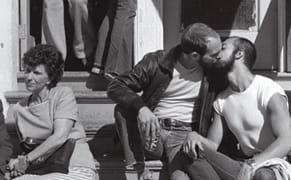
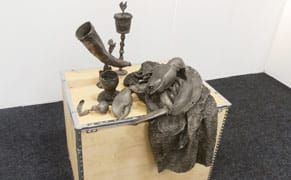
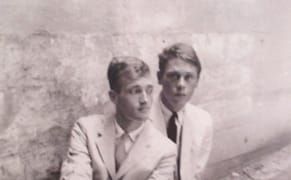
Before pride parades, Stonewall, the It Gets Better Project, and “Born This Way,” a circle of friends, lovers and artists unabashedly embodied and represented their own homosexuality. This group coalesced around Paul Thek, expressing their identity during a deeply conservative era, as seen in the important and enlightening exhibition Paul Thek and His Circle in the 1950s at the Leslie-Lohman Museum of Gay and Lesbian Art.
Continue Reading → 
Wandering through five jam-packed floors of art student studios at the New York Academy of Art MFA Open Studios last Friday, I realized that despite the Academy’s emphasis on traditional figural art, many artists transcended this stricture through the use of multiple medias to depict nature-inflected whimsy or psychological disturbance.
Continue Reading → 
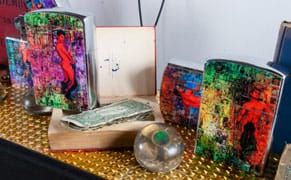
“You’re all too young and too clean-cut to remember, but I was a star in the golden age of Times Square sleaze,” snears burlesque superstar Tigger-James Ferguson, playing a washed-up Times Square prostitute in my favorite of his performances. That piece kept popping up in my mind while visiting Scott Ewalt’s exhibition Back in the Night: Psychotronic Landscapes, Objects & Souvenirs at Participant Inc.
Continue Reading → 
Wading through the crowded opening of the Independent Art Fair, held in the former Dia:Chelsea building with its ridiculously narrow stairway, I found myself doing more reading than gazing at art. While this was partly due to the inclusion of Printed Matter, the seminal alternative book and zine store that sustained massive losses from Hurricane Sandy, it was also because the galleries and nonprofit spaces in the Elizabeth Dee and Darren Flook–founded art fair leaned heavily on conceptual works.
Continue Reading → 
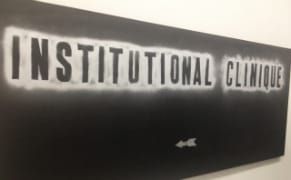
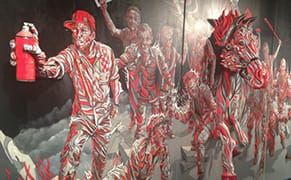
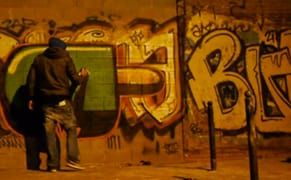
When I entered the doors of Scope New York, taking place in the Skylight at Moynihan Station, part of the former James A. Farley Post Office, I almost walked right into a can of spray paint. Jutting with a horse head and a skateboard from the walls in French street artist Shaka’s large-scale, three-dimensional triptych at Gallery Nine 5’s booth, the spray can abruptly announced the abundance of graffiti and street-art-inspired work at this year’s Scope.
Continue Reading → 
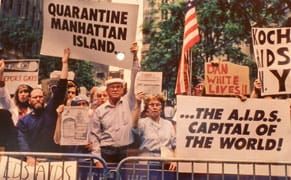
Sitting in an intimate audience at the LGBT Community Center on a recent Tuesday night, I observed an unexpectedly inspirational conversation: three queer artists with different practices revealed their use of art as a means to construct a community, counter invisibility, and declare acceptance of their bodies in a Visual AIDS–organized panel titled Positive Assertions.
Continue Reading →