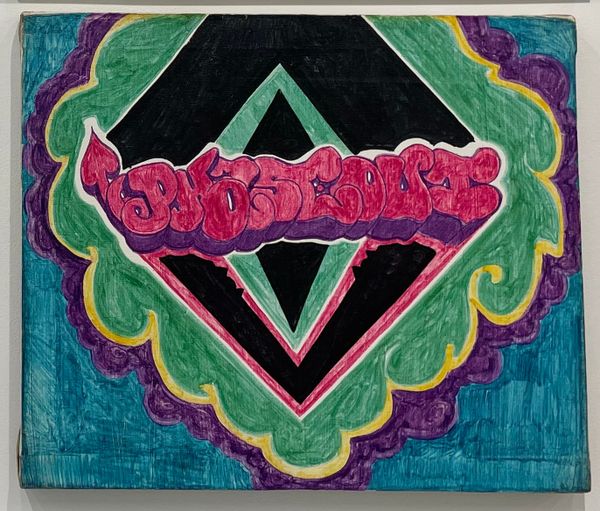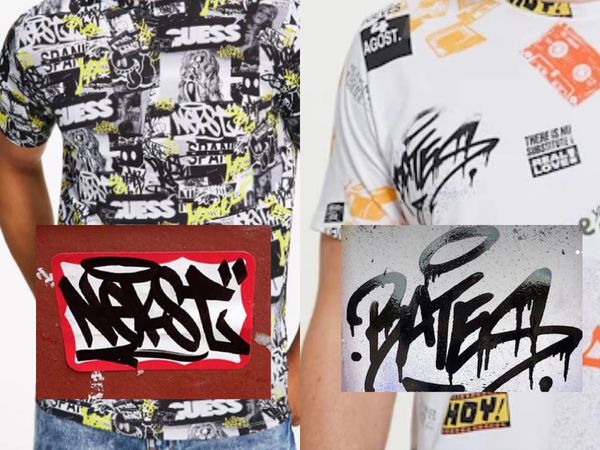
From hard-edged, angular, and zig-zagging lines inspired by graffiti tagging styles to thick, swooping curved lines reminiscent of calligraphy, Opera Gallery’s Saber & Rostarr exhibition sets up a fascinating and fruitful comparison between two artists who combine street culture and aesthetics with more traditional abstraction.
Continue Reading → 
Early Saturday morning, at 1:06am according to police, artist Kenny Scharf, 55, was apprehended by the NYPD for graffiti in Brooklyn’s East Williamsburg industrial park.
Continue Reading → 
Graffiti and tattoos seem like total opposities. One is ephemeral, lasting only until it’s painted over by the city or other writers, the other is forever, or at least unless you decide to rip the ink back out of your skin. Yet there’s been abundant crossover in the aesthetic style, but what’s more interesting is graffiti writers who have moved to tattooing as their main focus.
Continue Reading → 
When I entered the doors of Scope New York, taking place in the Skylight at Moynihan Station, part of the former James A. Farley Post Office, I almost walked right into a can of spray paint. Jutting with a horse head and a skateboard from the walls in French street artist Shaka’s large-scale, three-dimensional triptych at Gallery Nine 5’s booth, the spray can abruptly announced the abundance of graffiti and street-art-inspired work at this year’s Scope.
Continue Reading → 
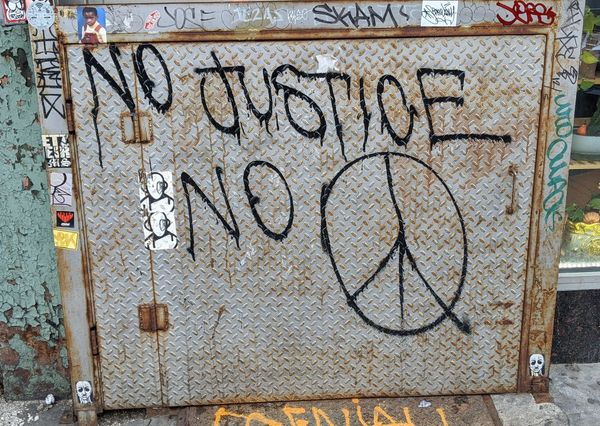
Who cares about bad graffiti or street art? The spray paint scrawls of ill-chosen tag names (“Piggy Nasty,” “Pony Tail,” “Tricky Trout, Jr.”), reckless vulgarity (penises and boobs drawn on absolutely everything), and sad drawings that barely shape into the animal, face, or whatever they’re trying to be, who cares about all that? Usually these aerosol-on-concrete creations just fade into our visual background without a second glance, but artist Scott Hocking has recognized them for the masterpieces of mediocrity that they are in a photography book appropriately called Bad Graffiti, released in December 2012 by Black Dog Publishing.
Continue Reading → 
Between 1975 and 1983, tens of thousands of people went missing in Argentina’s “Dirty War.” The exact number of the tortured and murdered in state-sponsored detentions is impossible to determine due to the discreetness of the disappearances and disposal of the bodies. Free speech was nonexistent; the members of the media and press who spoke out frequently became part of the missing. It was in this environment of fear that street art became a public voice, and in the decades that followed it has continued to be part of an activist culture of art, especially in Argentina’s capital, Buenos Aires. This week, filming started on a feature-length documentary called White Walls Say Nothing (Paredes blancas no dicen nada in Spanish) that aims to capture the history and contemporary vibrance of Argentine street art.
Continue Reading → 
The Museum of Modern Art may be one step closer to recognizing graffiti as a legitimate art form, but New York City is not. Writer Adam Mansbach, who took part in last week’s “Writers and Writers” event at MoMA, has a post on the Awl about being denied subway advertising space that he was prepared to pay for because the writing in his ad looked too much like graffiti.
Continue Reading → 
Last week, I witnessed an art event I thought would possibly never occur: the Museum of Modern Art made a serious step forward in recognizing the cultural importance of graffiti writing and hip hop at their fascinating panel discussion, “Writers and Writers: Narrative on the Page and in the Street.”
Continue Reading → 
BERKELEY, California — Recently I went on my first visit to the Berkeley Art Museum to see their Barry McGee show. To be honest, I was mostly indifferent to McGee walking into the show, and largely skeptical about graffiti or street artists’ role in a museum setting. Although the show convinced me of McGee’s talent, it still left me wondering about representing graffiti institutionally. Having studied painting and printmaking at a San Francisco Art Institute, and several large shows in museums and galleries across the world, the San Franciscan native who garnered fame for street tags like Ray Fong, Lydia Fong, Bernon Vernon, Ray Virgil, and Twist is no outsider artist anymore.
Continue Reading →