10 Art Shows to See in Los Angeles This March
The artists of Nature Morte gallery, Hayv Kahraman’s painted libations, Jesse Wiedel’s screwball American dream, the late Nona Olabisi’s homegrown muralism, and more.
Los Angeles may be recovering from a bit of an art hangover after our dizzying fair week, but there are several excellent shows worth a closer look this month. At Vielmetter, Hayv Kahraman draws on personal loss to create mystical visions of resilience. Painters Jesse Wiedel and Cole Case focus on our nation’s complexities and contradictions, asking what freedom really means at this pivotal moment in time. Relatedly, a two-gallery Wally Hendrick retrospective and a deep dive into Wallace Berman’s Verifax collages emphasize the enduring vitality and revolutionary spirit of these 20th-century countercultural figures. And at Loyola Marymount University’s Laband Art Gallery, a Noni Olabisi survey gives institutional recognition to the late artist, whose murals are already prominent features of South LA’s landscape.
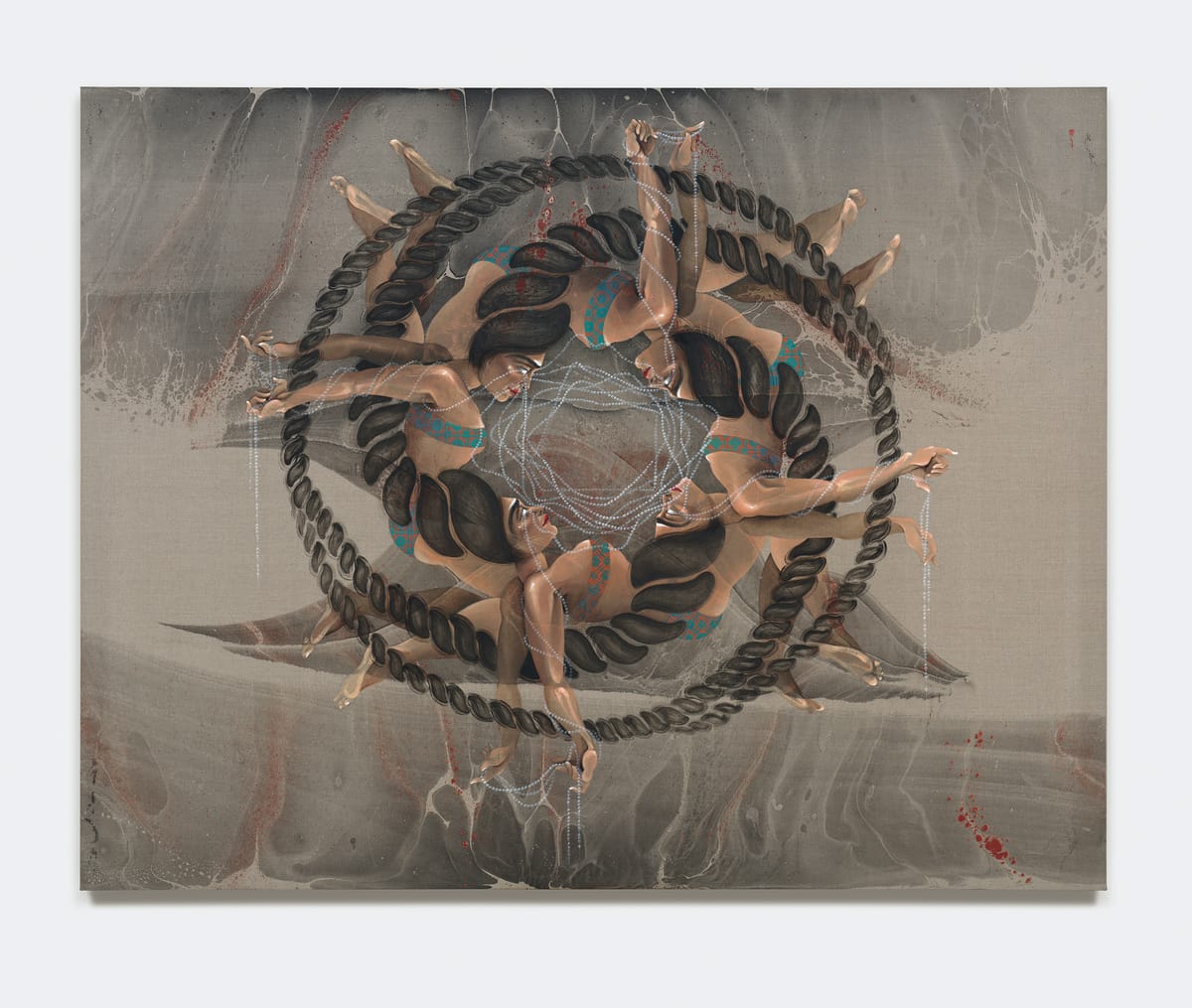
Hayv Kahraman: Libations
Vielmetter Los Angeles, 1700 South Santa Fe Avenue, #101, Downtown, Los Angeles
Through March 21
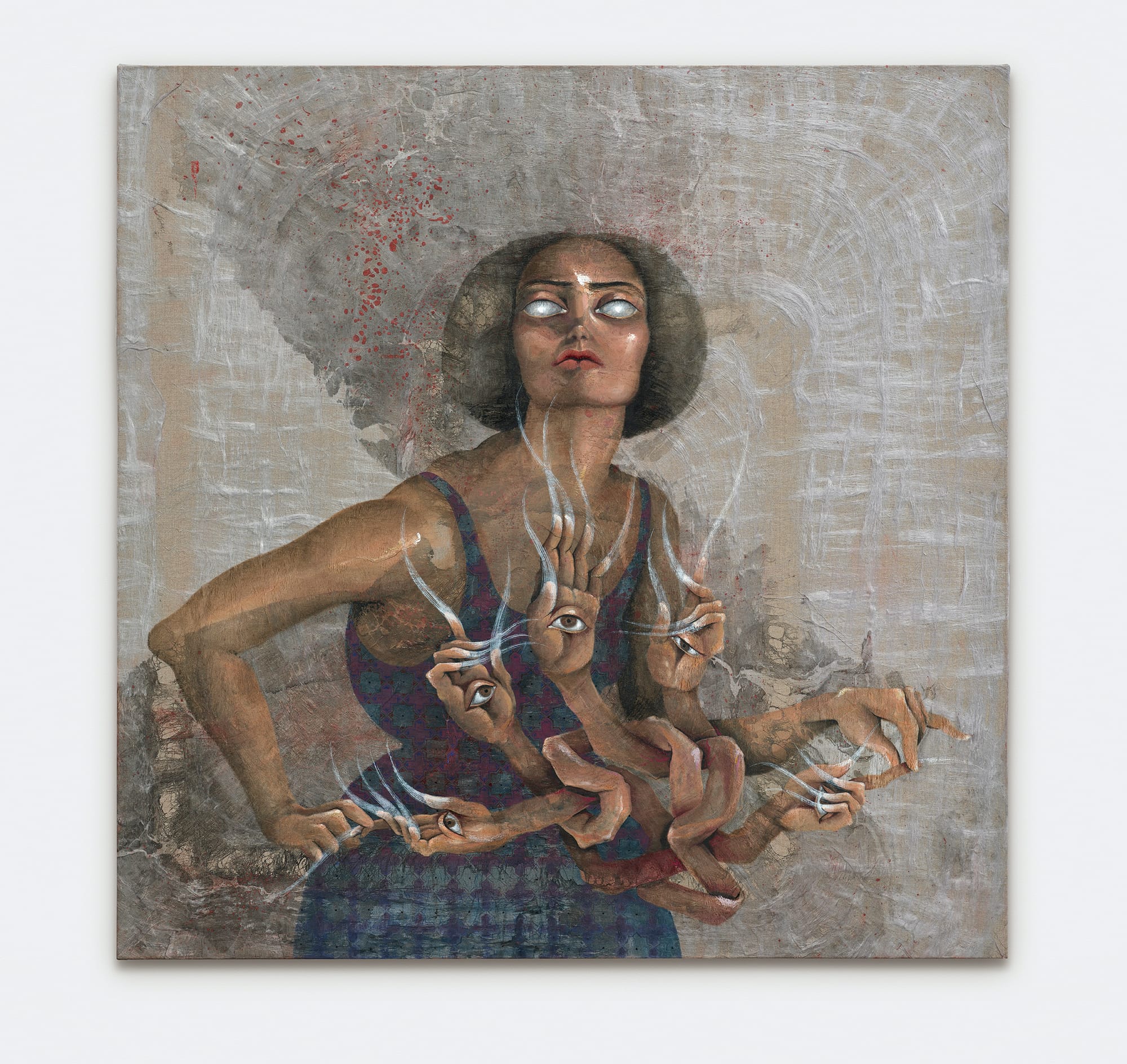
In her latest body of work, Hayv Kahraman grapples with the loss of her Altadena home during last year’s Eaton Fire. The women in her paintings channel a sense of magic, wonder, and ritual as they contort their bodies or dance across the canvas. Kahraman herself endured the traumatic displacement from her native Iraq as a child during the first Gulf War, and she incorporates symbols from her heritage, such as Sufi talismans and the Anqā, a phoenix-like bird from Arab mythology. While she pulls from her own personal history, Kahraman’s female figures embody the universal impulse to find meaning in catastrophe.
Jesse Wiedel: Stalking the Good Life
Serious Topics, 1207 North La Brea Avenue, Inglewood, California
Through March 28
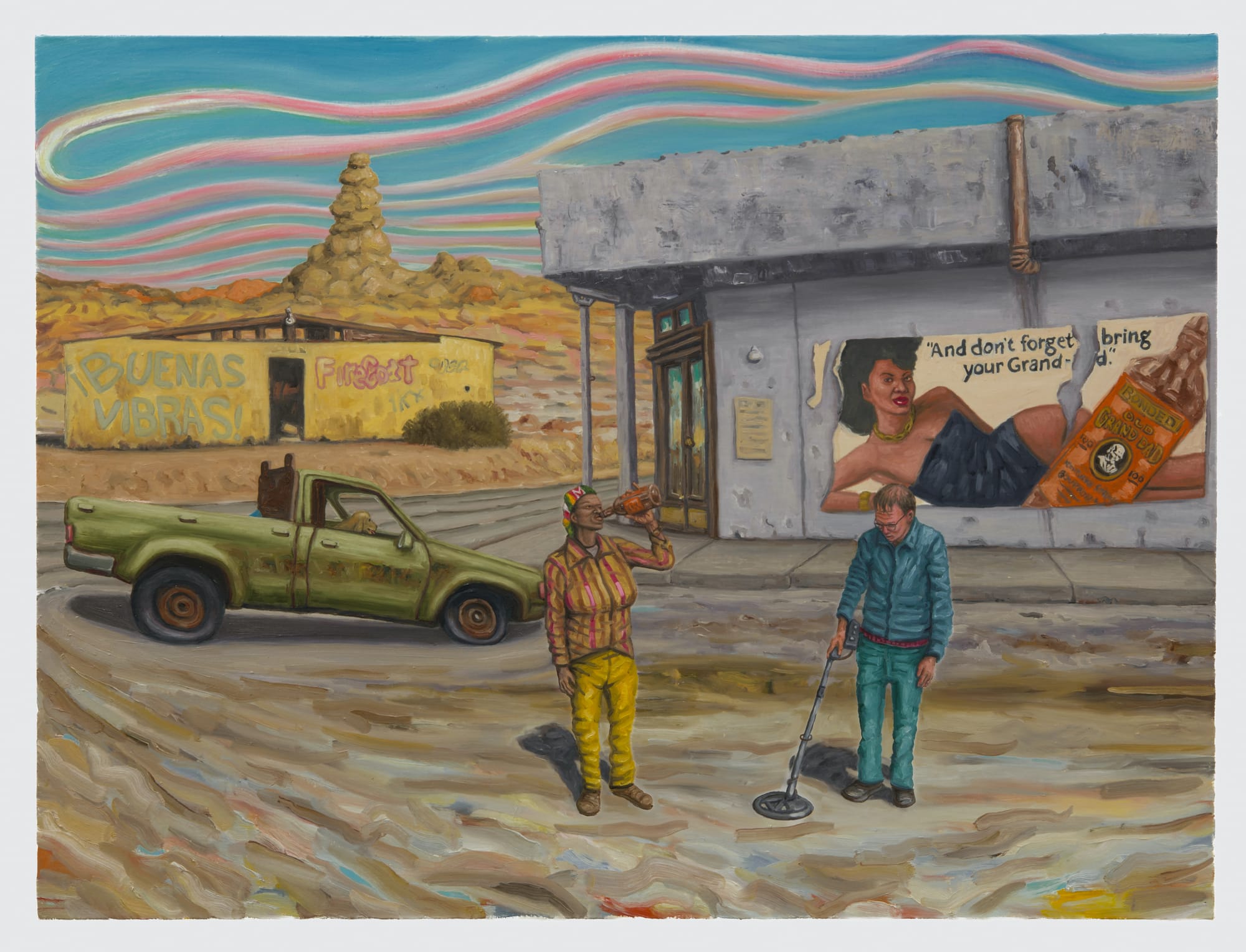
Stalking the Good Life portrays a screwball version of the American Dream in vivid color and expressionistic brushwork, as a motley cast of characters search the liminal spaces of the Western US for a slice of paradise. Jesse Wiedel paints gas stations, roadside churches, and RV parks populated by outsiders and misfits on quests of self-discovery and self-destruction. With a nod to both the idealistic regionalism of Thomas Hart Benton and the baroque frenzy of Robert Williams, Jesse Wiedel proffers a vision of regular people navigating the hopes, fears, and realities of our brave new world.
Lauren Quin: Eyelets of Alkaline
Pace Los Angeles, 1201 South La Brea Avenue, Mid-Wilshire, Los Angeles
Through March 28
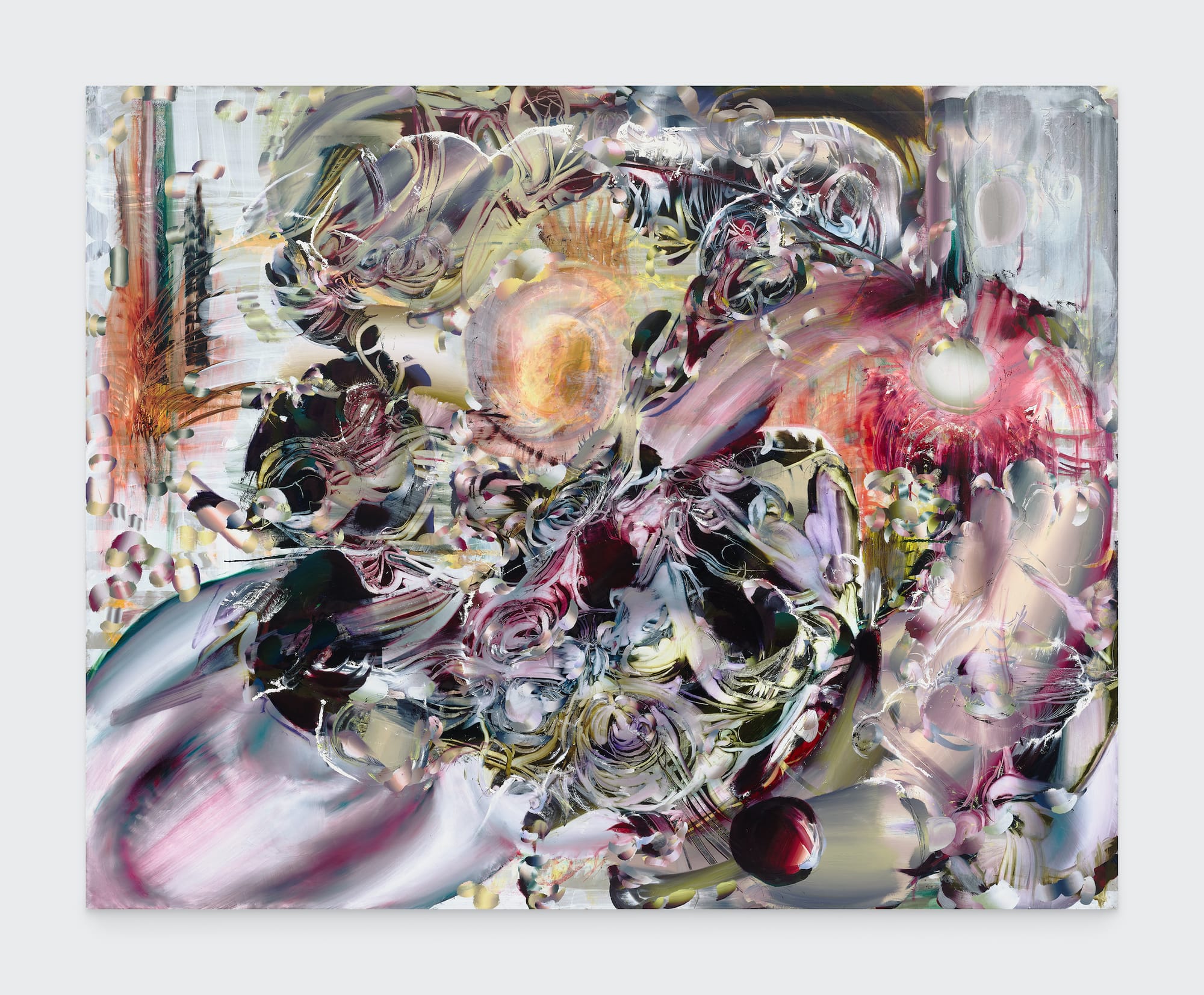
Over the past several years, painter Lauren Quin has been developing and refining her own formal language of symbols that she combines in various permutations. For her latest body of work in Eyelets of Alkaline, she returns to old canvases, revising and remixing motifs into new compositions that teeter between flat abstraction and illusionistic dimension. These paintings, which mark a shift from the saturated hues for which Quin is best known, are characterized by a chromatic subtlety that focuses attention on her control of form, space, and surface.
Noni Olabisi: When Lightning Strikes
Laband Art Gallery, Loyola Marymount University, 1 LMU Drive, Westchester, Los Angeles
Through April 4
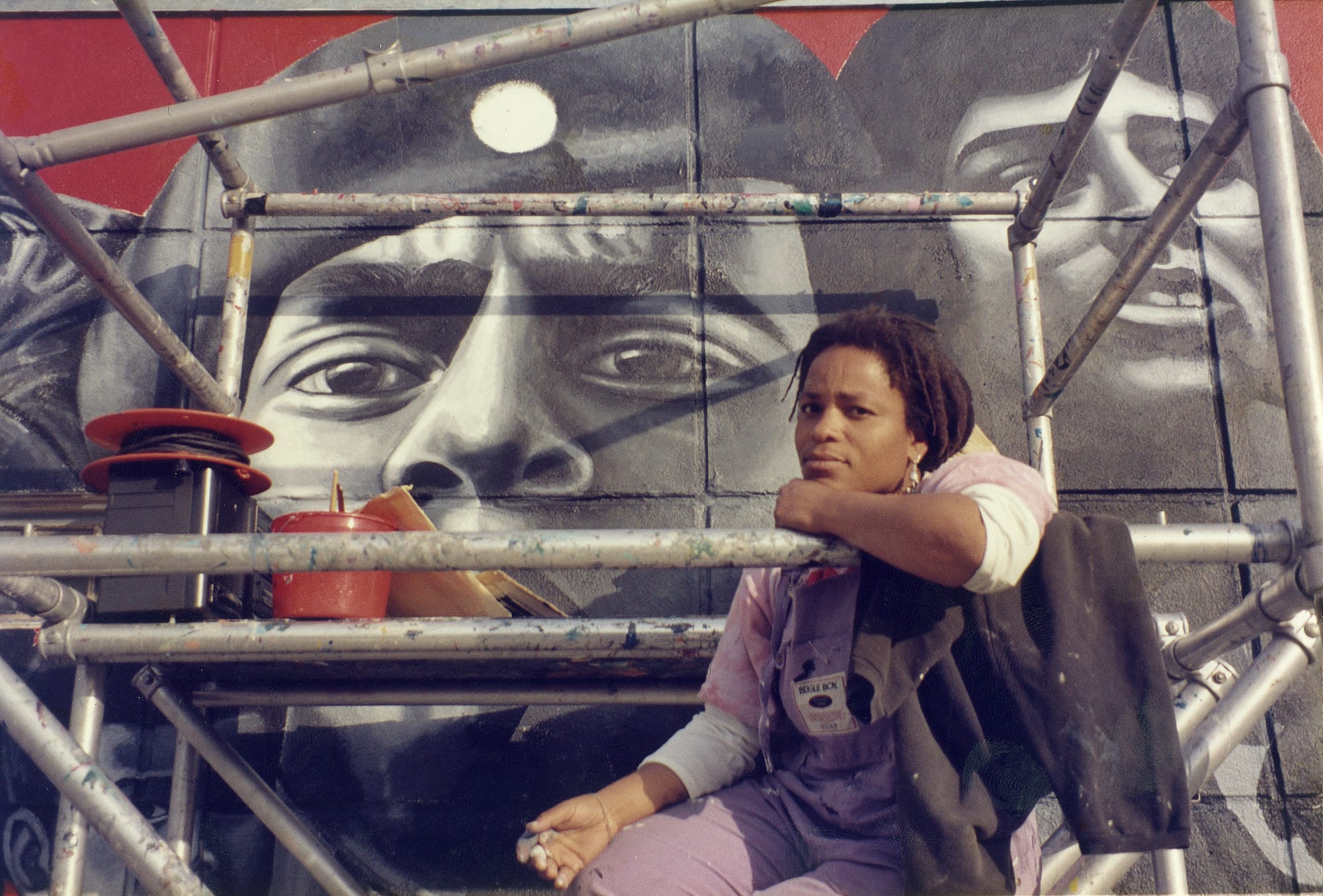
Murals by the late Noni Olabisi dot the streets of South LA: bold, honest depictions of Black struggle and resilience. They are distinguished by her signature color scheme of black and red, and by the incorporation of a yellow sun-like circle often placed on or above her subjects’ heads, a representation of inner light. Notable examples include “Freedom Won’t Wait,” a depiction of anguished Black figures painted during the 1992 LA Uprising; “To Protect and Serve” (1995), which features a central image of Black Panthers flanked by hooded Klan members and scenes of police brutality; and “Troubled Island” (2003), an ambitious portrayal of the Haitian slave rebellion of 1791. When Lightning Strikes showcases the work of this significant but underappreciated artist through more than 40 artworks spanning 1984 to 2022, the year of her unexpected death.
Wally Hedrick: Sex Politics Religion
The Box, 805 Traction Avenue, Downtown, Los Angeles
Parker Gallery, 6700 Melrose Avenue, Hancock Park, Los Angeles
Through April 4
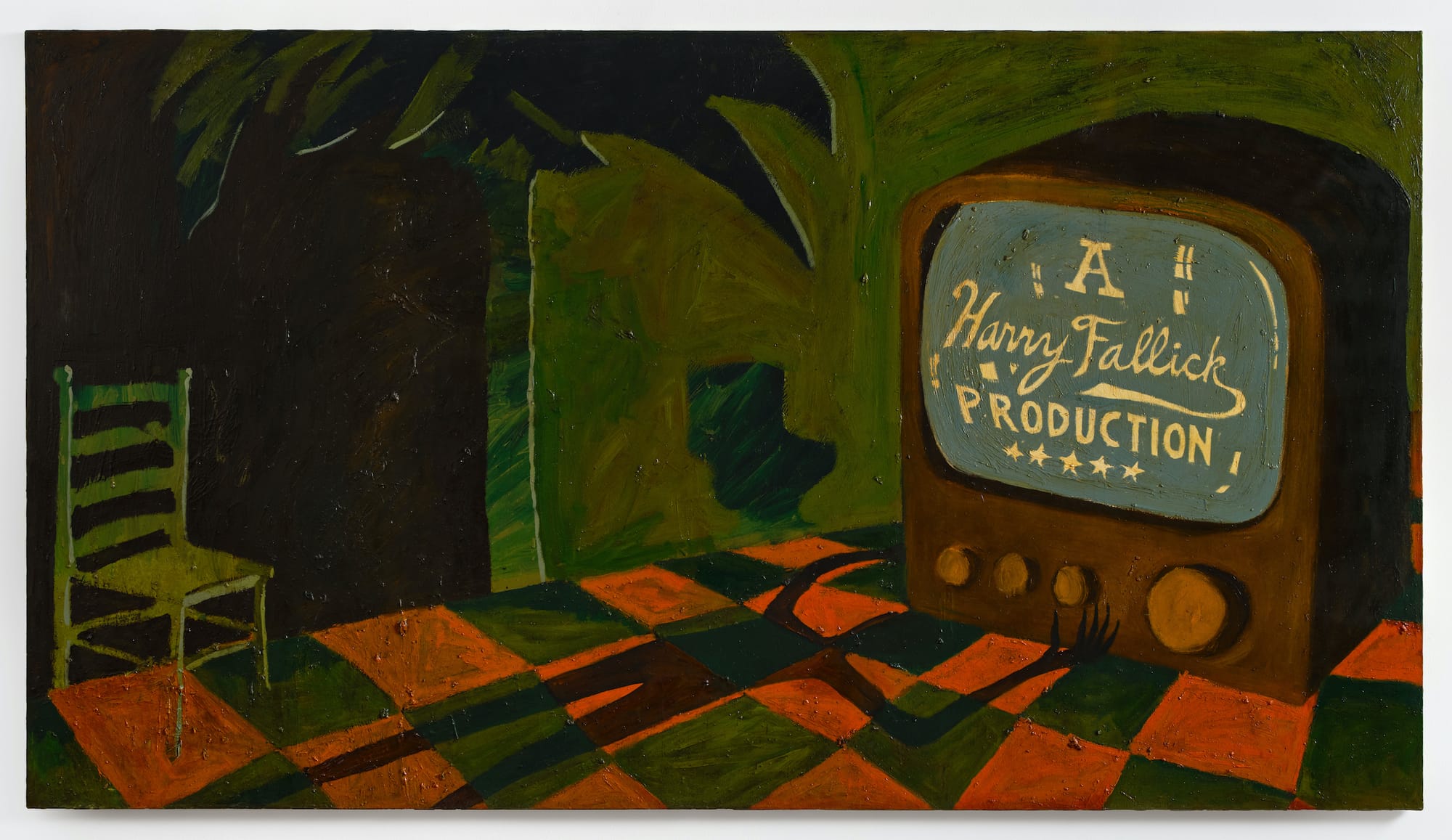
Sex Politics Religion is a two-venue retrospective of Wally Hedrick, the late Bay Area artist who eschewed any type of singular style in favor of aesthetic and intellectual freedom. His output ranged from sculptural assemblage to gestural painting, graphic signage to diagrammatic charts, and photo-realism to installation, with no sense of linear development between them. He was as opinionated about politics as he was about art, creating black monochromes in protest of the Vietnam War that reached their apex with “War Room” (1967/1968/1971/2002), on view at Parker Gallery. Taken together, the two exhibitions provide a framework, if not discrete order, for considering Hedrick’s unwieldy, fascinating career. To accompany the retrospective, the galleries have jointly organized a symposium on Wally Hedrick at The Box on March 28.
Kanemitsu on Traction
Musée du Al, Echo Park, Los Angeles (by appointment only)
Through April 12
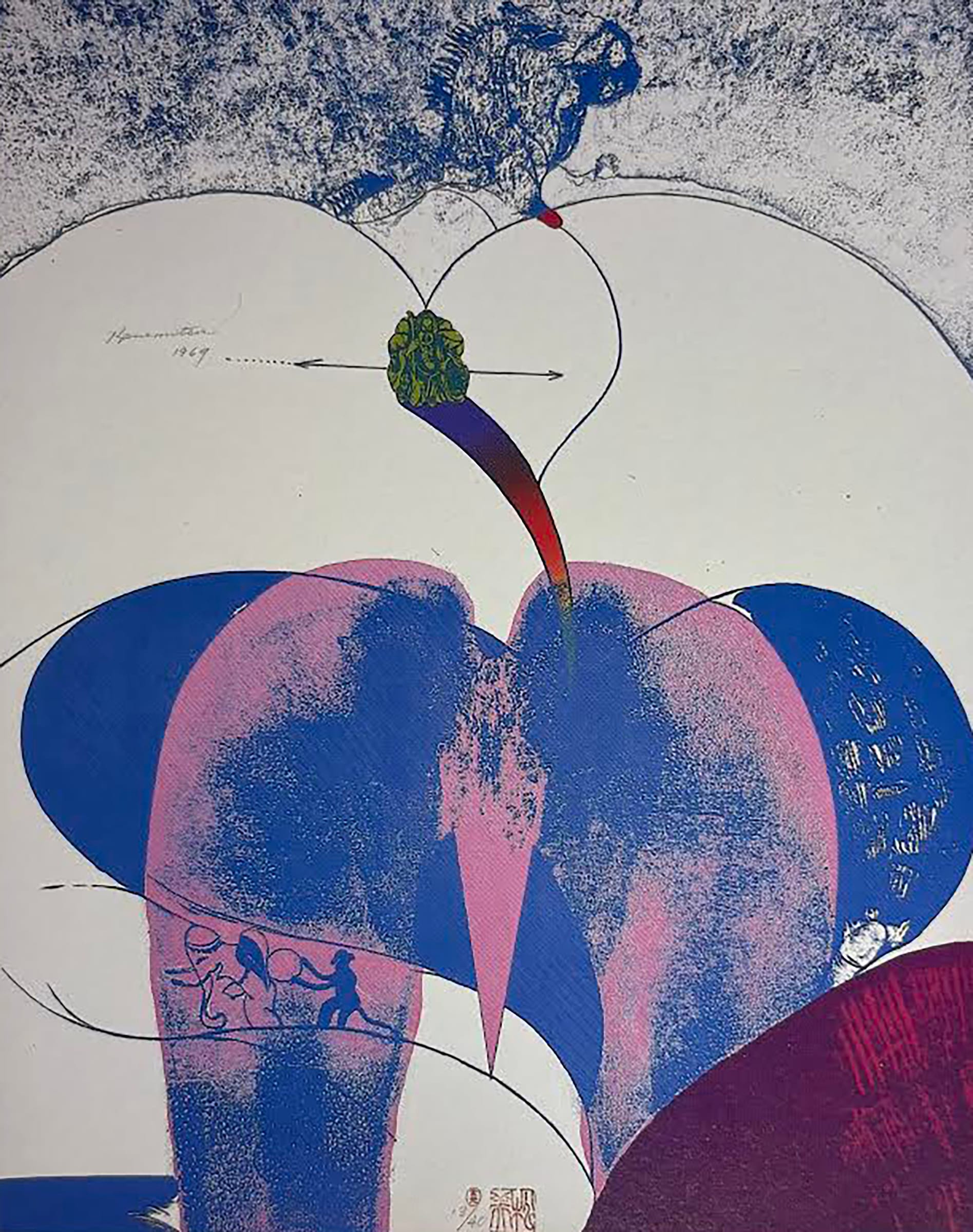
Matsumi (Mike) Kanemitsu was a widely admired artist and teacher in Los Angeles who played an important role in the city’s cultural life from the 1960s until his death in 1992. An influential Abstract Expressionist — it was Jackson Pollock who dubbed him “Mike” — he began exhibiting at the Dwan Gallery and printing with Tamarind Workshop in Los Angeles in the 1960s before moving here from New York to teach at Chouinard Art Institute, the California Institute of the Arts and, Otis College of Art and Design. He lived and worked at one of LA’s first artist-in-residence buildings, 800 Traction, where he opened Gallery IV with fellow artist Nancy Uyemura in 1985. Printmaking was a crucial part of his practice, and Kanemitsu on Traction brings together lithographs and woodcuts produced between 1970 and 1990 to illustrate his stylistic development from his AbEx roots.
Nature Morte, 1982–1988
Ehrlich Steinberg, 5540 Santa Monica Boulevard, East Hollywood, Los Angeles
Through April 18
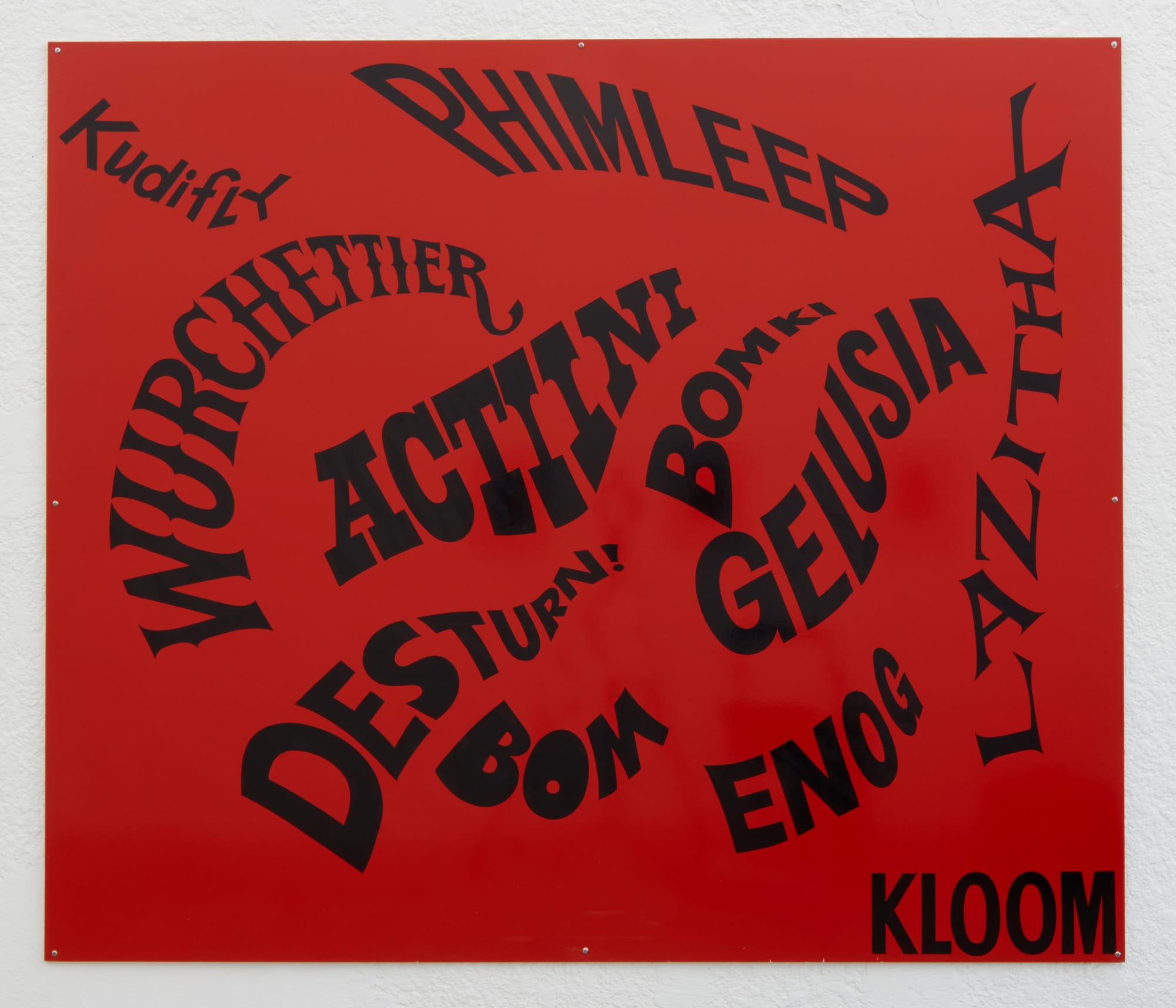
Founded by artists Alan Belcher and Peter Nagy, Nature Morte was a pioneering East Village art gallery that championed artists whose conceptual, language-based, or photographic practices bucked the Neo-Expressionist painting trend sweeping through Soho during its run from 1982 to ’88. Ehrlich Steinberg’s exhibition features work shown at the gallery or made while it was active, including text works by Ken Lum and Louise Lawler, paintings by Steven Parrino and Julia Wachtel, photos by Sherrie Levine and David Robbins, and more.
Cole Case: And it Keeps Coming 'Til the Day it Stops
Track 16, 1206 Maple Avenue, Suite 100, Downtown, Los Angeles
Through April 18
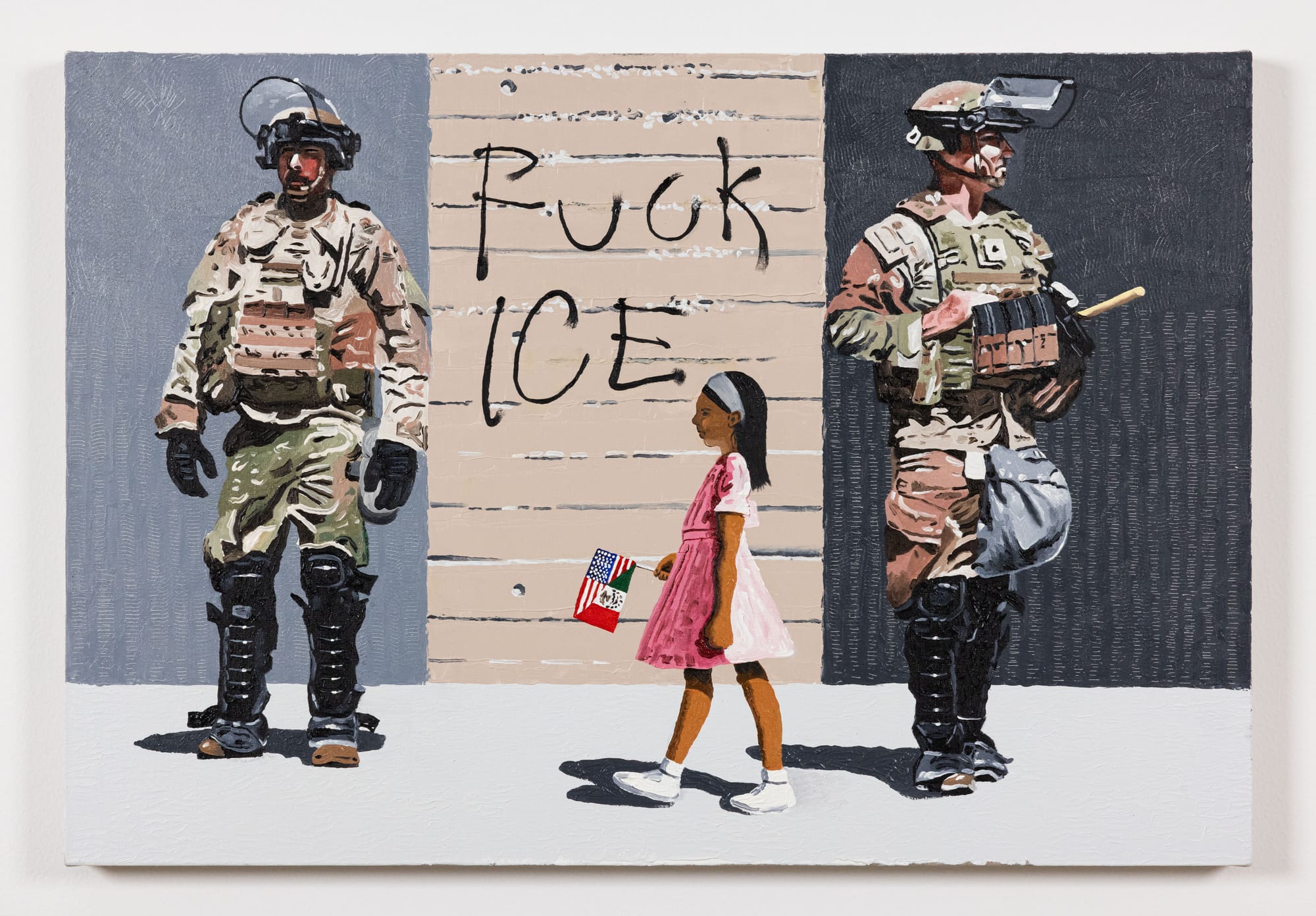
Cole Case’s paintings confront contemporary political and social turmoil by framing specific episodes of injustice or protest through the lens of art history. He draws on his own experiences facing riot police in downtown LA, monitoring ICE patrols, and visiting the concentration camp at Manzanar where the US government incarcerated Japanese Americans during World War II. Case renders scenes with the gravitas of history painting, as with “Abduction” (2026), which models ICE’s kidnapping of Rosalina Vargas last year after Poussin’s “Rape of the Sabine Women” (1634); or “ICE Entering Santee Alley” (2025), a riff on James Ensor’s “Christ's Entry Into Brussels in 1889” (1888), replacing Ensor’s banner reading “Vive La Sociale” with “Chinga Tu Migra.”
Lizzie Fitch and Ryan Trecartin: PLY WOULD
Morán Morán, 641 North Western Avenue, East Hollywood, Los Angeles
Through April 18
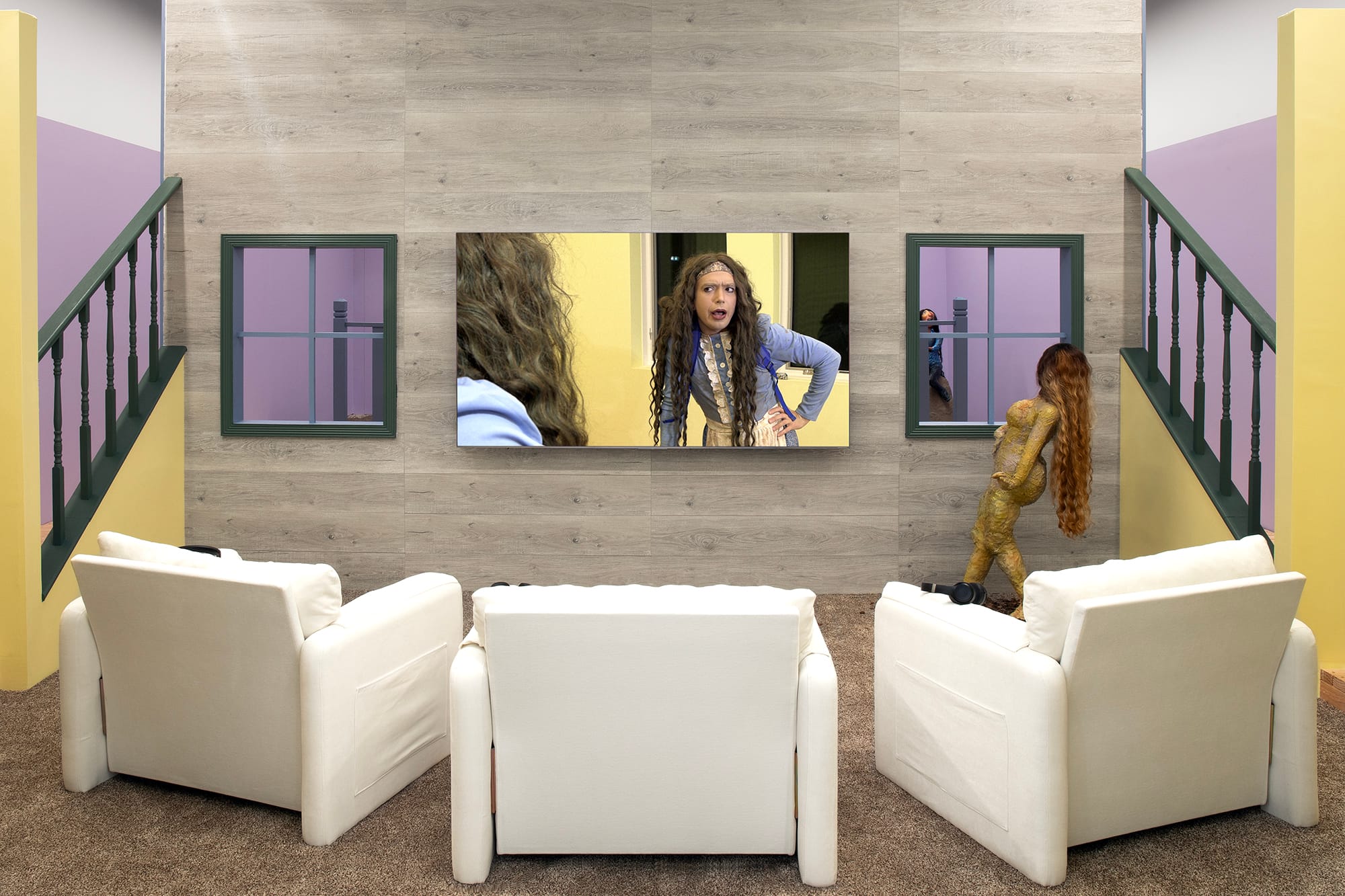
Frenetic, campy videos and elaborate installations in tow, Ryan Trecartin and Lizzie Fitch emerged in the 2000s as darlings of the post-internet art scene. In 2016, the collaborators moved to Ohio and began work on Whether Line, a complex of stage sets amid the rural landscape that serves as the site for an evolving series of artworks exploring issues of class, surveillance, and leisure. Ply Would showcases the latest iteration of the Whether Line project, bringing together video, sculpture, and installation inside a barn-like theater that mimics the on-screen setting.
100 Years of Wallace Berman: “It Don’t Mean a Thing (If It Ain’t Got That Swing”
Michael Kohn Gallery, 1227 North Highland Avenue, Hollywood, Los Angeles
Through April 25
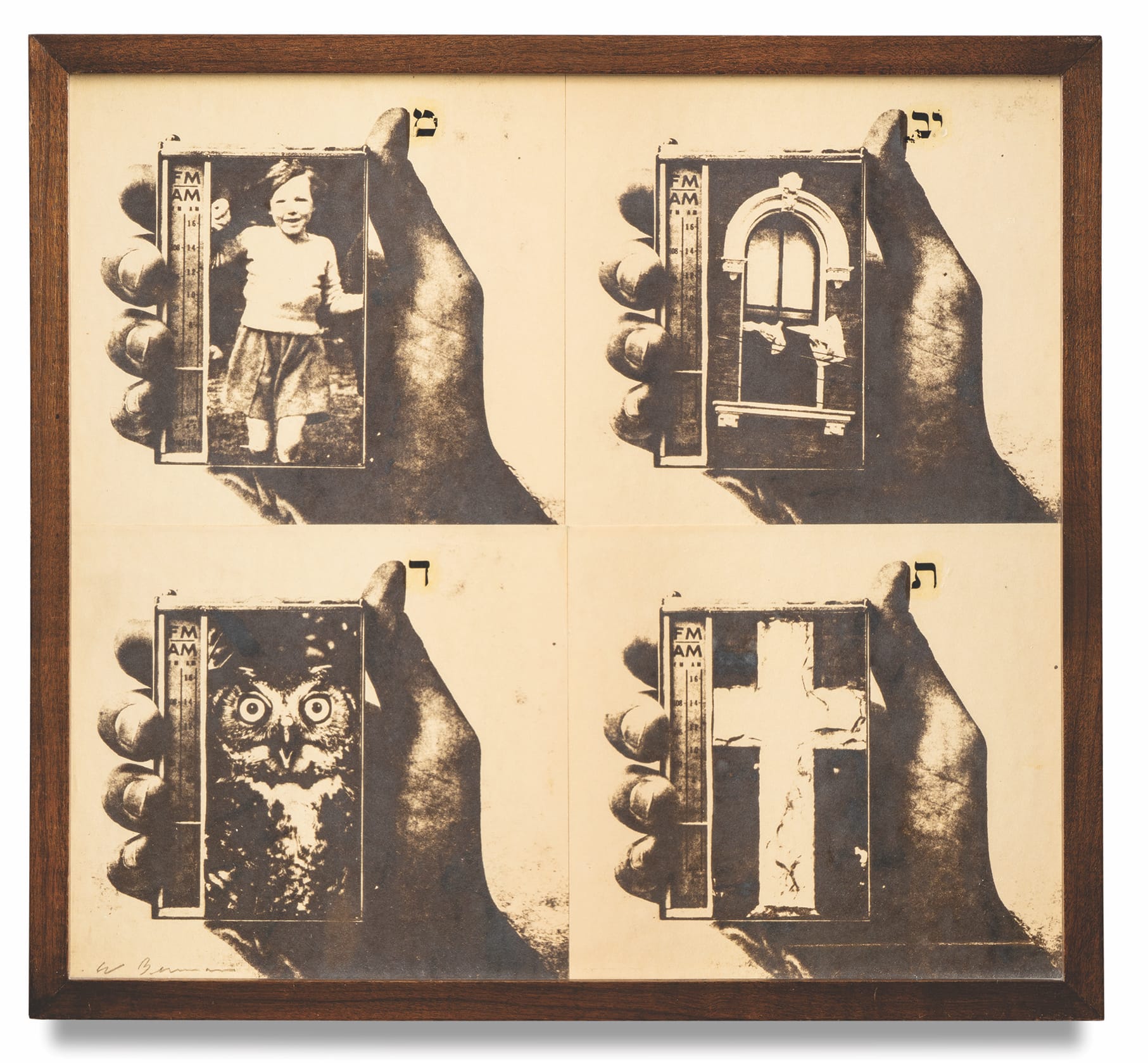
Wallace Berman was an enigmatic yet influential artist whose works investigating the function of mass media remain relevant five decades after his death. In the mid-1960s, Berman arrived at a serial format that would yield endless possibilities: a hand holding a transistor radio onto which he would collage images from myriad sources. Using a Verifax (an early type of copy machine), he made grids of these handheld radios, creating poetic juxtapositions between the appropriated images representing pop culture, politics, science, mysticism, and everything in between. Curated by Berman’s son Tosh on the 100th anniversary of his birth, and 50th anniversary of his untimely death in a car accident, this exhibition unites a wide selection of his Verifax collages — from intimate four-square grids to complex works with over 50 components — offering a rare chance to survey the breadth of this significant body of work.