10 Art Shows to See in Los Angeles This October
Roberta Gentry’s visions in orange and blue, Jordan Nassar’s tatreez puzzles, 12 Japanese women who shaped hard-edge abstraction, Susan Silton’s feminist conceptualism, and more.

This October, art shows in the city home in on the everyday and its ability to reveal greater truths about existence, perception, and history. From the human-made detritus and barren landscape of the High Desert, Ry Rocklen creates nuanced portraits of place and family. At Regen Projects, Elliott Hundley charts the uncharted reaches of his subconscious by securing hundreds of found images to panels with pins. Meanwhile, Jordan Nassar practices tatreez, traditional Palestinian embroidery, in his multi-panel works that engage not only with art history but with cultural erasure and destruction. And a retrospective on the work of LA-based artist Susan Silton showcases her participatory practice and deep engagement with the world outside the gallery walls.
Ry Rocklen: Desert Lenses
Wilding Cran, 607 North Western Avenue, East Hollywood, Los Angeles
Through October 24
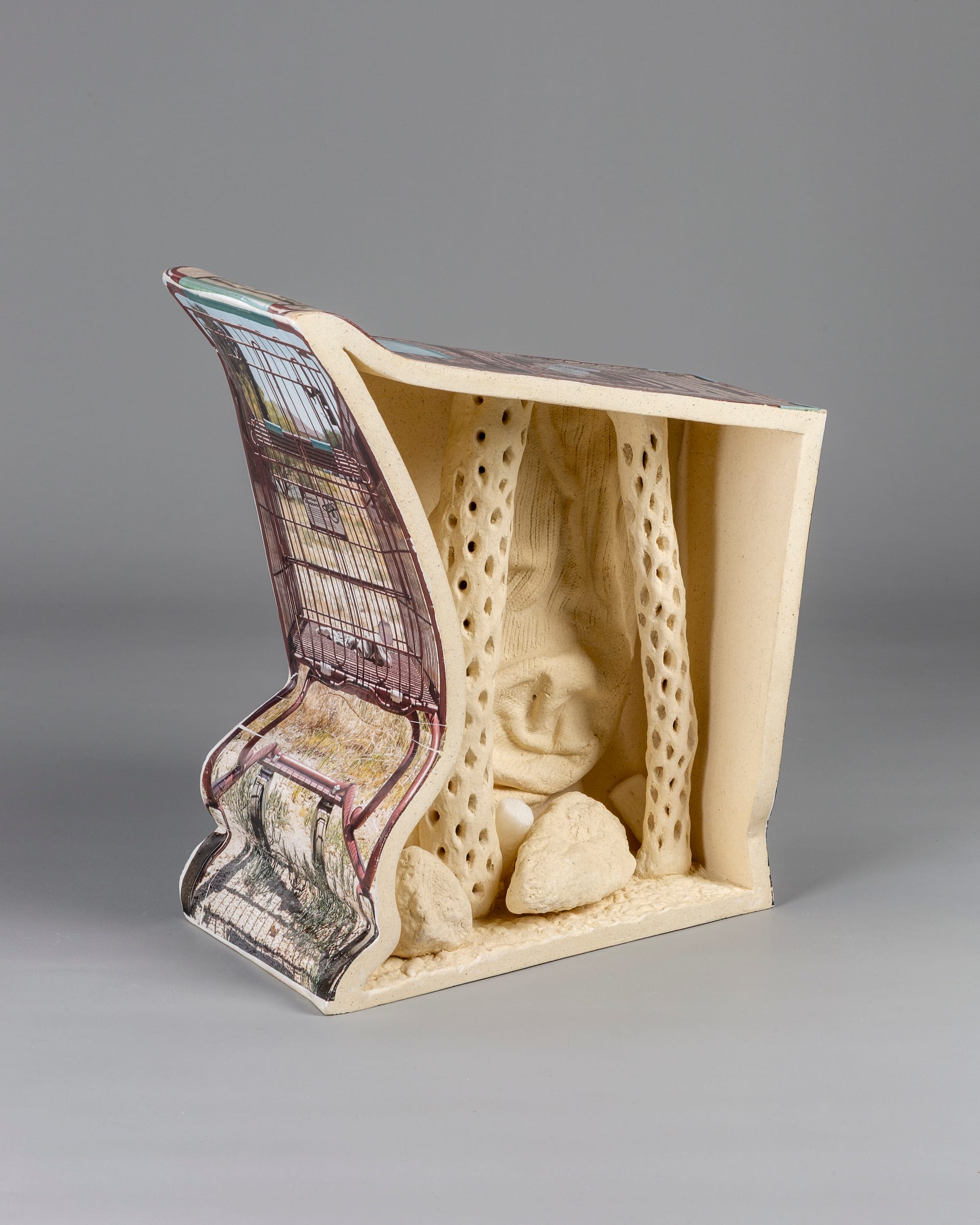
Interdisciplinary artist Ry Rocklen finds magic in the mundane, making visible the stories embedded in ordinary objects. Desert Lenses focuses on the area around Joshua Tree where he lives, just east of Los Angeles, featuring photo-based ceramics that juxtapose natural and human-made elements in the desert, such as monochrome still lifes hidden within the shell of a rusted shopping cart or battered bus. Accompanying these works are casts of his family members’ socks in paper and aluminum, each conveying a remarkable sense of personality through its rumpled form.
Michel Auder: Remains of the Day
Jeni Abramson Gallery, 461 North Western Avenue, East Hollywood, Los Angeles
Through October 24
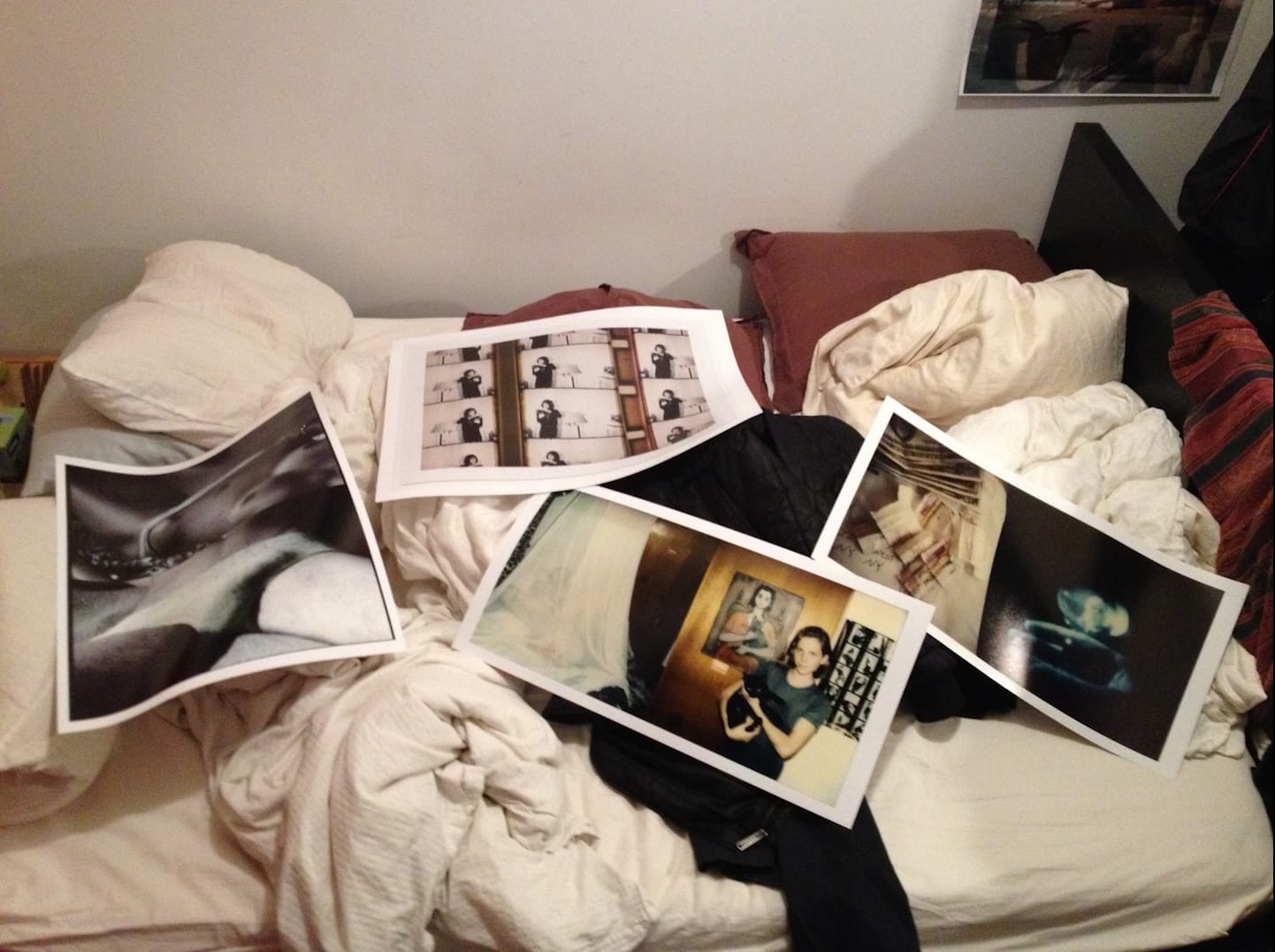
For over five decades, photographer and filmmaker Michel Auder has plumbed the gulf between art and life through diaristic videos, travel logs, and experimental films that filter politics, culture, and art history through a poetic, autobiographical lens. Remains of the Day, the inaugural exhibition at Jeni Abramson Gallery, features snapshots, film stills, archival documentation, and other photographs from throughout Auder’s career, offering several paths through which to enter his singular image-based vision.
Roberta Gentry: Blood Orange
Track 16, 706 Heliotrope Drive, East Hollywood, Los Angeles
Through October 24
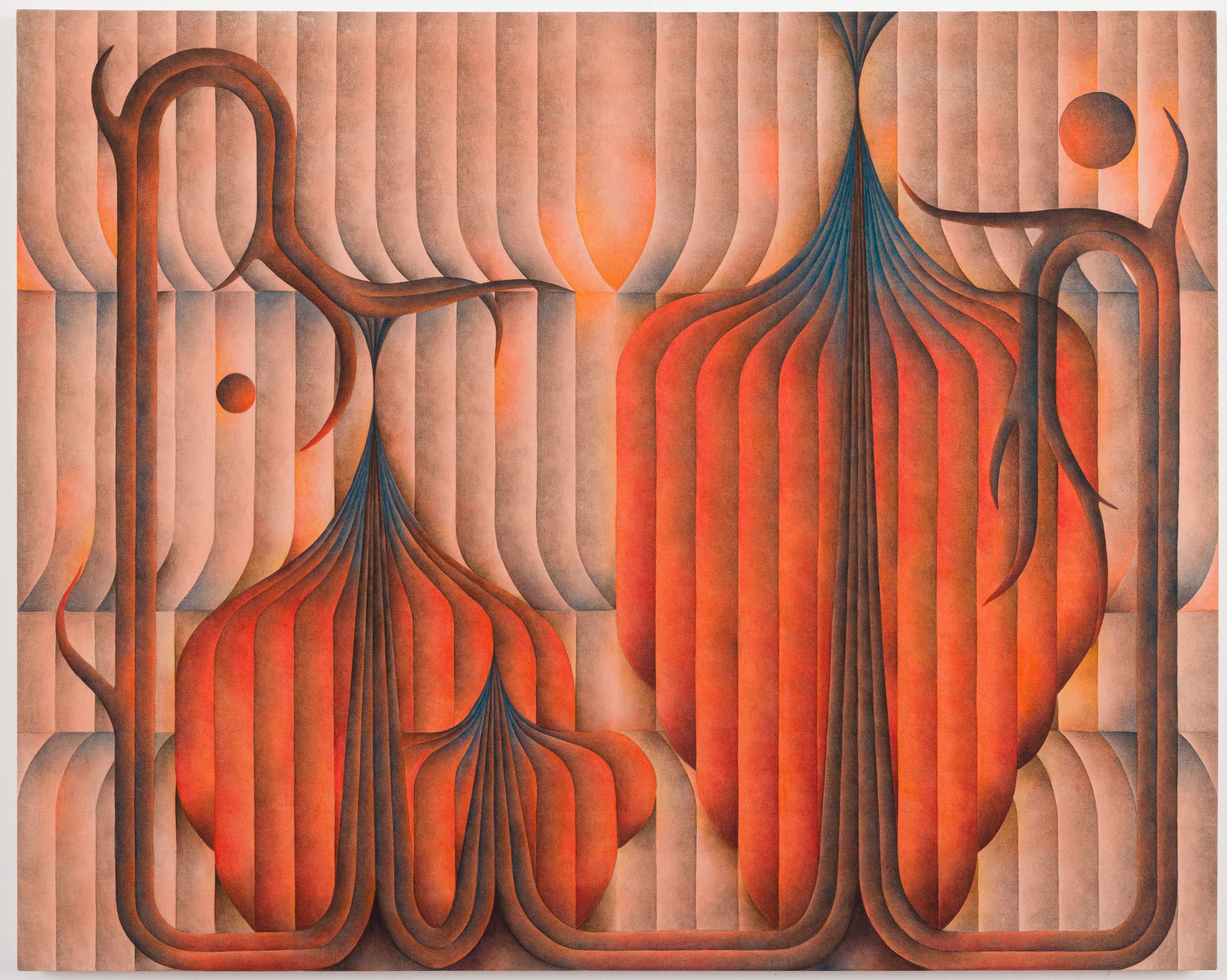
Roberta Gentry’s organic, eccentric paintings balance geometric abstraction with a sense of whimsy. The LA-based painter fuses medieval imagery, scientific illustration, and psychedelia, resulting in scenes resembling visions from a lost civilization. The works in Blood Orange are limited to a color palette of cool blue and radiant orange, emphasizing the interplay of form and fantasy. On October 11, the gallery will host a talk with Gentry and artist Chris Ulivo at 1pm.
Elliott Hundley: Book of Sand
Regen Projects, 6750 Santa Monica Boulevard, Hollywood, Los Angeles
Through October 24
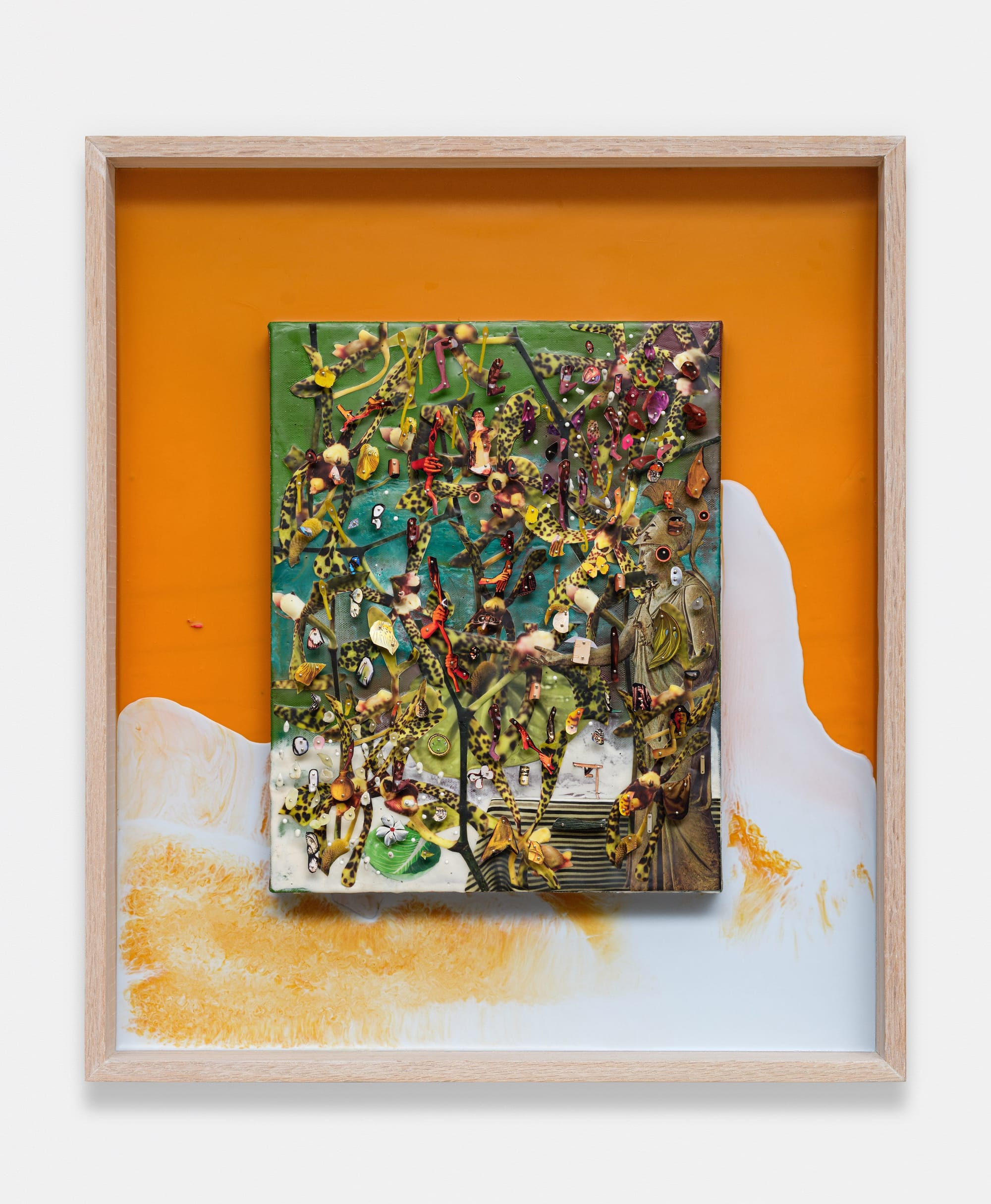
Elliott Hundley is known for his obsessive, breathtaking assemblages built up from hundreds of appropriated images held in place with pins, extending collage into three dimensions. Previous bodies of work have drawn inspiration from sources as diverse as Greek tragedy and Antonin Artaud, but in Book of Sand, Hundley turns inward. Using a process similar to Jungian sandplay therapy, the artist constructs these works from paint, string, cut-out images, and other found materials without preconceived intentions. The works on view range from sculptures to the 13-foot-long tapestry “Veil” (2026), reflecting various facets of his rich, psychic world.
Gronk: X Reason
Craig Krull Gallery, Bergamot Station, 2525 Michigan Avenue, #B3, Santa Monica, California
Through October 31
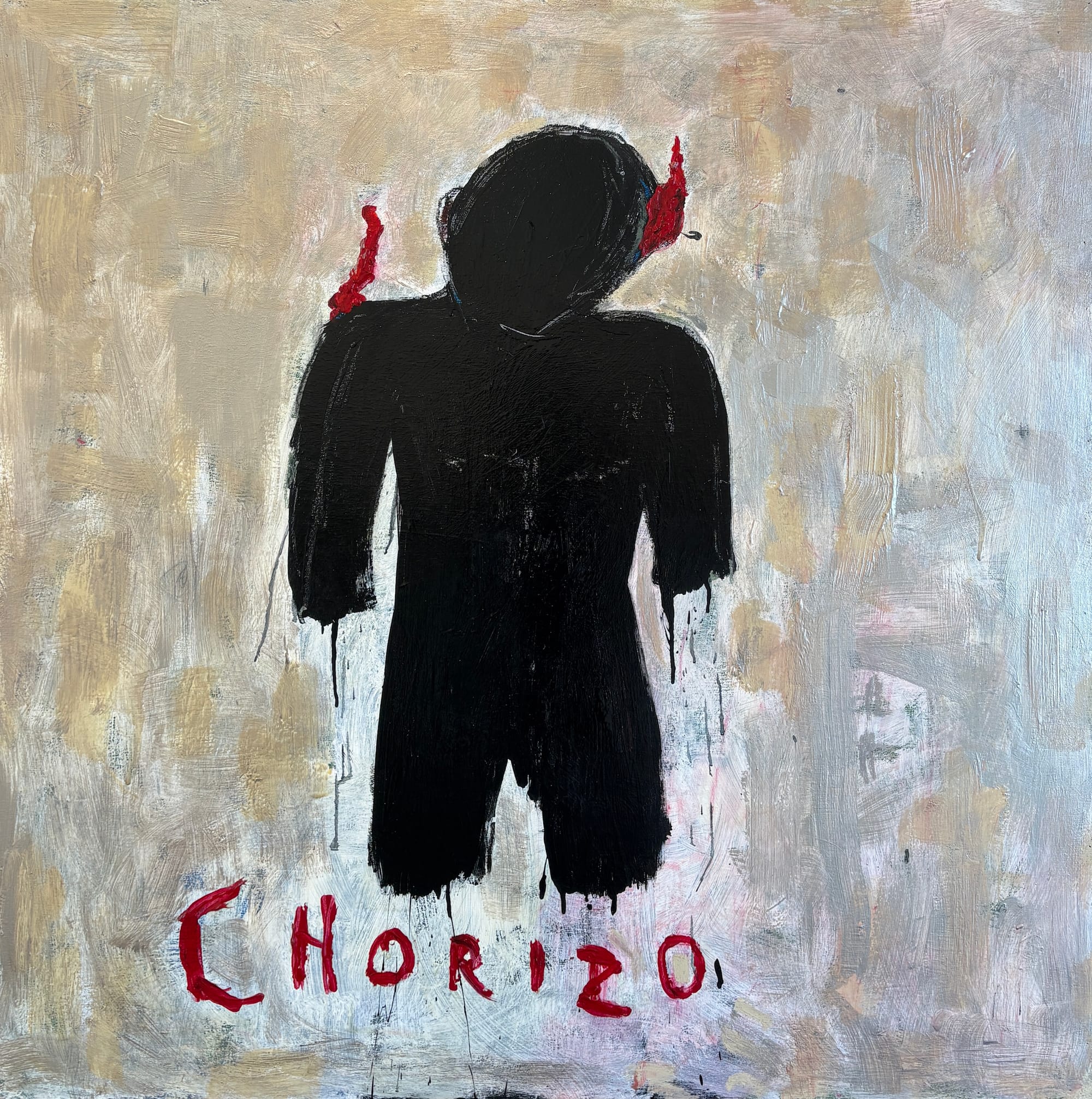
After cofounding the pioneering art collective ASCO in the early 1970s, Gronk embarked on a long career as a multi-faceted solo artist. From his paintings to his theater designs (often created in collaboration with opera producer Peter Sellars), his work reflects a wide range of influences spanning classical Greek myths to 1950s B-movies, brought together in his signature expressionistic style. X Reason features new paintings, ceramics, and furniture that embody the ambiguity and potential symbolized by the letter “X,” an unknown variable for which there are many possible solutions. The exhibition also includes “Conquest” (2021), a four-panel, 16-foot-long mural — calling back to his origins with ASCO — that can be displayed in various permutations.
Emmanuel Louisnord Desir: Rough Ways of the Delicate Ones
Sebastian Gladstone, 6916 Santa Monica Boulevard, Hollywood, Los Angeles
Through October 31
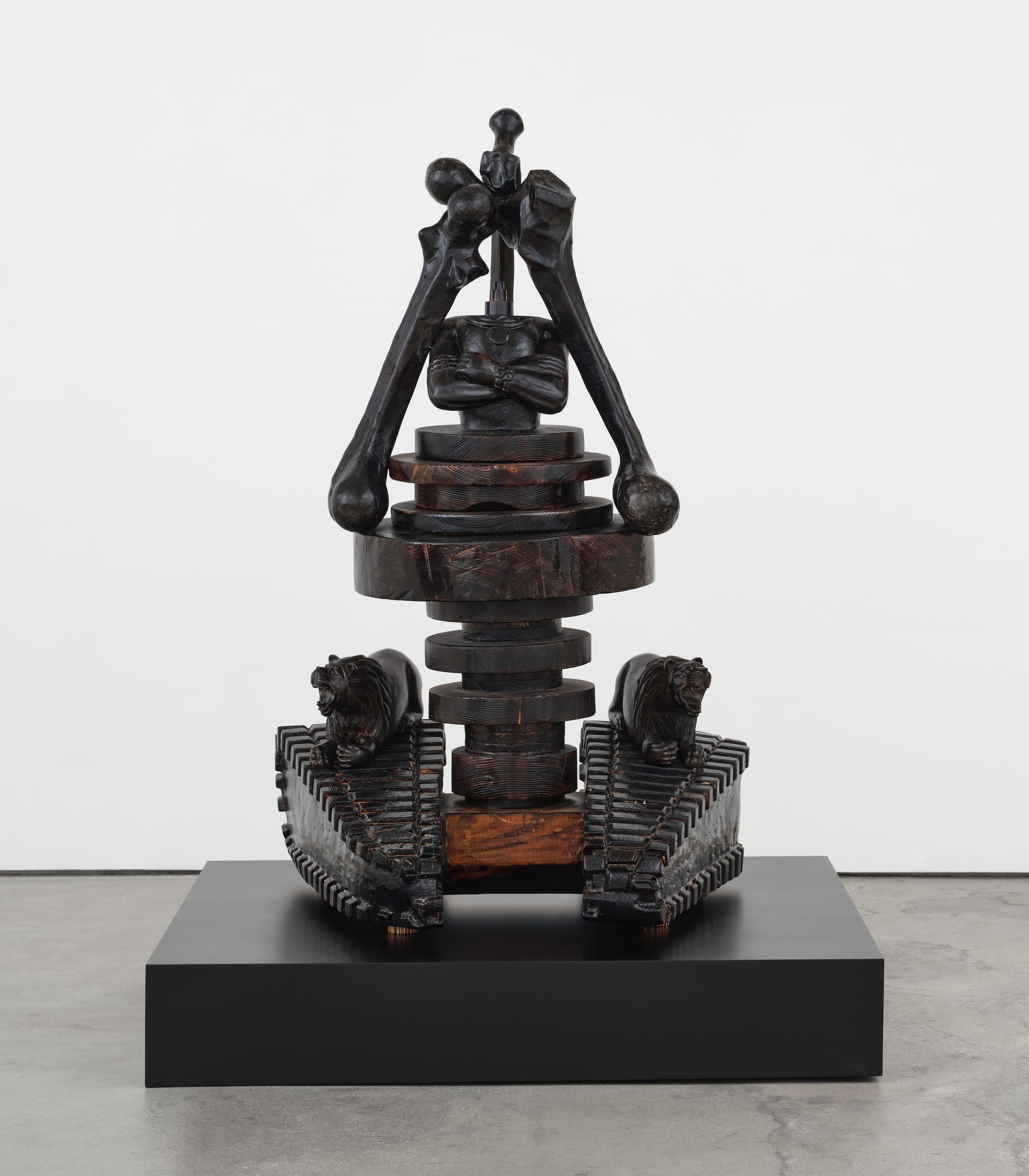
In his bronze sculptures and figurative paintings, Emmanuel Louisnord Desir draws on scriptural verse and Afrofuturist imagery to forge new conceptions of resistance and emancipation. Composed of bones, wings, industrial parts, and multiple heads, Desir’s hybrid figures reflect the trauma of exploitation, as well as the potential for liberatory transformation. These broken figures, reformed into instruments of technological progress like an engine or telescope, contain their own tortured history while pointing to a speculative future that is still being built.
Jordan Nassar: Describing Clouds
Anat Ebgi, 6150 Wilshire Boulevard, Mid-City West, Los Angeles
Through October 31
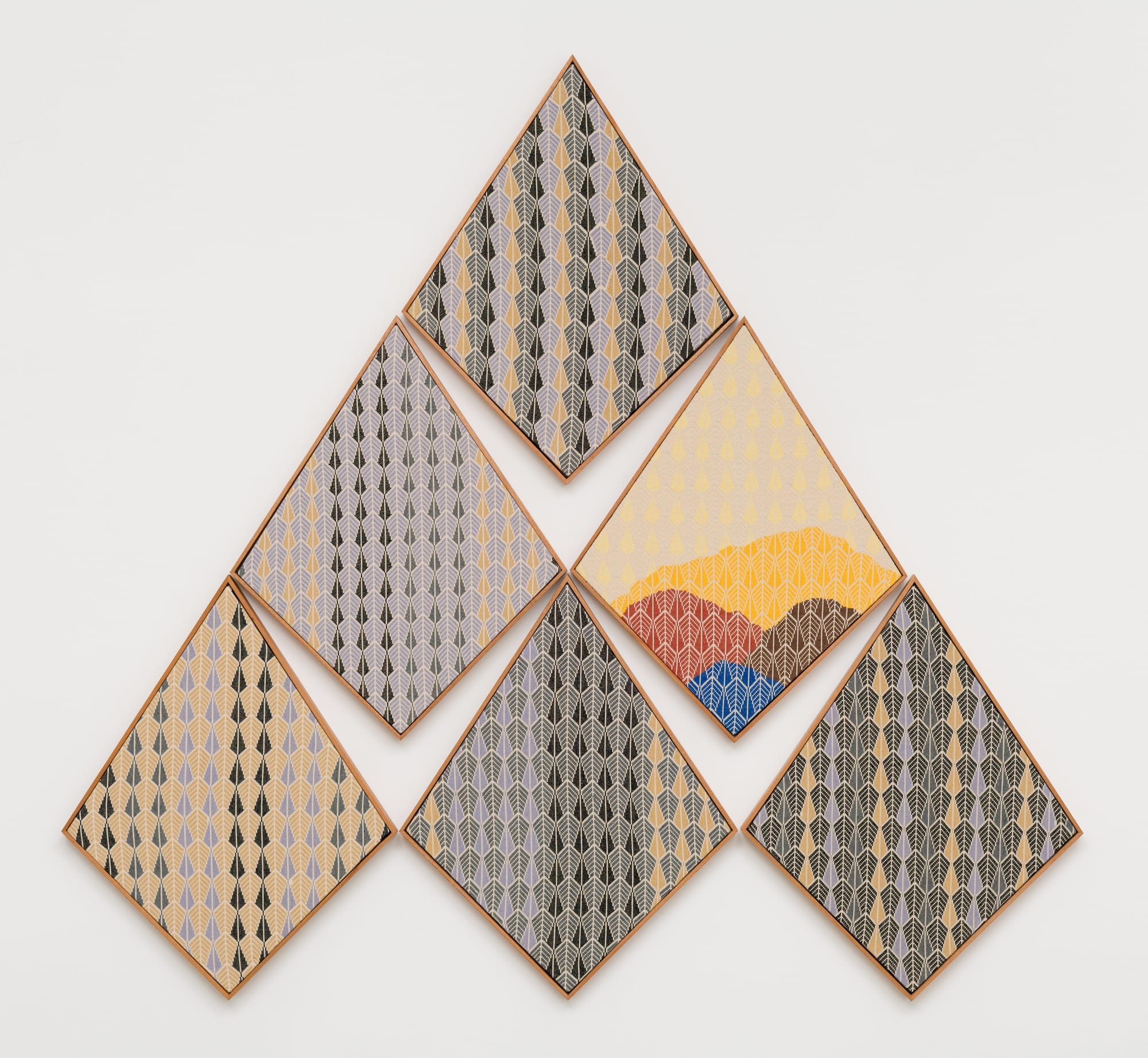
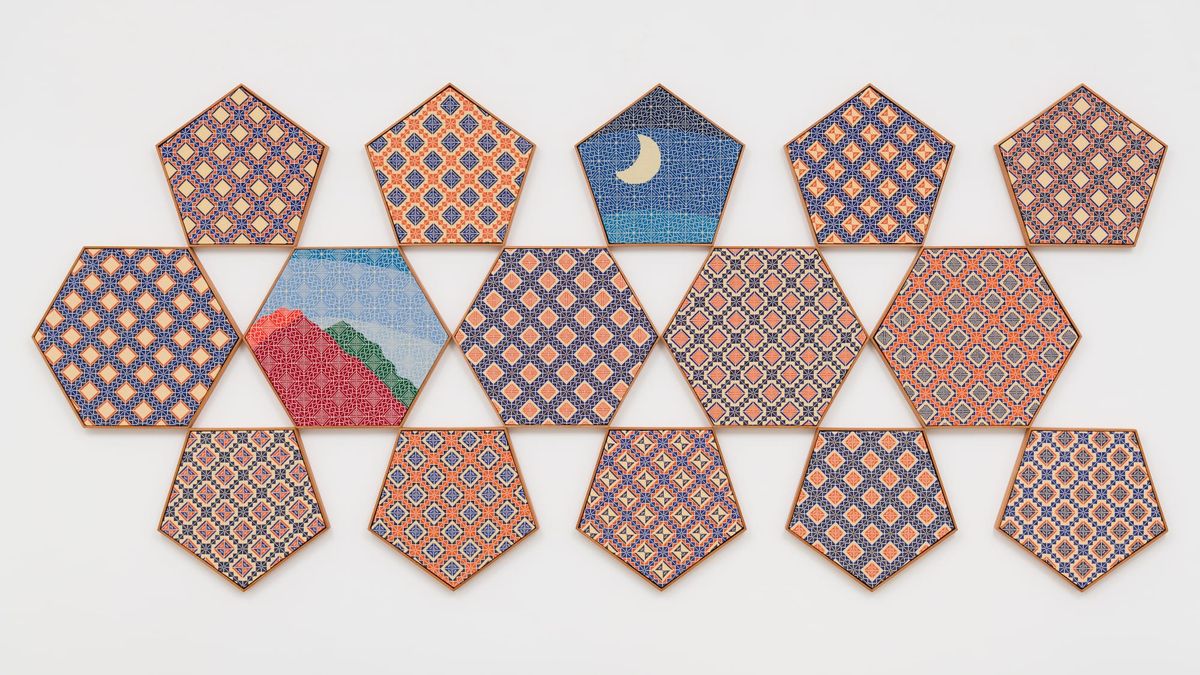
Describing Clouds features new multi-paneled embroideries and a mosaic by Palestinian-American artist Jordan Nassar, continuing his exploration of how abstraction can engage with complexities of culture and history. Inspired by tatreez, Nassar’s shaped panels are filled with embroidered grid patterns depicting dreamscapes of rolling hills and floating clouds. These are intended to be installed in various configurations, suggesting multiple formal and narrative possibilities. These textile works are joined by “Jabalia” (2026), a tile work based on a fifth-century Byzantine mosaic located in a church in Gaza. The hunting scene it depicts takes on an elegiac quality given the uncertainty of the original mosaic’s survival in the wake of Israel’s bombing campaign and genocide.
Hard Line Women
NonakaHill, 720 North Highland Avenue, Hollywood, Los Angeles
Through November 7
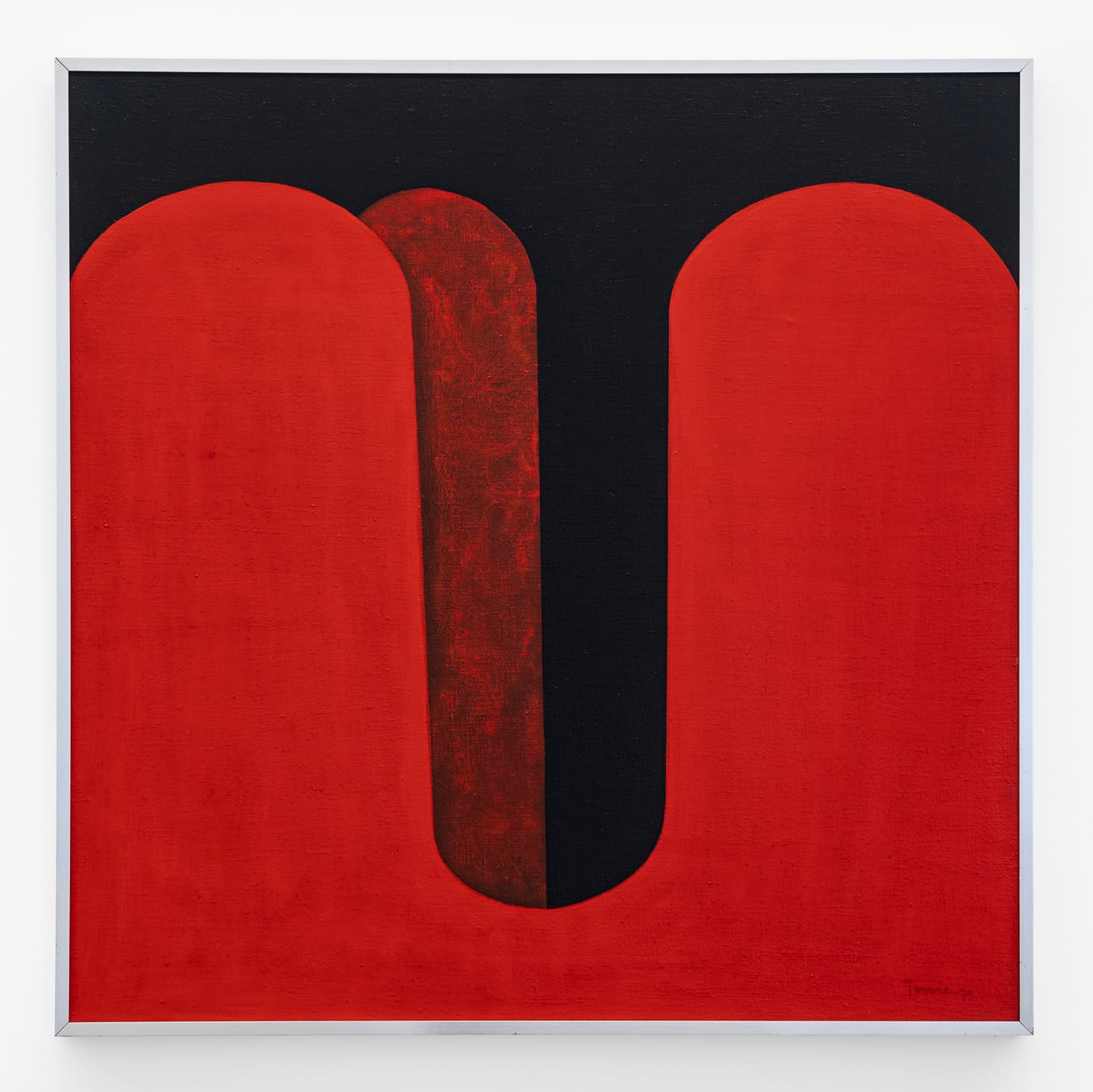
Hard Line Women brings together the work of 12 Japanese women artists who have shaped hard-edge abstraction from the 1960s to today. Across painting, performance, installation, and photography, each of these artists created significant yet often unheralded contributions to a primarily male-dominated field. Highlights include Tomie Ohtake’s severe red-on-black curves in “Untitled” (1975); Kazuko Miyamoto’s stark string-and-nail installation, “Untitled” (1977); and Etsuko Nakatsuji’s minimalist, cartoon visage “eyes-Line” (2003).
Susan Silton: Diving into the Wreck
Los Angeles Municipal Art Gallery, Barnsdall Art Park, 4800 Hollywood Boulevard, East Hollywood, Los Angeles
Through November 22
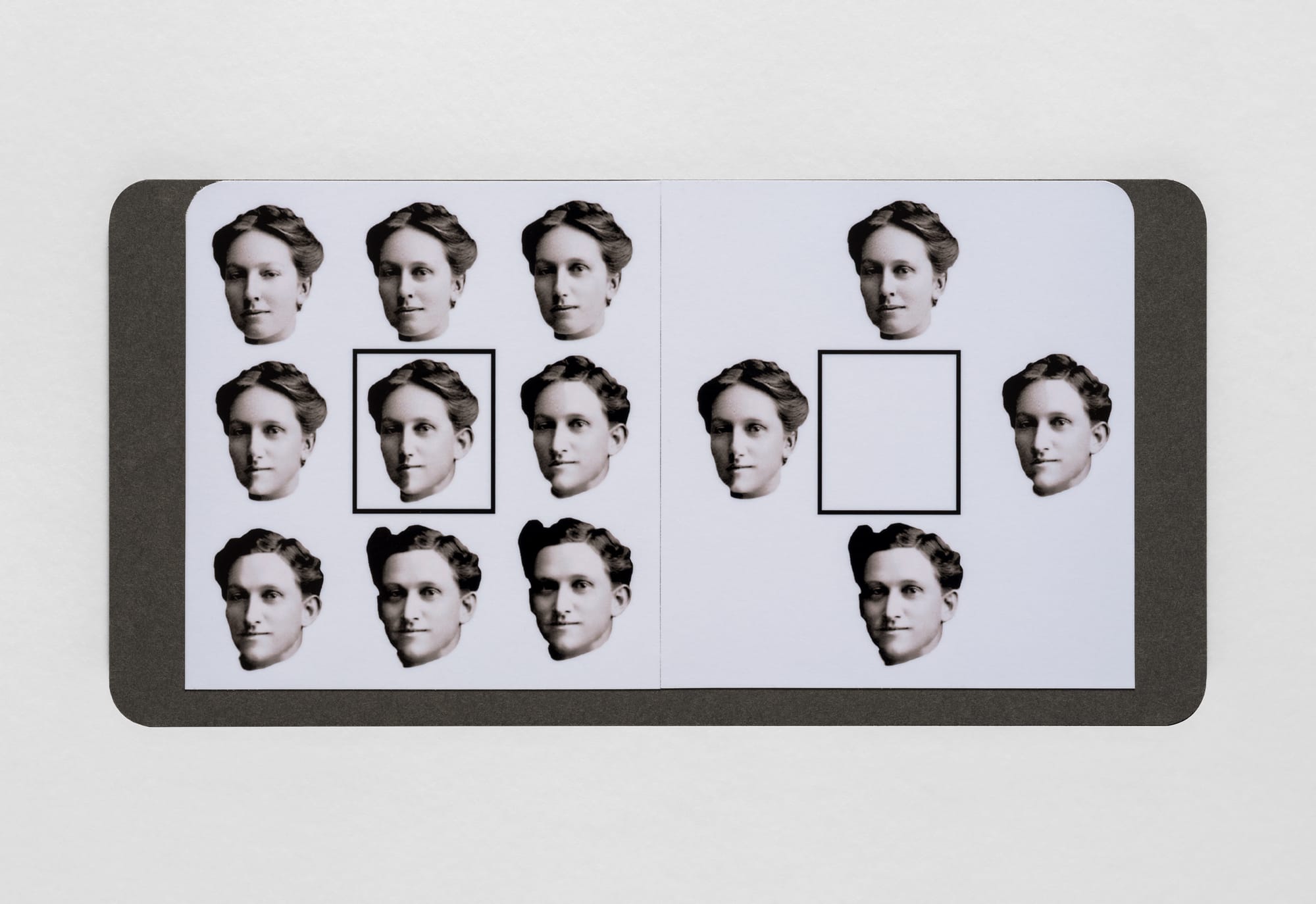
Taking its name from the title of lesbian feminist writer Adrienne Rich’s 1972 poem, Diving into the Wreck is the first major survey dedicated to Susan Silton, a key figure in West Coast conceptualism and feminist art movements. Incorporating video, photography, installation, and text, Silton’s is a deeply participatory practice, one that seeks to engage with audiences and issues beyond the white cube. To this end, the exhibition is accompanied by Civilized Voices (2026), a series of hand-painted billboards created in collaboration with five LA-based poets and installed amid the trees near the gallery entrance.
John Baldessari: Sculptures
Sprüth Magers, 5900 Wilshire Boulevard, Miracle Mile, Los Angeles
Through December 19
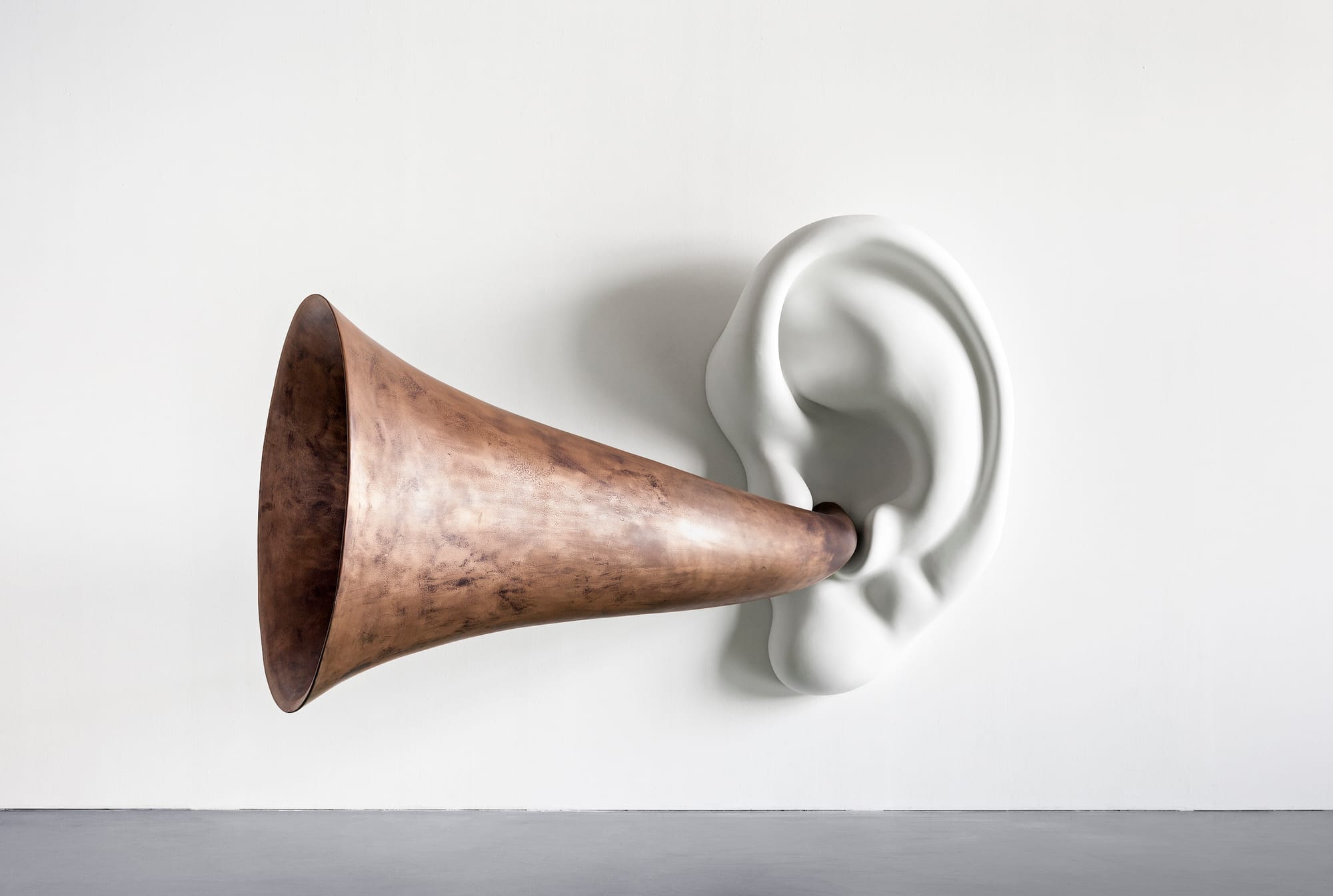
While John Baldessari is perhaps best known for paintings and prints featuring provocative, playful, and confounding juxtapositions of image and text, he has also quietly worked on three-dimensional pieces since the 1980s. This exhibition, simply titled Sculptures, highlights the breadth of this overlooked component of his practice, including bas-relief paintings, patterned wallpapers, and comically oversized body parts — ears, noses, and brains — that inject surreal slapstick into the dry humor of his conceptual investigations.