10 Photo Books to Read This Month
Hal Fischer’s archive of queer fashion, Sophie Rivera’s portraits of Nuyorican communities, Rania Matar’s love letter to Lebanon, and more new titles to check out from photo book publishers.

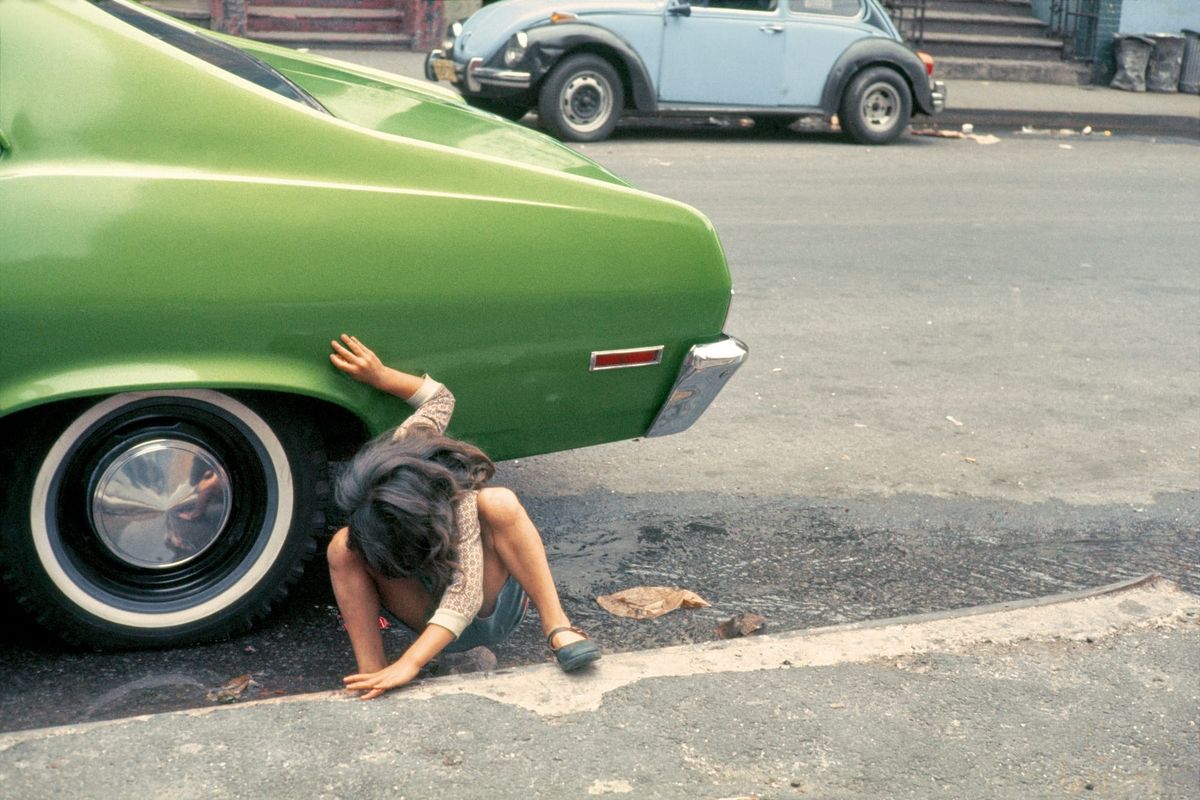
In 1976, Helen Levitt photographed a child balancing between a lime-green car and the sidewalk curb above a stream of runoff in New York City, her birthplace and the subject of most of her six-decade career. Levitt's practice encapsulated the quiet politics and visual poetry that photography can offer us. The recent news of Steidl Verlag's close call with bankruptcy throws into vivid relief the importance of independent photo book publishers, and our editors and critics have several suggestions for anyone looking for a place to start. Choose your own adventure: Walter Chandoha's endearing photos of family felines, Hal Fischer's archive of queer fashion, Sophie Rivera's portraits of Nuyorican communities, and more. While you're at it, show some love to the indie photo book publishers like TBW Books, Kris Graves Projects, and others hard at work to support the artists and storytellers transforming our worldviews with their cameras. —Lakshmi Rivera Amin, associate editor
Family Cats: From the Archive 1949–1962 by Walter Chandoha | Damiani, June 2026

“Cats! They drive you crazy and they blind you with love,” writes fashion icon and former Vogue visionary Grace Coddington in her foreword for Family Cats, a bite-sized new book of Walter Chandoha’s kitten photographs. Chandoha, a combat photographer overseas during the Second World War, trained his lens on the feline subject upon his return to the US, where he would produce a staggering 90,000 images of cats — which sounds impressive until you see my iPhone photo library. Unsurprisingly, the “One Cat Photographer to Rule Them All” crafted some truly fantastic portraits of kittens, whose tiny paws and endearing awkwardness fill the pages of this publication. —Valentina Di Liscia, senior editor
Sophie Rivera: Double Exposures, edited by Susanna V Temkin | Aperture, July 2026
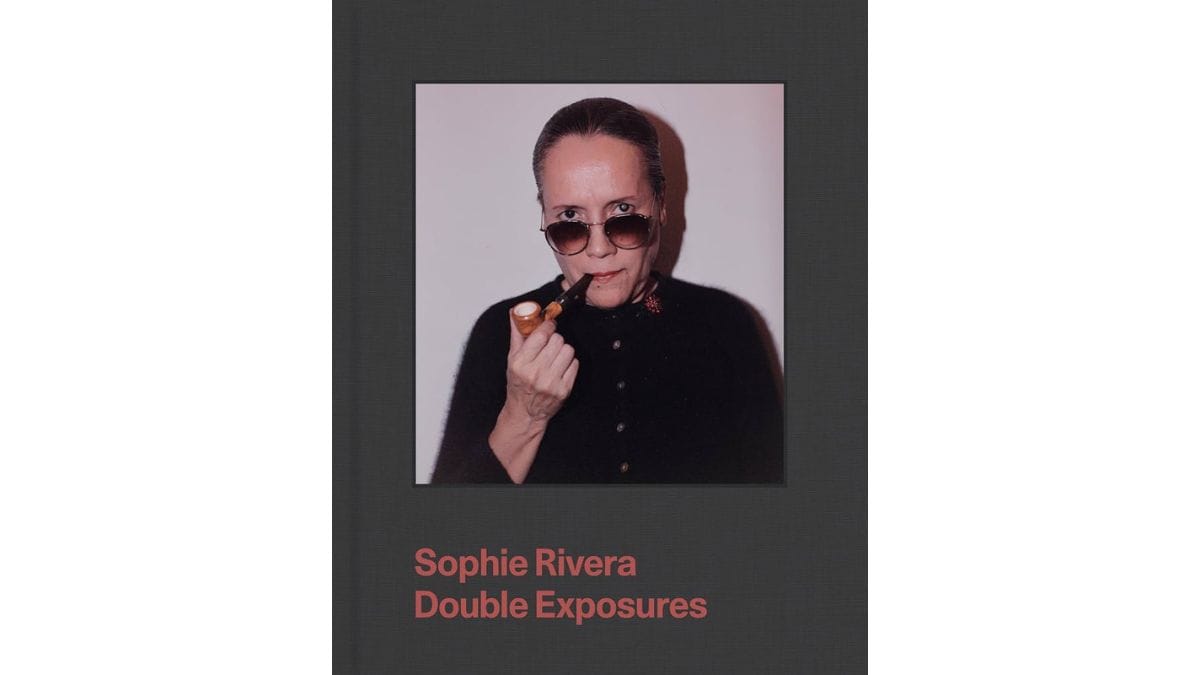
Take a look at Sophie Rivera’s self-portrait peering over her sunglasses, pipe between pursed lips, and tell me you don’t want to know more. The born-and-raised Nuyorican artist, who passed away in 2021, made photographic portraits of people in her community; a retrospective of her work at El Museo del Barrio closed mere days ago. But the show lives on in the accompanying catalog, in which curators and scholars like Susanna Temkin and Elizabeth Sherman deepen a viewer’s understanding of her relationship to disability, feminism, and her Puerto Rican identity — interspliced by gorgeous plates of her work. —Lisa Yin Zhang, associate editor
Read Julia Curl’s review of the exhibition
Rania Matar: Where Do I Go? | Kaph Books and the Eskenazi Museum of Art, April 2026
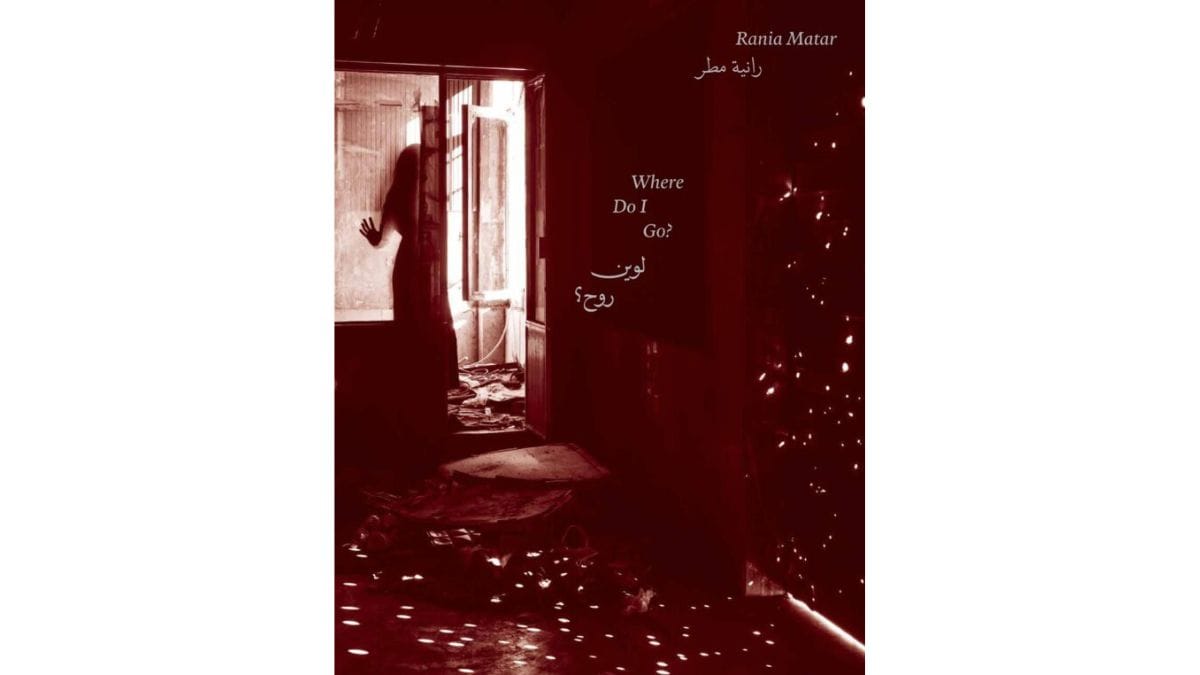
Using the lingua franca of social media images, artist Rania Matar threads the presence of beautiful women with the ruins of a place she loves deeply: Lebanon. Sometimes the figures appear to collapse from exhaustion or look at us with questioning glances; the photographs never settle into a lull that allows us the privilege of ignoring their power. This book accompanies her recently closed exhibition that was mounted at the University of Indiana’s Sidney and Lois Eskenazi Museum of Art that focused on young Lebanese women and how they reimagined a country that has faced the toll of war, disasters, and governmental collapse for over 50 years. —Hrag Vartanian, editor-at-large
Silent Springs by Michele Borzoni and Rocco Rorandelli | Loose Joints Publishing, July 2026
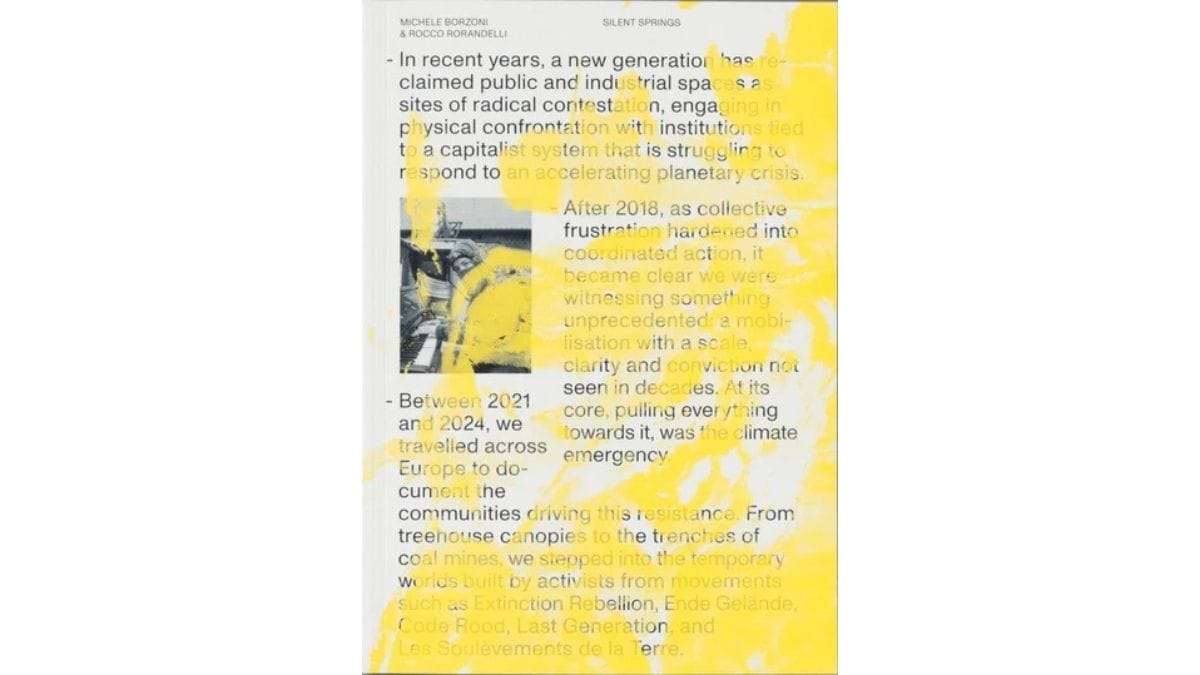
As much of Europe marks its hottest summer on record, and heatwaves and wildfires there continue to claim thousands of lives, a new book documents the people combatting climate change and environmental destruction. Silent Springs — whose title pays tribute to American scientist and author Rachel Carson’s groundbreaking and controversial 1962 book — opens with a glossary of words related to climate activism. Terms like "eco-anxiety," "repression," and "uprising" come starkly to life in Michele Borzoni and Rocco Rorandelli’s sharply focused photos from 2021 to 2024 of the encampments, actions, and rallies of resistance groups like Extinction Rebellion, Ende Gelände, and Last Generation. Across agricultural fields, mining sites, highways, and schools across Europe, these pictures present passionate people — many of them strikingly young — who leave their phones (and any forms of ID) behind, bravely marching and militating against corporations, governmental institutions, and police in the sun and snow. At a time when so many of us feel paralyzed about the Earth's future climate and its implications, this book offers a heartening vision of hope. —Lauren Moya Ford
Helen Levitt, edited by Joshua Chuang | Thames & Hudson, May 2026
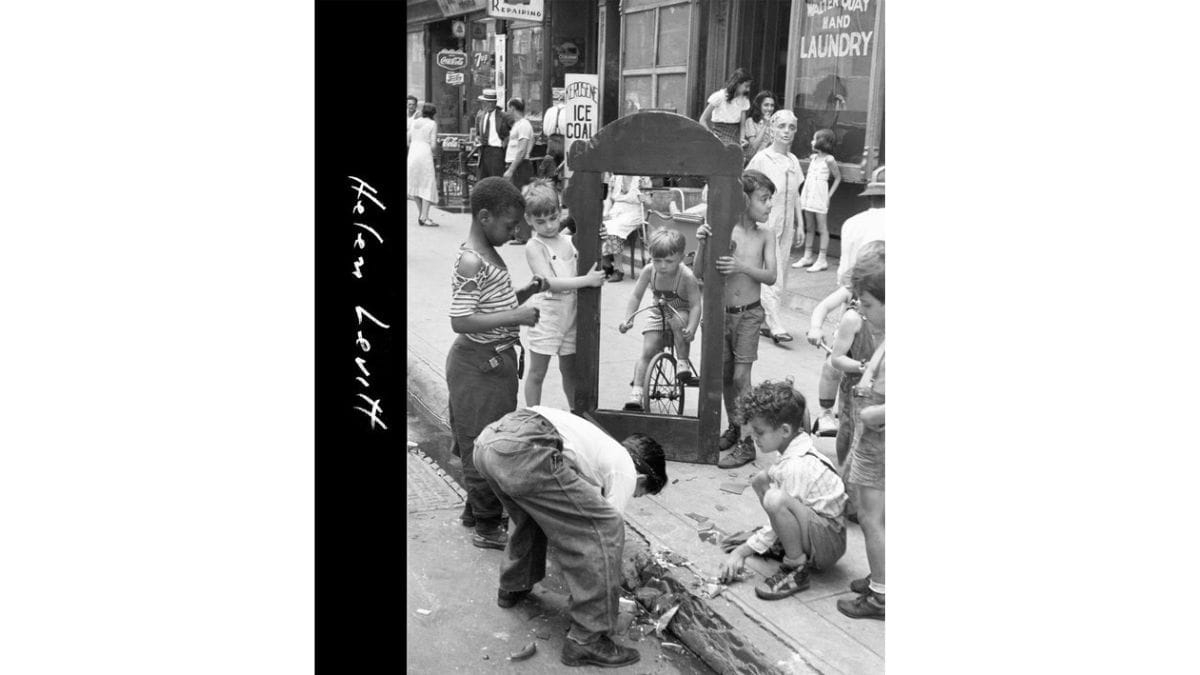
"Though Levitt is perhaps best known for her photographs of children’s chalk drawings in the 1930s, they comprise only a fraction of her six-decade practice, whose emotional complexity and formal innovation continue to captivate. The comprehensive book Helen Levitt, edited by Joshua Chuang, draws from the breadth of her output with rarely seen images and scholarly essays that focus on her early expeditions with a Leica, 1941 trip to Mexico, experiments with color photography, two series taken in the New York subway, and final photographs from the 1980s." —Natalie Weis
Social Season by Miranda Barnes | MACK, January 2026
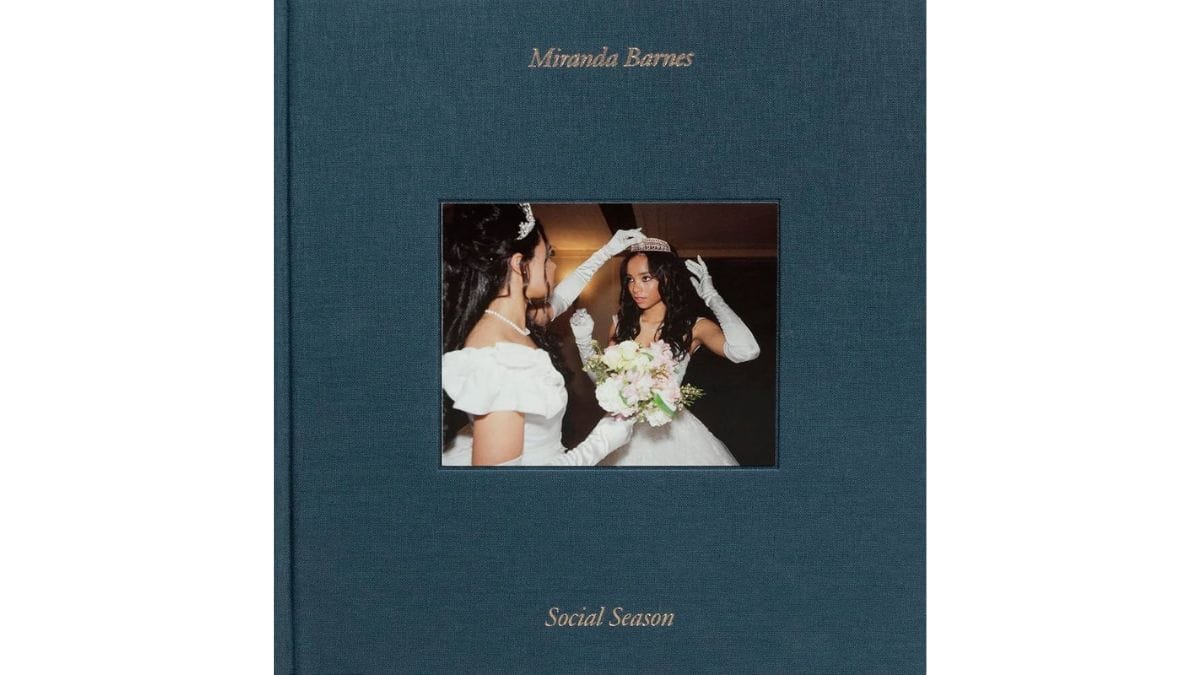
Miranda Barnes has been working between documentary and commercial photography for a better part of the decade. Social Season, Barnes’s debut monograph, covers Black debutante balls she photographed in Detroit between 2022 and 2025. Debutante balls have their origins in European nobility and were later appropriated by African Americans during Emancipation as a celebration of cultural pride and dignity. Barnes’s photographs skew the visual binary of celebrating or critiquing notions of Black respectability and class that have now become synonymous with Black debutante balls. She offers a caring and candid window into the small moments of Black life that center on waiting, meditating, and preparing for one's moment in the spotlight, highlighting how debutante balls create community and showcase youth sartorial expression. —Imani Williford
L is for Look: Children's Photobooks, edited by Anne Lacoste and Rose Durr | Spector Books, May 2026
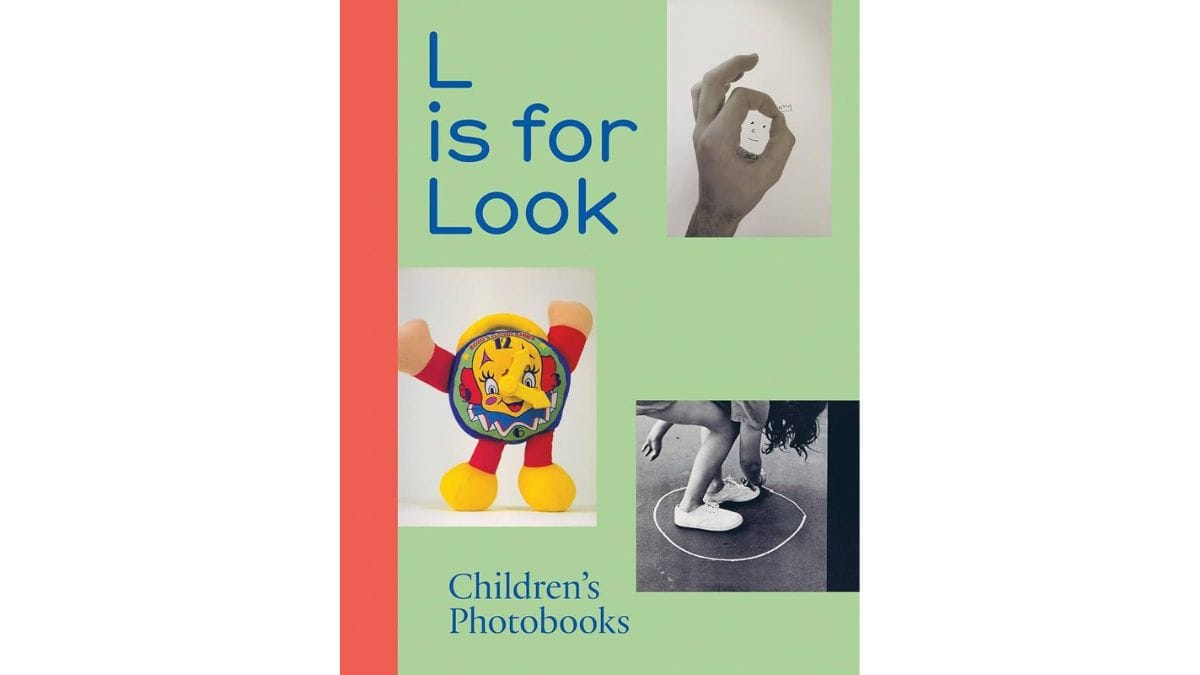
While picture books have long been understood as tools that help children build visual literacy, L is for Look explores the less-trodden yet equally delightful territory of photo books designed with young audiences in mind. The catalog weaves together the genre’s roots in early-20th-century pedagogy with later avant-garde experiments in graphic design, all while foregrounding the centrality of women artists and teachers, like Tana Hoban and Mary Steichen Calderone, in shaping the field. What’s exciting here are the ways these books toy with photography’s claims to veracity, geared toward readers who are nascent participants in the project of making sense of the world around them and their place within it. Playful crops, dynamic layouts, and photomontages and tableaus aren’t intended to deceive or persuade, but rather to catalyze that corner of the imagination that bubbles in the space between fiction and reality. —Nanase Shirokawa
Hal Fischer: Seminal Works | Aperture, February 2026
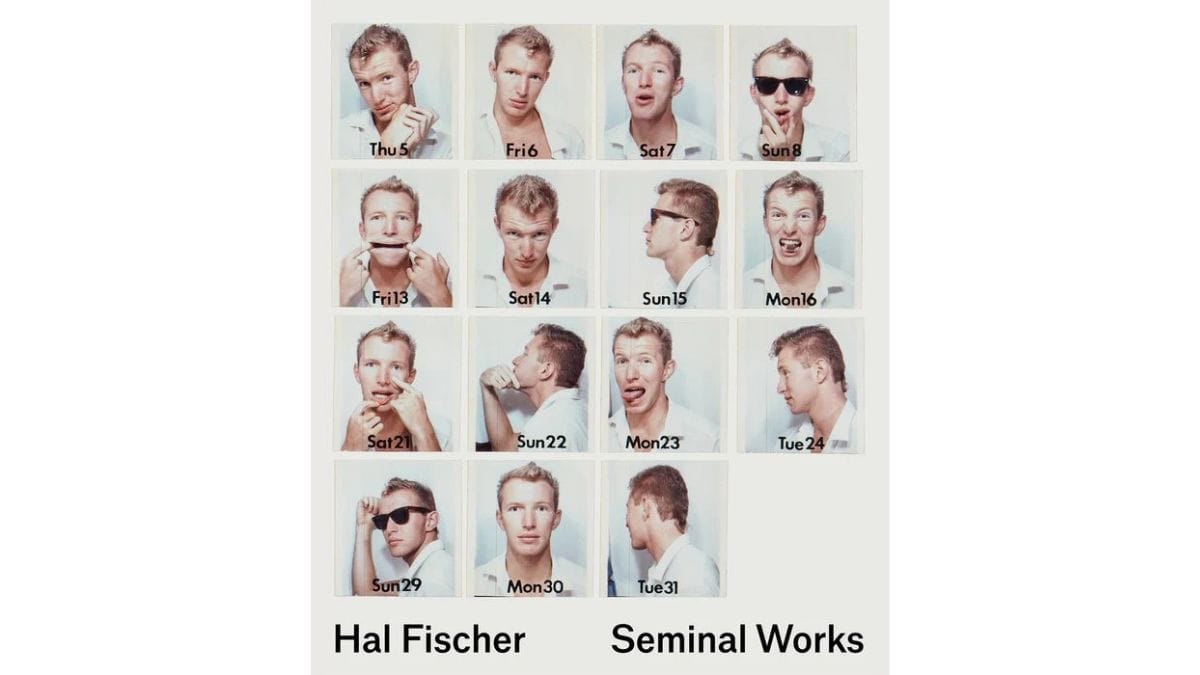
Photographer Hal Fischer’s work is often about clothes and the codes embedded in gay fashion in the 1970s. Fischer explains the appeal of the cowboy archetype and the color-coding of bandanas; in one hilariously deadpan text, he writes: “Handkerchiefs are also employed in the treatment of nasal discharge and in some cases may have no significance in regard to sexual contact.” Fischer’s writing also informs 18th Near Castro St. x 24, a series of photos in which he took a photo of the same bus stop from the same position every hour for a full day. His descriptions of what he did for the hour between each snapshot bring the story of the artist and the space surrounding the photograph into the picture. It’s important, exquisite, perfect. —Nathan Gelgud
CPW Upstate Photography Biennial | 1080PRESS, June 2026
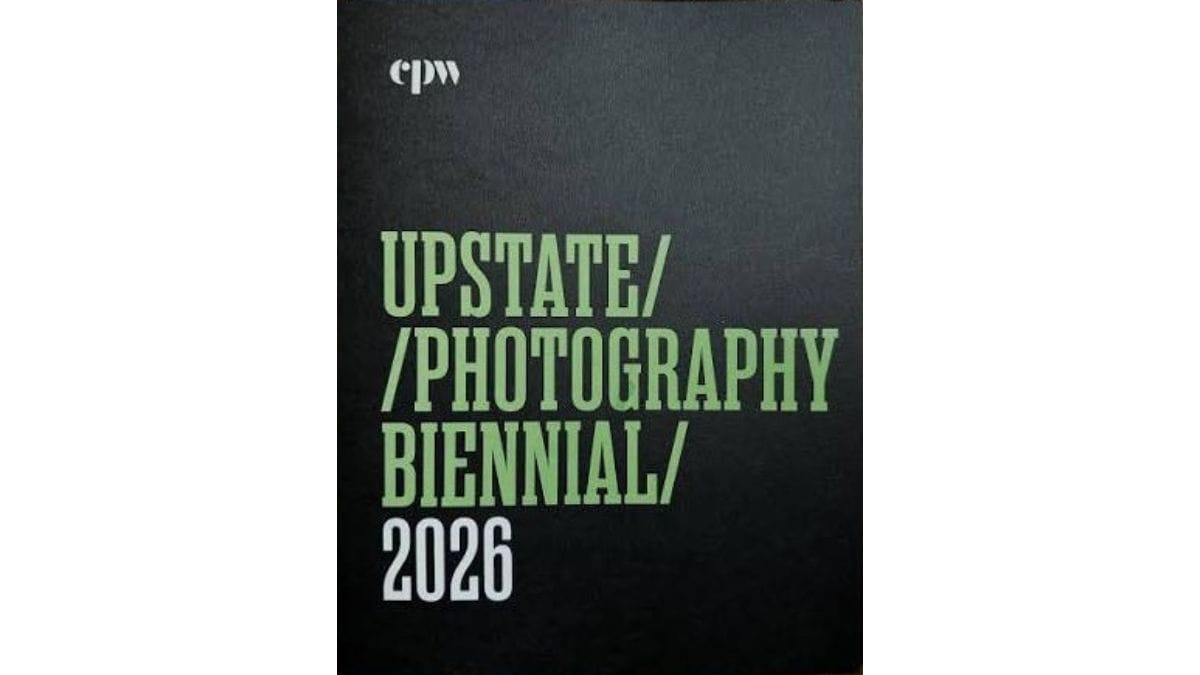
“The memory of a society extends as far as the memory of the groups composing it,” noted sociologist Maurice Halbwachs in 1950. “It is constantly transformed along with the group itself.” This ever-evolving idea of collective identity describes the nearly 40 artists in the inaugural Upstate Photography Biennial in Kingston, New York. Unbound by theme and even medium, Center for Photography at Woodstock curators Adam Ryan and Marina Chao selected artists based on what it means to make photo-based work in this moment. The resulting exhibition catalog is not a survey of photographers in the orbit of New York City, but a careful reflection on the strength in the adaptability of community — artistic and otherwise. —Frances Cathryn
Dead Letter Room, by Allie Tsubota, translations by Art Translators Collective | The Eriskay Connection, February 2026
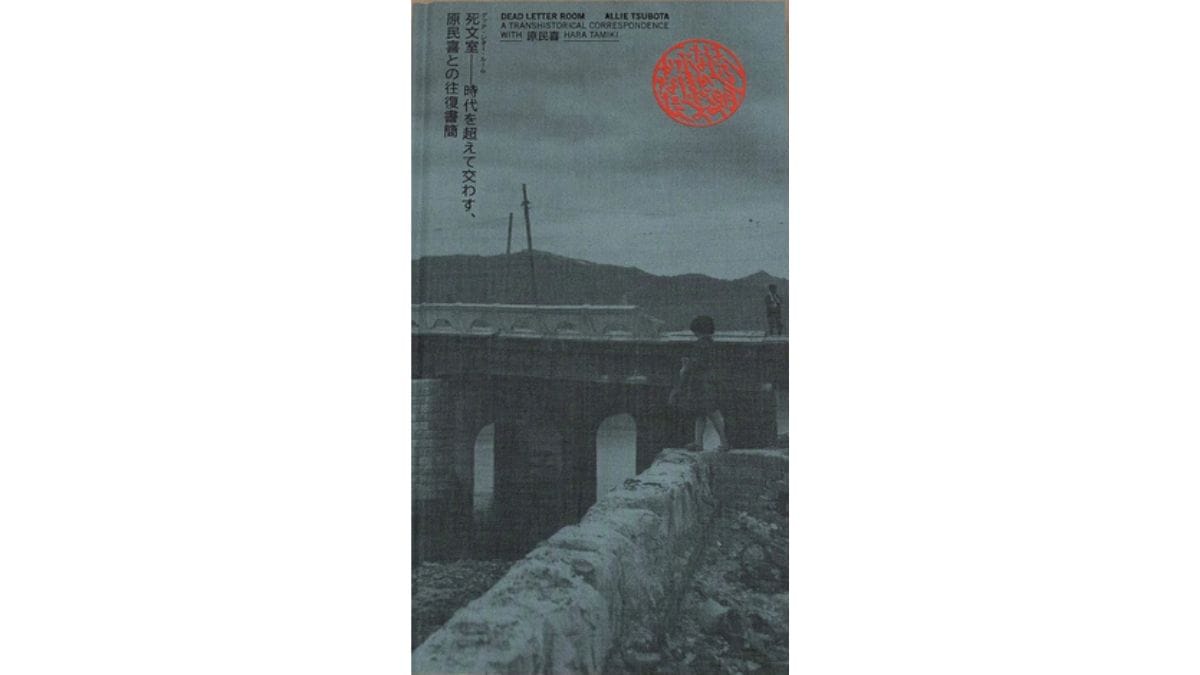
Dead Letter Room, the first book of photography and writings by Allie Tsubota, is based on a series of the same name that the artist developed in 2022. It follows a fictionalized correspondence across time and place between Tsubota and 20th-century Japanese poet Hara Tamiki, who recounts his experiences of surviving the bombing of Hiroshima and the reverberations of mechanized warfare in what would become known as the Atomic Age. Alongside these speculative texts, Tsubota stages another dialogue between archival photographs collected by the United States Strategic Bombing Survey in Occupied Japan in 1945 and her own documentation of contemporary life there. Spanning nearly 120 years, the scope of this project is broad, but Tsubota’s ability to focus on details that ground the viewer in the humanity of an imperial archive offer us a guide to navigating militarized violence as it operates today. —Frances Cathryn