The Story of Surrealism Isn’t Whole Without Gala Dalí
In Surreal, Michèle Gerber Klein asks us to confront the unjust eclipse of Gala’s legacy by that of her husband, Salvador, whose career she brought to fruition.

In his 1922 painting “Rendez-vous of Friends,” now a staple of 20th-century art history textbooks, Max Ernst depicted the Surrealist circle and its influences with only one woman in its midst: Gala Dalí, known then as Gala Éluard. Her inclusion is an indication of how fundamental she is to the history of the period. Despite being relegated by dismissively misogynistic language (Tim McGirk named his 1989 biography of her Wicked Lady), she is a historical lynchpin, a fundamental connector.
In Surreal: The Extraordinary Life of Gala Dalí, author Michèle Gerber Klein doesn’t argue for her place in history but merely presents the facts, leaving us no choice but to conclude how absurd it is that Gala’s name is not as well known as that of her husband of nearly five decades, Salvador Dalí, something the artist himself would likely have never considered. He credited her publicly at every juncture and even signed some of his canvases, like “Dream Caused by the Flight of a Bee Around a Pomegranate a Second Before Awakening” (1944), with both their names.
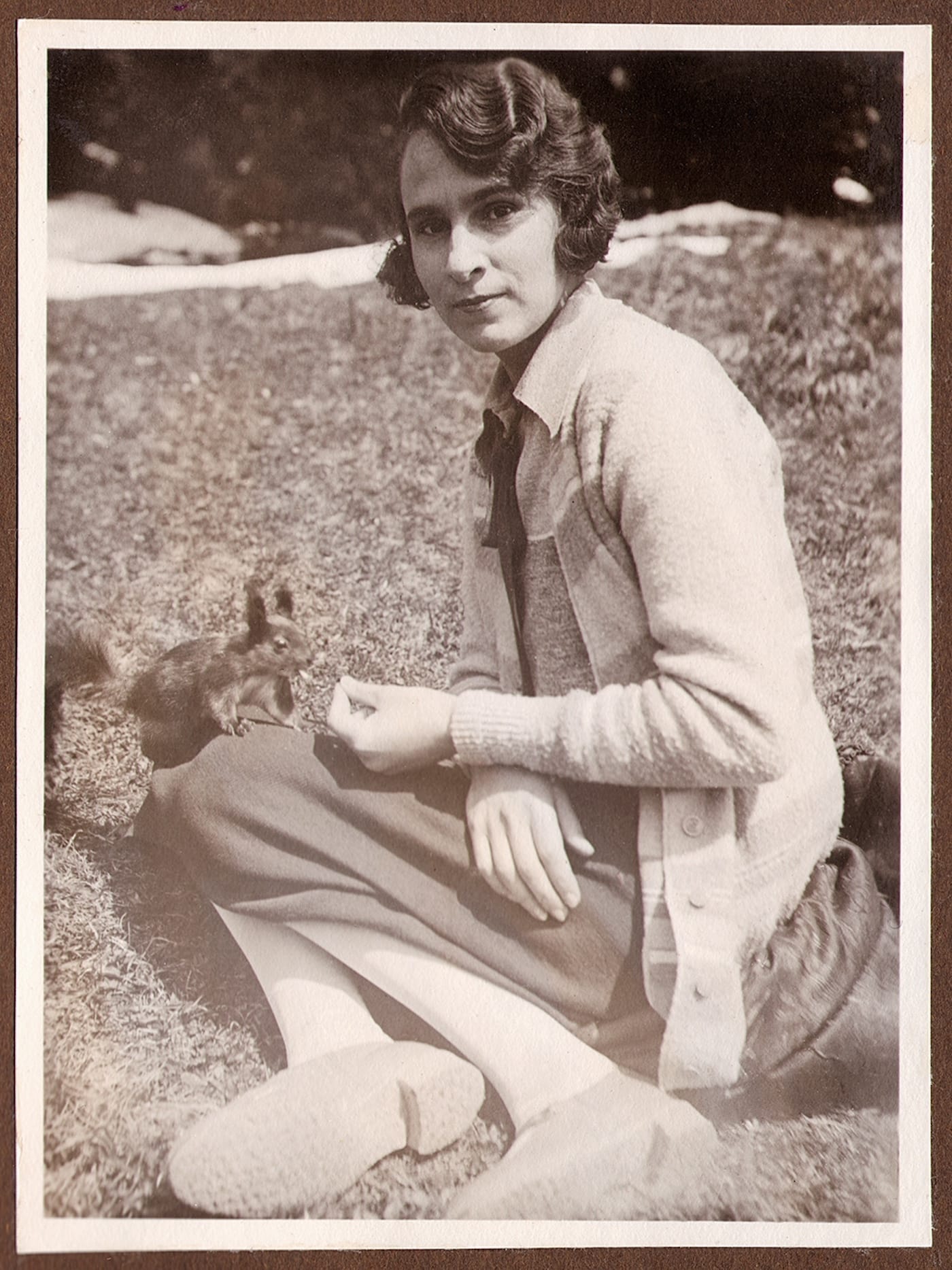
Gala’s centrality earned her the moniker “the Mother of Surrealism,” as she witnessed the movement practically from its inception. Though she spent her early years in Russia, a bout of tuberculosis as a teenager brought her to a sanatorium in Switzerland, where she fell in love with the young French writer Paul Éluard. They soon married and moved to France, where Paul became fast friends with André Breton and the burgeoning Surrealist circle. She left her husband and daughter after falling in love with Salvador Dalí in 1929 during a trip to Spain, quickly becoming a driving force behind marketing and selling his work. Her influence on other artists and writers most closely associated with the movement was immense: Éluard wrote pages of poetry about her, André Breton modeled the main character in his 1928 novel Nadja after her, René Char dedicated a book to her, and Yves Tanguy was a witness at her second wedding.
However, the book’s title contradicts the character that Gerber Klein diligently constructs. She describes Gala as a woman whose intelligence, elegance, and shrewd strength were noted by almost all who met her. While Salvador is characterized as eccentric, embodying Surrealism by showing up variously dressed in capes, adorned with his own canvases, and even in a diver’s suit, it is Gala who chooses what he wears and who appears at his side impeccably dressed, most often in a Chanel suit. (She was buried in Dior.) In the eyes of an acquaintance, she was “hard,” a “soldier,” while another called her “intrepid,” Salvador’s “rock.” “Surreal” seems an ill-fitting label for the figure who represented the “de facto commercial side of Dalí’s practice” and frames the book as if it were a story of Gala as a muse rather than an agent, manager, and marketer.