15 Fall Art -Ennials, From St. Louis to Dakar
A photography show dedicated to NYC in the nighttime, an Indigenous-led arts festival honoring the Mississippi River, the first-ever Bienal de Yucatán, and more biennials and triennials to visit across the world.


The 61st Venice Biennale is on view through late November, but fall is a time of beginnings, so it is only fitting that many other biennials and triennials opening across the world this season offer their own fresh starts.
In a new triennial at the Walker Art Center in Minneapolis, design is wrested from its typical associations with materialism. A new biennial in Mérida in Mexico's Yucatán Peninsula features 75 artists who work with the word and idiom in pursuit of new fabulations. The days may get shorter in autumn, but as evidenced at this year's photography edition of the Museum of the City of New York Triennial, the night shift proffers its own forms of vitality. Inspired by sci-fi author Ursula K. Le Guin's writings, the Converge 45 Triennial in Portland considers the new communities and discourses that form in the presence of art. Artists at the Toronto and Lyon Biennales work with migration, rupture, and extraction to not only transcribe tragic histories, but to chart speculative futures. And at this year's Alexandria Biennale, which returns to Egypt after a 12-year hiatus, we're reminded of the importance of resilience and protest amid today's global turmoil and permacrises, because This Too Shall Pass. — Phillip Pyle, associate editor
Walker Design Triennial: Beyond Materialism
Walker Art Center, Minneapolis, Minnesota
Oct. 17–Feb. 14, 2027

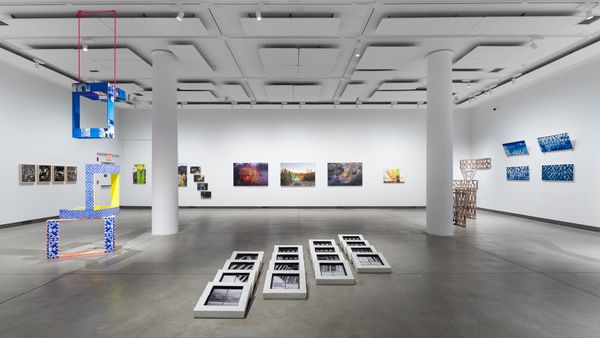
In the age of polyester, fast fashion, and TikTok Shop dupes, it’s difficult to remember that design exists for anything besides consumption. The inaugural Walker Design Triennial moves away from materialism and a post-industrial model of profit optimization, examining a recent shift towards spiritual cultivation in design. Across 95 works from an international array of artists and collectives, the exhibition examines how design can engage social issues, instead of exacerbating them.
Bienal de Yucatán: Vocal
Across various locations in Mérida, Mexico
Nov. 26–Feb. 28, 2027
Yoko Ono, Teresa Margolles, Rirkrit Tiravanija, Oscar Murillo, and Jean-Luc Moulène are among the 75 artists participating in the inaugural Yucatán Biennial. Held in multiple venues across Mérida, a city known for its enduring Mayan heritage, the first edition of the exhibition is themed around language and idiom. International artists will work alongside local creators to explore how language traverses different territories, artistic processes, and disciplines.
Museum of the City of New York Triennial: The Photography Triennial: After Dark
Museum of the City of New York, East Harlem, Manhattan
Nov. 20–April 25, 2027

The second installment of MCNY's photography-centered triennial, which kicked off in 2023, this show will explore how New York City’s culture reaches new heights as the sky dims. Nightlife, the night shift, and the midnight munchies unfold in unison as the sun sets above the five boroughs, as documented by photographers including Elle Pérez, Tommy Kha, Saint Piñero, Dina Litovsky, Mahka Eslami, Liz Deschenes, D’Angelo Lovell Williams, and Kia LaBeija.
Gwangju Biennale: You Must Change Your Life
Gwangju Biennale Exhibition Hall, Gwangju, South Korea
Through November 15
“You must change your life” — the final line of Rainer Maria Rilke’s 1908 poem “Archaic Torso of Apollo” — is at once an open-ended declaration and a blunt call for transformation. Channeling that existential command through its title, the 16th Gwangju Biennale situates contemporary works, including deconstructed club rooms and webpage collages, in relation to art’s capacity to reflect change. 43 artists and groups explore change as an aesthetic phenomenon, a scalar metric, and a channel for transcending the self.
Toronto Biennial of Art: Things Fall Apart
Across various locations in Toronto, Canada
Sept. 26–Dec. 20

Central to the Toronto Biennial’s fourth edition is the notion of rupture, namely through the avenues of migration and diaspora, waterways and borders, genocide and ecological justice, and speculative science fiction. Coco Fusco, Dawoud Bey, Kent Monkman, Skawennati, Dala Nasser, Wen Liu, and Simranpreet Anand are among the artists who look at disruption and its consequences as tools for transcribing history and unpacking the future.