A Coming-of-Age Tale Set Amid Miami’s Delicate Ecology
MIAMI — There is a wordy, massive disclaimer at the beginning of director Terence Nance’s recent short film, “Swimming in Your Skin Again.”


MIAMI — There is a wordy, massive disclaimer at the beginning of director Terence Nance’s recent short film, “Swimming in Your Skin Again”: “This film is not promotional, representative, or reflective of any existing religious or cultural practice,” says a woman’s voice, “including but not limited to Santería, Candomblé, Vodou, Catholicism, Christianity …” She goes on, the list stretching to include the Church of Bey and quantum mechanics, each accompanied by a sketched drawing, until she explains, “This film is sound and images juxtaposed, and means nothing.” Then we are immersed in water, out of the realm of sketches and into the juxtaposition of which our temporary narrator speaks. Though the remaining 20 minutes of the film traipses into beautiful, cosmic unknowns, none of it is meaningless.
Terence Nance premiered An Oversimplification of Her Beauty at Sundance in 2012, to much acclaim. The feature — a glimmering prism into the life of a man pondering the nature of relationships, time, and the ways they intersect — is told through a multitude of lenses, among them video, cartoons, and stop-motion animation. It was funny and moving and necessary, both as a reminder that young black filmmakers aren’t an emerging trend but have always been here, and that experimental filmmaking can be accessible, even relatable. Though Nance hasn’t yet directed another full-length, all that he’s created since, whether politically charged and pertinent (“Blackout: John Burris Speaks”) or idyllic (his video for Cody Chesnutt’s “Till I Met Thee”), toy with elements of the sublime. Swimming in Your Skin Again, a moving and magical realist poem, is no different.
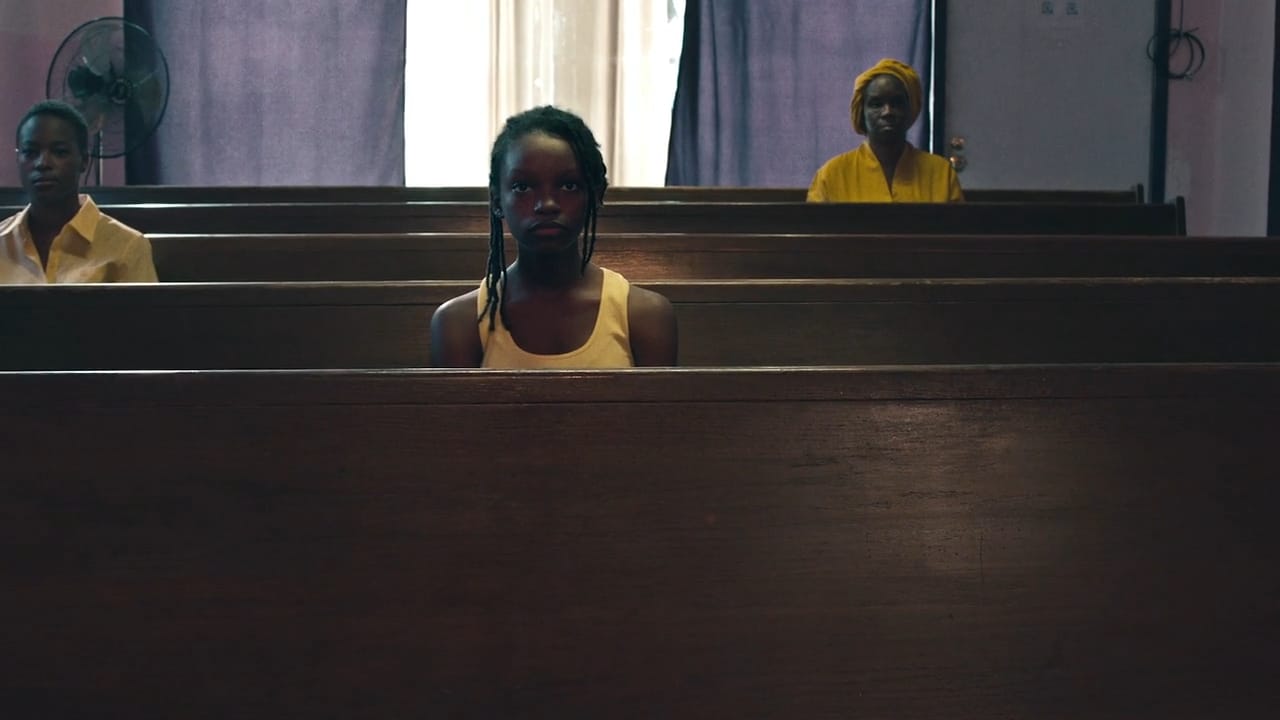
Produced by Miami film and multimedia collective Borscht Corp., the film was written in collaboration with Nance’s younger brother, Norvis Jr., an artist and musician whose song lyrics lent the movie its title. He is also our protagonist, if we are to pick a human protagonist rather than a thematic one (motherhood or water might be other choices). In an opening scene, we find him in yellow, typing the aforementioned song. Later, we find him in the woods, at church, underwater, often accompanied by a young girl; each person we meet along the way feels like a ghostly apparition.
The film itself is like a song, punctuated by dance, poetry, and the movement of the sea. Though the symbiosis between motherhood and the ocean is not immediately explicit, the symbolic connection between water and the womb, between nature and family, seems ingrained. In one scene, a group of young boys walk through a lush tropical clearing, reciting rhymes into megaphones, speaking of their birth and the cosmos. They come upon an older woman who shushes them, calls them to her, places yellow-paint handprints on their backs as a second woman in white assists. The handprints disappear as they follow her through the verdant flora, then leave the woods, wandering over fences and into the streets, alone in a new sort of wilderness. In another moment, Norvis dives into a pool as we hear a telephone conversation between a mother and her son. Both the divide between them and the mother’s unwavering love are clear: “How’s your day been?” she asks. “Fucked up, the usual.” Her reply: “That happens, too,” she says. “Then you just have to keep on moving, keep on trucking … One foot in front of the other. What’s the weather like?”

These days, it is hard to discuss Miami, the film’s location, without mentioning its potential demise — another explanation for “Swimming in Your Skin Again”’s perpetual references to the sea. Says Nance:
When I got there, a few people mentioned to me that the city was sinking and that it would be uninhabitable within the century. I also heard that Miami Beach, at least, was a kind of conquistador-constructed intervention into the ocean and the current situation regarding sinking is at least in part due to the fact that these urban planners came through with their hubris thinking they could beat Mother Nature. So I’m sure that kind of just got in my head when I was writing it in Miami, knowing that it was ecologically temporal.
One interlude features a child dancing not just to music but also to radio clips commenting on Miami’s sad, potential dissolution.
There is a kind of mysticism here: we leave the womb, but remain somehow attached; pushing ourselves (and our cities) too hard and insensitively, we reenter a different kind of aquatic fate. So says our narrator to the girl beside him: “I don’t think we should go too far away from the pool … Because that’s where she lives. You know, the one who lives in the water.” “Man, she don’t live in the pool,” replies the girl. “She’s in the ocean.” Earlier, alone, she stands at the podium in a mostly empty church, and announces to us: “The child in each of us knows paradise. Paradise is home, home as it was or home as it should have been … yet each child is cast from paradise, into growth and destruction, into solitude and new community, into vast, ongoing change.”
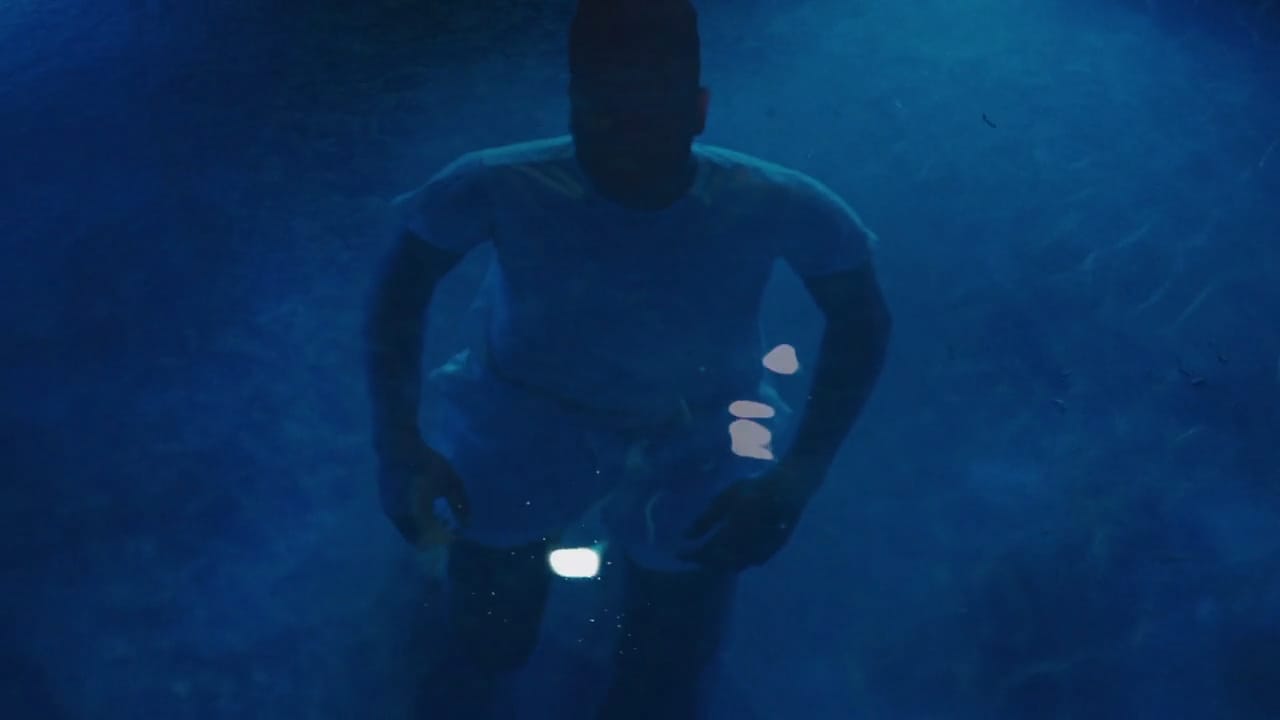
We all know the intimate experience of watching something precious and deeply known to you become washed away with time, or of learning to step out of the water and make your own footprints. This might account for the film’s naturalism, its ease. Even in its dreamlike roaming, it is intuitive and connective — like breathing or like birth.
Swimming in Your Skin Again is screening at the Sundance Film Festival through January 31 and online at NOWNESS.