60% of Sudan’s National Museum Looted, Report Says
The destruction of cultural heritage in the war-torn nation threatens to distort the past and present beyond recognition, fracturing Sudan’s future.

In the last three years, the deadly civil war tearing through Sudan has not only decimated its population but also destabilized the nation's culture, history, and identity. On top of the more than 150,000 people killed and millions displaced, the looting and destruction of cultural heritage objects, artifacts, archaeological sites, and museums threatens to distort the past and present beyond recognition, fracturing Sudan’s future.
Earlier this week, NBC News reported that over 60% of the Sudan National Museum's holdings had been looted in the two years that the paramilitary Rapid Support Forces (RSF) had control over the capital city of Khartoum. That statistic came from Ghalia Jar Al-Nabi, director of the General Authority for Antiquities and Museums, who told NBC that the plundered works “are not merely inanimate objects, but represent a people’s history and a nation’s entity.”
The museum building itself is still standing, a relief considering reports that the Nyala Museum in South Darfur had not only been looted, but also repurposed as a military base, and the Sultan Ali Dinar Palace museum in Al Fashir was destroyed entirely.
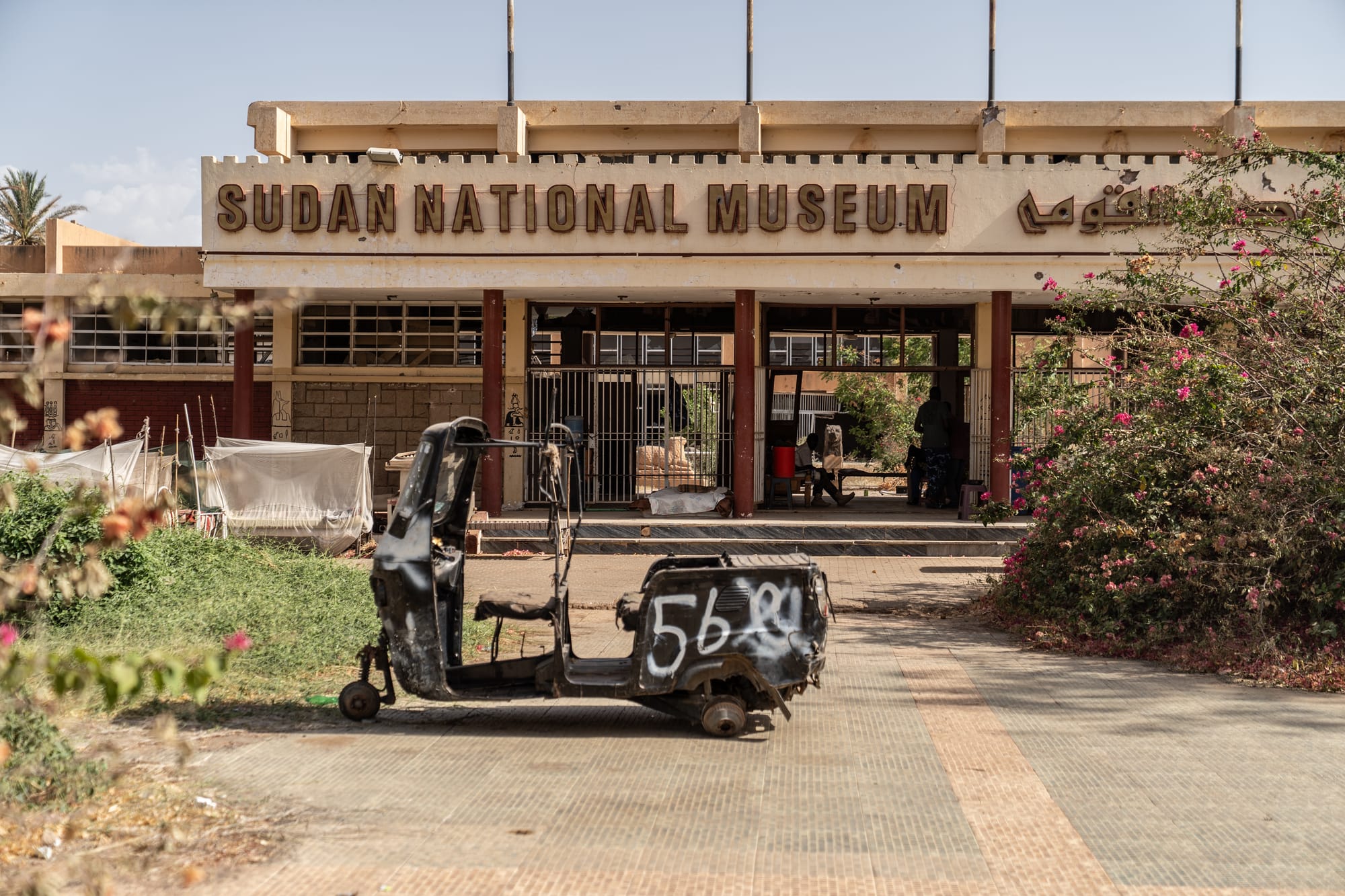
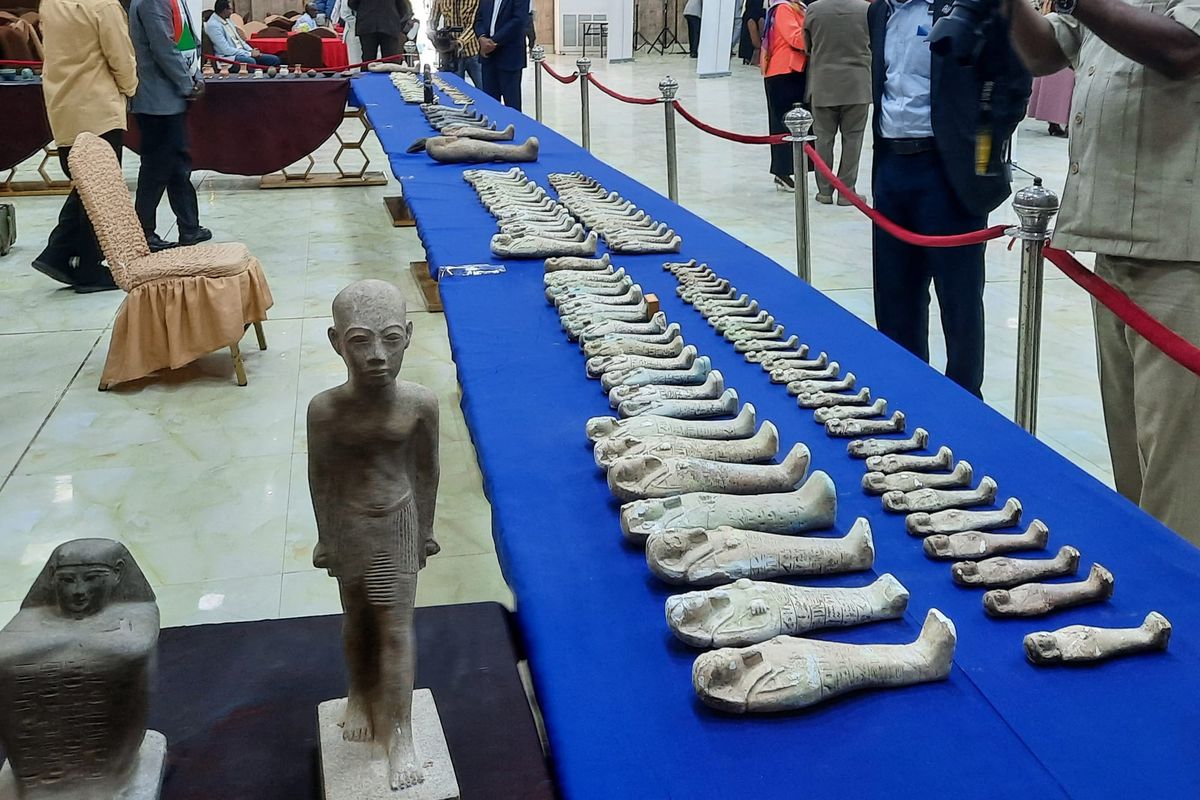
By September 2024, the National Museum reported that tens of thousands of antiquities had been looted from its collection of 150,000 objects — several of which had been put up on eBay for hundreds of dollars.
In an interview with Hyperallergic, Geoff Emberling, an associate research scientist at the University of Michigan's Kelsey Museum of Archaeology, explained that the militia deliberately targeted “high-value portable objects.”
“For example, ceramic vessels which constitute some of the most beautiful and important records of ancient Sudanese civilization were largely left behind, whereas gold and jewelry had been entirely cleared out [from the museum's storage areas],” Emberling said.
In addition to directing archaeological research on ancient Kush at the Jebel Barkal mesa, Emberling co-leads the Sudan Cultural Emergency Recovery Fund, a fundraising task force recruited by Sudan's National Corporation of Antiquities and Museums (NCAM) through which he liaises directly with the team on the ground at the National Museum. He clarified that before the war's outbreak in April 2023, the National Museum's exhibition halls were largely empty as the museum underwent a major renovation.
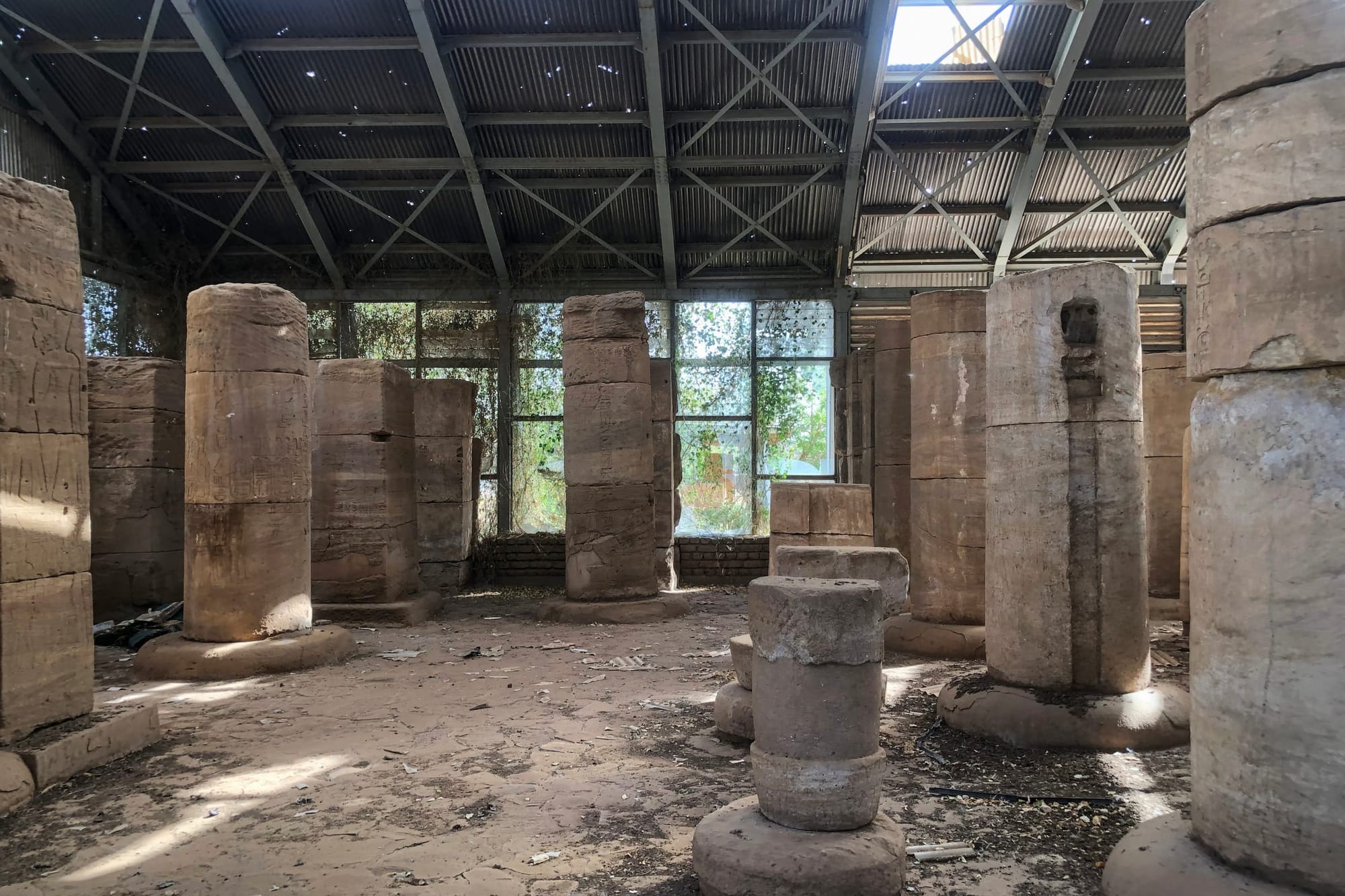
Most of his team’s efforts have been focused on work in Khartoum, where the security prospects are most stable, he said, referencing how the city has seen a return of over a million civilians in the last year after it had been recaptured from the RSF.
“There's a group of approximately 15 people on the ground who have been cleaning, doing emergency repairs, documenting losses, and trying to plan for restoration of whatever can be salvaged,” Emberling explained, adding that the gradual restoration of electricity and water services was ongoing in the area.
“The fact that they remain in the country and work to protect and maintain the sites and the museums, when some of them had opportunities to escape with their families, is an act of bravery, but it's also an act of love and care for their heritage,” Emberling said.
He also pointed to those doing the work to digitize and catalogue Sudan's cultural heritage objects, historical records, and artifacts to make them permanently available and accessible — namely the Sudan Virtual Museum, a virtual walkthrough of the National Museum that launched in January through NCAM and the French Archaeological Unit for Sudanese Antiquities.
Hyperallergic also reached out to NCAM curator Shadia Abdrabo, who is currently working to create a virtual database of stolen objects from the museum with research funding from the French National Institute for Art History.
Emberling acknowledged that only those who looted antiquities knew their whereabouts these days. It's worth noting that 570 looted antiquities were recovered and repatriated to Sudan in mid-January.
Describing how trade, cross-cultural exchange, and immigration have shaped the nation's social and cultural identity, NCAM archaeologist Habab Idriss Ahmed underscored in a 2024 opinion piece that “for thousands of years, Sudan has been a crossroads for the wider region.”
“Evidence of Sudan’s development and interactions has been preserved in tangible forms like monumental architecture, numerous archaeological remains and objects, and elaborate artworks,” she wrote. “Sudan's cultural heritage transcends national borders, resonating globally and enriching humanity's collective memory. The loss of any part of this heritage diminishes us all.”