7 New York Exhibitions That Embody Indigenous Survivance
In shows coinciding with Indigenous Peoples' Day, artists including Jeremy Dennis, Shelley Niro, and Sarah Sense chart Native history and futurity.
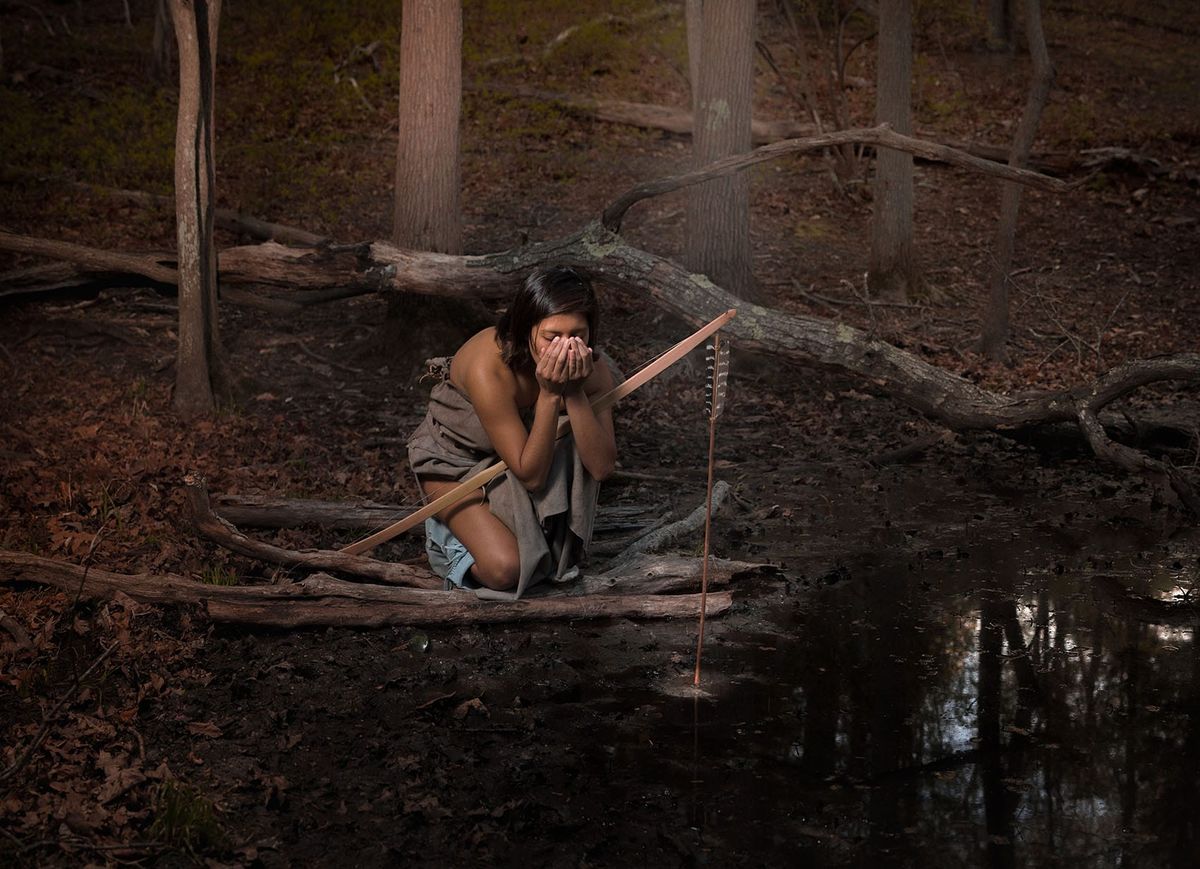
To commemorate Indigenous Peoples' Day here in New York, we have highlighted seven ongoing exhibitions of Native art and history in Manhattan, the Hessel Museum of Art at Bard College, and the Long Island Museum in Stony Brook. Across solo and group presentations, the featured artists, who represent a diverse tapestry of Indigenous populations across Turtle Island, embody survivance by tracing and rejecting narratives of dispossession and irrelevance, upending and satirizing stereotypes, preserving and reinventing traditional art forms, and bringing underrepresented histories out from the margins.
Some of these sites are closed in observance of the occasion, and some of you have not been afforded the three-day weekend commanding this period of reflection, so rest assured that the following programs will be available from the last week of October through next spring.
Cannupa Hanska Luger: American Traditional
Garth Greenan Gallery, 10 Greene Street, SoHo, Manhattan
Through Oct. 24
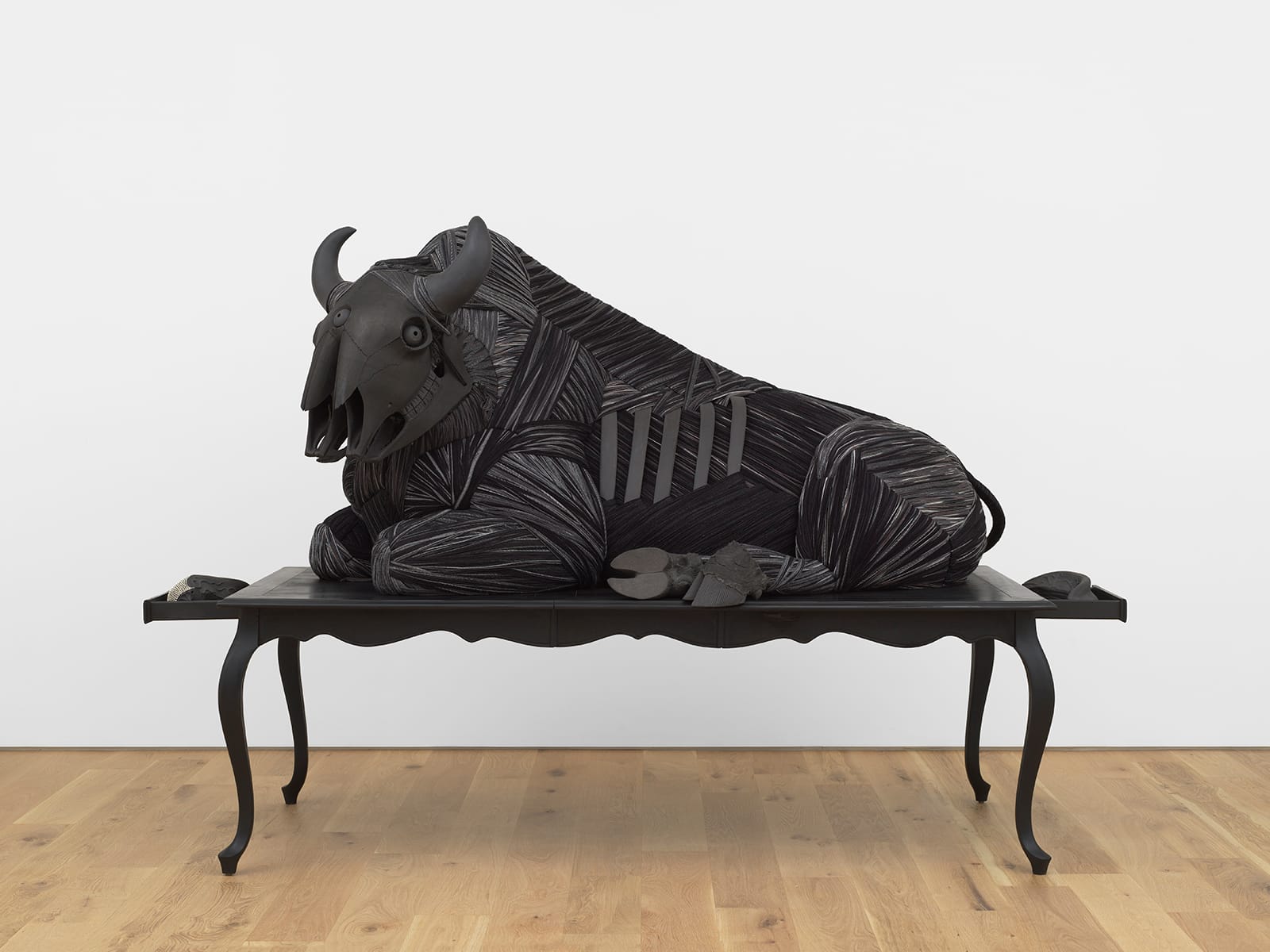
Inaugurating the gallery's new space, Cannupa Hanska Luger's (Mandan, Hidatsa, Arikara, and Lakota) American Traditional exchanges the artist's typically colorful verve for a series of uniform matte-black works born from ironstone clay, sumi ink, and direct flame. The titular work presents a striated sculpture of a skinned bison with a bifurcated skull sitting on a standard colonial-fashion dining table. Encoded in tautly wrapped yarn, this distortion manifests throughout Luger's wall hangings and pedestals of other animal skulls and carcasses, which are embellished with railroad spikes, Pulaski axes, and vintage “American Traditional” furniture associated with the westward settler expansion. Per the artist, the work emphasizes the “bizarre and horrific history of colonialism,” and the motifs of mutilation and mutation speak to the manipulation of collective memory in the retelling and neglect of certain perspectives.
Shelley Niro: In Her Lifetime
Hales Gallery, 547 West 20th Street, Chelsea, Manhattan
Through Oct. 31

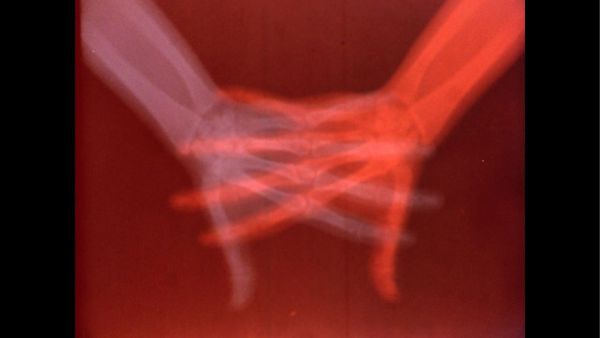
Turtle Clan of the Kanyen’kehá:ka (Mohawk) Nation artist and filmmaker Shelley Niro celebrates her second solo show with Hales New York in a tight selection of mixed-media photographic works spanning decades of her career. In Her Lifetime, which takes its name from Niro's 1992 black-and-white picture sequence of her sister with overlaid text, emphasizes the artist's use of humor and accessible references in her personal reflections on identity, nationhood, collective memory, and stereotypes through an Indigenous perspective. For this exhibition, Niro also reinterprets a variety of her iconic photos from the early 1990s, embellishing them with hand-painted elements and decorative patterns that, in the context of Indigenous womanhood, add a certain cheeky assertiveness to her family portrayals.