A Homerist Reacts to Christopher Nolan’s “The Odyssey”
“This is a tale of a man affected by trauma, but without any sense that it changed him at all.”

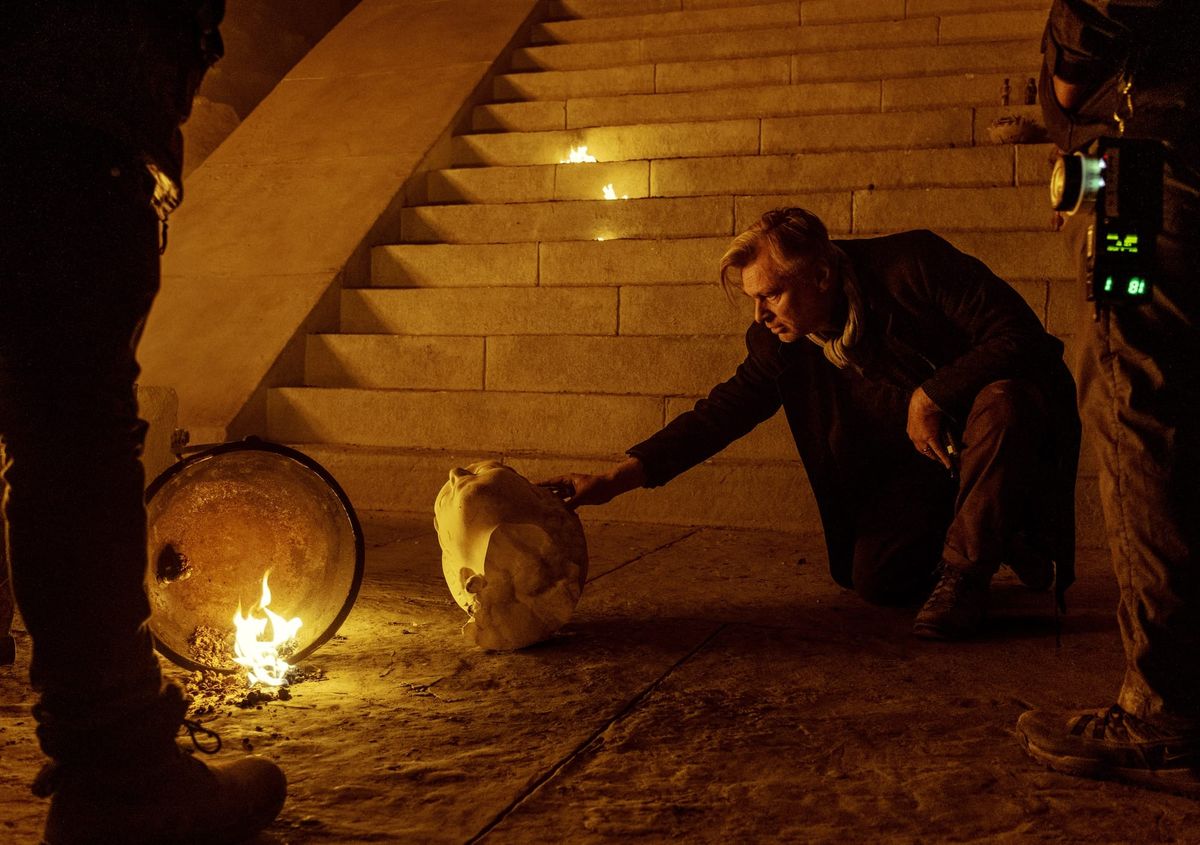
This is not Homer’s Odyssey. Let’s get that out of the way. As a Homerist, I had to remind myself of this throughout a film that reduces a narrative of 12,000 lines to just under three hours of airtime. The cuts are significant for someone who knows Homer well: The entire Phaeacian episode is gone; Matt Damon’s Odysseus never meets his father. Where the Homeric epic splits and gives its hero 12 books on Ithaca, the movie is about two-thirds journey and flashback with under an hour once Odysseus returns home.
The middle of Christopher Nolan’s The Odyssey (2026) delivers visceral discomfort. When the witch Circe (Samantha Morton) serves her transformative feast to Odysseus’s companions on the island of Aeaea, the camera tracks their voracious hunger, following their shift from greedily slurping, increasingly frantic men into squealing pigs. Circe physically wrests them out of one shape into another, later commenting that their appetites made them what they truly are.
This scene bears the promise of what the magic of modern film can do for ancient myth. It is physically affective, making vivid what could only be imagined before. And it also allows for the adaptation of the story: This Circe has been abused by travelers before. The animals who lurk on her island are the men who have met their comeuppance.