A Video Game Lets You Take Back Looted Artifacts
An indie game studio in South Africa has developed a heist adventure that reframes play, memory, and repatriation.

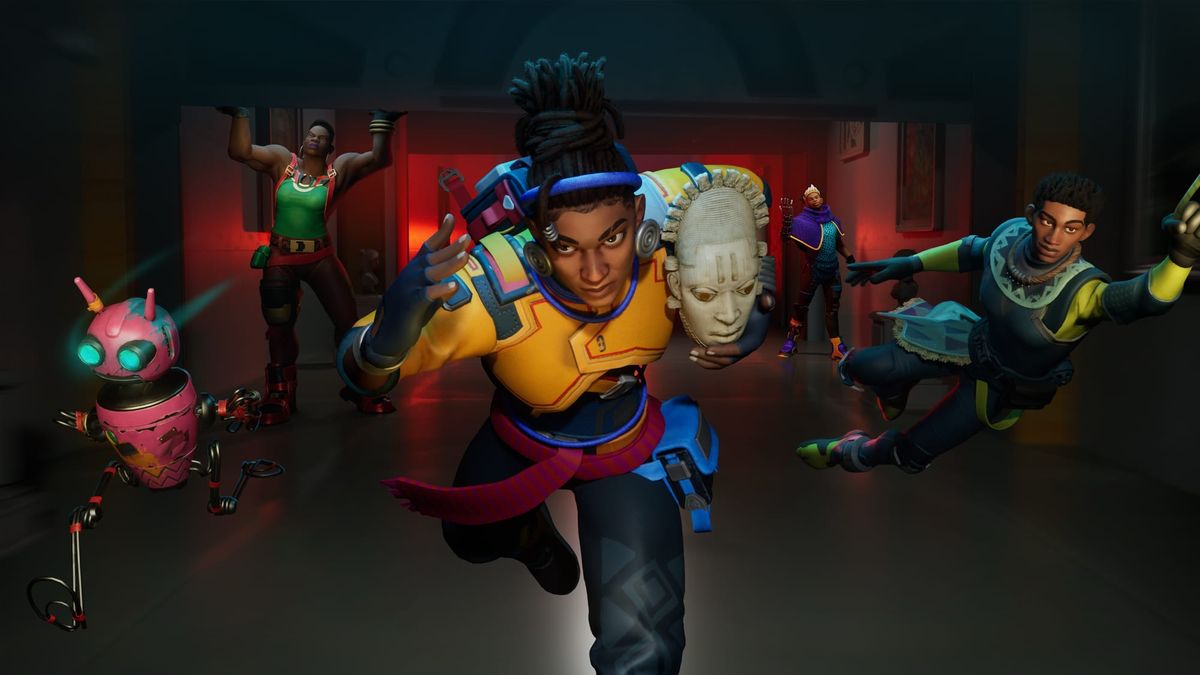
An indie game studio in South Africa has created one of the most daring premises in gaming today. The developer Nyamakop's upcoming game, Relooted, is a heist adventure that allows players to steal back African artifacts from Western museums, reframing play, memory, and restitution.
The game is set in a futuristic Johannesburg, South Africa, and takes roughly 13–17 hours to complete. Players are part of a rogue crew on a stealth mission to recover over 70 African artifacts, each rendered with careful research and cultural specificity.
For CEO Ben Myres, Relooted’s premise is deeply personal. In 2017, he and his mother visited the British Museum. “We came across the Nereid Monument, and it had been disassembled and rebuilt brick by brick in London,” he told Hyperallergic. “My mum was devastated, seeing a whole piece of history uprooted, and displaced like that. She turned to me and said: ‘Maybe your next game should be about this.’”
Nyamakop first made its mark with Semblance, a puzzle game involving platform-jumping praised by the international gaming community for its originality, which was released in 2018. But Relooted marks a shift: bigger in scope, more detailed environments and character models, and more ambitious in its cultural grounding.
“It’s one of the largest video games ever made in Sub-Saharan Africa,” Myres said, “So it was always going to be a challenge, finding the funding to make such a large thing. The entire journey has been challenging, almost by default.”
The team brought on researchers to study artifacts and histories across the continent, ensuring that the objects at the heart of the game are represented with accuracy and respect.
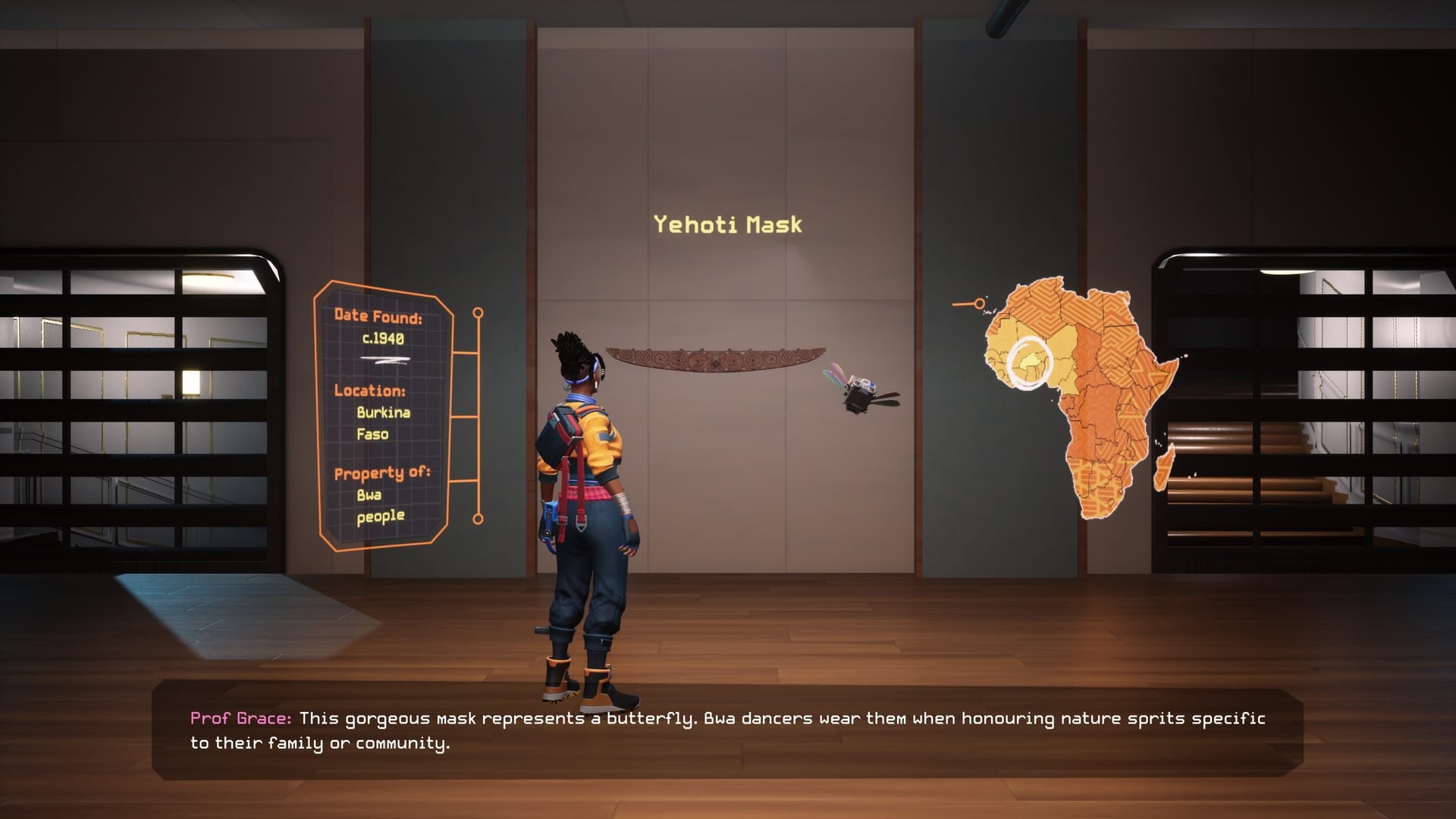
In a world where Africa is often seen as a homogenous lump, working on Relooted presented an opportunity to correct lingering perceptions of a vast, culturally diverse place. As Narrative Director Mohale Mashigo said, “I was intentional about not merging African cultures in the game, giving them their own kind of identity. It’s about honoring distinct histories while imagining new futures.”
The Ngadji drum, for example, is a large, cylindrical hardwood instrument with a taut animal-hide head and intricately carved geometric motifs along its body. When struck, its deep, resonant tone and worn surface reflects its sacred role in Shona cosmology as a conduit between the physical and ancestral realms. It is currently held at the British Museum, rather than serving its spiritual function for the Shona people and other nearby communities.
The game also features the Maqdala crown, one of the most exquisite royal artifacts of Ethiopia’s imperial past. Made of gold alloyed with silver and copper and adorned with filigree and religious panels depicting apostles and evangelists, it embodies the deep fusion of political power and Christian ritual in Ethiopian history.
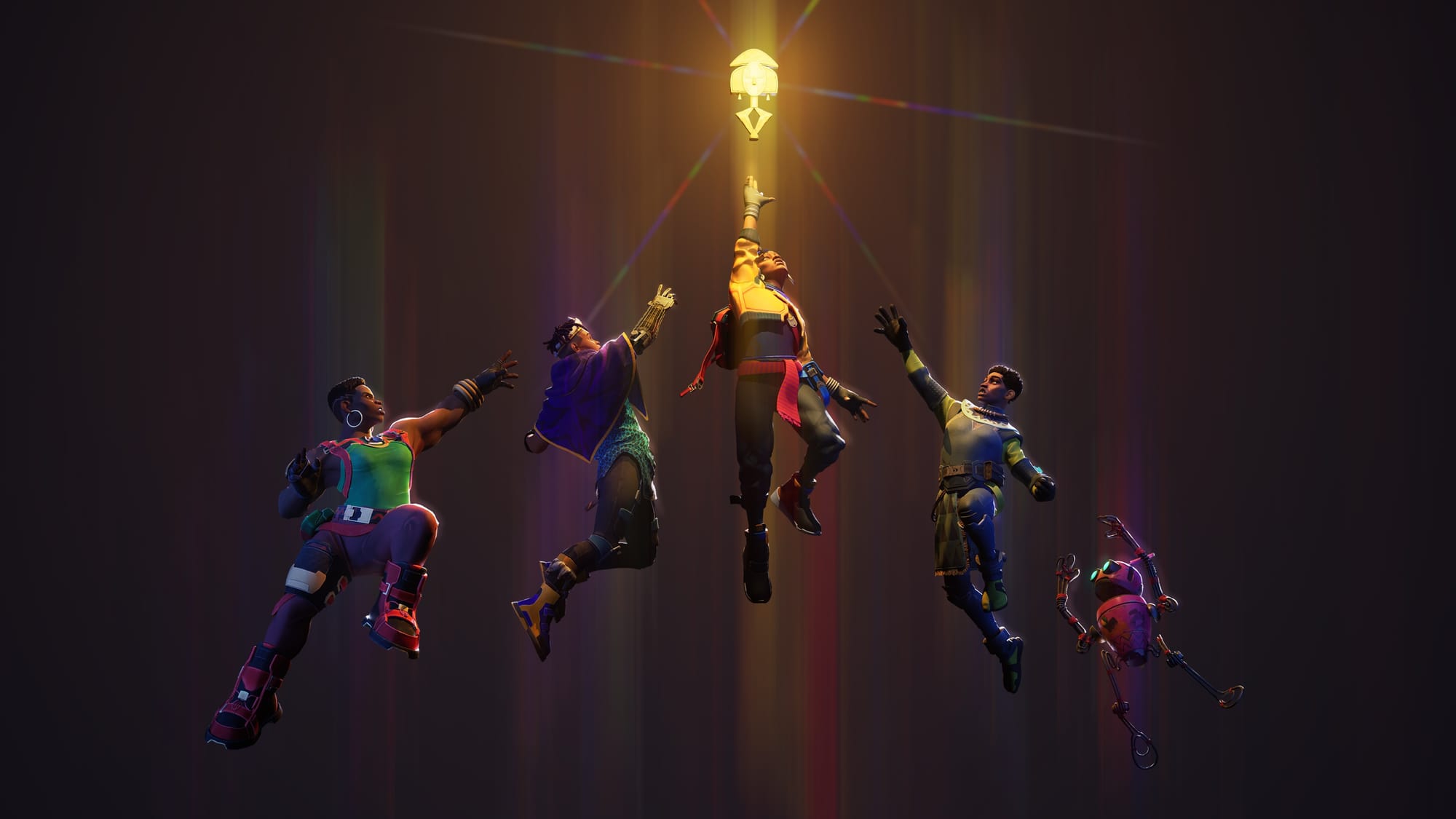
Though once believed to have belonged to Emperor Tewodros II, scholars now suggest that it was crafted in the 1740s by Empress Mentewwab and King Iyyasu II as a ceremonial gift to a major church, linking imperial authority with spiritual patronage. Its loss during the 1868 British assault on Maqdala underscores the real-world trauma of colonial plunder, a theme across Relooted’s narrative of restitution.
These artifacts and more are translated into gameplay mechanics. Based on Relooted’s stated premise and Nyamakop's prior design philosophy in Semblance, players don't simply return these objects. They must navigate museum bureaucracy (alarms blaring, security obstacles), trace provenance records, negotiate with institutions, and rebuild community structures that were once broken by its loss. These systems appear as puzzle sequences, dialogue trees, and diplomacy meters that rise and fall based on whether the player treats the crown as property or sacred object.
Interestingly, the Ngadji drum unlocks ritual, sound-based prompts. The player must learn rhythms, consult elders, and participate in ceremonies to reactivate its social meaning. If returned incorrectly — say, as a museum-style display rather than a living instrument — the drum remains silent in the game and certain narrative paths stay closed. This mechanic demonstrates that repatriation entails not just movement of objects but restoration of social relations and cosmologies.
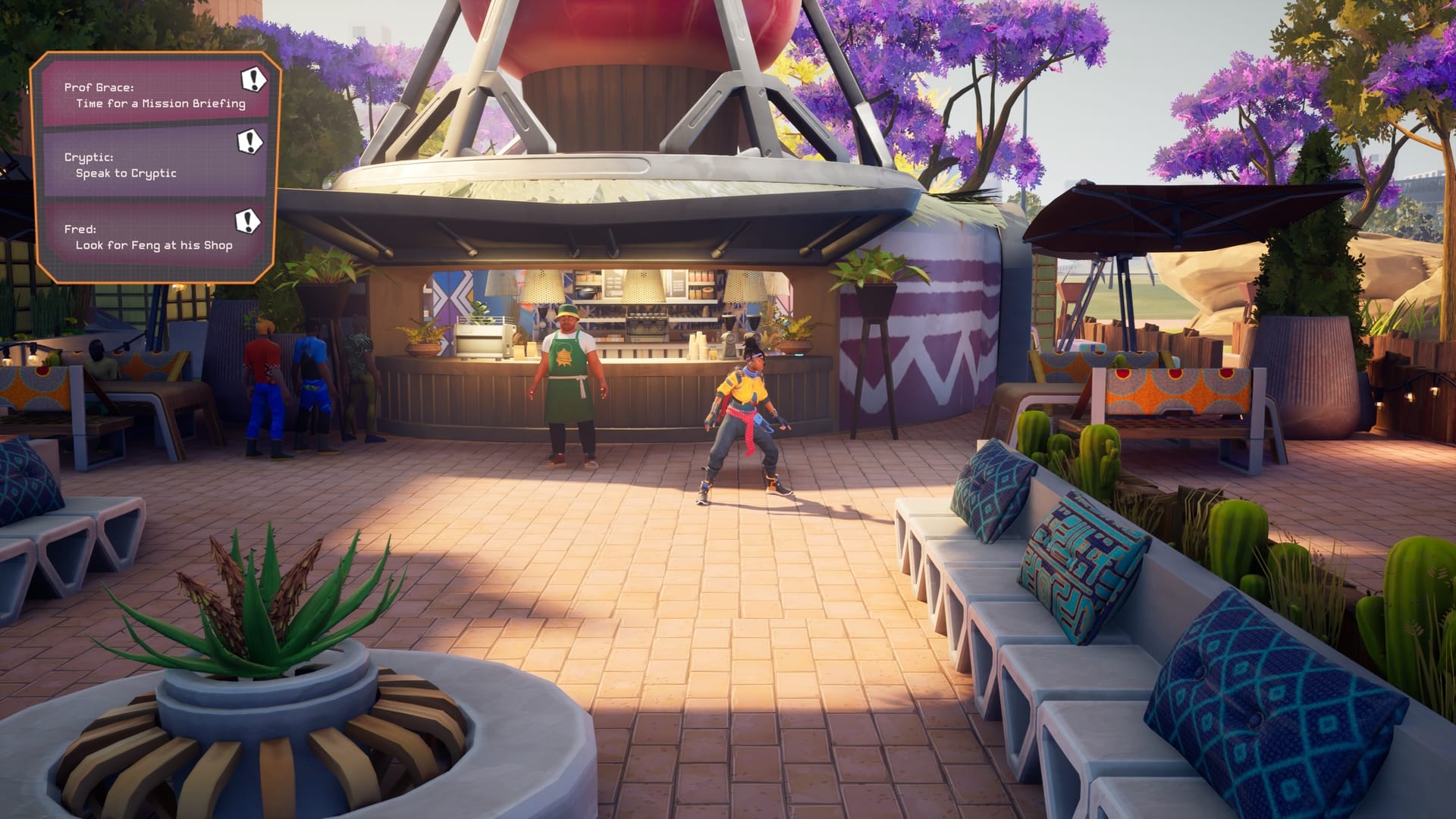
Though the game takes on the weighty subject of cultural restitution, Myres and Mashigo resist defining Relooted as a work made strictly as cultural critique. “At its core, it’s still a video game,” Myres said. “People can play it as a heist adventure, or they can see it as a commentary on looting and restitution. We don’t want to prescribe the experience. What it can do is to add to the spectrum of political possibilities. The intent isn’t to force people into activism, but it can amplify ongoing conversations.”
Mashigo was equally cautious: “I’m wary of using activist language to define the game. I’d rather let players take away their own lessons. If someone walks away entertained, that’s valid. If someone else walks away thinking about colonialism and stolen heritage, that’s also valid.”
Relooted has emerged in a time of mounting pressures on Western museums to return artifacts, from the Benin bronzes to the Rosetta Stone. Governments, activists, and cultural workers have long argued that restitution is not merely symbolic, but an ethical and material necessity to acknowledge colonial violence, restore cultural sovereignty, and allow for the rebuilding of cultural institutions on the continent.
By situating this struggle in a heist framework, Nyamakop bridges a cultural and generational gap. While courtroom petitions and diplomatic negotiations might feel abstract and removed from everyday life, interactive play makes such issues immediate, embodied, and participatory. (Indeed, the heist crew is led by a stealth leader, then hackers, acrobats, a museum insider, and even a grandma.)
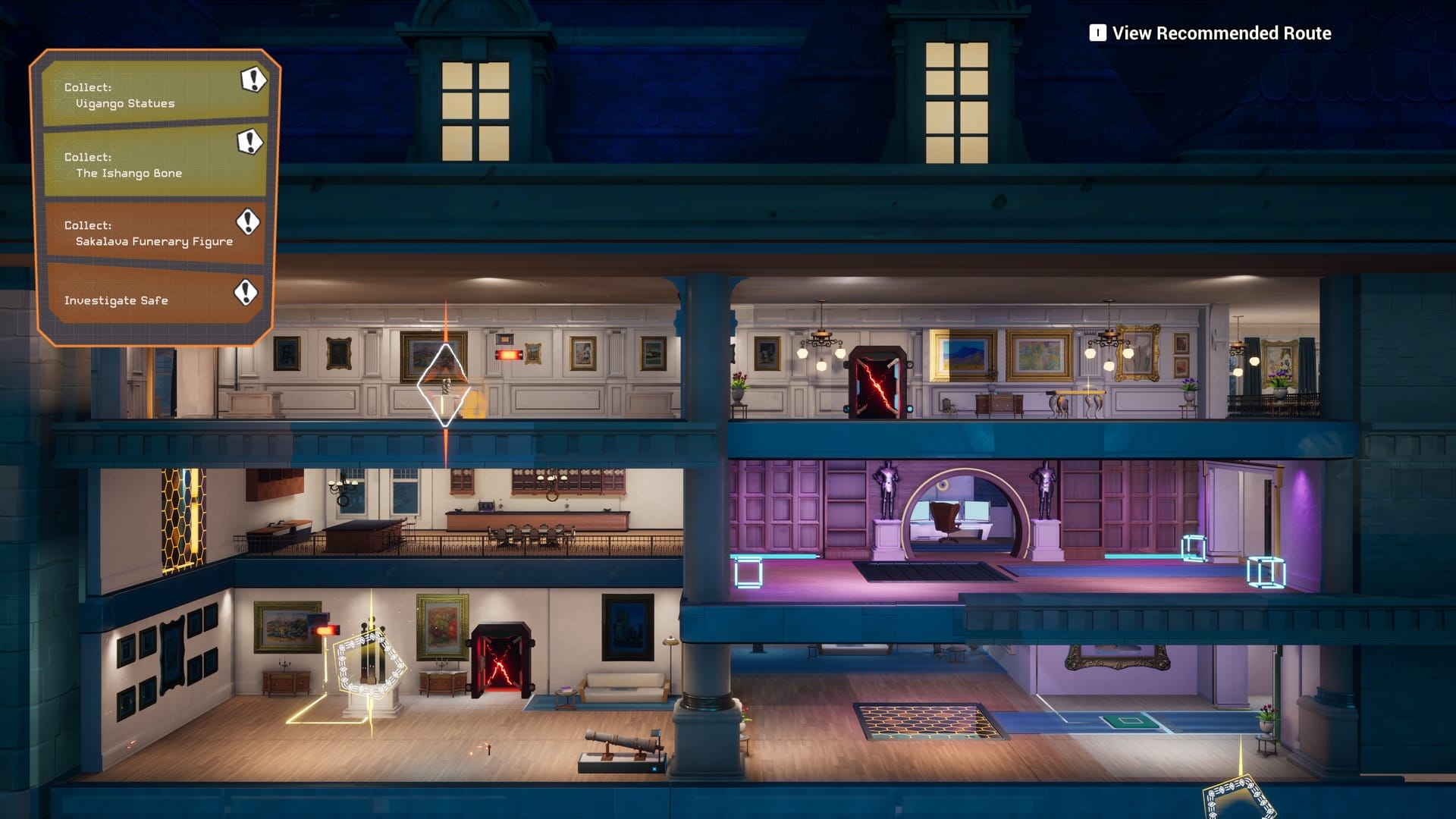
Museums are not just backdrops, but designed as labyrinthine environments filled with traps such as security lasers. The game even nods to the moral ambiguity of breaking in (the mechanics register your actions as “theft”), even when the act is a reversal of historical wrongs.
In that sense, the game participates in a broader lineage of African futurism in media, where art and technology become tools for rewriting the past and imagining futures where African voices control the narrative. Like Nnedi Okorafor’s speculative fiction or Wanuri Kahiu’s visionary cinema, Nyamakop’s work demonstrates that the future of African storytelling is as much about charting new directions as revisiting wounds.
This approach is a significant departure. Western audiences are accustomed to stories of heists about money, jewels, or technological secrets. By framing artifacts as treasures worth risking everything for, Relooted shifts the value system of the genre itself. What matters here is not personal enrichment, but the reclamation of history, identity, and dignity.
Nyamakop released a demo version of Relooted on September 16, 2025 for Xbox Series S/X and PC. No exact date has been confirmed for official release.