A View From the Easel
“Going back there is a psychological, conscious choice to enter the space and interact with the energy.”

Welcome to the 349th installment of A View From the Easel, a series in which artists reflect on their workspace. This week, Lilit Martirosyan summons the memories embedded in wool and soil while the sounds of opera arias fill her studio.
Want to take part? Check out our submission guidelines and share a bit about your studio with us through this form! All mediums and workspaces are welcome, including your home studio.
Lilit Martirosyan, Yerevan, Armenia
How long have you been working in this space?
Around three and a half years.
Describe an average day in your studio.
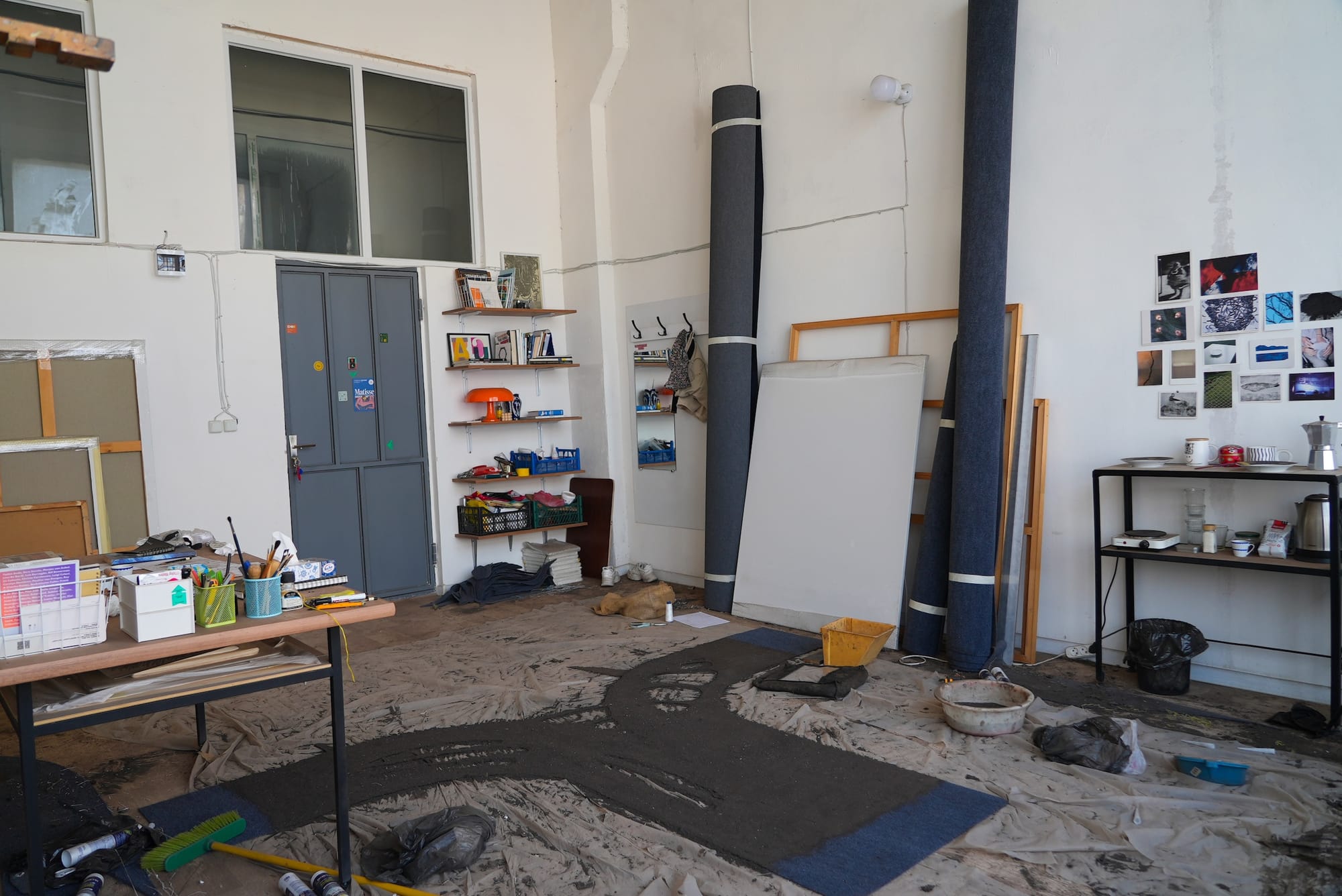
It’s 8 am and the dazzling waves of the sun are penetrating through the floor-to-ceiling window frame, leaving a checkered shadow on the floor. It’s relatively quiet and the studio stays filled with sunlight till 1pm, so I try to spend some good morning hours there and catch the light. Sometimes when I work on a project I get completely consumed, staying in till late evening, and other times when I’m in between works it’s more about sketching, slow idea and material exploration, and browsing of the artist books I have around. I work in different media: installation, painting, printmaking … So my routine and materials change a lot, from physical work of sifting the soil to aesthetic surface experimentation with oil paint. When working on a series I often juggle between artworks while they dry but generally prefer finishing a project before jumping to something else. There is always something playing in the background. I’m very much into old music, classic rock, ’30s jazz, and recently opera arias that help me to phase away.
How does the space affect your work?
I am much more focused in the studio than anywhere else. I like that my living space is separate from my artistic space and I can be as messy as I want and free in my process, letting people in only at the stage of the work I’m comfortable for them to see. While the ideas and inspiration can come from anywhere, it is always best for me to do the making in the studio without any distraction and around my own creative “artifacts.” It is like a saving bank of creative energy that you accumulate during your work, so going back there is a psychological, conscious choice to enter the space and interact with the energy.
How do you interact with the environment outside your studio?
The studio is in the industrial part of the city, always buzzing with noise, though it has its charm once you get used to it. It is situated in a former silk factory building from the Soviet era. Now, the first floor is a gold market and the rest is occupied by all kinds of small factories and studios. There are some artist studios but they are scattered around the building and everyone comes and goes at their own pace.
What do you love about your studio?
I love that it has high ceilings, it is practically a perfect cube, and the big window. For me it is a welcoming and not abusive space in the sense that I can always start fresh without the aggravation of the past work.
What do you wish were different?
I wish it were closer to my place. I usually commute around 40 minutes but I try to treat it like a legal time out, a routine when you can catch up on something you have been putting off or just rest and people-watch.
What is your favorite local museum?
I like the Cafesjian Center for the Arts.
What is your favorite art material to work with?
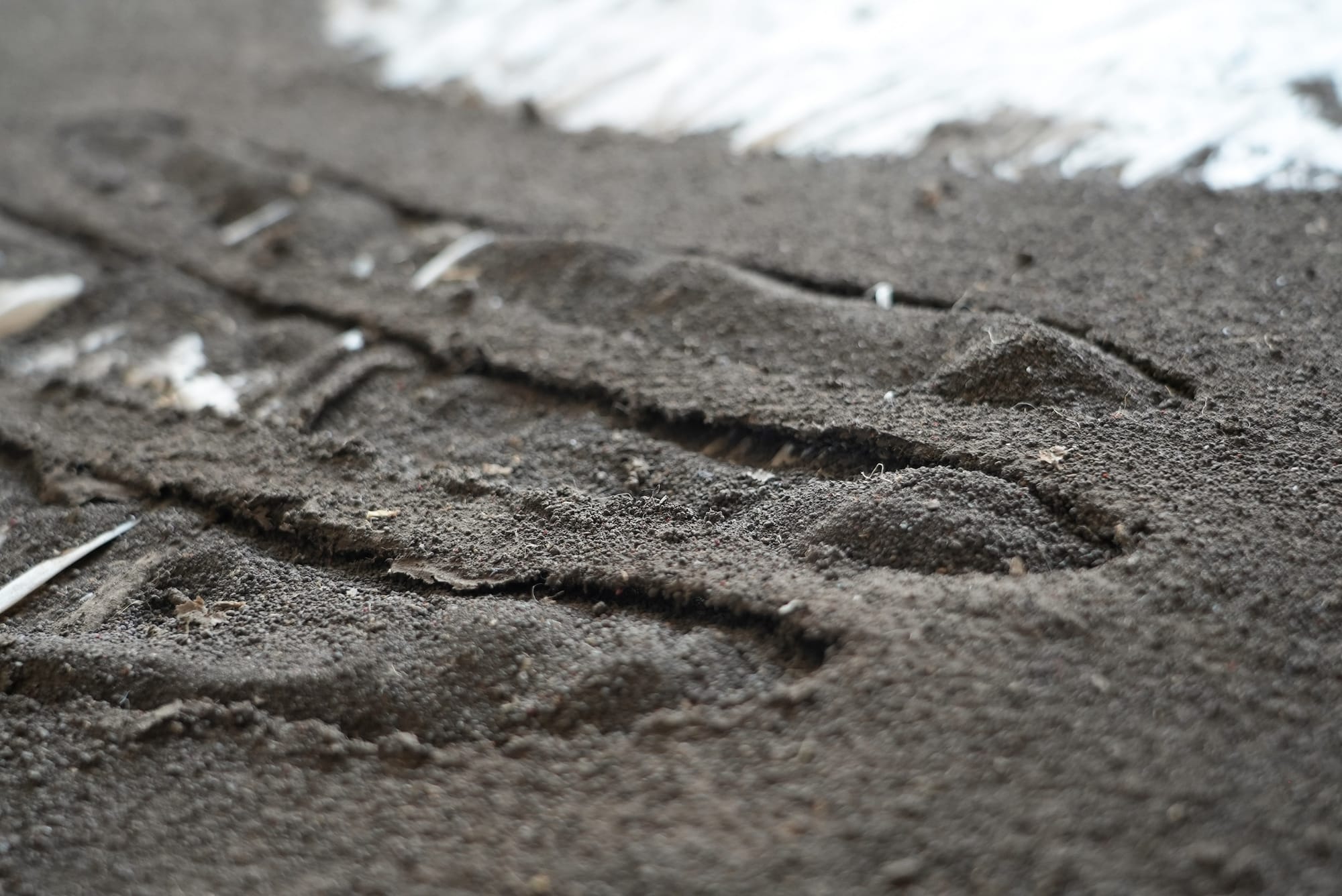
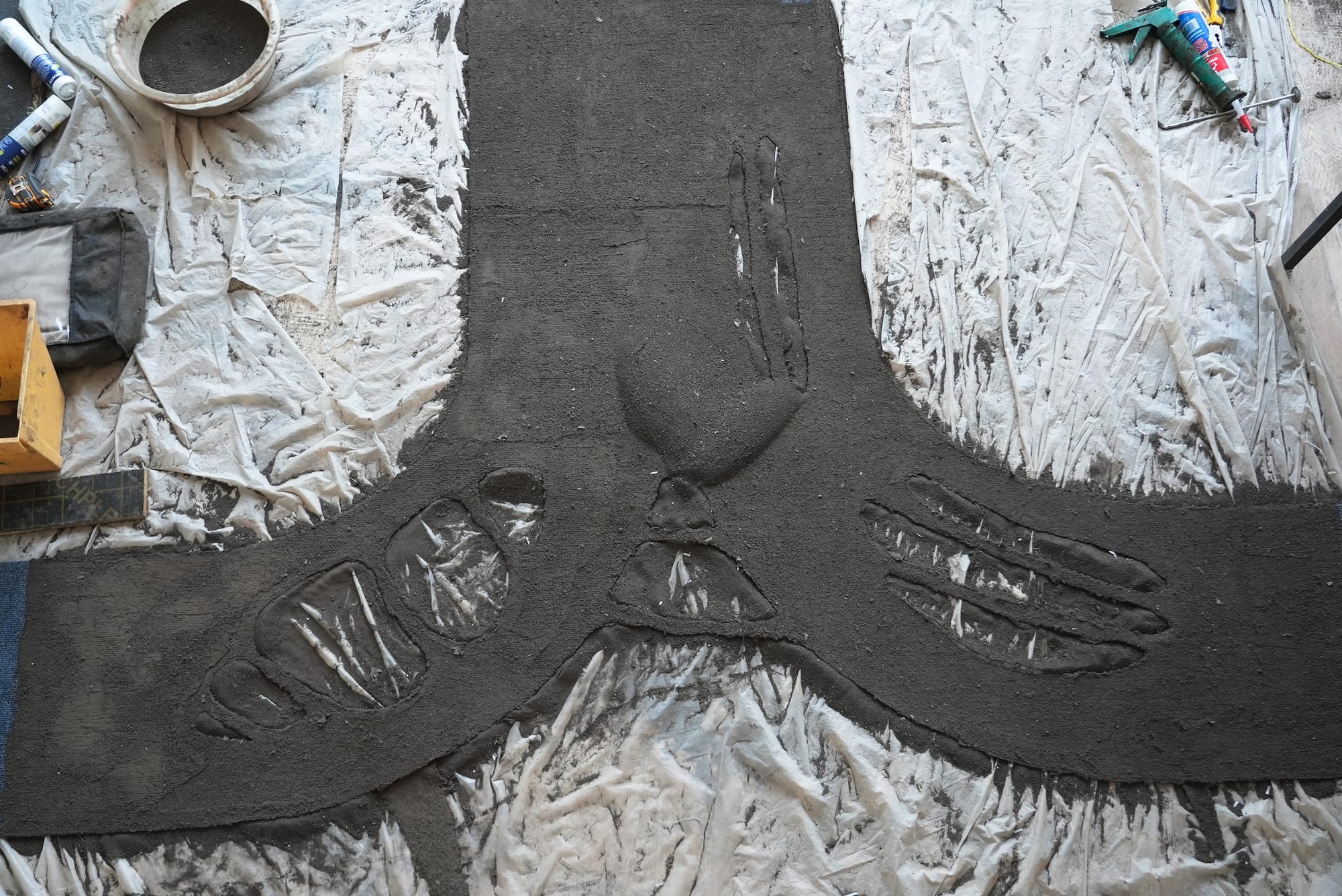
For now, I really like working with natural materials like wool or soil. I really enjoy playing with tactile materials that have their own cultural and philosophical eloquence and transform their perception through scale, repetition, and other interventions. Recently I have been working on a series of soil installations that were represented in my project Body of Earth at ICA Yerevan (curated by Lilit Grigoryan). I wanted to lift the earth and give it a solid entity that you face vertically, and I wanted to stretch it however I want. It turned out to be a quite physical process of sifting, gluing, pressing, but also a very rewarding one where you work with a living material that often times directs you. As a result, I had ripped soil “sculptures” that spoke about land commodification and post-war traumas expressing human condition through land condition.