A View From the Easel
“Sometimes I find myself dancing around the studio as I work.”

Welcome to the 325th installment of A View From the Easel, a series in which artists reflect on their workspace. This week, artists work in the realm of the intangible and explore the visual language of binding.
Want to take part? Check out our submission guidelines and share a bit about your studio with us through this form! All mediums and workspaces are welcome, including your home studio.
James Horner, Bronx, New York
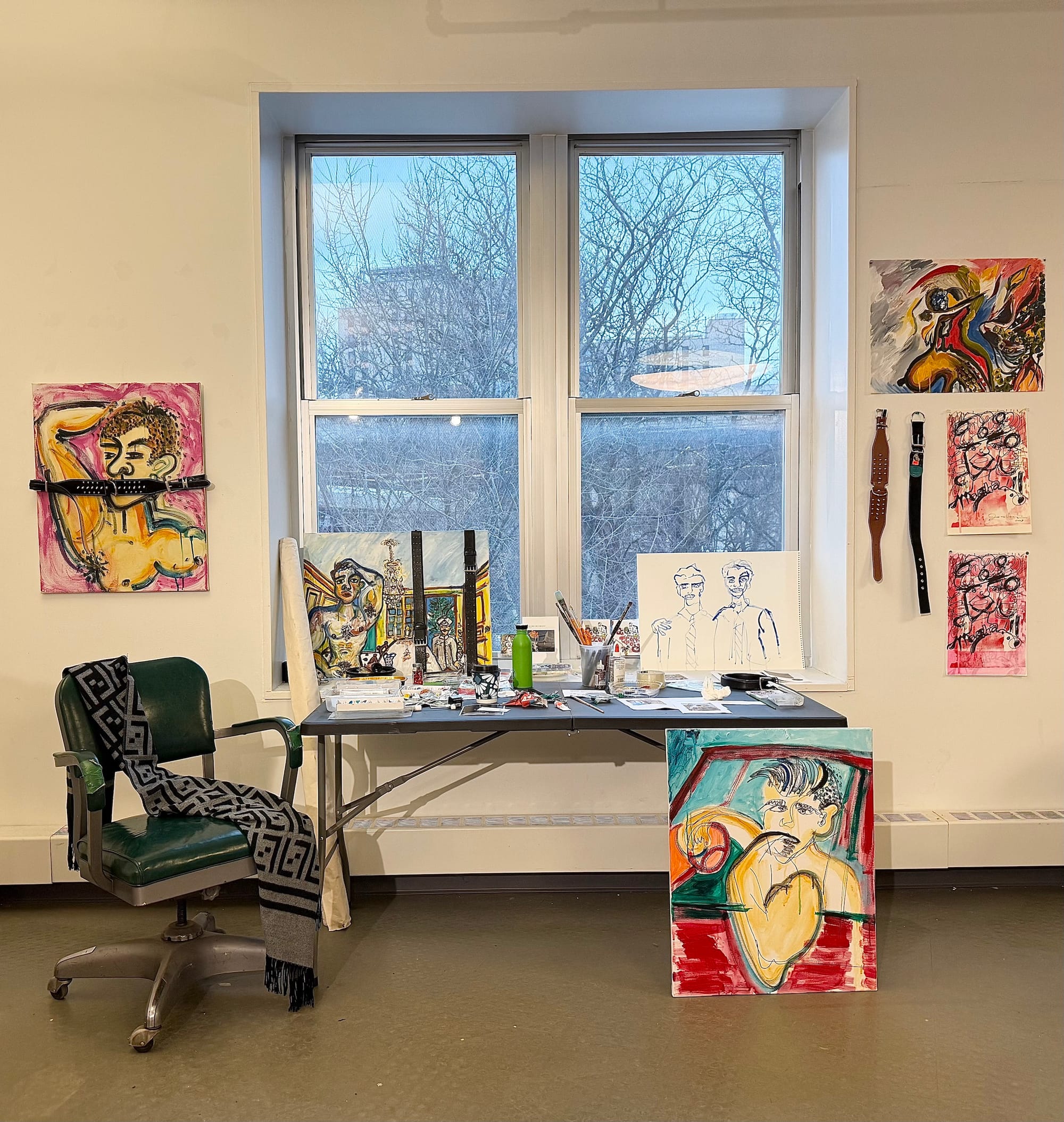
How long have you been working in this space?
Just over three months.
Describe an average day in your studio.
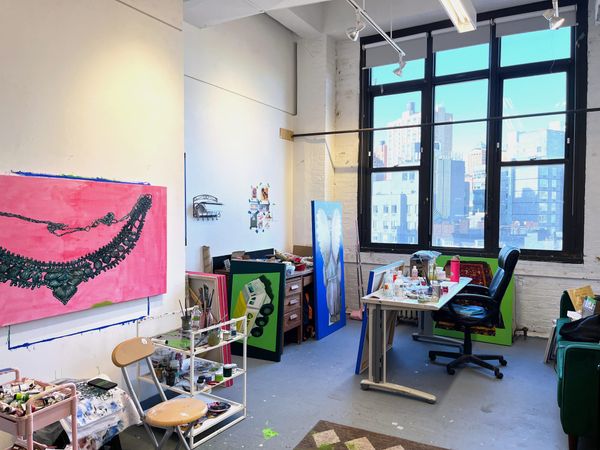
I typically work on four to five paintings at a time. I begin with simple line drawings of figures based on live models or photographs, gradually building up detail and developing the full composition. To get into a creative rhythm, I listen to alternative music or 1980s new wave — music from my 20s — which often energizes me. Sometimes I find myself dancing around the studio as I work.
How does the space affect your work?
The high ceilings and open layout — connected visually to other artists’ studios — make the space feel much larger than its 200 square feet. This openness gives me a sense of freedom and encourages me to fully explore the visual narratives in my work. There’s also a subway just outside my window. I love hearing it pass by and imagining where everyone on board might be headed.
How do you interact with the environment outside your studio?
For inspiration, I often visit the New York Botanical Garden and the Bronx Zoo, both of which are close to my studio. The Bronx itself is a lively and dynamic community. There is a strong art community here, and I’m deeply connected to it. I earned my MFA in painting from Lehman College, and I continue to visit former professors and attend exhibitions at the Lehman College Art Gallery.
What do you love about your studio?
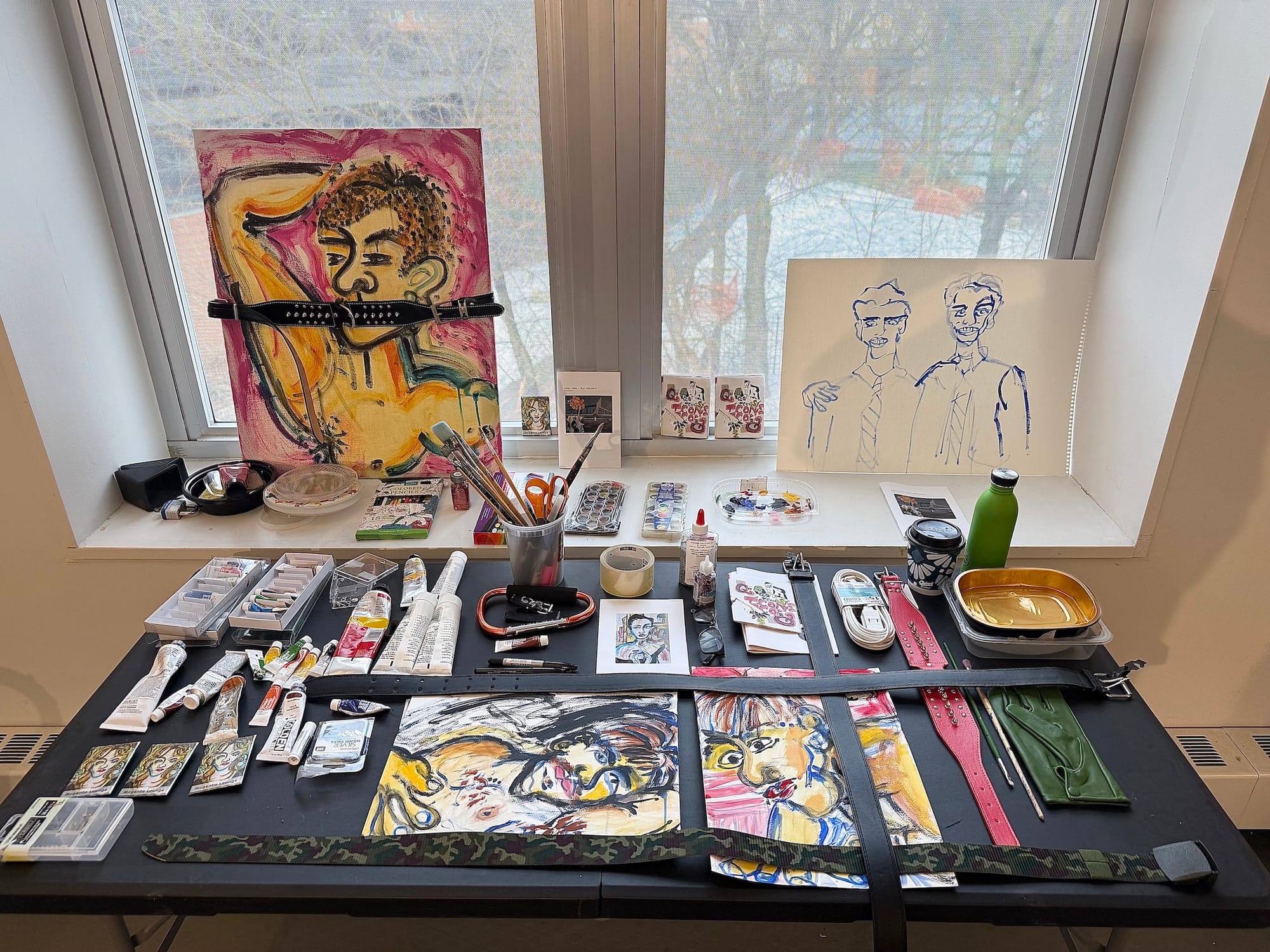
As a queer artist, I enjoy having a studio in the Bronx, which is a melting pot of people from different cultures. My studio is at the Bronx River Art Center, where they offer reasonably priced studios for artists, exhibits, and classes for adults and teens. I appreciate the sense of community there. And it’s reassuring to have fellow artists nearby who I can turn to for feedback and dialogue while I’m developing new work.
What do you wish were different?
I feel fortunate to have an affordable studio in New York City and close to my home in Scarsdale, so I genuinely have very little to complain about.
What is your favorite local museum?
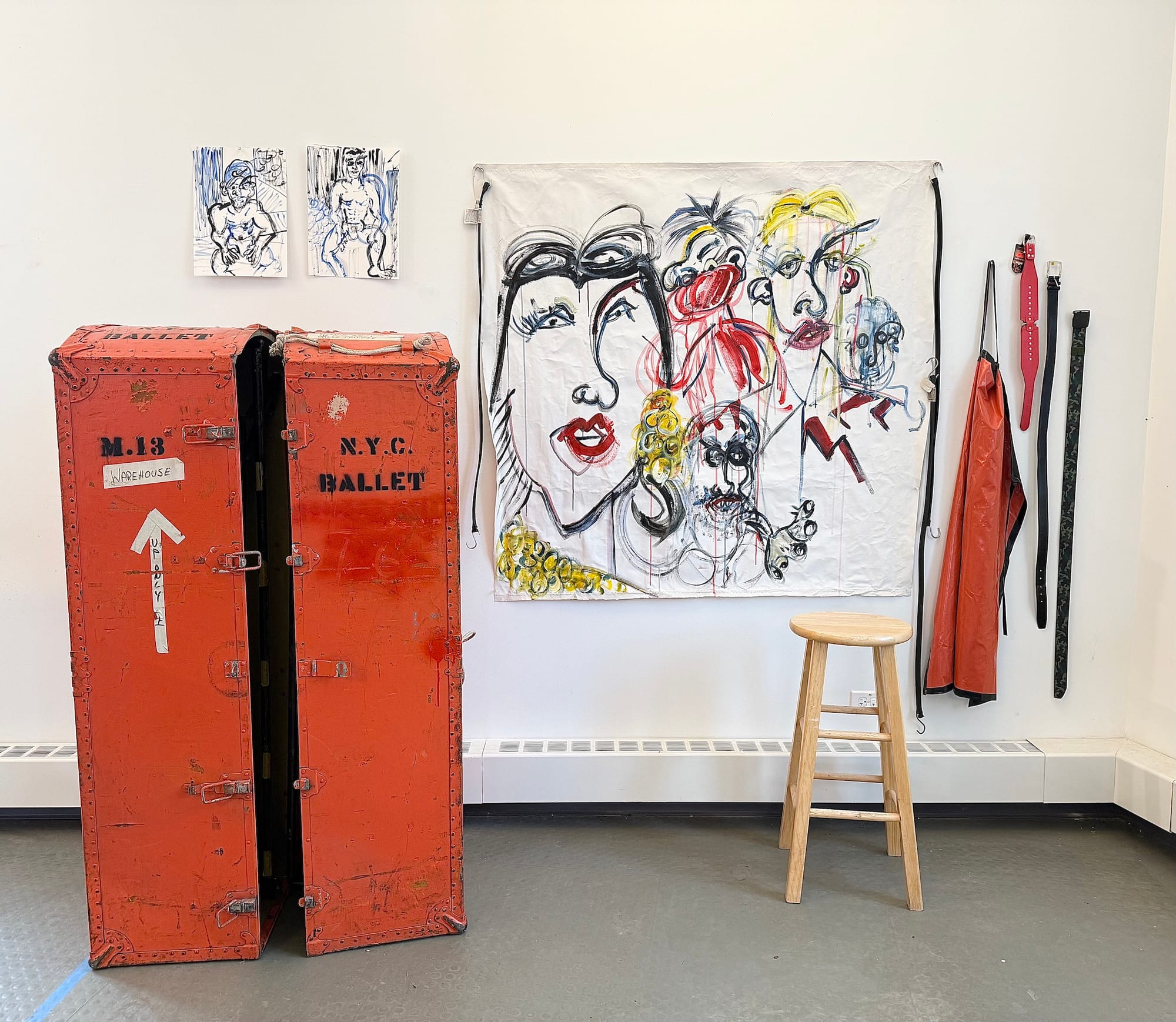
The Bronx Museum is a hidden treat. It’s rarely crowded, which allows for a more intimate viewing experience. I’ve taken zine-making and printmaking classes there and have also taught a workshop. And I created a silkscreen print of Marsha P. Johnson there, which is now part of their museum archives. The piece was exhibited in Making Room: Museum as Space for Self-Expression (2024), a show highlighting the museum’s public programs alongside works from its permanent collection.
What is your favorite art material to work with?
Recently, I’ve been working with aluminum, leather, and waxed thread. I construct frames using aluminum and leather or metal belts, binding them together with waxed thread. I also wrap leather and metal belts around canvas surfaces. I’m drawn to the visual language of binding — it speaks to themes of restraint, structure, and masculinity that are central to my current work.
Ingrid Hernández, Tijuana, México
How long have you been working in this space?
Fifteen years.
Describe an average day in your studio.
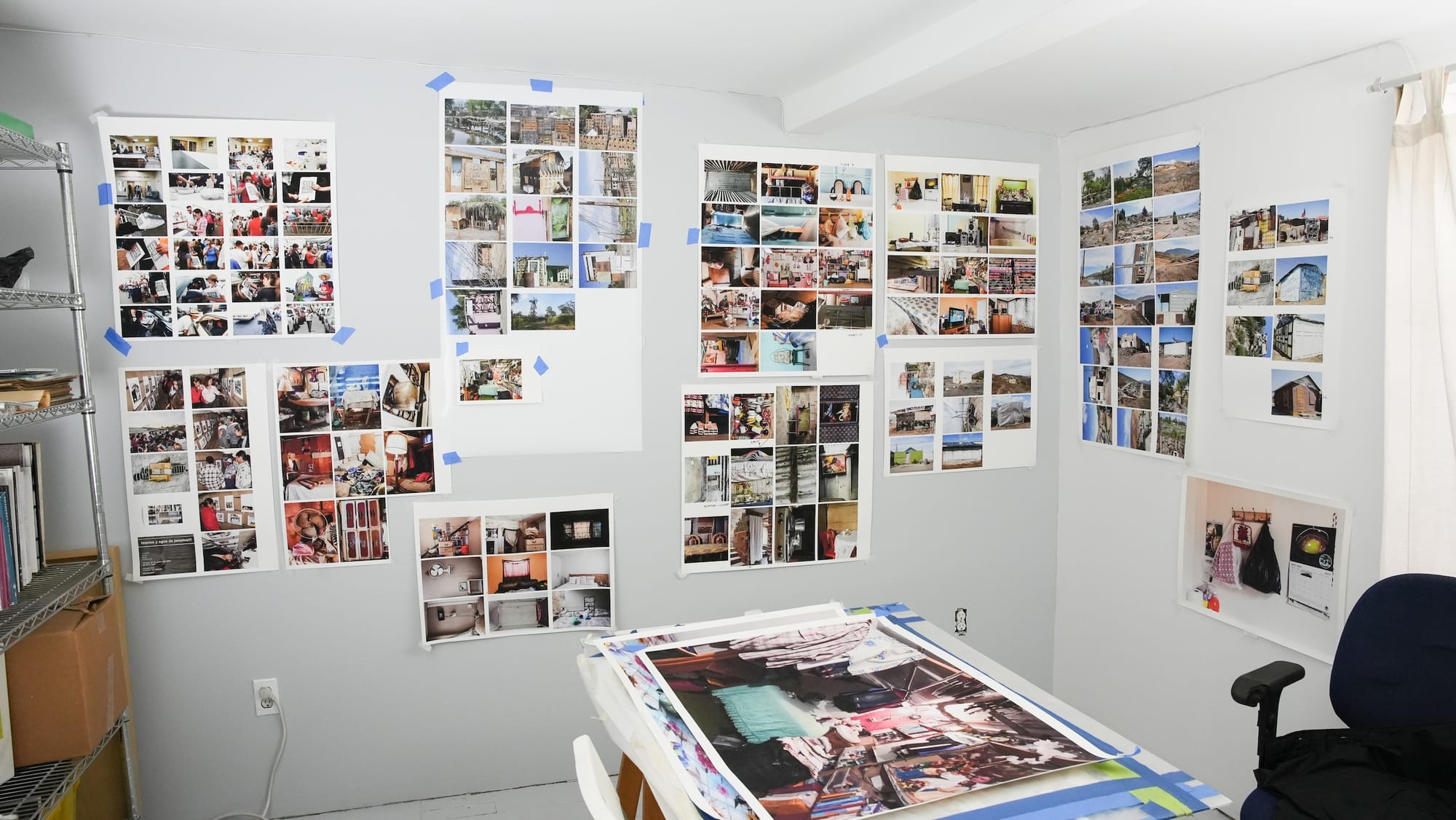
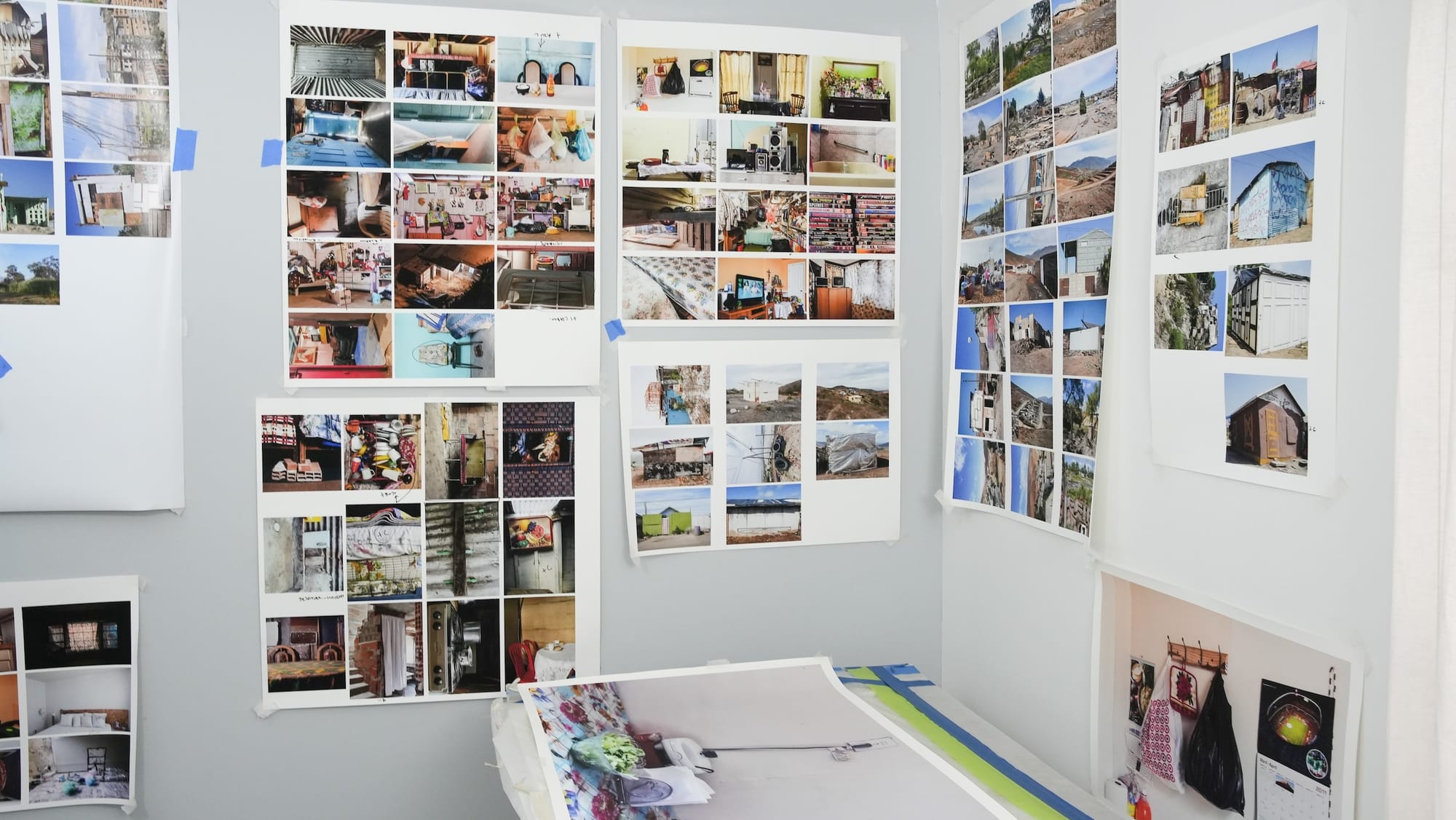
I work in two very different spaces. In one of them, I use the studio walls to place my images in various formats, where I plan the order, scale, and series of each project. I think of this space almost as a rehearsal for a museum or gallery, a place where I can experiment with different wall installations. The other space is dedicated to writing: I work in front of a large window overlooking the city. This environment allows for concentration, contemplation, and a sense of freedom in my thinking.
I am a very routine-oriented person. I usually wake up at 5am and spend the first moments of the day reflecting on different aspects of my work and trying to find answers to questions that concern me; this is when ideas flow most clearly. I then write, often between 5am and 7am. After breakfast, I begin my studio work around 10am, reviewing photographs and building series.
I often combine studio work with phone calls and coordinating with my team, especially when we are planning an exhibition or developing a publication of my work. My artistic practice is primarily grounded in photography and writing. I am deeply interested in writing about my own artistic research, so my time in the studio is devoted both to reviewing and editing images and to writing.
How does the space affect your work?
Space is fundamental to my artistic practice. I work primarily with photography as my main medium, and while I have developed some projects within my own neighborhood, most of my work has taken place in houses and communities that are often far from where I live.
For me, the experience of walking through the spaces I photograph is essential — moving through neighborhoods and physically inhabiting the houses I document. Experiencing these places through the body allows me to approach the photography of space from a more intimate dimension. For this reason, having a direct and embodied relationship with each site is crucial, as my intention is for that encounter to affect me in ways that can be perceived in the resulting images.
How do you interact with the environment outside your studio?
I love this question. My studio is located in the same place as the house where I grew up. For this reason, my neighbors and I know each other and stay in regular communication; it is the neighborhood where I was raised and where relationships have been built over time. We stay in touch through a WhatsApp group, which functions as an everyday network for sharing information about common neighborhood situations, such as a lack of street lighting, a water leak, or the organization of a neighbors’ meeting.
What do you love about your studio?
I love that my studio is the house where I grew up and that it retains the layout of a home — kitchen, bedroom, dining room, and other domestic spaces. In this place, everyday activities and artistic work coexist. In one area of the studio, I carry out wall-installation tests, as if rehearsing an exhibition in a gallery or museum, while in another I focus exclusively on writing and administrative work.
This layering of uses — between the domestic and the public, between inhabiting and producing — has deeply shaped the way I understand space. I grew up in my grandmother’s restaurant, a place that functioned simultaneously as a public space and a home: It was where I did my homework, played, watched television, and celebrated my birthdays. That early experience of multiple actions and rhythms coexisting is reflected today in how I conceive my studio and in the way I think about the spaces I photograph.
What do you wish were different?
I love everything about my studio, but if I had to think of something I would change, it would be that it were larger and had more windows and natural light.
What is your favorite local museum?
Centro Cultural Tijuana.
What is your favorite art material to work with?
I conceive of my working material as something that goes beyond the tangible. In my practice, the fundamental material lies in the conversations I have with the people who allow me to enter their homes and photograph their spaces. These interactions — grounded in dialogue, listening, and trust — structure my working process and shape how projects develop. In this sense, social interaction does not function merely as context, but as the material that gives form and depth to my work.