A View From the Easel
“I work as an attorney during the day and let loose at night in my studio.”

Welcome to the 327th installment of A View From the Easel, a series in which artists reflect on their workspace. This week, artists transform their law school notes into a medium and weave the studio into their everyday life.
Want to take part? Check out our submission guidelines and share a bit about your studio with us through this form! All mediums and workspaces are welcome, including your home studio.
George Seyffert, Dumbo, Brooklyn
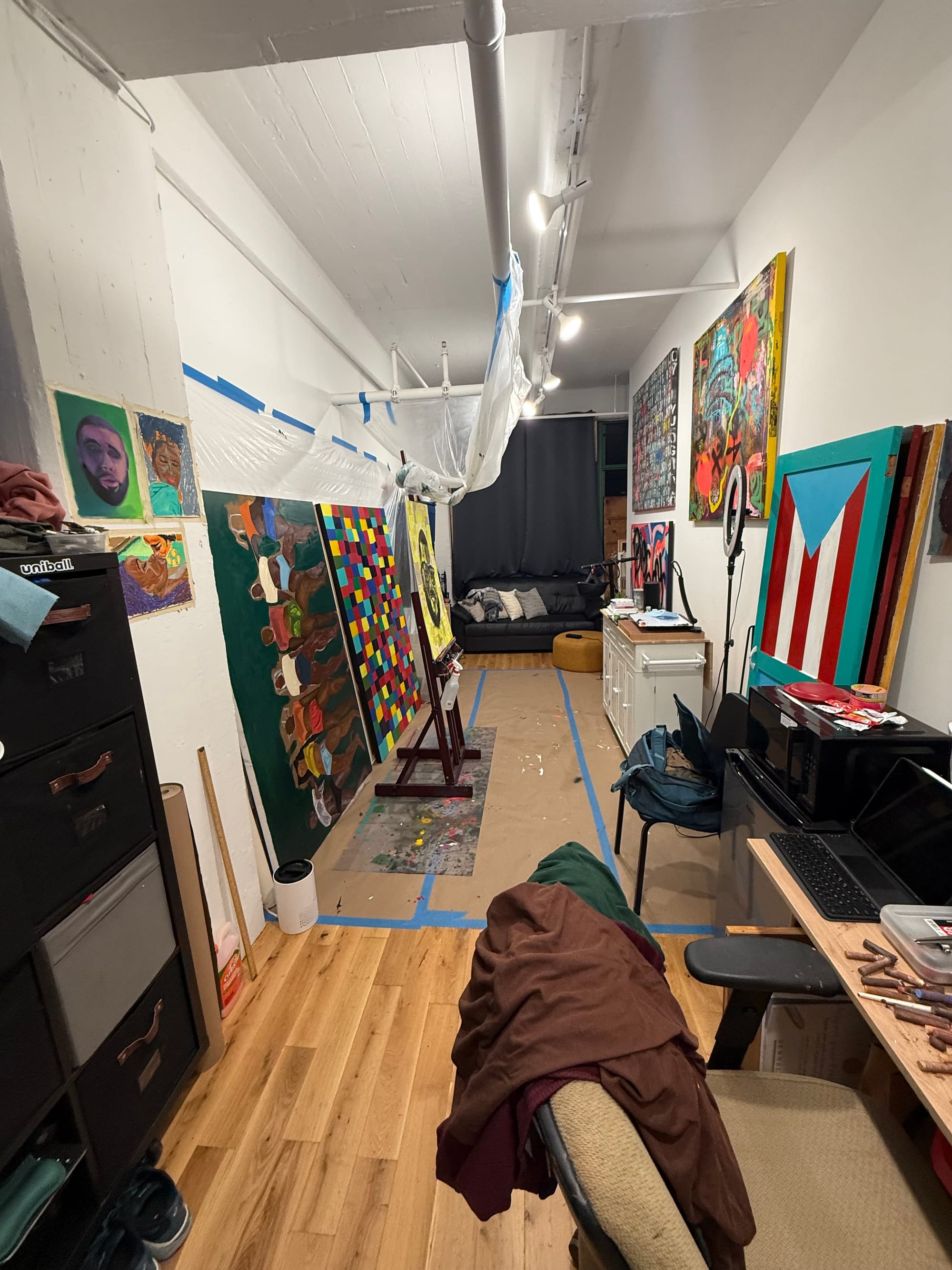
How long have you been working in this space?
One year.
Describe an average day in your studio.
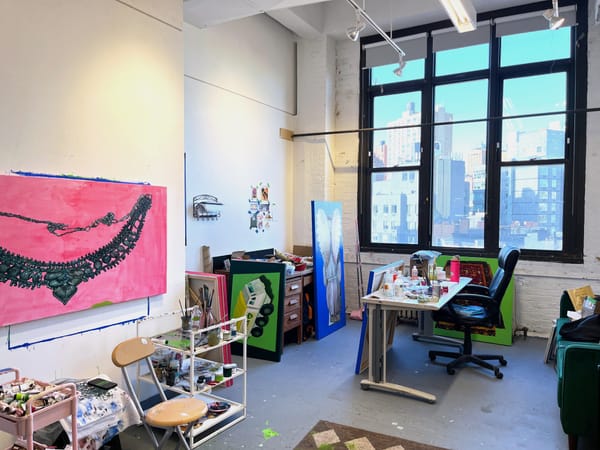
My studio is my evening and weekend getaway. I work as an attorney during the day and let loose at night in my studio, usually into the morning hours. As soon as I enter, the curtains open to a city night sky, my Spotify connects to my speaker, I change into my studio clothes, and I begin. My music selection ranges from salsa, reggae, soft rock, old school hip hop, classical, pop, Brazilian funk, and more! A beverage might be poured, or I'll take a quick smoke break before I begin. There are always several pieces being worked on at once. What I start with depends on my emotional and mental state. A long day at work may result in me pursuing a simple task such as canvas stretching, sealing, sketching, etc. Or a weekend might be a full 16-hour session, completely tackling one piece.
How does the space affect your work?
This is my second studio. My first didn’t have windows. Being here allows me to disconnect from my corporate life and be who I truly am. The space gives me what I need. A separation from daily life but still in the heart of it all. It’s refreshing to have a place in the city where I can enjoy solitude and produce my best work. At times I stare out the window and find new inspiration for pieces completely unrelated to what my eyes are picking up.
How do you interact with the environment outside your studio?
Dumbo is hard to beat. A few blocks from the river and a truly amazing view is priceless. I was born and raised in Greenpoint, Brooklyn. Being near the East River is something I’ve made part of my everyday life. The view alone is what has pushed me to where I am today. The inspiration. The dreams. All of it stems from the view of the skyline. The cherry on top is that there is art everywhere. I am in a building with dozens of other artists. It’s comforting to be part of a community of peers.
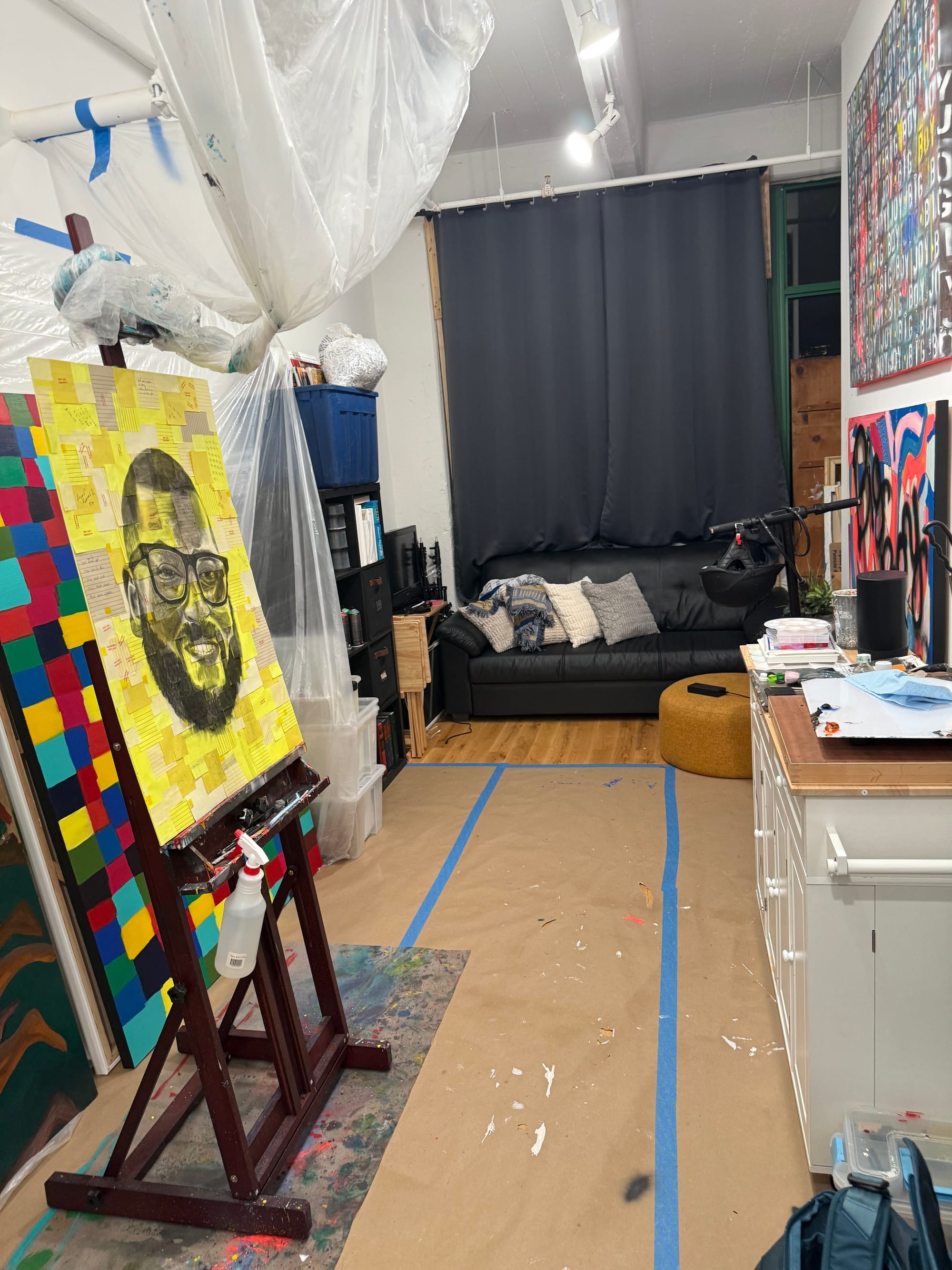
What do you love about your studio?
Location and windows based on my previous answers. Sometimes a quick trip up to the roof on a nice day gets you a 360-degree view of what the city has to offer. Friends love to come over and I love to entertain. It’s pretty close to mass transit, so people are always coming and going.
What do you wish were different?
I mean more space, of course. It’s NYC. We all want more space. But other than that, not much. The winters are a bit cold due to the building’s heating system, but otherwise it’s quite perfect.
What is your favorite local museum?
I’m stuck between a few but I must say the Brooklyn Museum. I’m a member and go whenever I can. My love for it started as a kid on an elementary school field trip. And right next to the botanical gardens! Who can ask for a better location?
What is your favorite art material to work with?
My old case law textbook pages and sticky notes from work. When moving into my first studio, I was going through my belongings and couldn’t decide what to do with my old law school books. I opened one up and saw how pretty they were with all my color-coding, highlighting, and red pen marks. From that moment on, I started to incorporate them into my work and haven’t looked back!
Nimisha Doongarwal, Berkeley, California
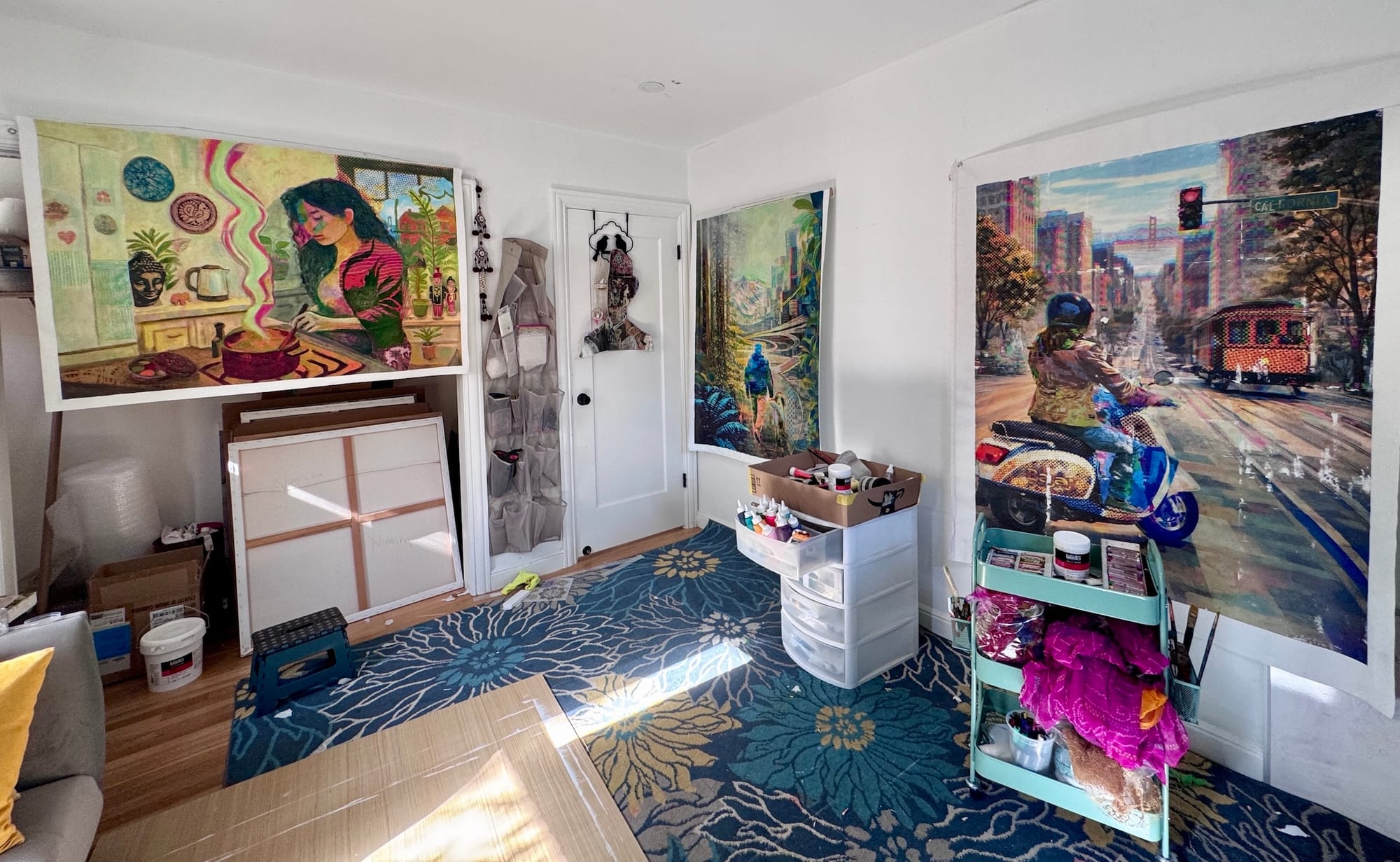
How long have you been working in this space?
Two and a half years.
Describe an average day in your studio.
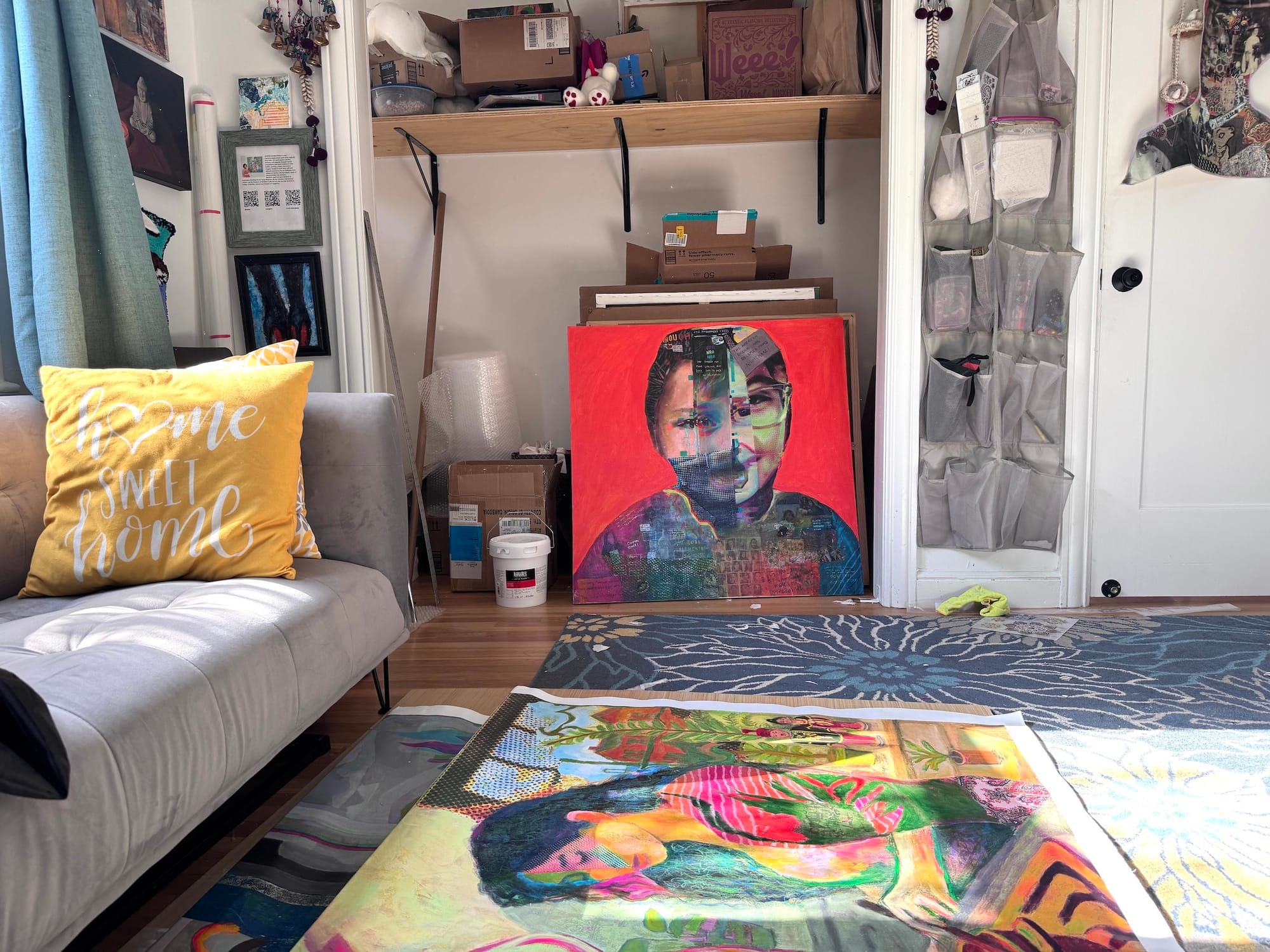
An average studio day begins after my full-time workday ends. I usually start around 7pm, once the house is quiet, and often work late into the night, sometimes until 2am or 3am. Those hours feel focused and uninterrupted, and on weekends, I spend longer stretches returning to the work more slowly. The practice often spills into my living room. Some processes, especially image transferring, feel meditative, so I work on the floor or horizontally, sometimes right in front of the TV. I almost always work on multiple pieces at once, letting ideas move between them. Since I work mostly at night, I use lighting that mimics daylight so I can stay true to color. For me, the studio is less about routine and more about showing up, sitting with uncertainty, and letting the work unfold.
How does the space affect your work?
The space I work in is intentionally fluid, and that openness directly shapes the work. While I have a home studio, the practice often moves beyond it, to the living room floor, into my backyard, or wherever the process asks to unfold. Being outside allows me to pick up textures, fragments, and small materials from what I encounter in real time, and just as often, it’s the feeling of being there that finds its way into the work.
Some phases of my practice aren’t tied to a physical studio at all. I build compositions digitally while commuting on trains, on flights, or sometimes tucked into bed, letting ideas form before they reach the surface of a painting. That lack of a fixed studio during certain stages allows the work to stay responsive, to my surroundings, to movement, and to my emotional state at the moment of making. Rather than separating life from studio time, this fluidity allows the work to absorb lived experience. Space becomes less of a container and more of a collaborator, shaping not just materials, but mood, memory, and meaning.
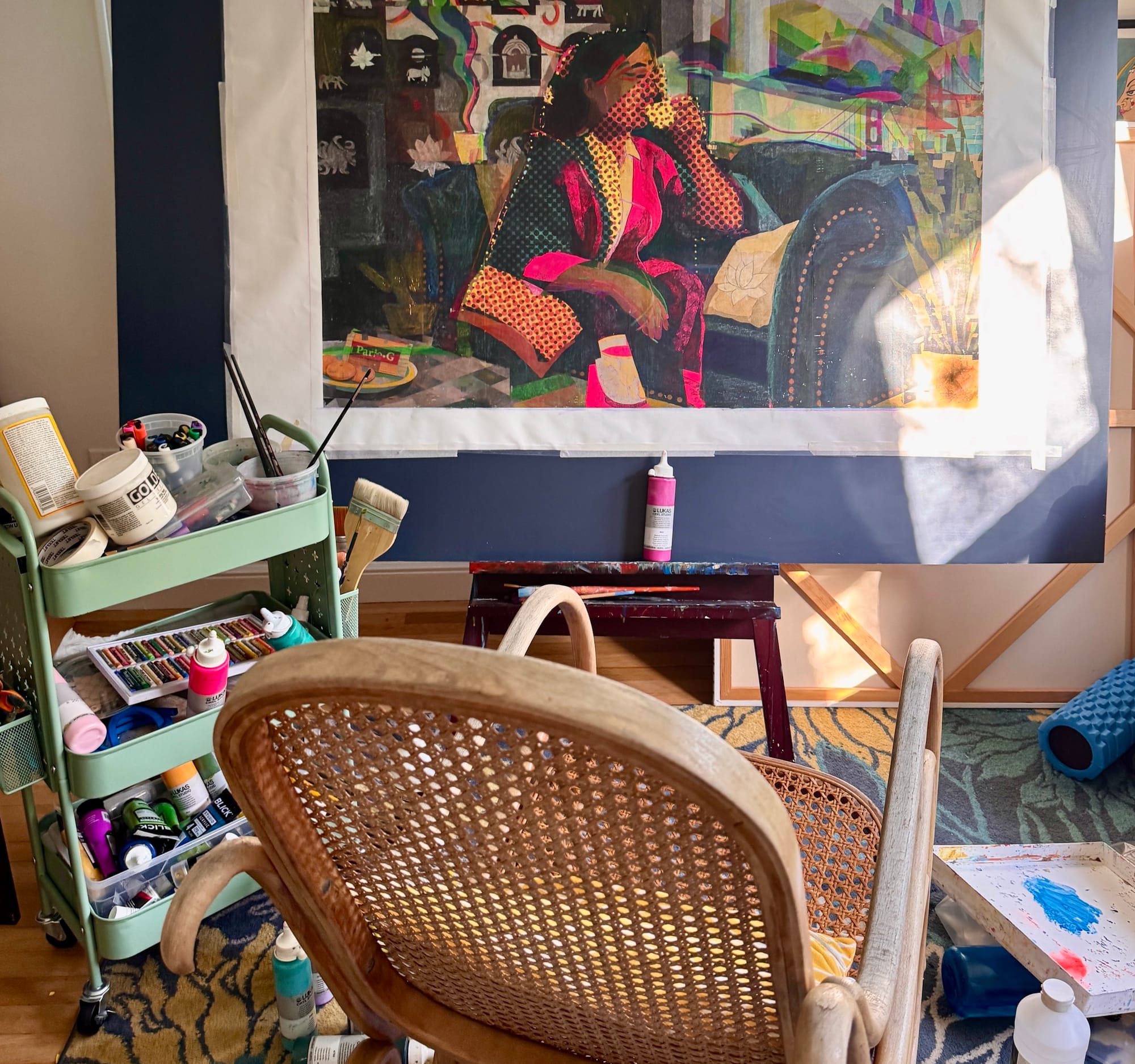
How do you interact with the environment outside your studio?
My work is shaped by everyday movement through my neighborhood and the communities I’m part of. Living and working in the Bay Area, I’m always noticing small moments, people in transit, routines, gestures, and cultural overlaps that quietly find their way into the work.
I’m actively connected to the local art community through groups like Northern California Women’s Caucus for Art and ArtTogether. Being part of these spaces and attending exhibitions, open studios, and events keeps me in conversation with other artists and grounded in what’s happening now. Much of my work centers on stories of underrepresented and immigrant communities, and staying engaged beyond the studio helps those stories remain lived, responsive, and real.
What do you love about your studio?
What I love most about my studio is its flexibility. It’s not a closed-off space; it shifts with my process, my schedule, and my energy. Because it’s part of my home, it allows me to work late into the night, return to pieces slowly, and let the work exist alongside daily life rather than apart from it.
The studio is filled with windows, and when I do work during the day, it’s flooded with natural light. I can open them to let in fresh air when I need a pause or reset, which changes the rhythm of the space and my relationship to the work. It holds both focus and freedom, a place where I can layer, step back, make a mess, sit with uncertainty, and return again. The studio doesn’t demand a finished outcome. It supports the long, quiet process of becoming, which is where my work truly lives.
What do you wish were different?
I sometimes wish I had studiomates. Working late nights from home can feel isolating, and I miss the shared energy, conversations, and friendships that come from being around other artists. Working from home also means being careful. At times I wish I could be messier and more impulsive with color without worrying about the space. And like most artists, I’m always wishing for more room. What once felt spacious is now filled with tools and stored work, especially as I start thinking about making sculptures and objects. A bigger studio feels like a future I’m slowly growing into.
What is your favorite local museum?
I live very close to the Berkeley Art Museum and Pacific Film Archive, and it’s become one of my favorite places to visit. I’m drawn to the way it shows strong local and regional work alongside thoughtfully curated exhibitions.
What is your favorite art material to work with?
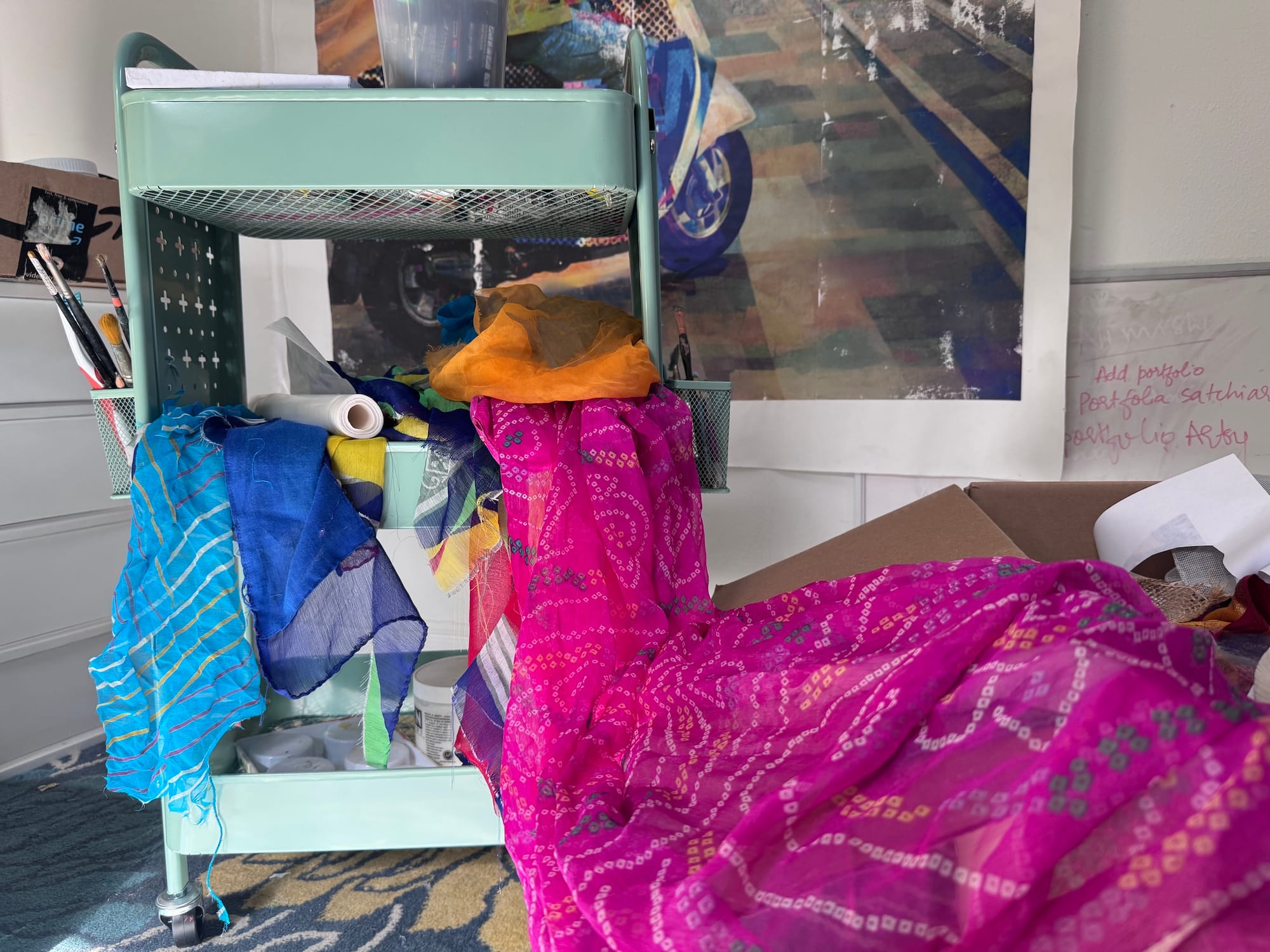
My favorite materials are fabric and paper used for collage. I’m drawn to surfaces that already carry a sense of history — printed images, textiles, and transferred photographs — because they bring their own memories into the work. Layering these materials allows me to work slowly and intuitively, letting meaning unfold over time rather than forcing it. I often incorporate saris, traditional garments from India that were worn by my mother and grandmother. Some of these fabrics were part of celebrations and weddings, and carrying them into my work feels like a way of holding personal and generational memory within the surface of the piece.