A View From the Easel
“A certain level of distraction can help me see the work more clearly.”

Welcome to the 334th installment of A View From the Easel, a series in which artists reflect on their workspace. This week, New Jersey-based artist Hadieh Afshani explores migration through ink and cultivates a network of artist-mothers.
Want to take part? Check out our submission guidelines and share a bit about your studio with us through this form! All mediums and workspaces are welcome, including your home studio.
Hadieh Afshani, Jersey City, New Jersey
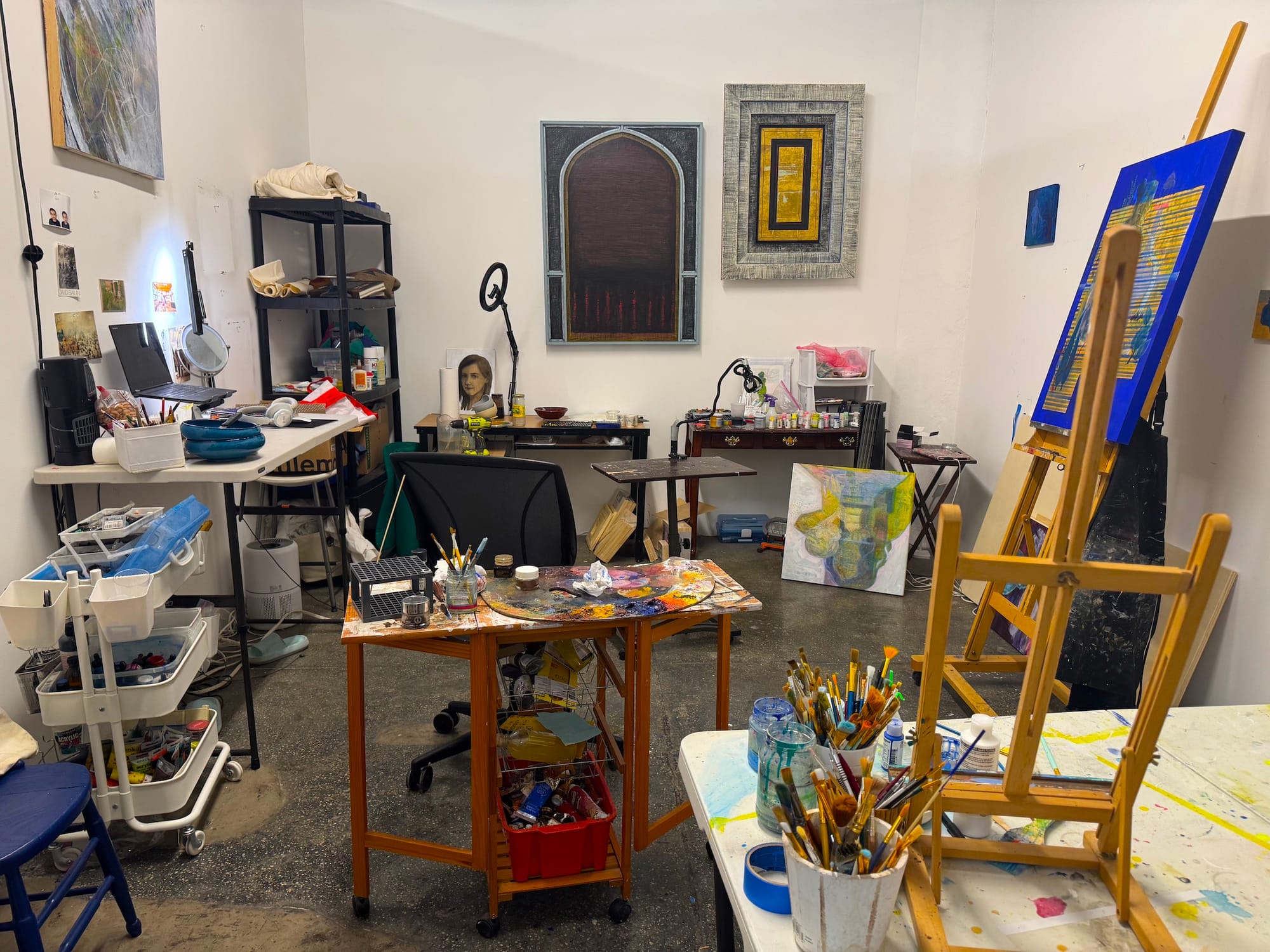
How long have you been working in this space?
Two years.
Describe an average day in your studio.
An average day in my studio begins after I drop my older son at daycare and my husband at the PATH station. I then go to my studio at Mana Contemporary with my baby. My working time is shaped around his rhythms — while he eats or sleeps, I am able to work more physically, and during moments of feeding or soothing, I shift into a more reflective mode, thinking through what I am doing and questioning the direction of the work. I often move between several works at once. This rhythm of interruption and return has become an important part of my process. I usually listen to podcasts, music, or audiobooks while working. I find that a certain level of distraction can help me see the work more clearly and approach it from new perspectives. I typically conclude my day around 5pm, when I leave to pick up my son and return home.
How does the space affect your work?
Being surrounded by other artists at Mana Contemporary creates a sense of shared commitment, while still allowing for the solitude I need in my own practice. My work requires quiet and concentration, and the studio offers a space where I can think, reflect, and engage deeply with the process without interruption. This sense of isolation is essential, especially as my work develops through layering, time, and careful observation. At the same time, the proximity of the studio to my home and my child’s daycare allows me to maintain a consistent practice within the realities of daily life.
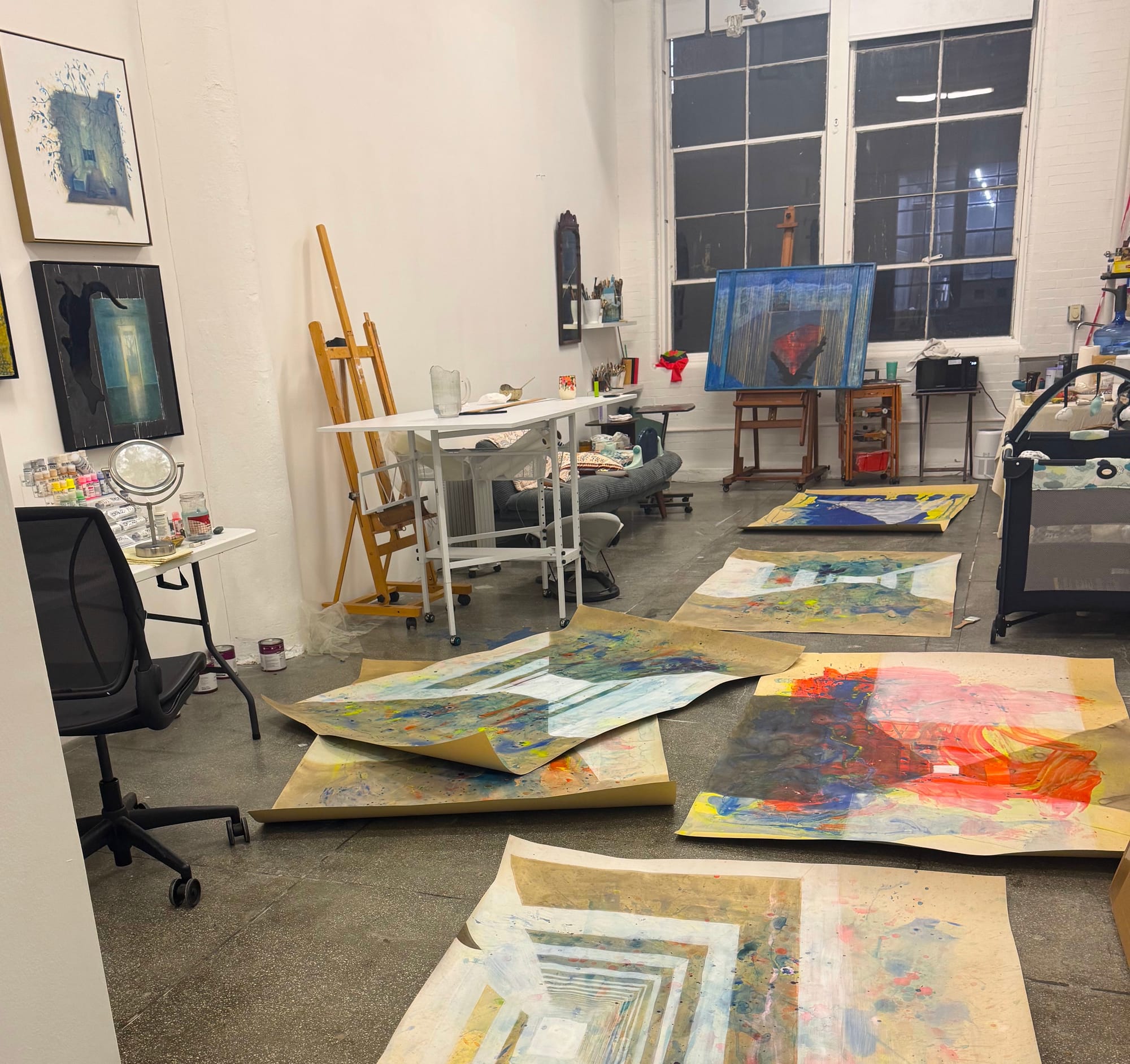
How do you interact with the environment outside your studio?
I am part of an active artistic community at Mana Contemporary. Beyond the studio, I stay connected through a close network of friends, many of whom are mothers working across different fields. We remain in constant conversation, discussing everything from daily life and parenting to broader social and political issues. These exchanges are an important part of how I stay engaged with the world outside the studio. This balance between focused, solitary work and ongoing dialogue with others — both within the art community and beyond — feeds into my practice.
What do you love about your studio?
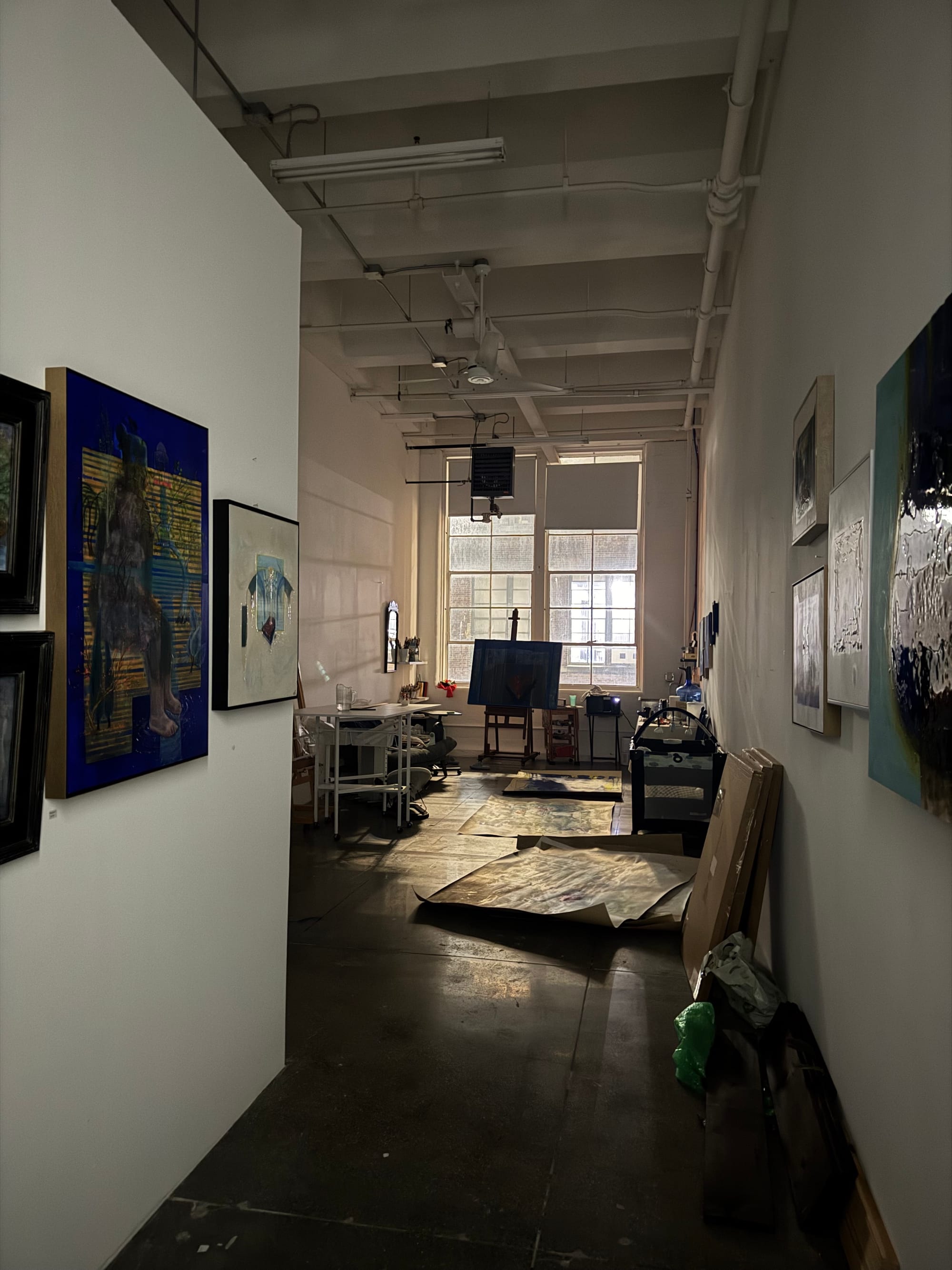
Its simplicity and functionality. The natural light from the windows is essential to how I see and work with my materials, and having a sink inside the space allows me to move fluidly between different processes without interruption. The scale of the studio also gives me enough room to work on multiple pieces at once and to step back and observe them over time. I also appreciate the character of the Mana building itself — the brick architecture, the sense of history, and even the daily familiarity of entering the space and being greeted at the front. These small, consistent elements create a sense of grounding and continuity, making the studio feel both personal and connected to a larger environment.
What do you wish were different?
Like many artists working in the New York area, the cost of maintaining a studio is a constant challenge. While I value having a dedicated space to work, balancing that cost alongside family responsibilities — especially with two young children — can be difficult to sustain long-term. At the same time, having access to a studio like this is essential to my practice. This tension between the need for space and the realities of affordability is something I continue to navigate as part of maintaining an active studio practice.
What is your favorite local museum?
One of my favorite local museums is the Tenement Museum. I’m drawn to it because it presents the lived experiences of immigrants in New York across different periods, not as distant history but as intimate, human stories. Walking through the preserved spaces and hearing these narratives creates a powerful connection between past and present. As someone whose work is shaped by migration and displacement, I feel a strong resonance with these layered histories. The museum offers a way of understanding how personal stories are embedded within larger social and cultural contexts, which closely relates to the themes I explore in my practice.
What is your favorite art material to work with?
Lately, I’ve been drawn to working with bright, transparent inks. Their fluidity and lightness allow me to build layered surfaces where forms can emerge gradually through accumulation and chance. I’m interested in how these materials behave — how they spread, stain, and interact with one another in unpredictable ways.