A View From the Easel: Flor Khan
“Here, I am allowed to play, to not know the answers, to let the message evolve on its own timing.”
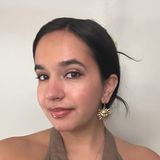
Welcome to the 358th installment of A View From the Easel, a series in which artists reflect on their workspace. This week, Flor Khan collapses time and tenderly revives the memories of her ancestors.
Want to take part? Check out our submission guidelines and share a bit about your studio with us through this form! All mediums and workspaces are welcome, including your home studio.
Flor Khan, Bronx, New York City
How long have you been working in this space?
I have been working out of this particular space since March; before then, I worked in a number of artist studios and my own apartment.
Describe an average day in your studio.
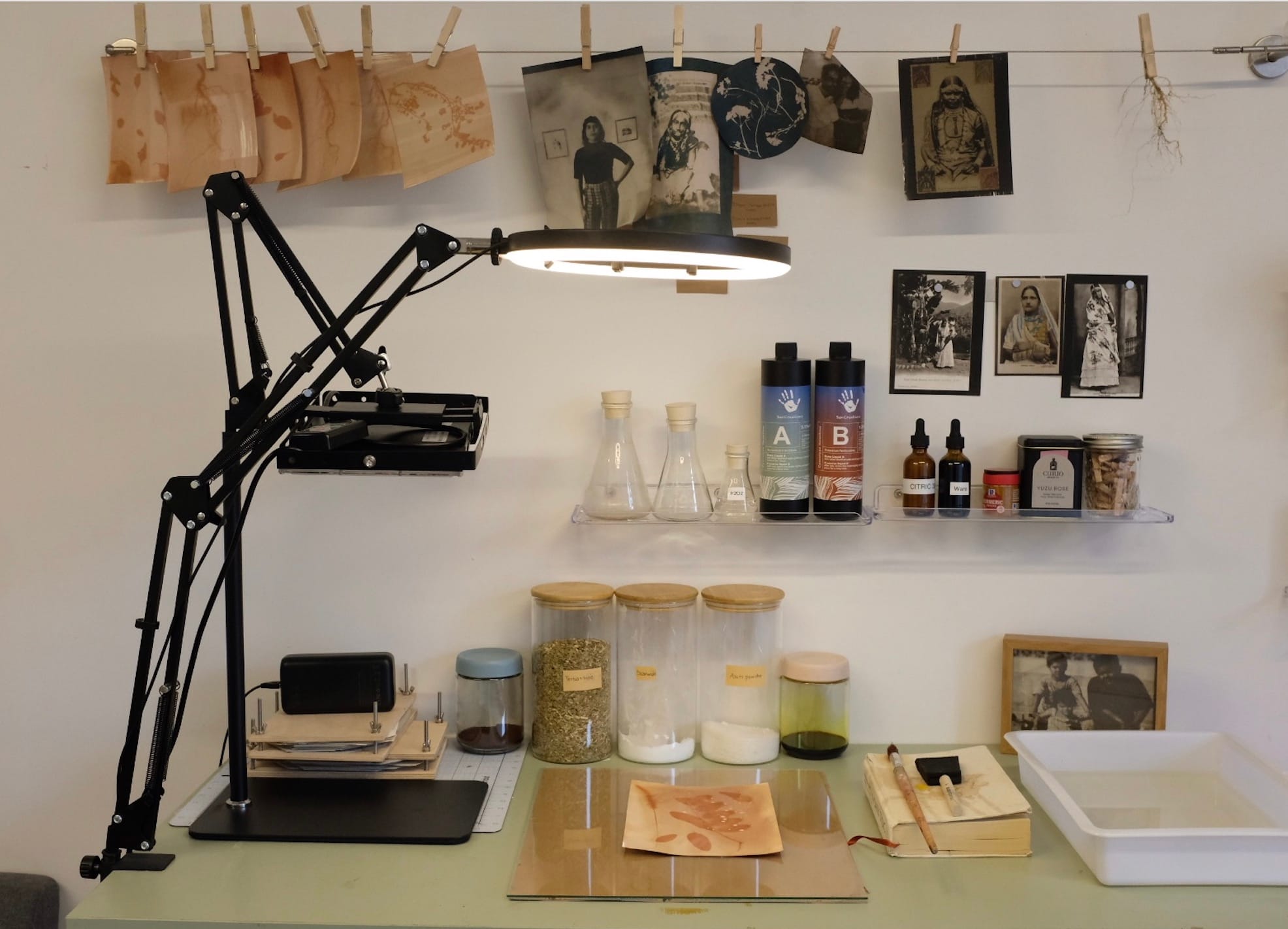
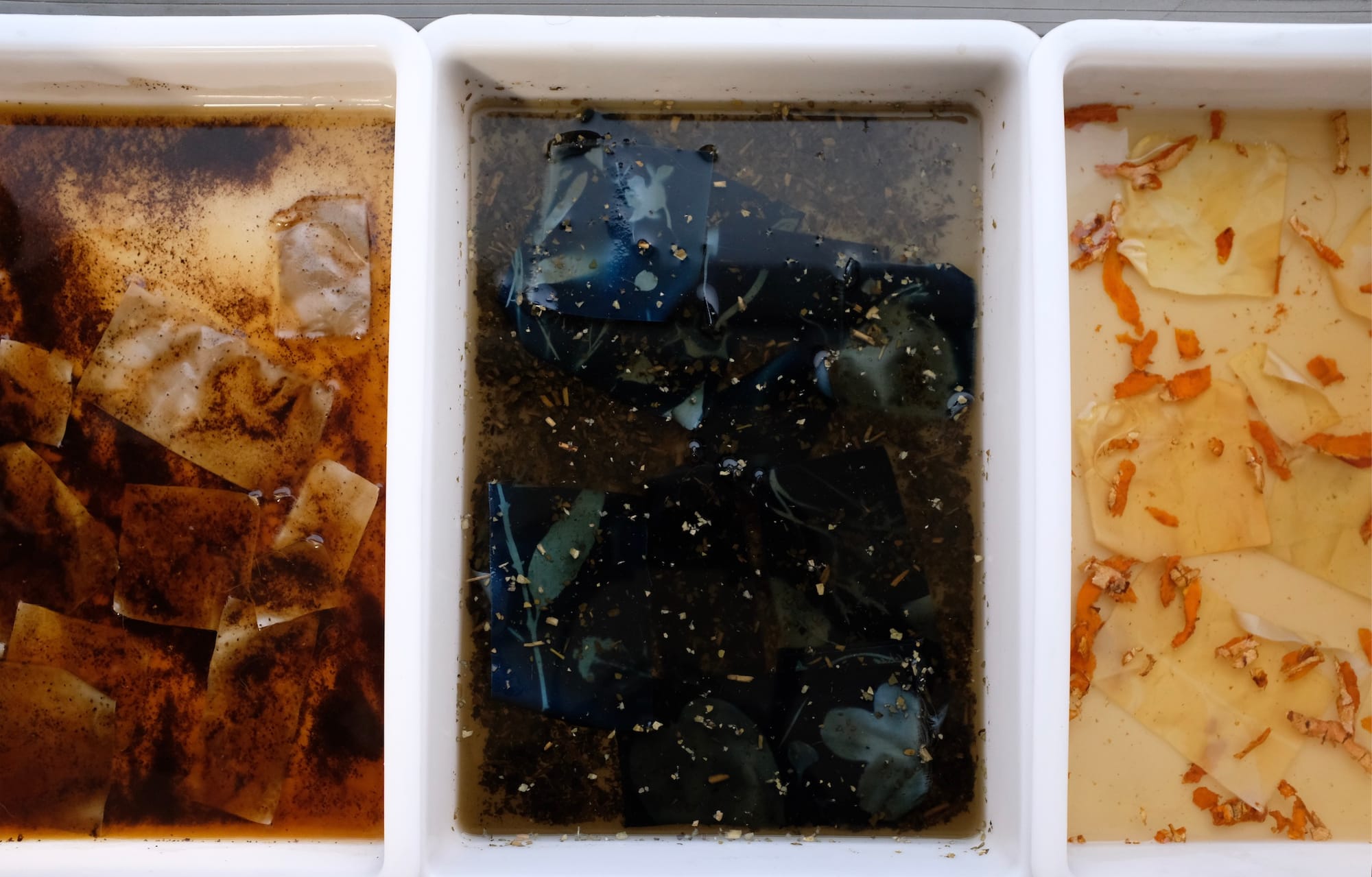
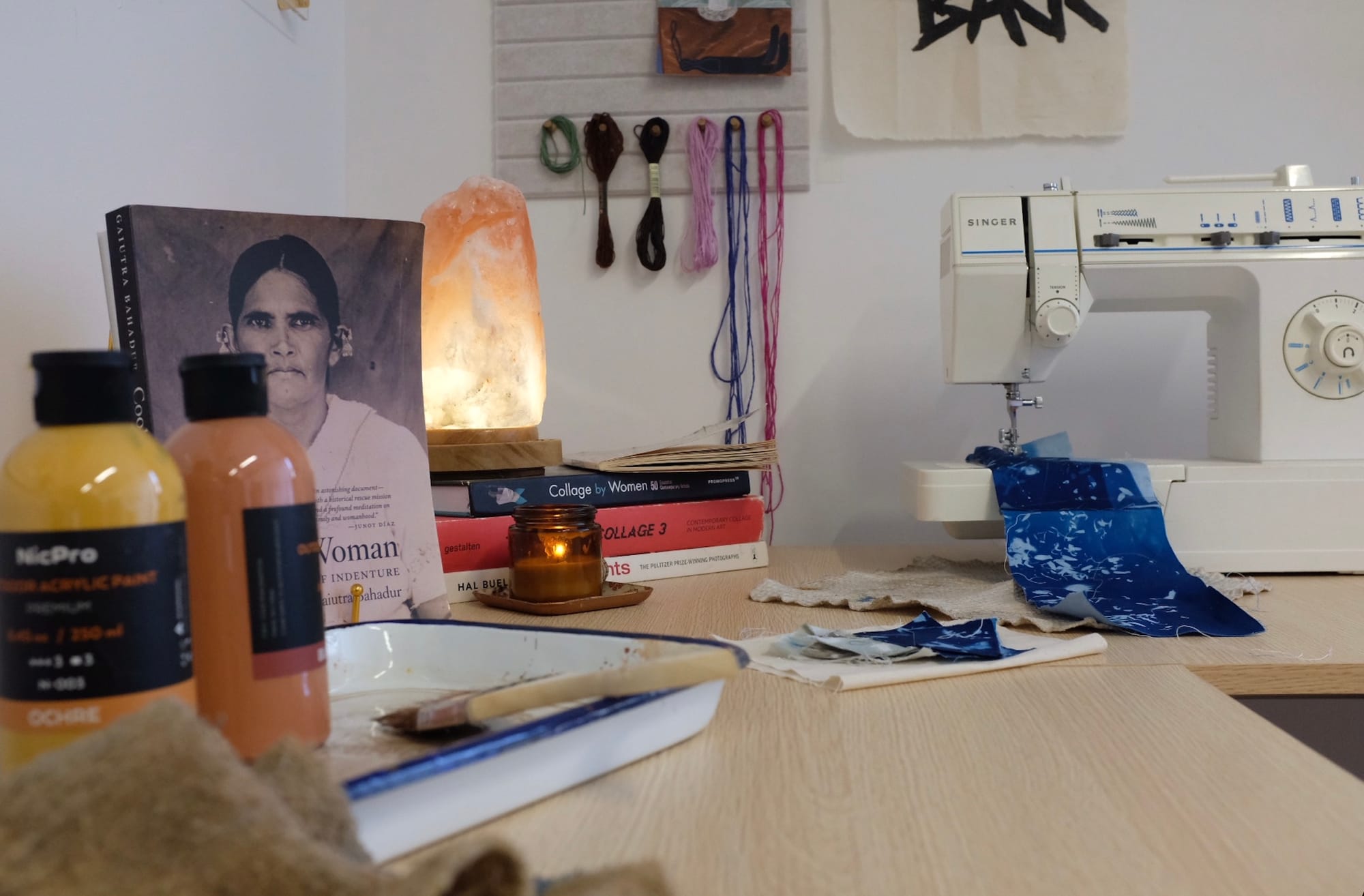
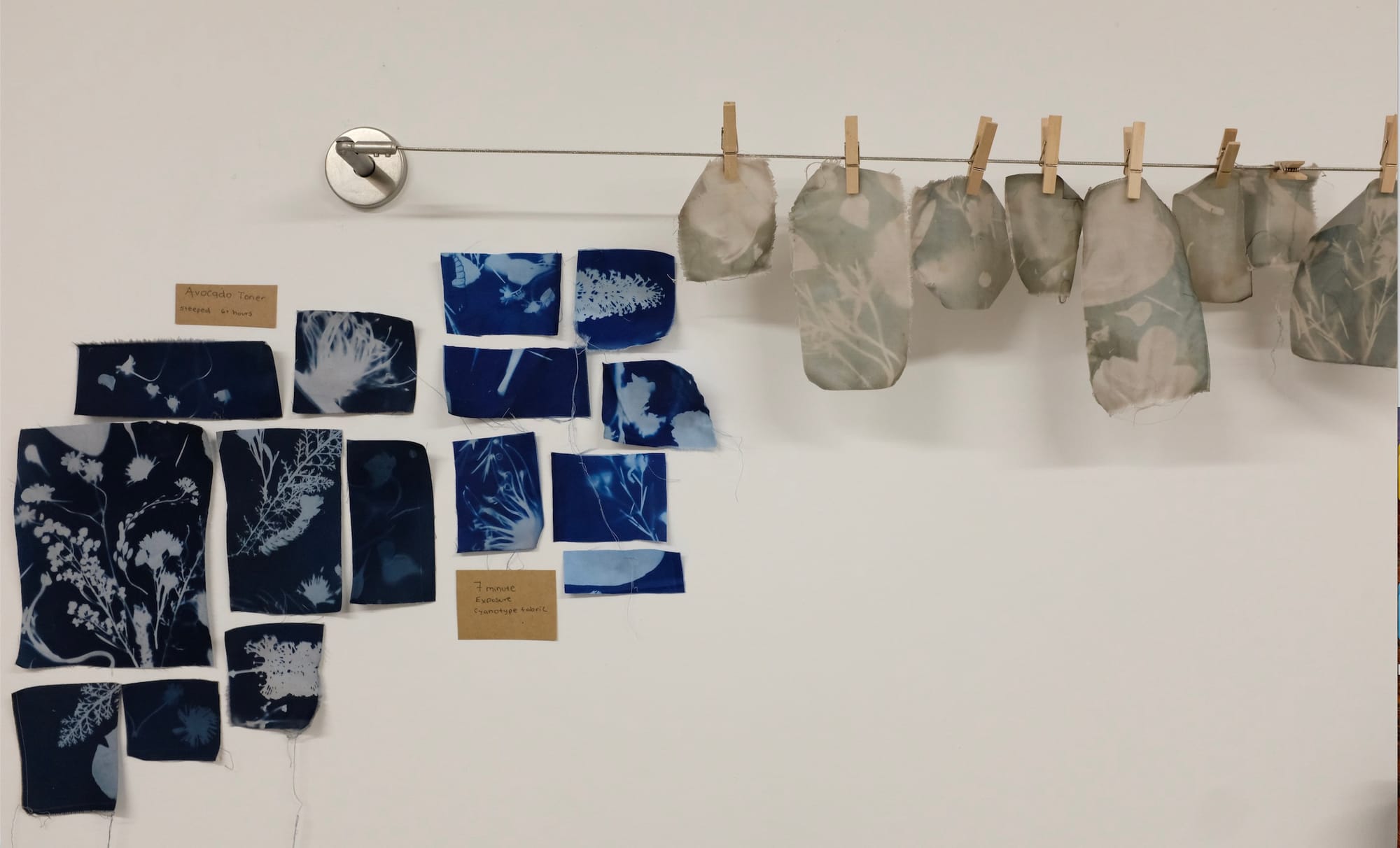
The average day at the studio starts around 4pm, following my daytime job. Typically, I work on two to three pieces at once: Something is usually developing color in my photo processing work station, another piece is drying on the work line, and the other piece is steeping in tannins. If I'm lucky, I get to work with my sewing machine when the fabrics have dried. Before beginning my work, I turn on my salt lamp and light a candle for the ancestors; I ask for their permission to bring their memories back to life. With each stitch, and each photo transfer, I am brought closer to their memory, whether that's working with Victorian-era postcards featuring my Indo-Caribbean aunties or tapping into the photo albums of my late father. For background music, NPR's Tiny Desk plays whichever artist is being featured for the week.
How does the space affect your work?
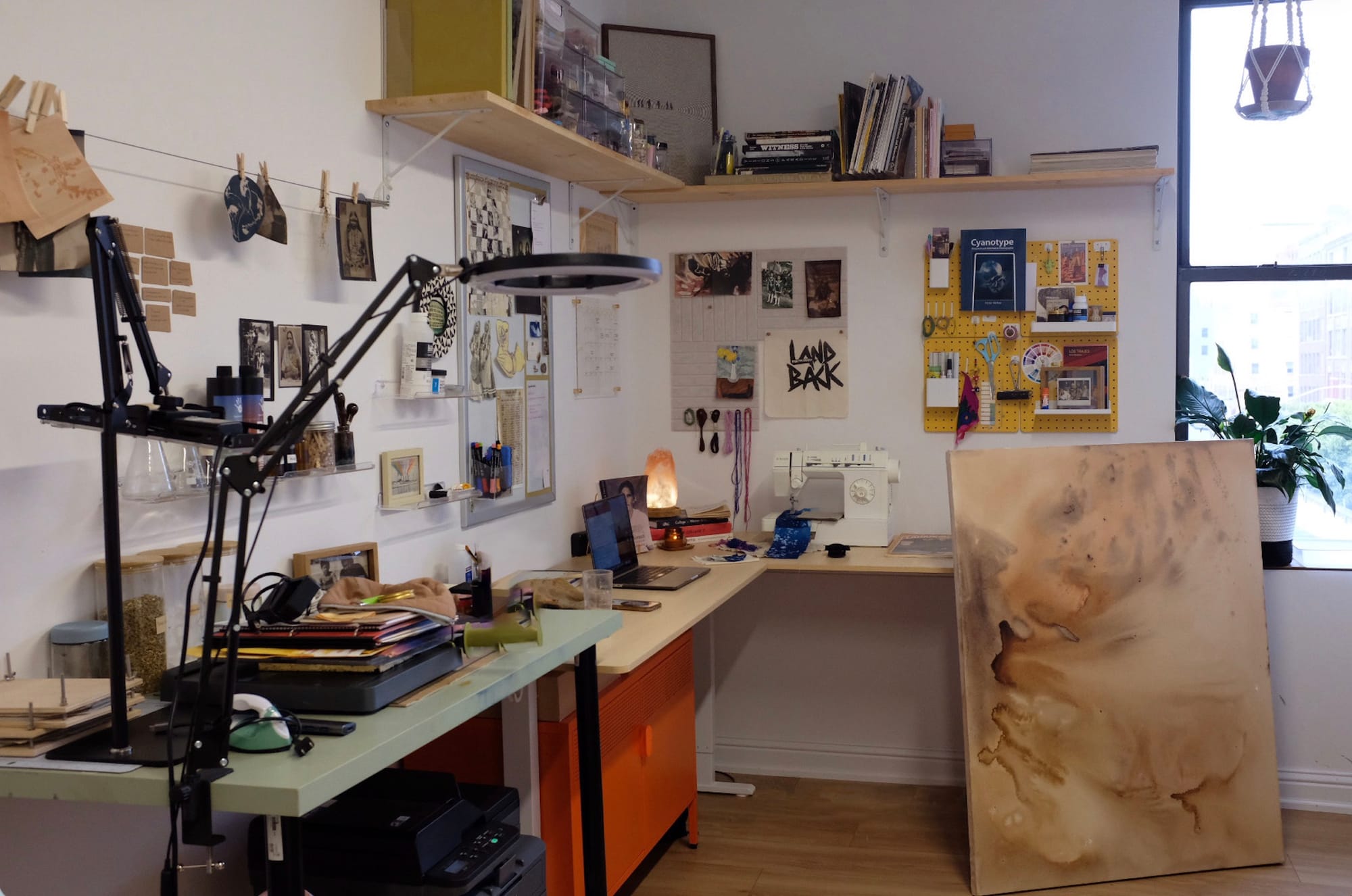
My studio is a sacred space. It is a blessing to be surrounded by works in progress, keeping me in the flow: The pieces and I are in continuous conversation with one another. If the rain comes, I nest myself in the dim light of the candle and find myself in another world, one where the colors of grief are allowed to float around me, where catharsis is not shied away from, where I am allowed to be slow, intentional, soft with myself and the imperfections of the creation process. Here, I am allowed to play, to not know the answers, to let the message evolve on its own timing.
How do you interact with the environment outside your studio?
Being apart of the Kreate Hub community has been a beautiful experience. The Bronx community has been so welcoming. The hallways are covered in art from my neighboring studios and it inspires us all to be in conversation with one another. Down the hall you can find small business: studios for makeup design, costume, and film production. My studiomate and partner is a muralist and painter. We often find ourselves spending late nights creating, dreaming of world where we get to co-create workshops for our community. In fact, in the next coming weeks, we will be hosting a mashup of our artistries: a cyanotype-painting workshop on New York City landscapes.
What do you love about your studio?
I love the silence in the late night. Because I'm away from the main road, there are less ambulances whirring in the background; instead, I hear the train in the distance, I hear the raindrops, the candle flickering. When I am here, I am able to lose myself in the creation process because I am away from the distractions of home and house responsibilities. I love that I can leave my pieces unfinished, unbothered, no need to pick up the mess because the space allows for the process to bloom on its own time.
What do you wish were different?
If I could have more space for my tannins, this would be excellent! Right now, my water basin is down the hall and the slop sink is necessary for washing out my photo processors. Because I work primarily with photo processing liquids, running water near my workspace would be a dream! But, for now, I am grateful for my humble beginnings.
What is your favorite local museum?
El Museo del Barrio is one of my favorite museums uptown, one because it is accessible for the artist communities I live near and two because it centers on the contributions of Latin American and Caribbean culture and history. Their recent exhibition Sophie Rivera: Double Exposures spoke to the many layers of identity women hold in the art world. I was particularly blown away by her gelatin prints of children portraits shot in the 1980s, showcasing the class systems and lives lives in New York City streets. Being able to go to museums near me that represent my own culture is a powerful, affirming experience. As a Xicana-Latina, I felt seen in her art.
What is your favorite art material to work with?
I am deeply moved by photography and alternative photographic processes. Working with images allows me to revisit memories of family and loved ones who have passed; image-making also allows me to reinterpret the image itself: I overlay meaning by working with cartography, sewing news images atop, or mending parts that feel untrue or not whole. In the case of working with 19th-century postcard images, I disrupt the colonial gaze and bring historical context and agency back to the women that were often eroticized through the camera, staged in front of backdrops that removed them from their truer lived lives. Alternative photographic process reveal layers of colors and shadows that all exist with a single image, bringing truth to the saying "a picture is worth more than a thousand words"; the difference here is that I, as the artist, get to rewrite them.