An Astronaut's Photographs of our Planet's Beauty and Mutilations
Astronaut photography has been influential on the perception of our planet almost since the first space missions.

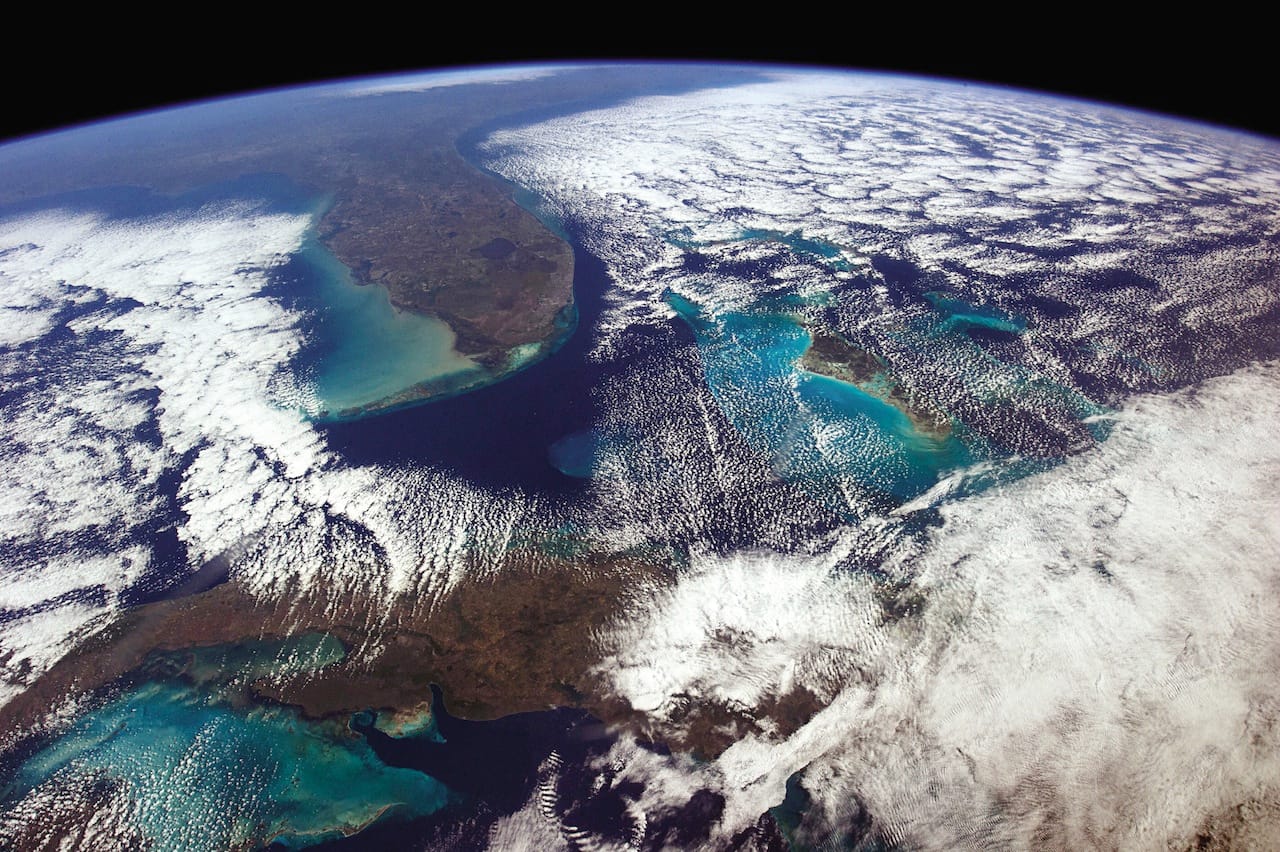
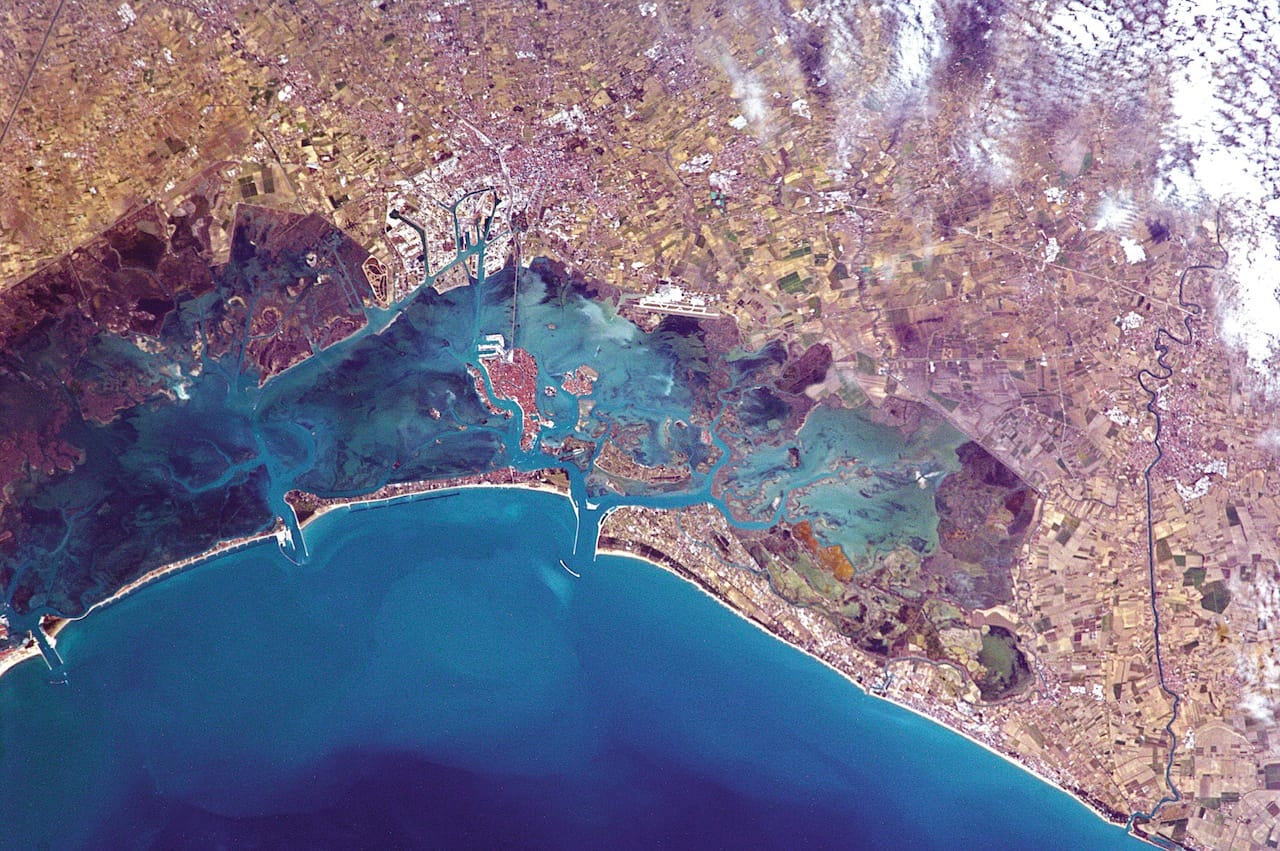
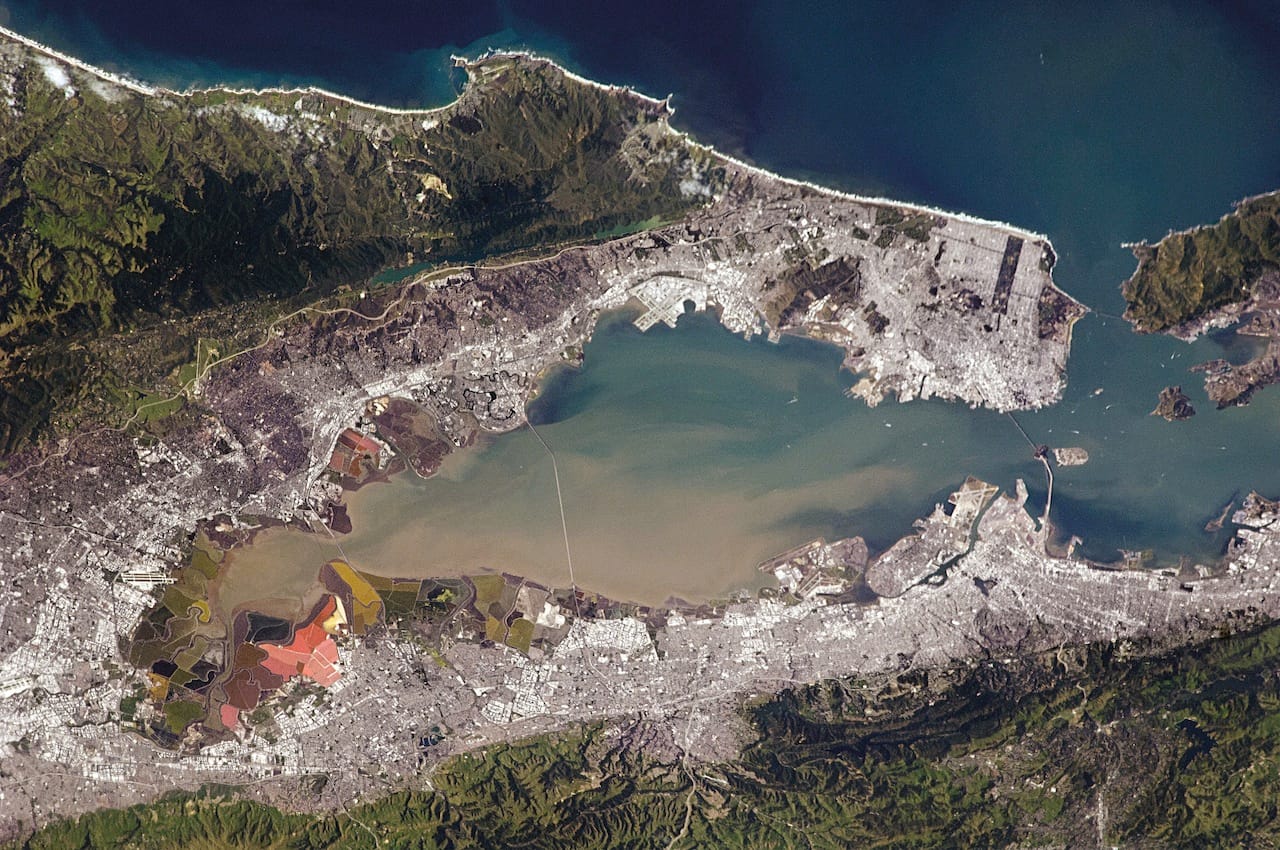
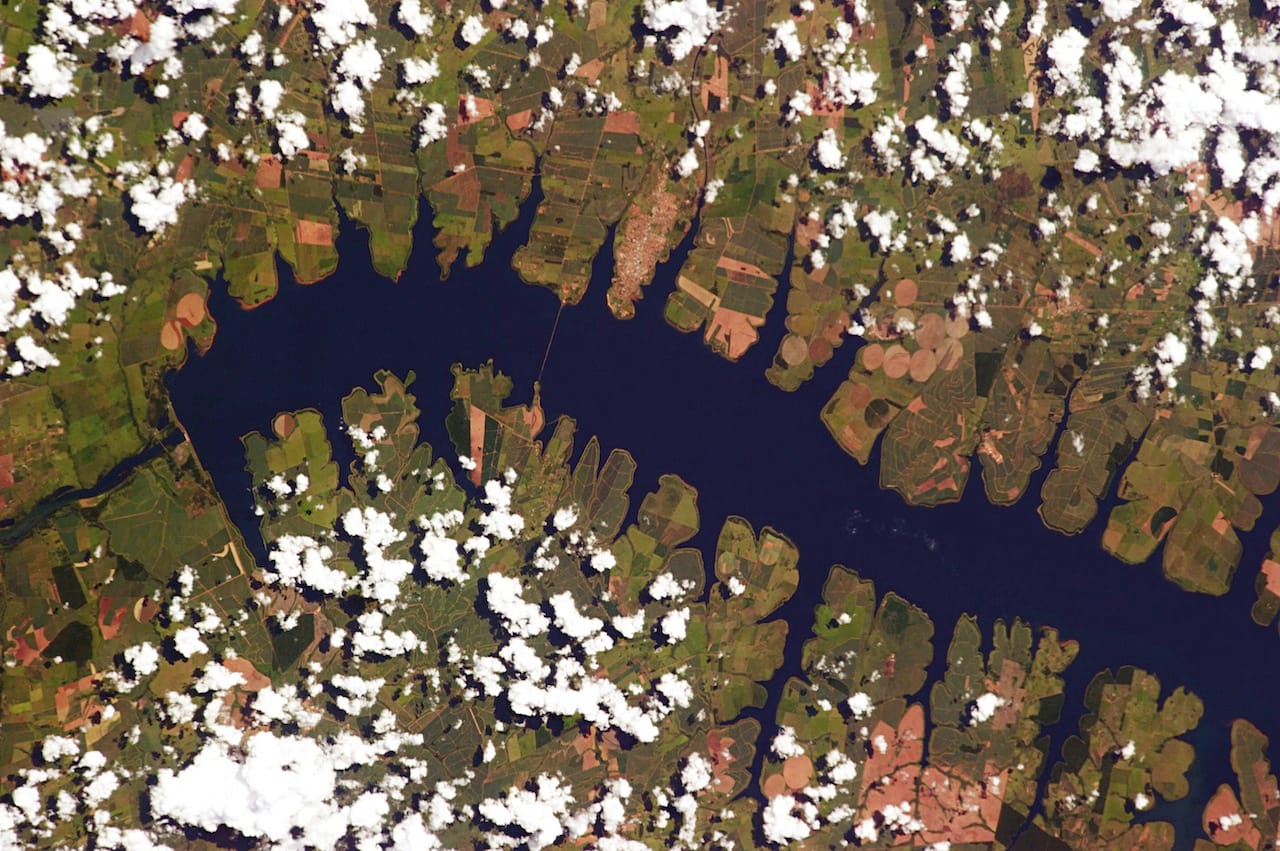
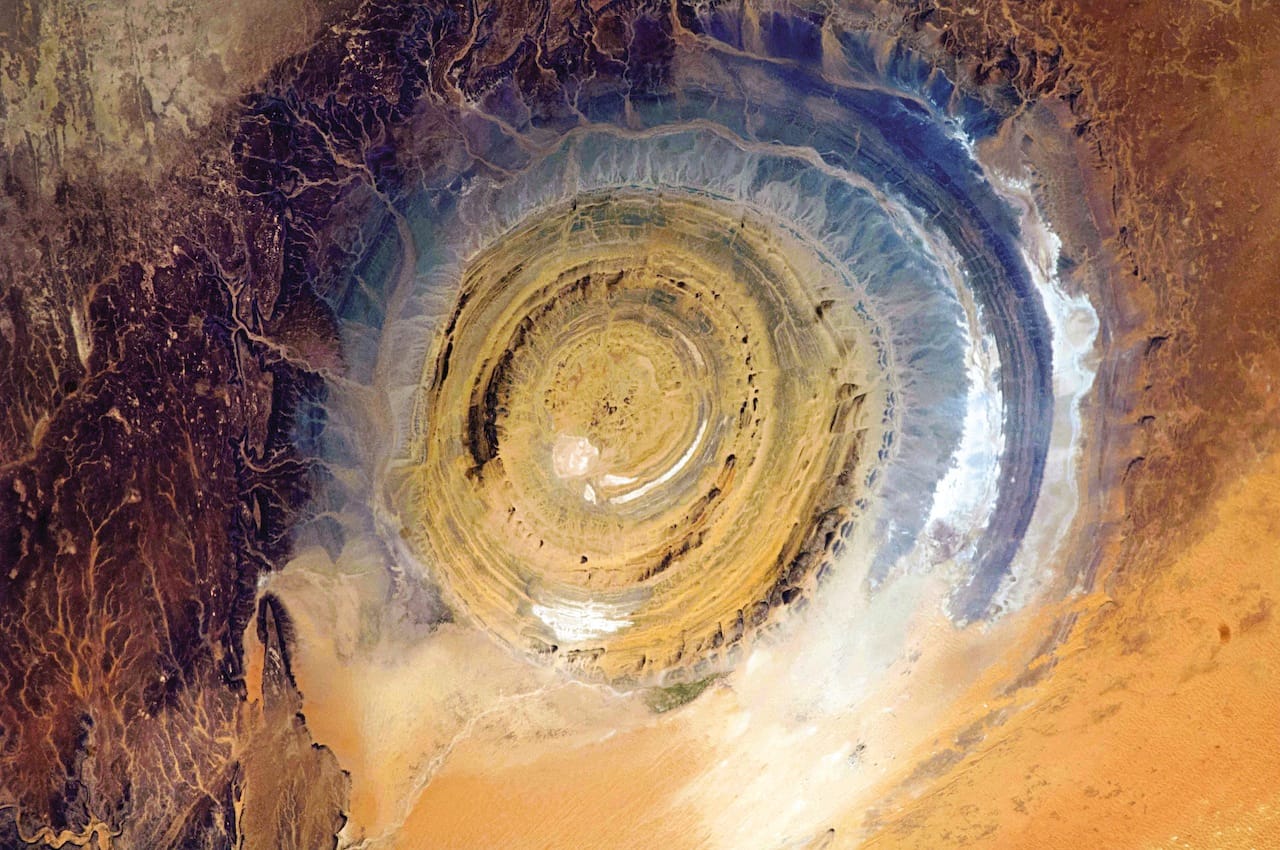
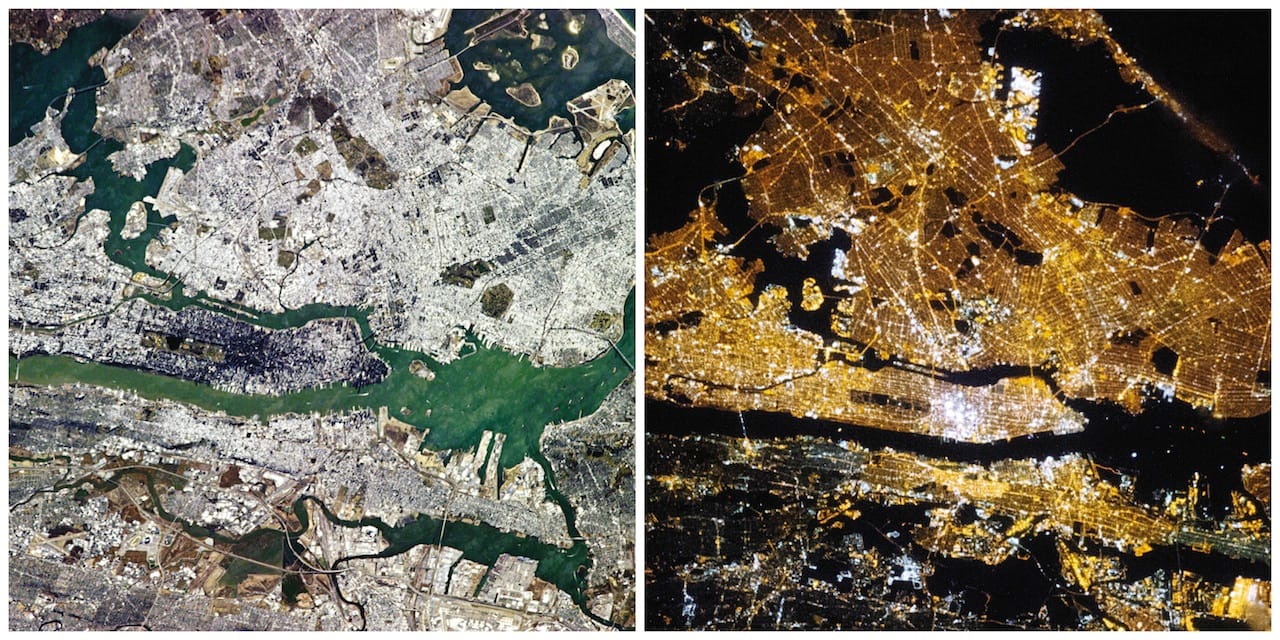
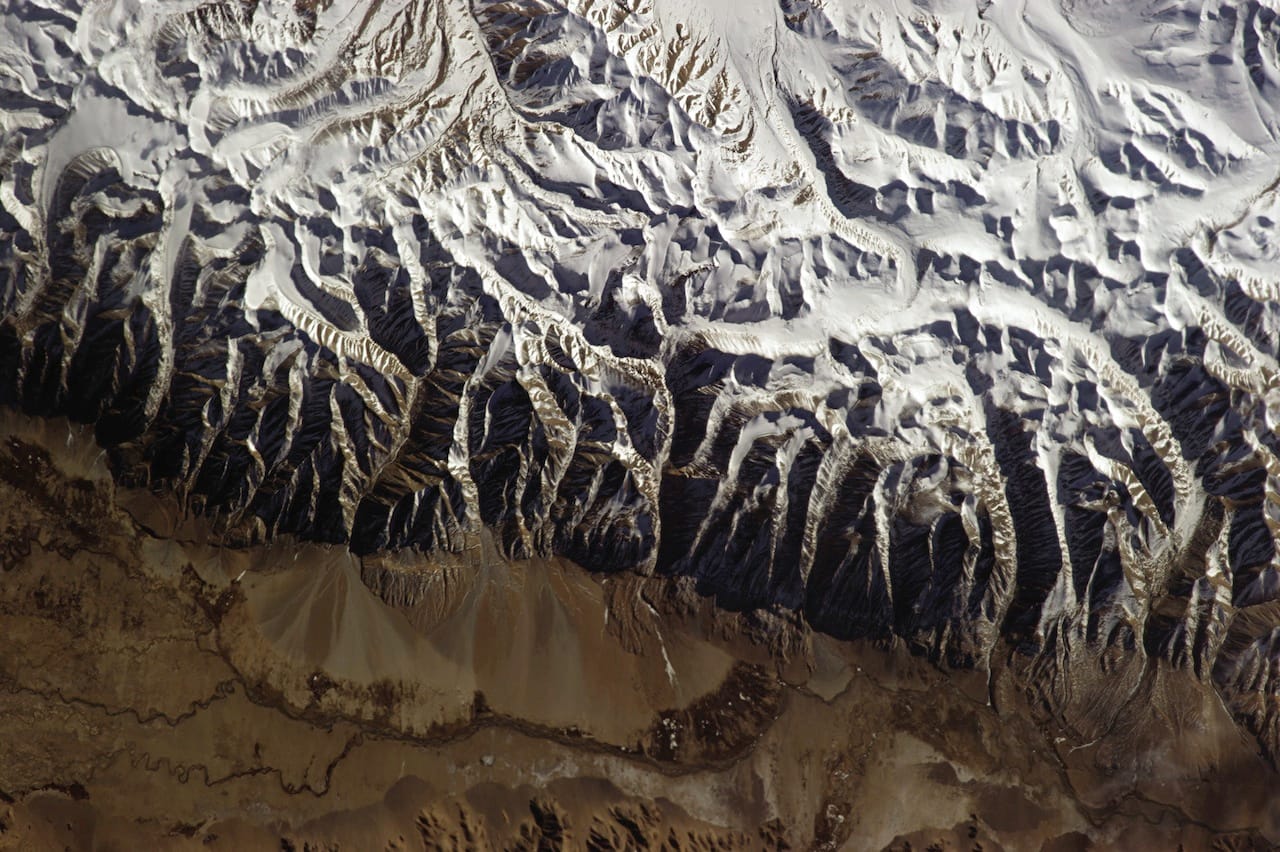
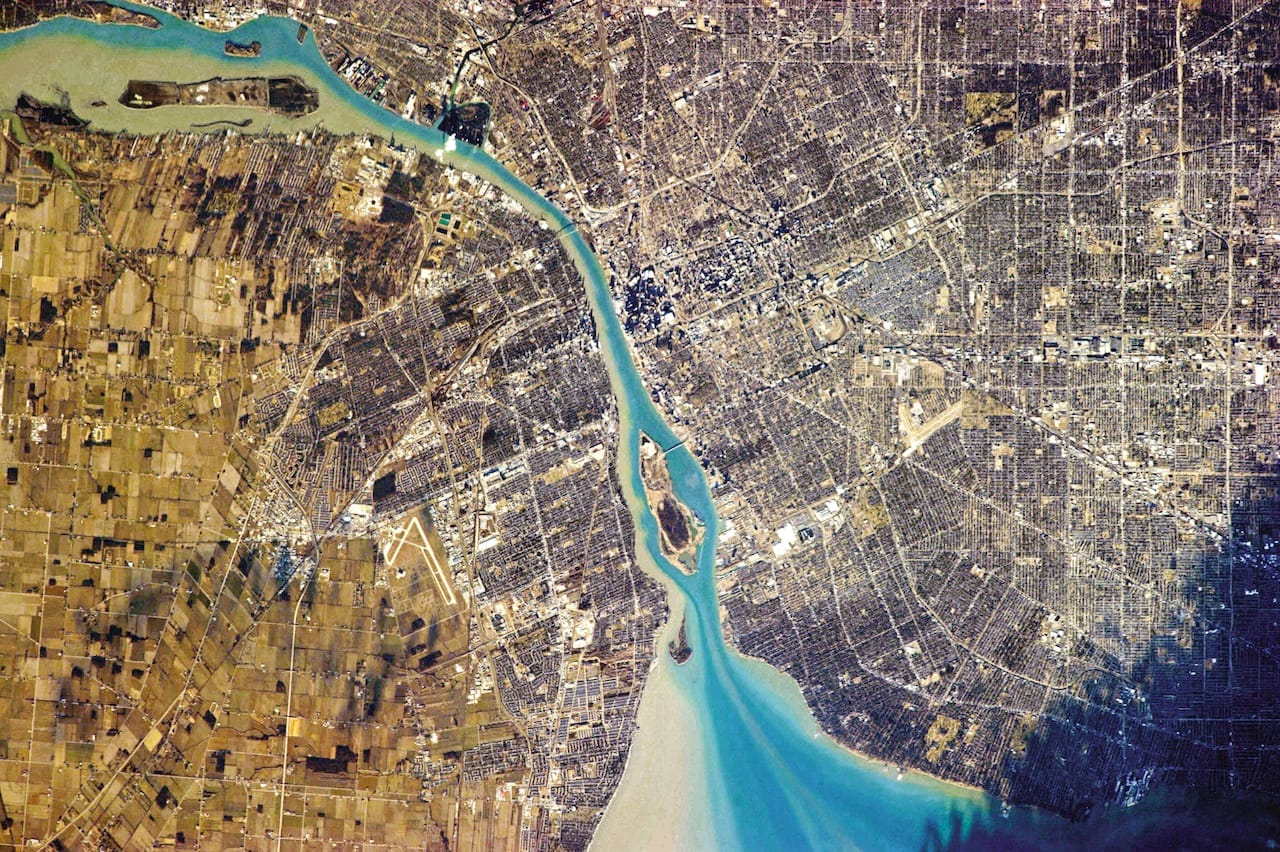
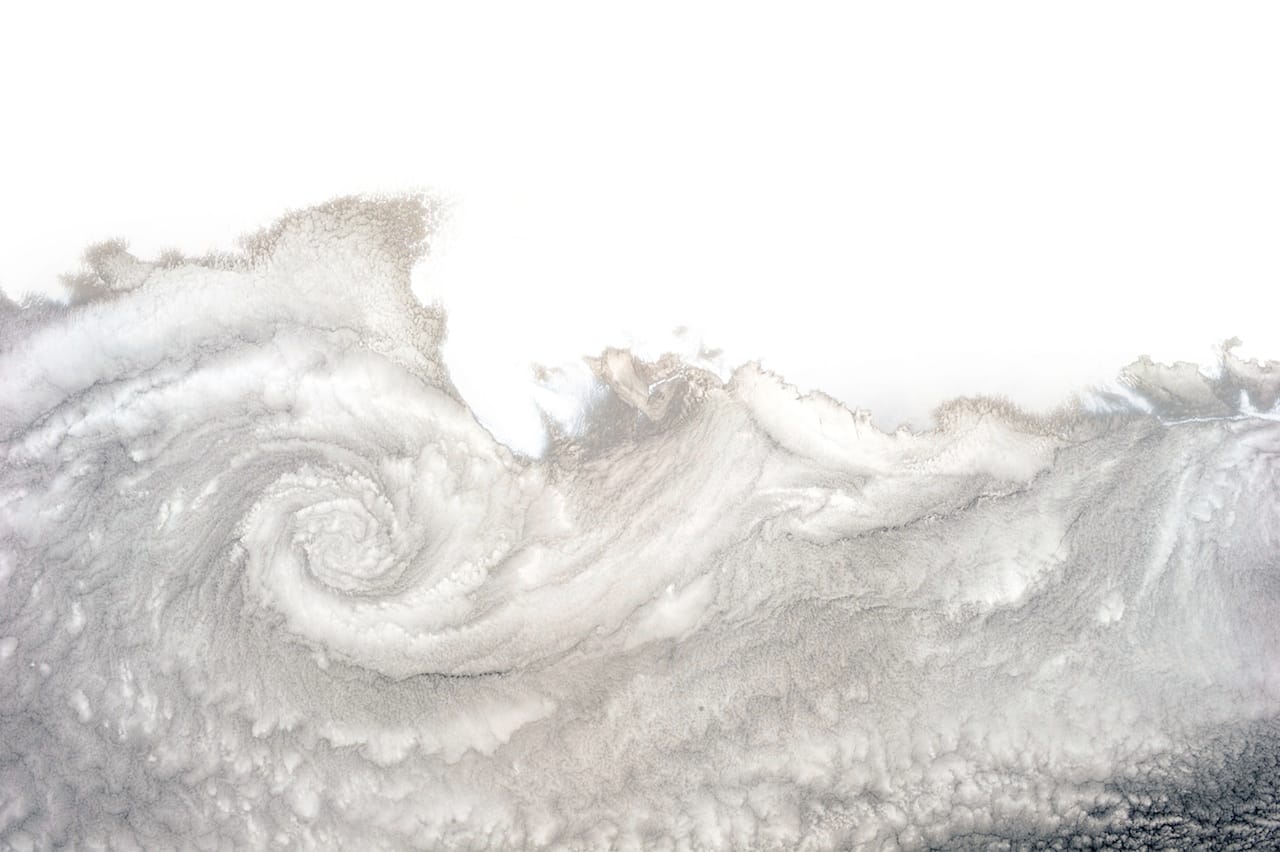
Over his five months as commander aboard the International Space Station (ISS) from December 2012 to May 2013, Col. Chris Hadfield orbited the Earth every 92 minutes. While gazing down at the distant landscapes through their seasonal shifts, manmade and natural alterations, viewing new angles with the rotations of the planet beneath him, Hadfield took around 45,000 photographs. The highlights are compiled into a new book that brings gravity-bound readers on a tour of our world from above.
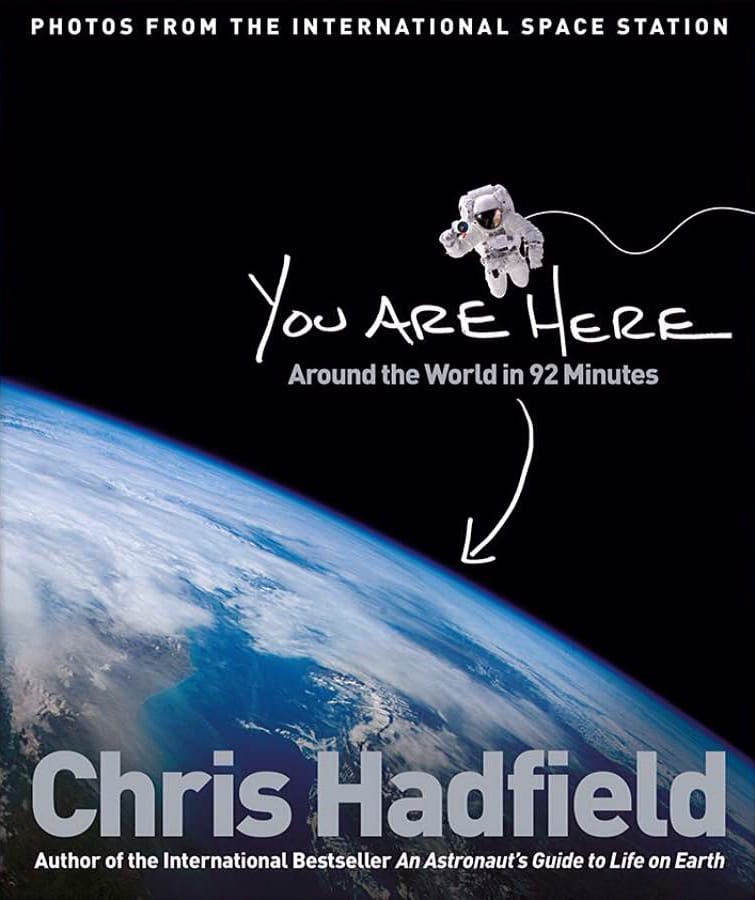
You Are Here: Around the World in 92 Minutes was released by Little, Brown and Company last month, including 192 photographs organized by continent. This “astronaut photography” as Hadfield describes it is different from the incredible wealth of satellite imagery available to almost anyone online, as it gives a human eye to the both immense and minuscule details of Earth. As he writes in an introduction:
Being able to perceive the narrative line behind our planet’s shapes, shadows and colors is a bit like having a sixth sense. It provides a new perspective; we are small, so much smaller even than we may have thought. To me, that’s not a frightening idea. It’s a helpful corrective to the frantic self-importance we are prone to as a species — and also a reminder to make the most of our moment on this beautiful, strange, durable yet fragile planet.
Astronaut photography has been influential on the perception of our planet almost since the first space missions. Going back to 1968 on the Apollo 8 mission, William Anders snapped the famous “Earthrise” image of the blue planet dawning on the horizon of the Moon. A stunning perspective, it also became an environmental touchstone that influenced the formation of the Environmental Protection Agency.
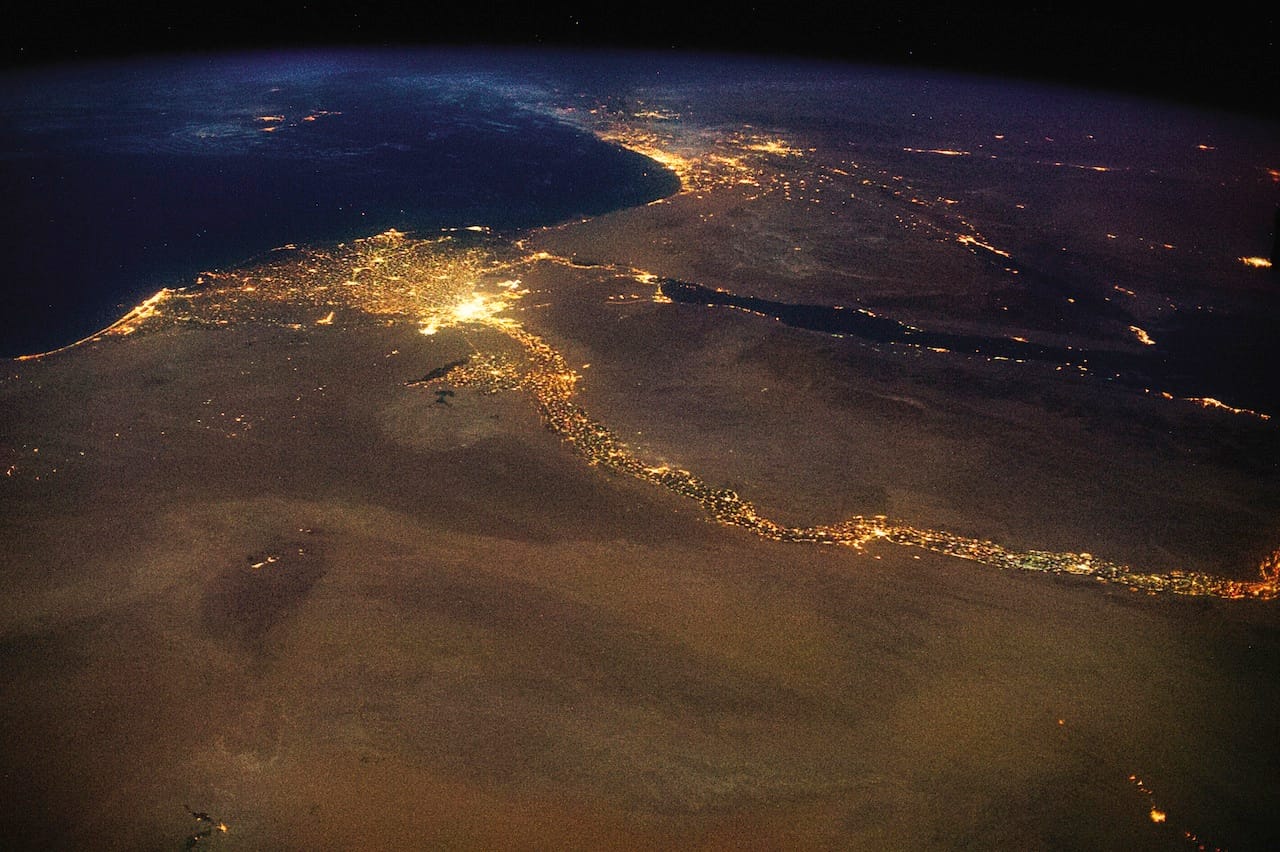
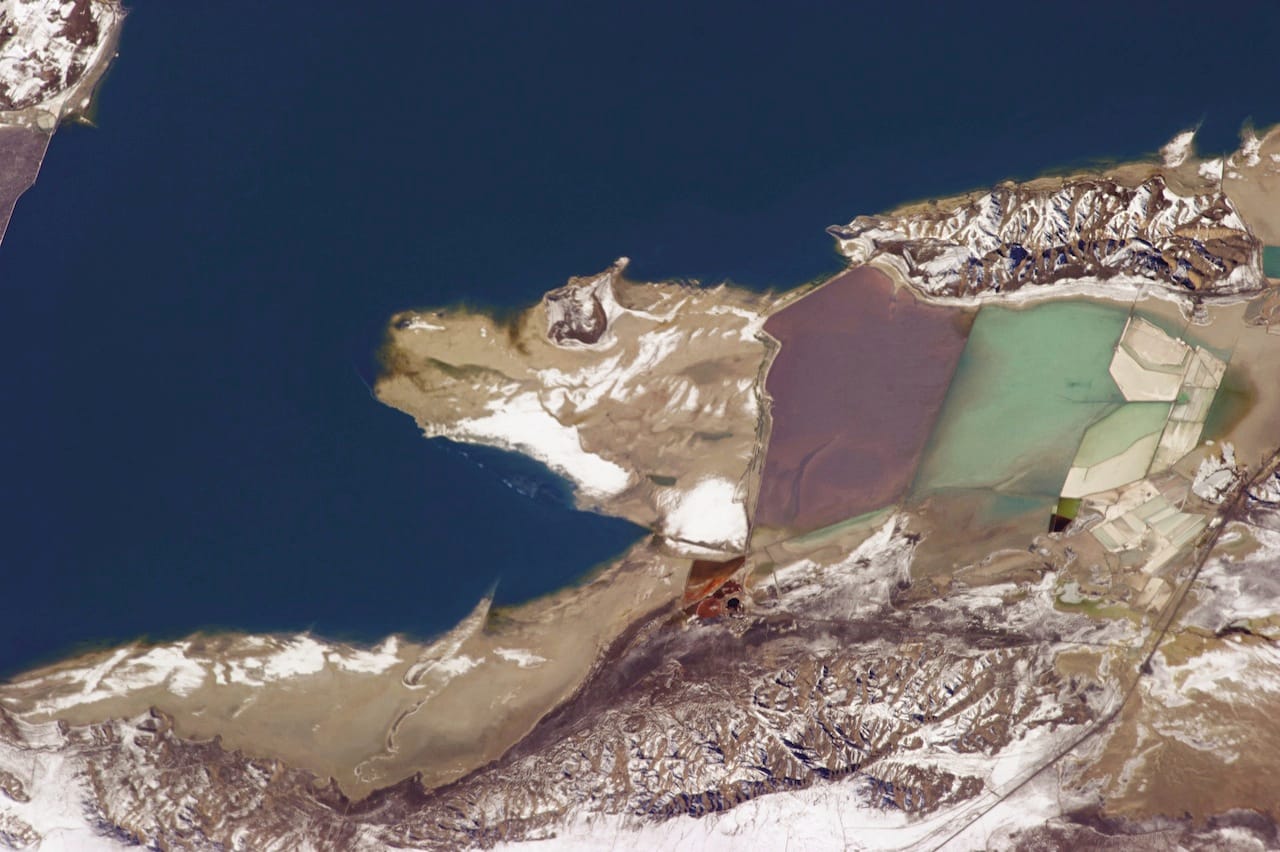
Likewise, Hadfield’s photographs have a resonance with the contemporary planet’s beauty and its problems. Development along the Mexico side of the border with California is pressed right to the line as if blocked by a force field; an aerial view shows the night lights of Cairo and Jerusalem in one frame with the winding Nile. Scars from the gas industry disrupt the topography of New Mexico, while Hadfield playfully comments on the shape of a “lone wolf” that seems formed by the geography of the Great Salt Lake.
With his 2013 An Astronaut’s Guide to Life on Earth, his time regularly tweeting photographs and posting videos on YouTube from inside and out of the ISS, the now-retired Hadfield has definitely been an advocate in bringing those down below in on the powerful perspective of space exploration. “The immediacy of the reactions and interactions, the collective sense of wonder, made me feel as connected to our planet and to other people as I ever have, though I was floating 250 miles above Earth in the company of just five other human beings,” he writes in You Are Here.
Despite our inundation with aerial views on Google Maps and other resources, the photographs are still a chance to see the world differently, to make you realize more strongly that, to paraphrase the Flaming Lips, we’re just floating together in space.
You Are Here: Around the World in 92 Minutes by Chris Hadfield is available from Little, Brown and Company.