Art from Anger: Portraits of Ciudad Juarez’s Lost Women
“Art is important when justice has failed,” he wrote, going on to say that when justice is not served, all that remains for the victim’s family is her story. As an artist on the outside looking in, he feels he can facilitate the telling of that story on an international scale, combatting the false n

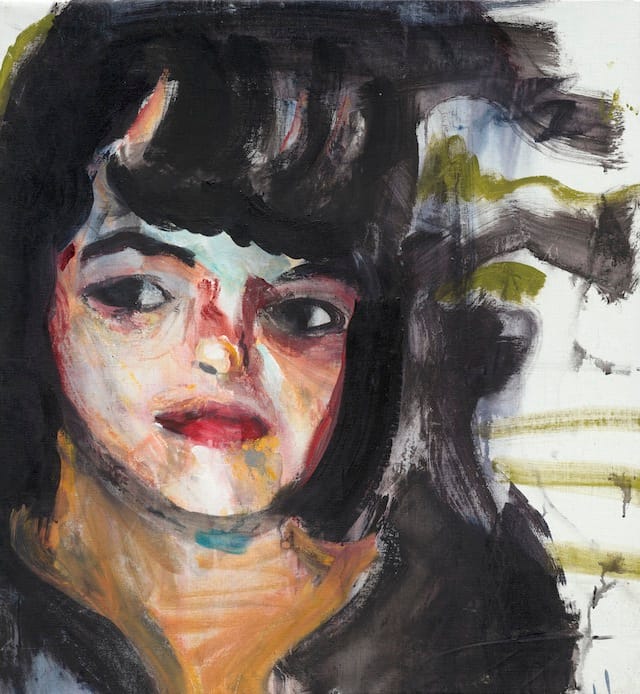
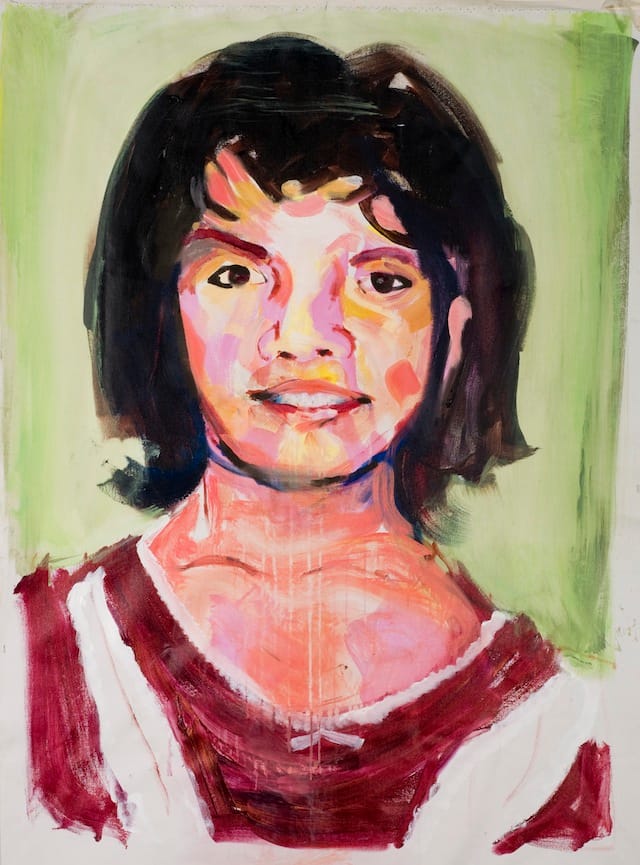
“Guadalupe Veronica Castro was kidnapped on 4 March 1996. She was 17 years old when she was strangled. Her mother, Maria Consuelo Paula Hernandez, moved to Juarez when Veronica was 7 years of age. Veronica was 13 when she started to work, faking her age saying she was older. She worked for 3 years before she went missing. Her goal was to help her mother so she chose to give up school after primary in order to work. She always gave her full pay cheque to Maria Consuelo—all she asked for was 20 pesos for a burger and for her mum to buy her Pantene Shampoo. Veronica was kidnapped and abused for 21 days. She had been drugged and hadn’t been fed. Her torturers cut off her left breast. Her body was found in the Lomas El Poleo body dump.”
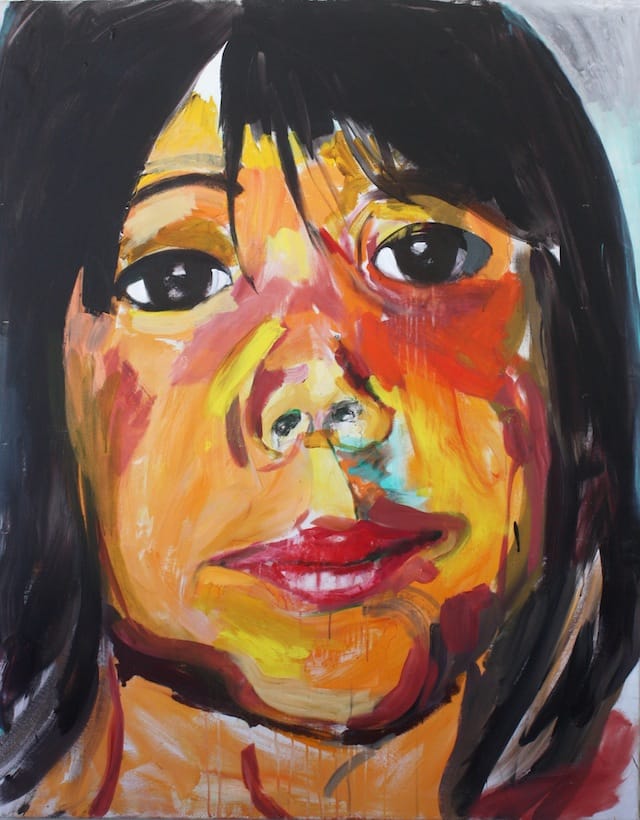
That’s the full, chilling title of a portrait painted by the Irish artist Brian Maguire, who traveled to the Mexican city of Juarez in 2008 after reading about the feminicidio that has targeted its women since the mid-1990s. The brutal killings have claimed at least 1,400 young women, and many more have gone missing. In Maguire’s painting, he renders Veronica’s features in bold, loose and colorful strokes that capture a bit of the life that was taken. Glancing sideways with a hint of a smile on her lips, she almost looks like a child.
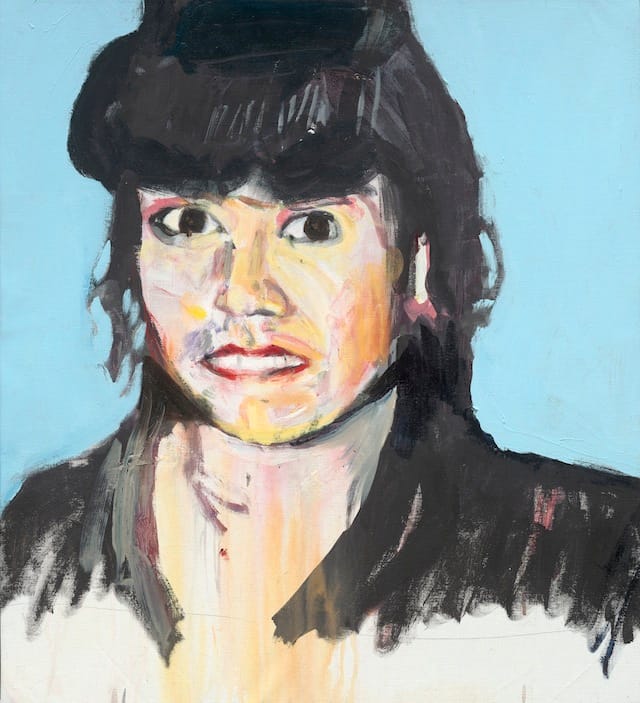
It’s one of many memorial portraits the artist made during his four years in Juarez. Maguire told Hyperallergic via email from Dublin that what compelled him to get involved was the government’s lack of investigations (attempts to seek justice are often met with death threats) and slap-on-the-wrist judicial rulings that only fuel more perpetrations.
“Art is important when justice has failed,” he wrote, going on to say that when justice is not served, all that remains for the victim’s family is her story. As an artist on the outside looking in, he feels he can facilitate the telling of that story on an international scale, combatting the false narrative encouraged by impunity, which is that the lives of poor, young Mexican women don’t count. “If the judges and police of Chihuahua had done their duty, this work would never have been made, but since they didn’t, it is necessary,” he said.
The artist created two acrylic portraits for every murdered woman he painted: one to give to her family, and the other to exhibit around the world. In September 2012, he showed them at the European Parliament in Brussels. “[The exhibition] clearly captured the attention of the MEP’s and the Mexican government,” he said. He has also shown some of the portraits at the Visual Centre for Contemporary Art in Carlow, Ireland.
Maguire isn’t the first artist hoping to raise awareness through art about the feminicide in Juarez. In 2008, artists Swoon and Tennessee Jane created an installation titled “Portrait of Silvia Elena” in Honey Space in Manhattan’s Chelsea neighborhood. Like the Irishman’s project, their installation was deeply emotional and sought to give a face to the thousands of victims of these heinous crimes.
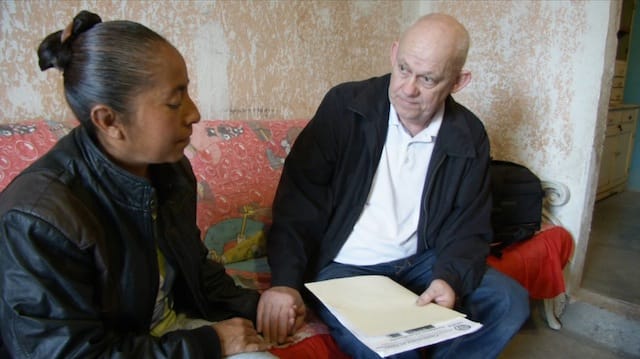
Maguire’s work has always dealt with social justice issues. He has spent 30 years painting in prisons and mental asylums in Ireland, Europe and the Americas, and ten years ago in Brazil, he took on the subject of the disappeared victims of the military dictatorship. In 2000, he began making films based on his work, and two years into his Juarez stay, he and the director Mark McLoughlin began work on the documentary Blood Rising. It first premiered in Dublin last year, and it will soon be screened in theaters throughout Britain.
“Mostly, for me, art comes from a spirit of revenge,” Maguire explains at one point in the film, which he sees as an additional way to challenge the narrative of impunity. “There is no justice, but if you point that out, you’re taking revenge on the lack of justice. Some art comes from love, but mostly it comes from anger.”
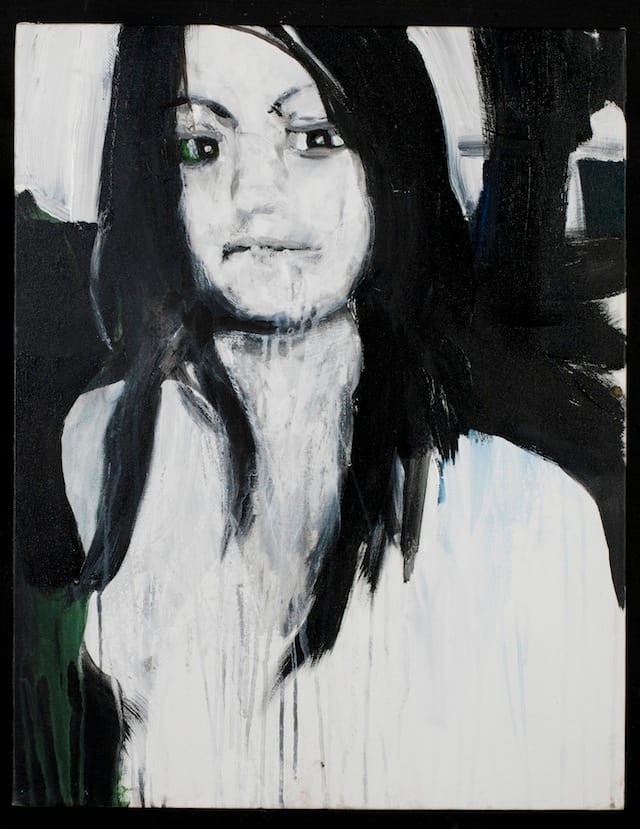
Looking at a portrait of 17-year-old Brenda Berenice Costillo Garcia, whose body was found in a dump with 11 other women’s corpses in February 2012, Maguire says, “If I take on anything in this work, it’s to make an image which speaks of the person that’s gone. I don’t know her, but I do know her mother. I do know her children. I have made some investigation as regards her personality. And I have an image.”
It’s a heart-wrenching, difficult film, but toward the end, Maguire cautions against embracing the mass-media stereotype of Juarez as a place lost entirely to violence.
“It’s still a city of a million and a half people, who are rearing their children best they can, and educating them, and doing what normal people do,” he says. “So it’s necessary for us to create a solidarity which is international. The necessity to resist — that is not a choice. It is an absolute necessity. In order to stay alive, to remain fully human, it’s necessary to resist.”
Throughout the film, it’s striking how out of place the pale Irish man looks in the streets of Ciudad Juarez, but Maguire seems perfectly at ease. There’s nothing self-serving about his project, never a moment where one feels he’s trying to profit artistically off of someone else’s tragedy. He also rarely indulges his own sadness; there are moments when he is visibly emotional on screen, but he never despairs. If art, as he says, grows out of anger, then Maguire is outraged. And there’s not much room for anything else.
h/t The Guardian