Art Problems: If I Have a Day Job, Am I a Real Artist?
Ever been shamed for having a nine-to-five job as an artist? Paddy Johnson can relate.

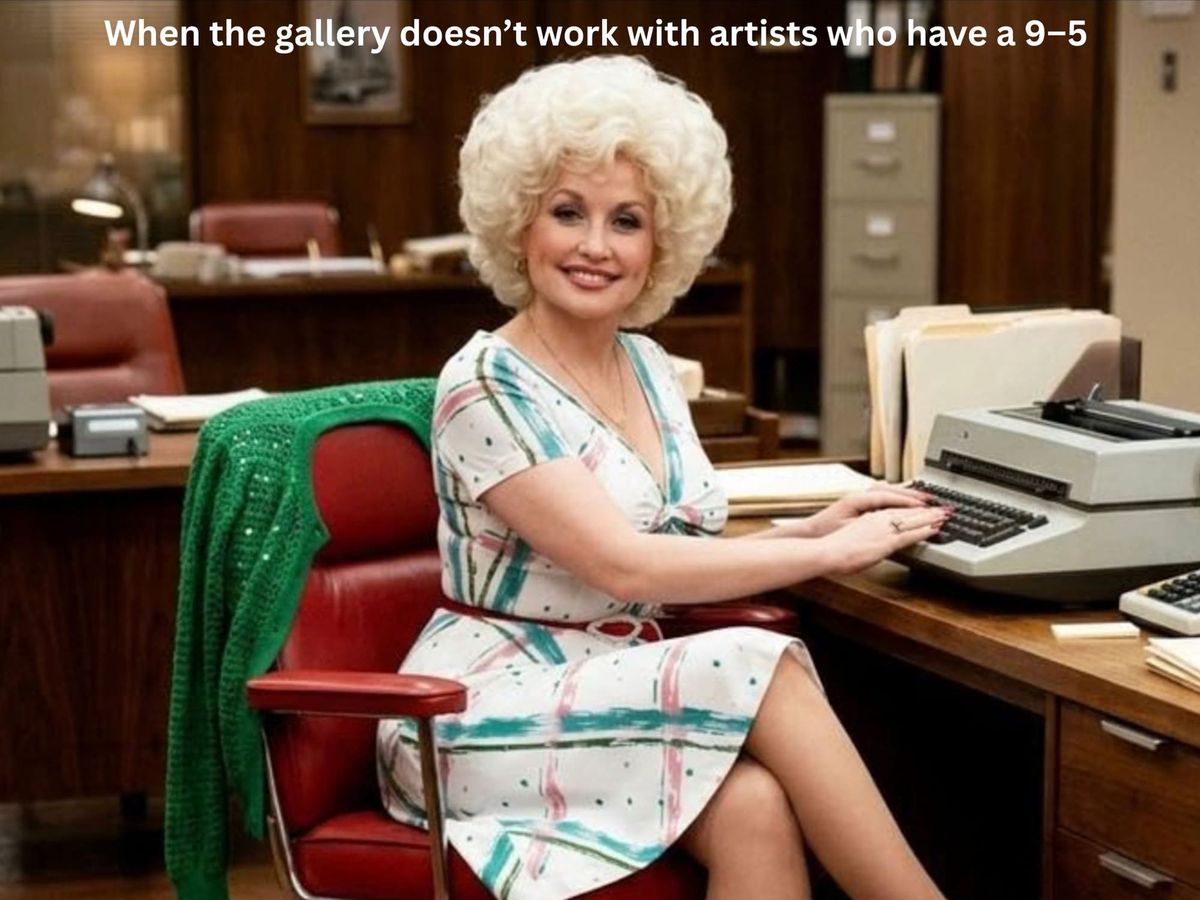
“I have a day job. Am I a real artist?” —W-2 in Wichita
Imagine you’re a plumber who works a nine-to-five job during the week and fixes pipes on the evenings and weekends. Do you lie awake wondering whether you’re a real plumber? Of course not. Plumbing pays reliably. It also comes with an apprenticeship and a license. Art has no equivalent. The pay’s shit, when it happens at all, and nothing “certifies” you to make it.
So we invent tests that help us evaluate value, most of them arbitrary and inane. Studio outside the home? Serious. Ivy League degree? Serious. Teach at one? Very serious. No job at all? If your answer is “no,” congratulations! You’re the most serious artist of all!
Every one of those markers concerns wealth and class. A separate studio requires rent money. A teaching job requires the degree, the connections, and usually years of adjunct exploitation. No day job means you’re paying bills either through sales or family money. Artists who sell easily often come from circles where friends can afford to buy.
An artist who does contract work reads as more “serious” than one with a full-time job because it buys studio time. That’s the theory, anyway. In practice, it leaves artists more financially exposed with no benefits to support them. The gig economy promised freedom, but it took away the few part-time jobs you could live on. Now, it’s an albatross.