Artists Grapple With Cesar Chávez’s Legacy After Abuse Allegations
The farmworker movement led by Chávez and Dolores Huerta, one of his accusers, has been a central influence for generations of Latine and Chicano artists.

In the wake of allegations of sexual abuse against labor leader Cesar Chávez that emerged earlier this week, Latine artists and cultural institutions are facing a moment of reckoning, perhaps most deeply felt in California, where Chávez lived and worked.
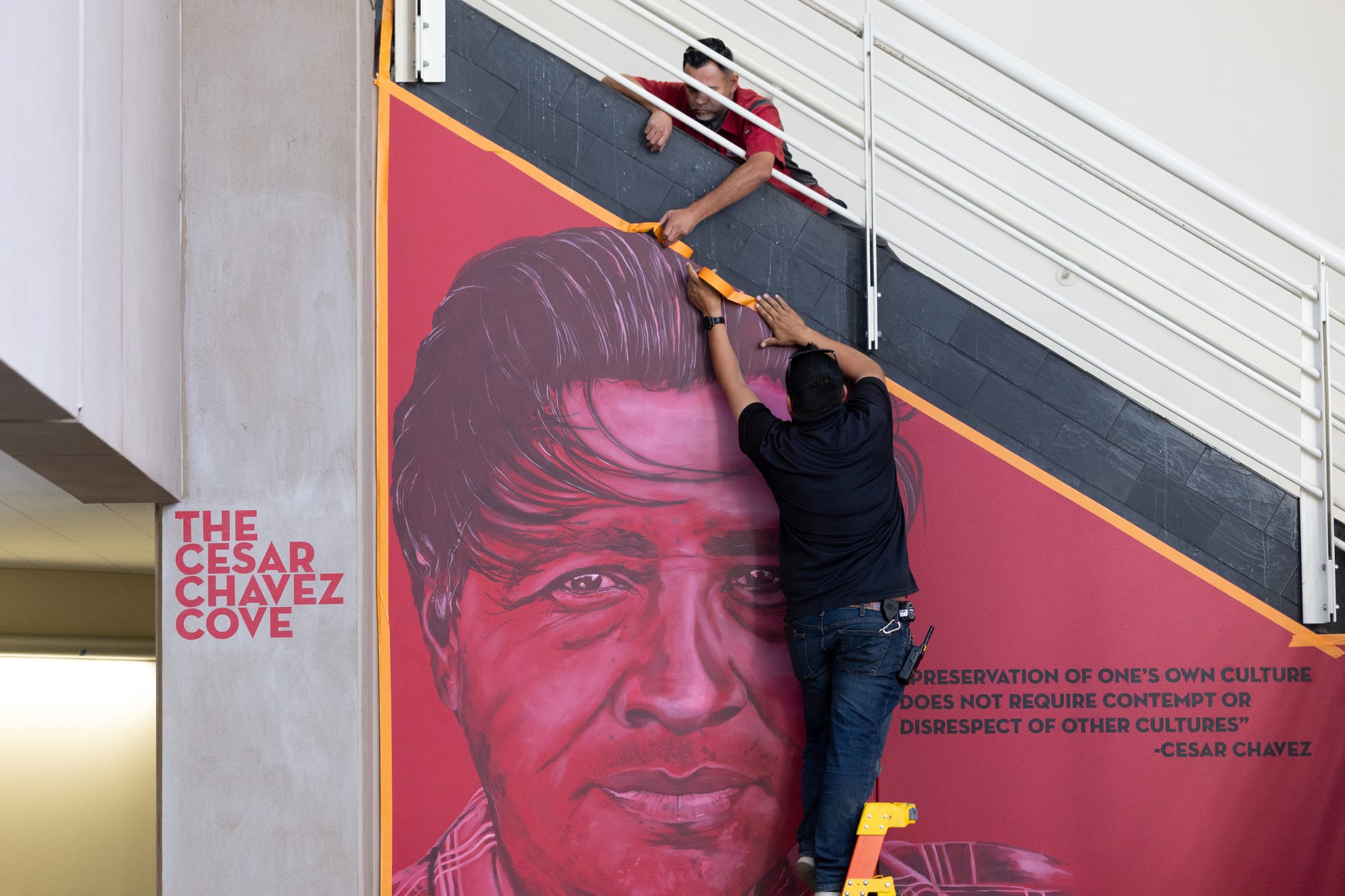
Throughout the state, countless murals bearing his likeness adorn streets, while schools and civic institutions celebrate his legacy with public sculptures — symbols that are already being taken down. In Watts, the artist behind a Chávez mural is in the process of replacing it with a portrait of activist and United Farm Workers (UFW) co-founder Dolores Huerta, one of several women who accused Chávez of sexually abusing her.
But for many artists, grappling with the significance of the revelations goes beyond taking down a public artwork or painting over a wall, demanding a more personal process of introspection and reflection.
“I am still very much devastated and processing everything,” local photographer Christina Fernandez told Hyperallergic. “My parents were activists and worked with the UFW for at least a decade. So much of my childhood is wrapped up in boycotts, picket lines, and marches, even as a young child. We are all experiencing a collective trauma.”
In an Instagram post, Fernandez said she would be withdrawing an artwork from her ongoing series View From Here, which features landscapes photographed through the windows of homes or workplaces of historical figures. The photo in question, “Cesar I, II, III (Office View, Keene, CA)” (2025), was taken in Keene, California, at the headquarters of the UFW, the union founded by Chávez and Huerta.
One reason why these troubling revelations have had such an impact on Latine/Latinx artists is the close link between the UFW and the emergence of the Chicano Art Movement of the 1960s and ’70s.
“Art has always been central to the UFW in the way they’ve communicated their message,” independent curator Pilar Tompkins Rivas told Hyperallergic. Artists embedded in the union designed and painted banners, while photographers created iconic images to inspire the public. “There was a co-mingling of political advocacy and art-making,” Tompkins Rivas said.
Printmaking became a central medium in the Chicano Art Movement, enabling the inexpensive dissemination of captivating information and images. In the early 1970s, the East LA community arts center Self-Help Graphics & Art emerged as — and remains to this date — a vital hub for the medium. The organization issued a statement after the accusations were made public in a New York Times investigation.
“WE BELIEVE DOLORES. WE BELIEVE ANA MURGUIA. WE BELIEVE DEBRA ROJAS,” Self-Help Graphics & Art said, referring to the survivors of Chávez’s alleged abuse, two of whom were minors at the time.
“We have a responsibility to support victims and center their voices. We must confront the harm within movements that have often been minimized to protect legacy, and that minimization is itself an act of oppression,” the organization continued.
LA Plaza de Cultura y Artes, a museum and cultural center devoted to Mexican-American and Latine culture, said it was canceling an upcoming César Chávez Family Day event. “We recognize that the recent allegations surrounding César Chávez may be painful and unsettling, particularly for those who have long looked to his legacy as a source of inspiration,” a statement read, emphasizing “the enduring leadership and contributions of Dolores Huerta.”
Others have responded directly to the harrowing news by creating new artworks that reassert and reimagine the legacy of the farm workers’ rights movement.
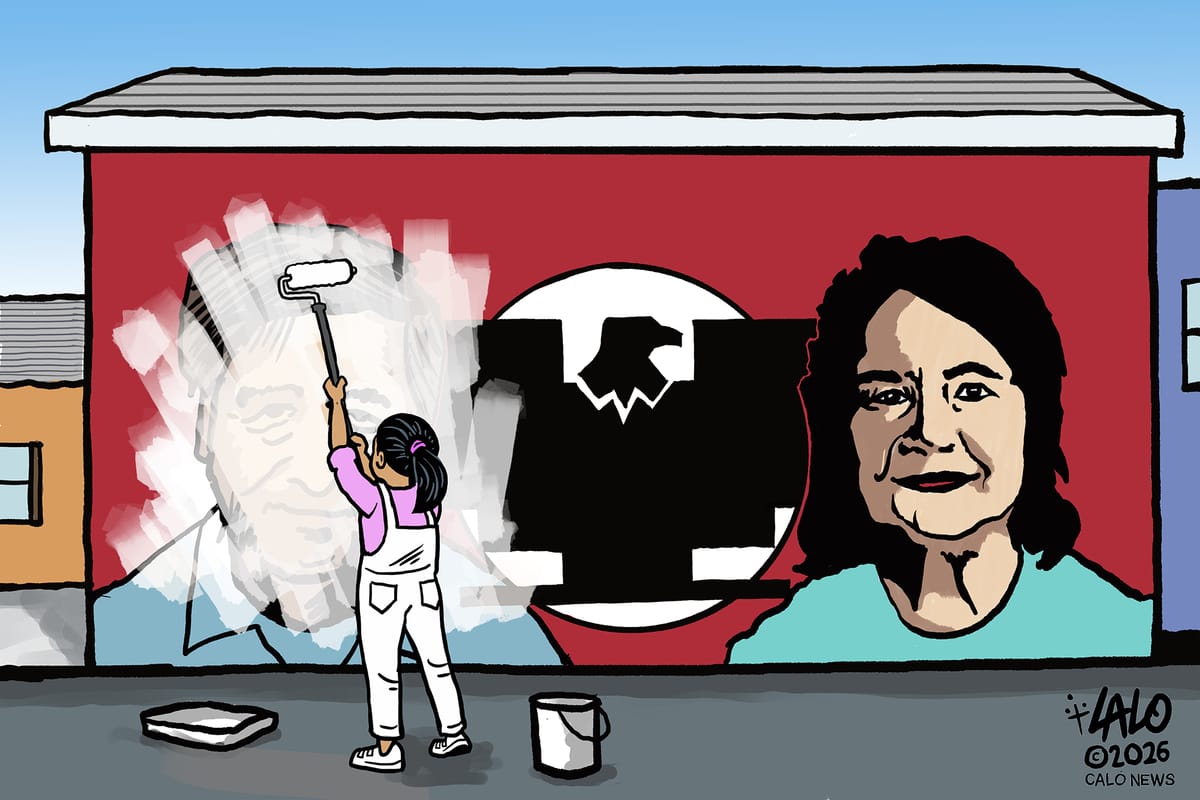
In a cartoon released on Thursday, artist Lalo Alcaraz depicted a girl in overalls painting over Chávez’s face on a mural that also bears the likeness of Huerta and the iconic UFW Aztec eagle logo. Chávez’s ghostly visage is still visible, underscoring the challenge of reckoning with his actions.
“You can still see his face, he’s still going to be there,” Alcaraz told Hyperallergic, “but the UFW will go on.”
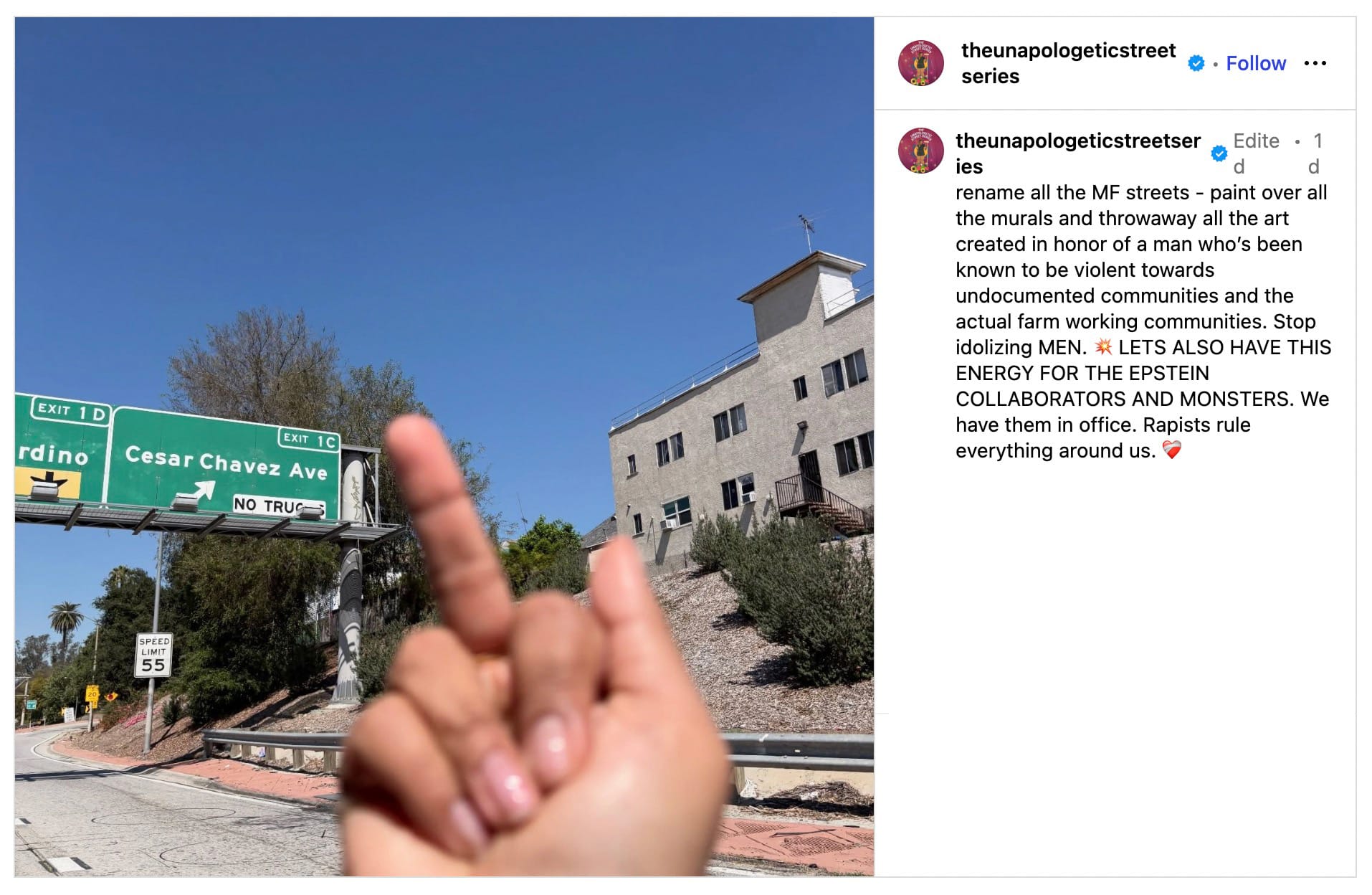
On Wednesday, artist Johanna Toruño posted a photo of a middle finger being raised to a Cesar Chávez Ave. exit sign on the 101 freeway. “Rename all the MF streets,” she wrote in a caption. “Paint over all the murals and throwaway all the art created in honor of a man who’s been known to be violent towards undocumented communities and the actual farm working communities.”
Toruño told Hyperallergic that she’s never included his image in her artwork in public spaces, given Chávez's known attitudes toward undocumented workers years before the recent allegations were made public.
“He’s never been an icon of mine,” she said. “No one person should become the face of any one movement. It’s about focusing on the community itself.”
Long before this week’s shattering revelations, momentum had been building to give more credit to Huerta for her role as a civil rights leader.
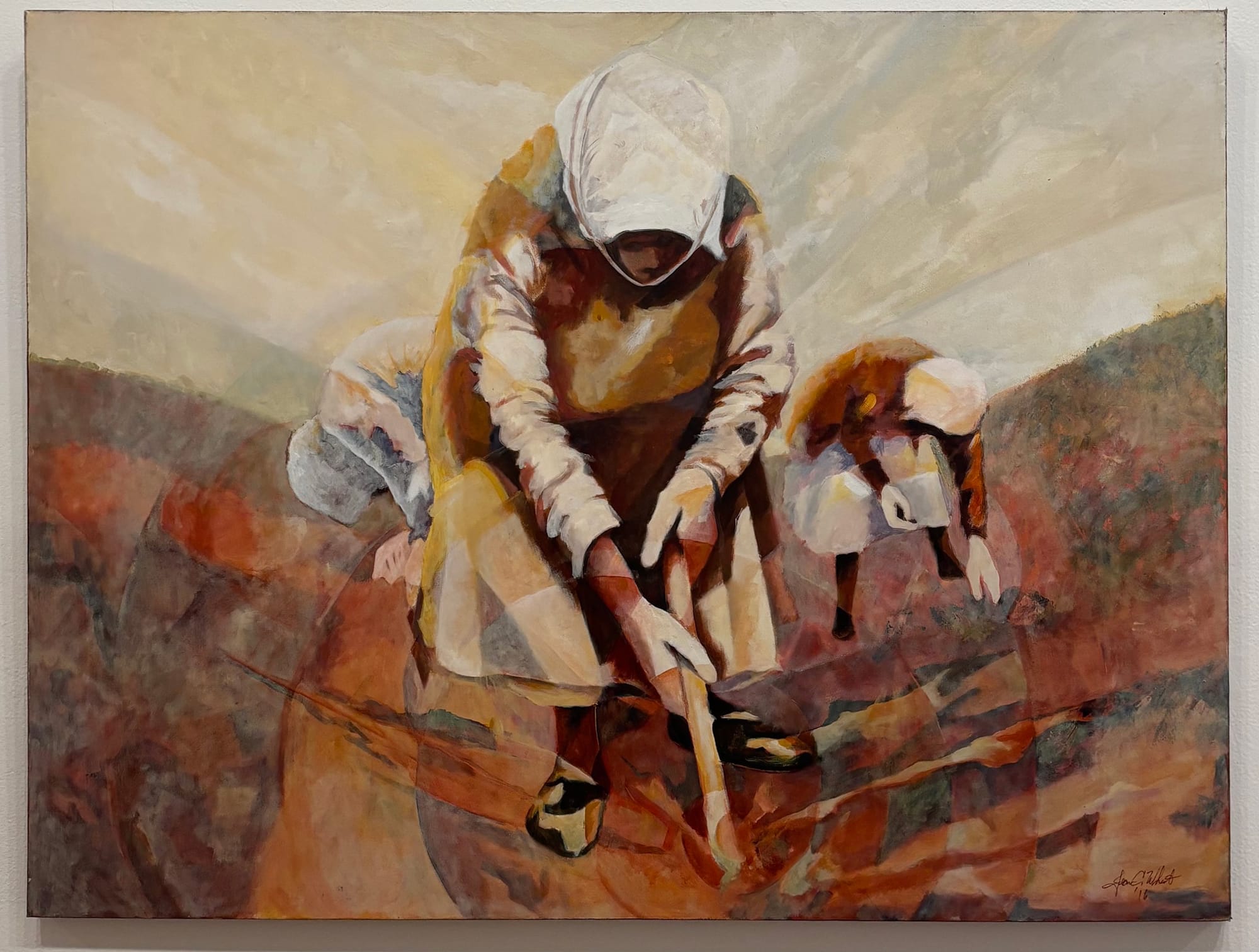
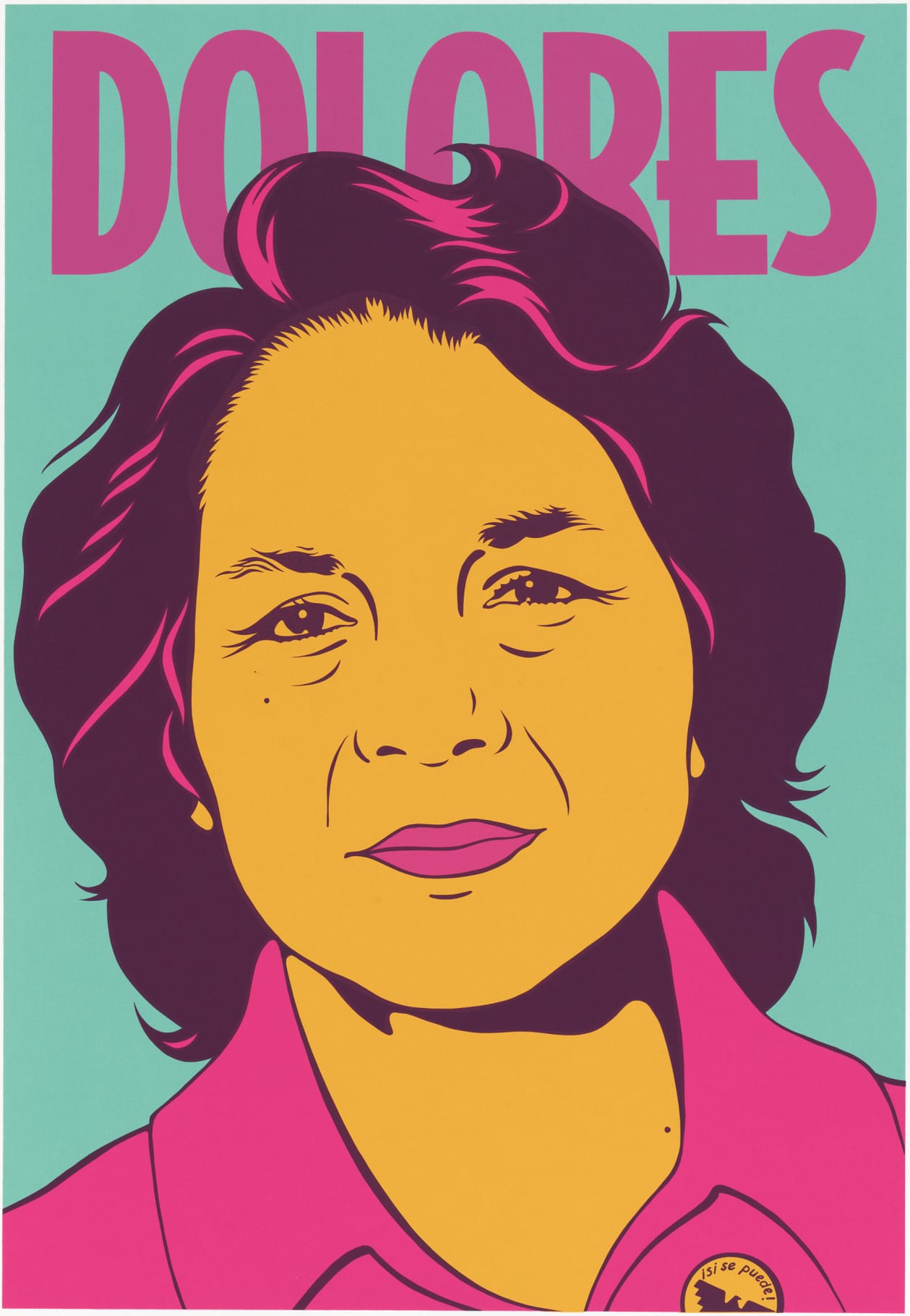
Last summer, artists and curators Harley Cortez and Glenna Avila began working on a group exhibition to honor the 95-year-old icon’s legacy. Dolores, opening at the Plaza de la Raza Boathouse Gallery on Saturday, March 21, features work by an intergenerational group of artists celebrating the feminist and human rights icon.
Important archival works, such as original drawings for murals by Yreina Cervantez and Carlos Almaraz and Barbara Carrasco’s bold 1999 screenprint of Huerta, are included alongside contemporary works by artists including Maria Maea, Ozzie Juarez, and Karla Diaz.
“We didn’t want this to be a moment where a man’s actions overshadow a woman’s hard work, “Cortez told Hyperallergic. “She created [the slogan] ‘Si Se Puede.’ She has shown up. As dark as a lot of this can be, she really is an incredible inspiration. I don’t want to lose focus on that.”
As painful as this moment may be for so many, it is part of a larger interrogation about whom we champion, how, and why.
“Think of it in the long lineage of people who have been reconsidered in the public realm,” Tompkins Rivas said. “We have to consider why we elevate certain figures. We should have the ability to be critical of that. This is a reckoning that absolutely must happen — there’s no second-guessing.”