
Art
How a Turn-of-the-Century Painter Influenced Military Camouflage
The newest exhibition at the Intrepid Sea, Air & Space Museum in New York examines the influence of nature on military camouflage.

Allison C. Meier is a former staff writer for Hyperallergic. Originally from Oklahoma, she has been covering visual culture and overlooked history for print and online media since 2006. She moonlights as a cemetery tour guide.

Art
The newest exhibition at the Intrepid Sea, Air & Space Museum in New York examines the influence of nature on military camouflage.
Art
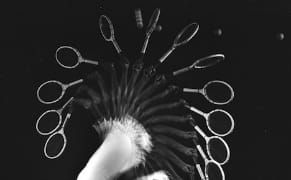
Back in the 1930s, an electrical engineer from Nebraska, working at MIT, developed the first "strobe" flash for photography, changing the way motion is documented.
Art
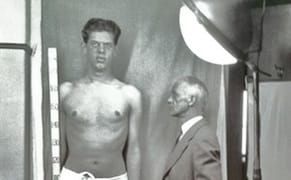
A curious thing about medical collections is how dehumanizing they can be.
Art
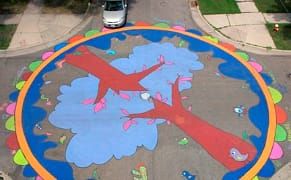
Drivers need to slow down. Traffic deaths are a serious problem across the United States, with pedestrian fatalities increasing in past years. One effort to keep eyes on the road is the use of colorful street art — painted right on the streets.
News
DIA reaches 80% of "grand bargain" goal, Corcoran files a rebuttal against merger detractors, Hobby Lobby plans Biblical museum, and more from the week in art news.
Books
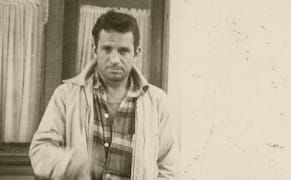
Writer William S. Burroughs took thousands of photographs from the 1950s to 1970s, but it's likely you've not seen many as even he didn't treat them like an art, but a mode of disrupting time.
Art
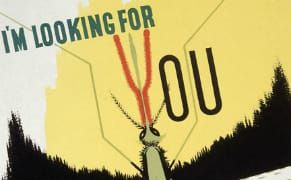
Striking visuals have long been essential to disease awareness, using art to convey the invisible menace of a microscopic virus and its destructive symptoms.
News
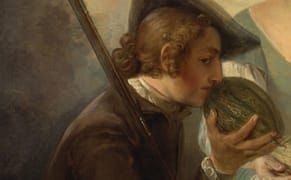
That color and smell have a sensory connection is long-established, but there's debate about whether associating the smell of strawberries with red or smoke with black is something structured in our brains, based in language, or resulting from experience.
Art
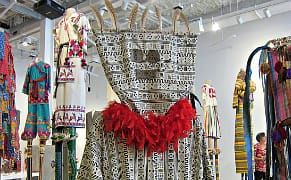
Laura Anderson Barbata started her international stilt-dancing collaborations in 2001 in Trinidad and Tobago, and since then has forged links between communities in the United States and Mexico. A traveling exhibition focused on the precarious performance practice opened earlier this month at BRIC H
Art
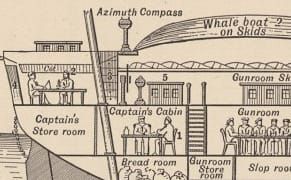
For the five years Charles Darwin spent sailing on the HMS Beagle the budding naturalist had around 404 books for company. After the ship returned to England on October 2, 1836, the books were dispersed, only now reassembled in a digital form.
Art
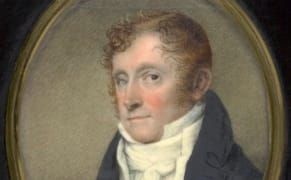
Clubs for ugly people, ear trumpets designed for mourners, mesmerism as a cure — disability in the 19th century reflected all of the Victorian era's oddities and societal changes. Nineteenth-Century Disability: Cultures & Contexts is a digital research archive of text and images on this more overloo
Art
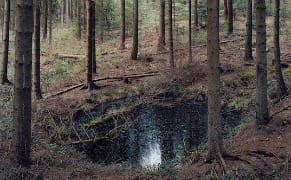
Almost masked in nature's regrowth are craters from World War II in Germany, pocking the ground as reminders of violence that erupted in the landscape. Photographer Henning Rogge set out to discover as many as he could through aerial maps and the exploration of old battlegrounds.