Art
70 Years of Glitchy Computer History Turned Into Music
Late at night in Great Britain's National Museum of Computing in Bletchley Park, some of the world's oldest computers awoke from mechanical slumber.

Allison C. Meier is a former staff writer for Hyperallergic. Originally from Oklahoma, she has been covering visual culture and overlooked history for print and online media since 2006. She moonlights as a cemetery tour guide.

Art
Late at night in Great Britain's National Museum of Computing in Bletchley Park, some of the world's oldest computers awoke from mechanical slumber.

Art
Setting aside the allegorical females and fictional heroines like Lewis Carroll's Alice, who are the historic women honored in New York's public statuary?

Art
Height (in feet) of the rogue wave depicted in Katsushika Hokusai's famed "The Great Wave off Kanagawa" (c.1830–32) = 32–39

Art
The watermelons of our summers are not the watermelons of yesteryear, as demonstrated by a 17th-century painting by Italian artist Giovanni Stanchi.

Art
With a population of over 20 million in its metropolitan area, Mumbai is one of the biggest cities in the world, and taxis are integral to its transportation.

Art
New York City has public art that's older than the city itself.

Books
After 25 years of collecting contemporary art, George Loudon's eye was caught by a display of 19th-century glass flowers at Harvard University.
Art
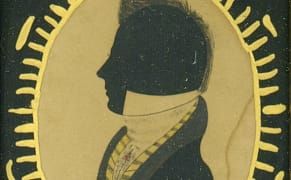
Before photography, the silhouette was a popular form of portraiture more affordable than oil painting, where the outline of a face in profile was cut in black.
Art
Following India's independence in 1947, architect Le Corbusier was recruited to design Chandigarh, the country's first planned modern metropolis.

Art
For the next two years, a constellation built by human hands over the ruins of a Hudson River castle is mingling with the stars.

Art
In researching her new art project, Fiona Tan discovered an odd pamphlet advertising "The Exhibition of Jonah, the Giant Whale caught off Trondheim, Norway."

Art
The conservation of artifacts already in museum care is highlighted more often than the repairs creators make to their own objects.