Beverly Buchanan’s Architecture of Care
Her practice was one of embodied noticing — exploring, feeling out, or reaching longingly for a Southern architectural vernacular.
ATHENS, Ga. — Beverly Buchanan, who died in 2015 at age 74, was an artist, writer, joke-teller, gardener, nurse, pharmacist, doctor, healer, disability activist, customer, futurist, and neighbor. She is perhaps best known for her representational sculptures of “shacks,” also known as “row” or “shotgun" houses. Her work as a whole is more difficult to categorize — across many media, she articulated nuanced understandings of land, architecture, and placed-based making that probed themes of class, gender, and identity. Buchanan lived in North Carolina, New York, and Florida, but spent a good number of years here in Athens, Georgia, where she became a beloved community member — while never receiving a solo exhibition from an institution within the city. That’s changed only recently: There are currently two exhibitions of her work here.
The main feature — Shacks, Stories, and Spirit: Beverly Buchanan’s Art of Home, at the Georgia Museum of Art through June 28 — is a small exhibition, taking up one gallery within the museum. It’s here that we’re introduced to “Medicine Woman” (1993), a major and canonical work of Buchanan’s, gifted to the museum in 2015 by the artist’s estate. The work is a tall, standing self-portrait assembled from found scraps of wood, painted jars with visible brushstrokes, and scraps of textile. She has a cane, and she stands atop a handmade box that is filled with medicine bottles, rocks, and other scraps of ephemera from around the artist's home.
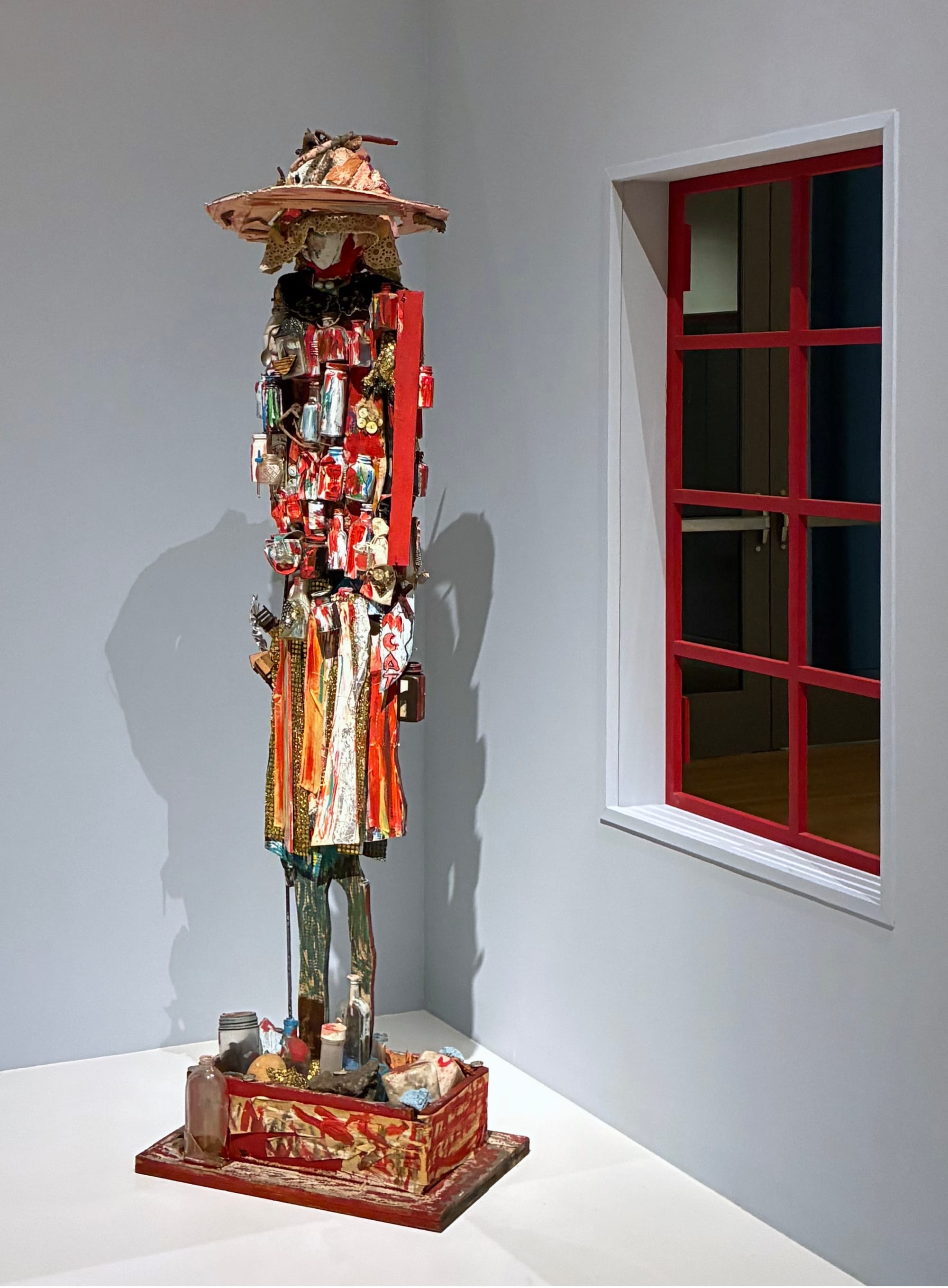
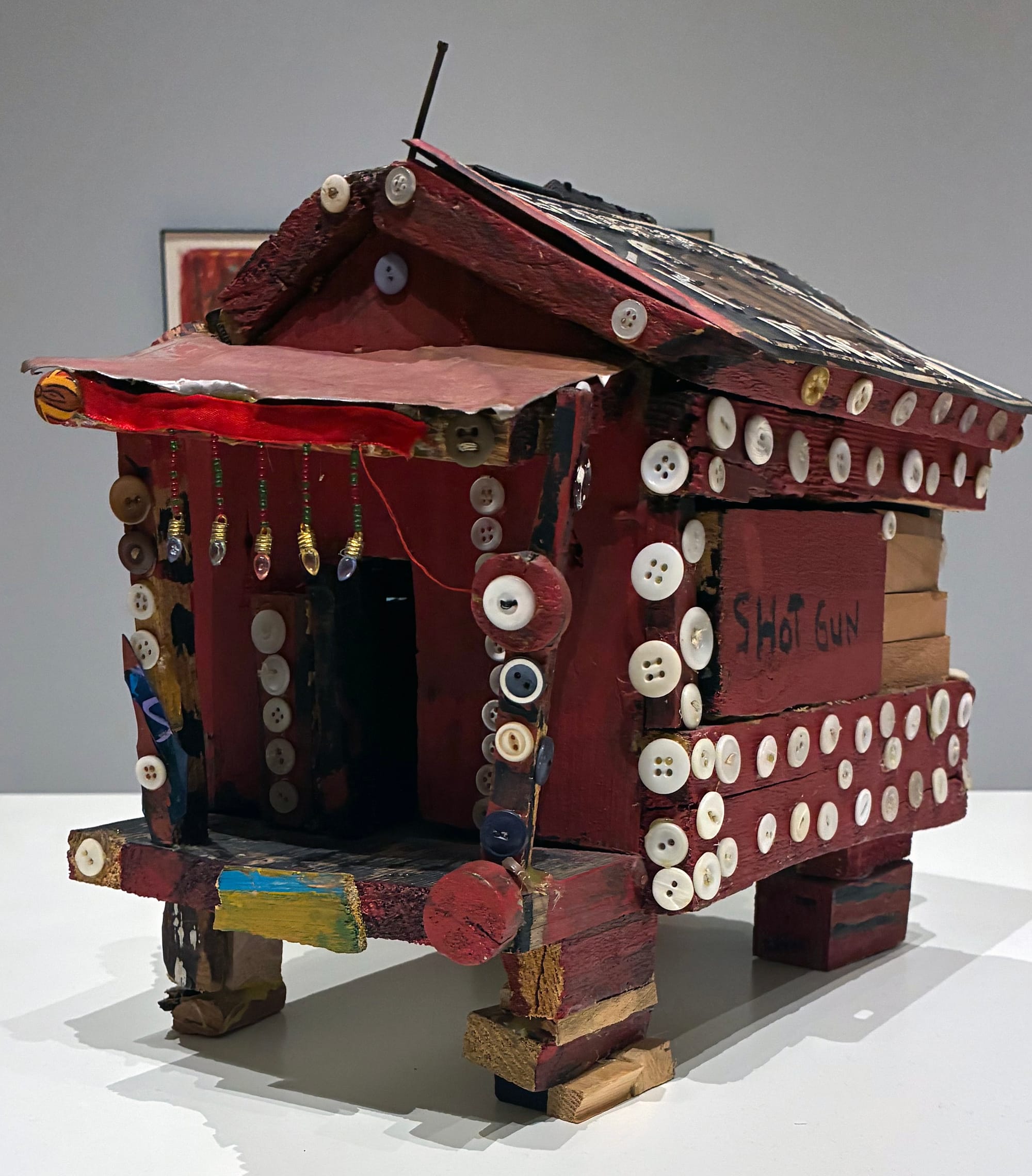
Left: Installation view of Beverly Buchanan, “Medicine Woman” (1993), mixed media; right: Beverly Buchanan, "Shot Gun House" (1992), mixed media, both in in the Georgia Museum of Art
It is in Beverly’s Athens, installed at the University of Georgia’s Athenaeum until March 21, that we are gifted with the opportunity to imagine the plentitude of her life: free meals with fellow artists, gardening socials, rock gathering, wading in the affection — those small experiences that detail the pain and humor of existence. It’s thanks to the graceful curation of Mo Costello and Katz Tepper that we get to wade deep into Buchanan’s ephemera. The prolific notes, endless sketchbooks, small drawings, sculptures, paintings, video works, and historical markers demonstrate Buchanan’s ethos of care — she was known for backyard art sales where she traded, gifted, and bartered her work in exchange for favors of caretaking or healthcare support.
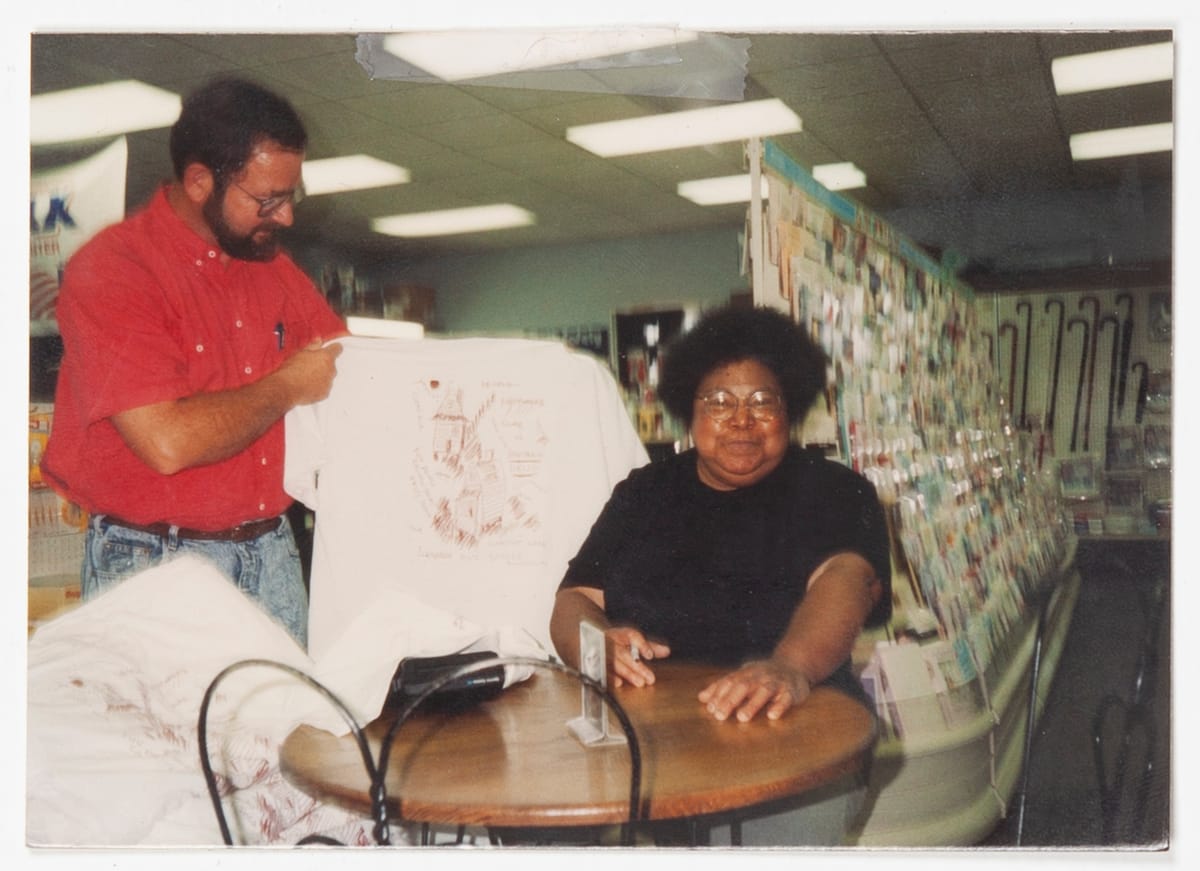
Fitting with that aesthetic of sharing, the Athenaeum has been transformed into an artist's den, each item bearing a provenance of its creation and exchange. A custom T-shirt for Hawthorne Drug Co, for instance, hangs in a small, built-out section of the gallery that explores the importance of that pharmacy for Buchanan, which she described as “a social, friendly place where you can eat lunch while waiting for your arthritis medicine.” The T-shirt is printed with two of Beverly’s shacks, scribbles indicating grass, and text that reads“Everyone come to Hawthorne Drug” along with “FUN PEOPLE CHICKEN SALAD NASTY DOGS,” “Luuunnnncch And Snacks,” “CLEAN AIR,” and “Competent Care.”
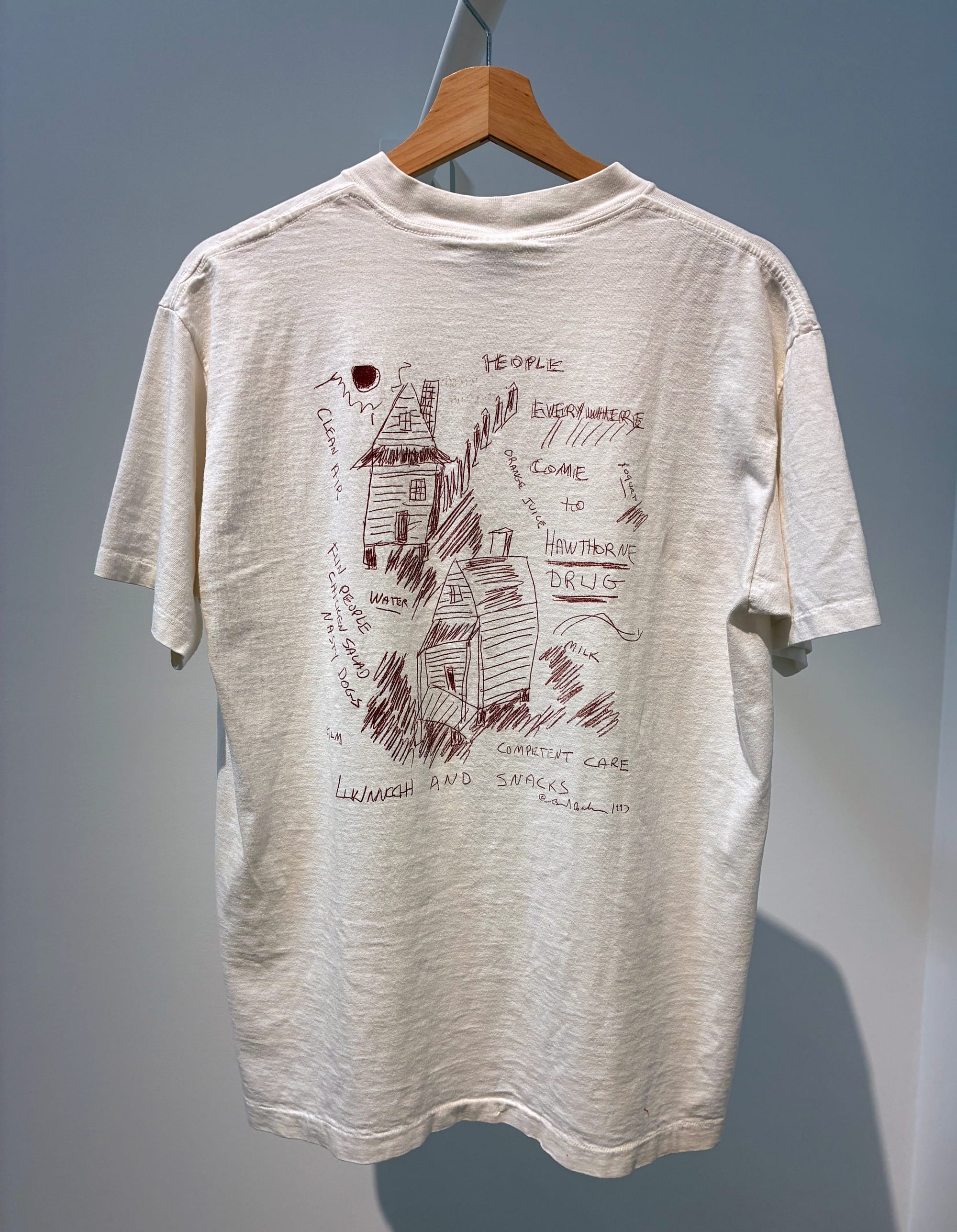
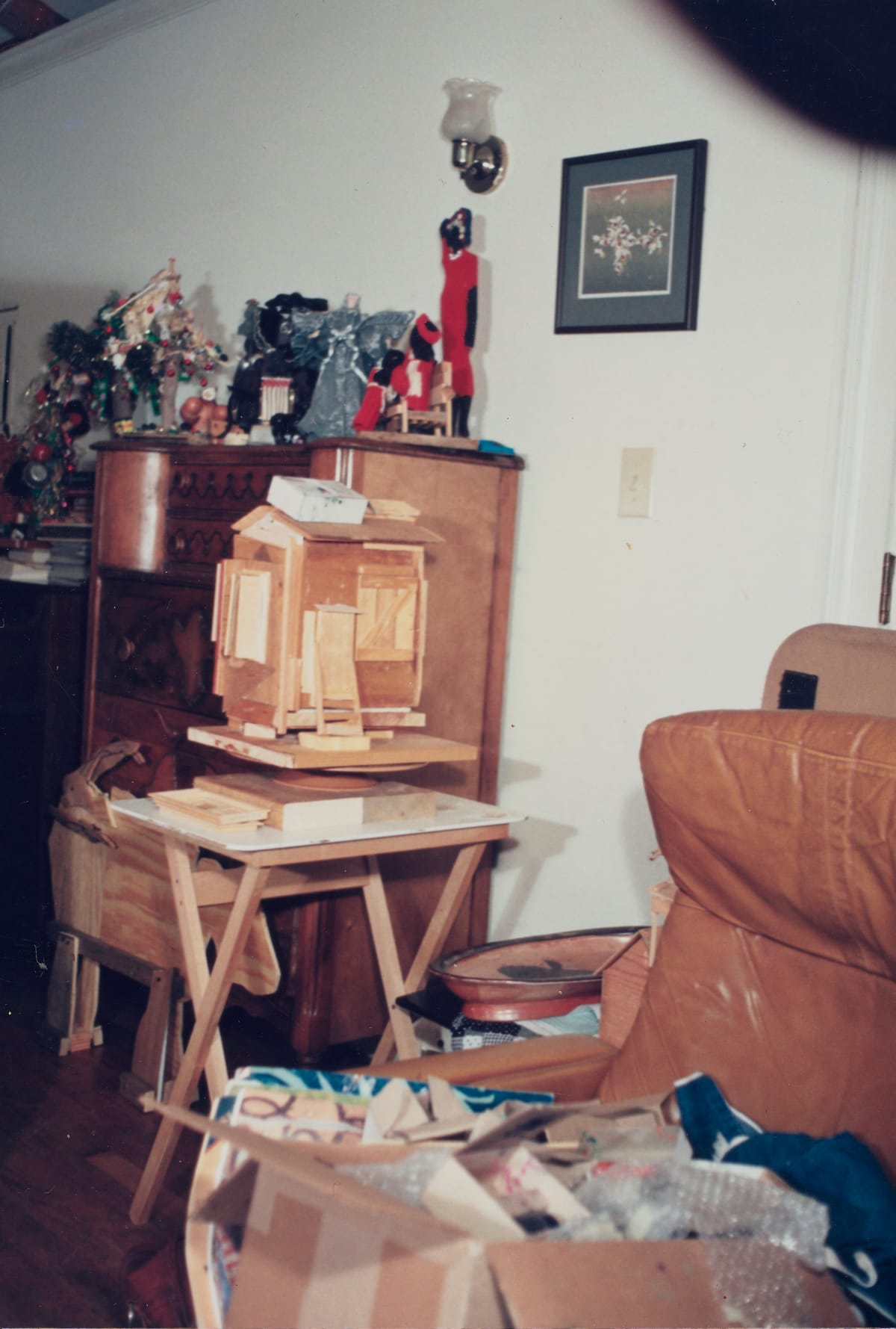
Left: T-shirt from Beverly’s Athens at the Athenaeum in Athens, Georgia; right: View of Beverly Buchanan, "Untitled" (c. 1991-1999), color photograph (© Beverly Buchanan, reproduced courtesy Beverly Buchanan papers, Smithsonian Institution)
Buchanan was born October 8, 1940, in Fuquay-Varina, North Carolina — her arrival derailing her mother’s trip to the State Fair in Raleigh. As Buchanan told it later, she decided (in utero) not to ride the Ferris wheel. Upon her parents’ divorce, her childhood unfolded mostly in Orangeburg, South Carolina, on the campus of South Carolina State University. There, she was raised by her great-aunt and uncle, Marion and Walter Buchanan, spending summers in North Carolina visiting her mother. A state agricultural agent, in addition to a professor and dean, Walter advised farmers on crop care and rotation, and her experience on these site visits undoubtedly informed her practice for years to come. Laboratories and carpentry shops became early studios; test tubes, scraps of wood, and bits of glass her materials. She foraged instinctively, arranging small compositions before she had a language for her practice.
Buchanan's inquisitive nature would at first lead her into medicine. She studied medical technology at Bennett College and later parasitology and public health at Columbia University. For nearly a decade, she worked as a medical technologist and public health educator in the Bronx and East Orange, teaching communities about vaccination, birth control, and infant health. However, in the evenings she attended classes at the Art Students League, where she met the painter Norman Lewis and encountered the work of Romare Bearden — even meeting the latter by accident after following him into the men's bathroom at intermission of a Dizzy Gillespie concert at Alice Tully Hall.
These connections led her to success in New York City. Her first exhibition there took place in 1969 at the infamous Cinque Gallery, founded by Lewis and Bearden, along with painter Ernest Crichlow. And in 1980, Ana Mendieta included Buchanan’s work in Dialectics of Isolation: An Exhibition of Third World Women Artists of the United States at A.I.R. Gallery.
But for the people local to Beverly, her practice was one of embodied noticing — exploring (or perhaps feeling out, or reaching longingly for) a Southern architectural vernacular. It is a practice that holds a deep respect for ingenuity, grit, and refuse, that believes in reuse, continuation, rebirth, and the radical agency of all materials. In a table case in Beverly’s Athens, we see a paper plate with the words “WILL TALK FOR FOOD.” It is paired with a doodled self-portrait in marker of Buchanan with a plate of food and a hot beverage beside what appears to be an exhibition show card with a photograph of one of Buchanan's shacks. Speaking to her sense of affection and humor, it is inscribed with the words, “FOR my pharmacist who I Love very much. Love, Bev Buchanan. . . Yes, his wife knows.”
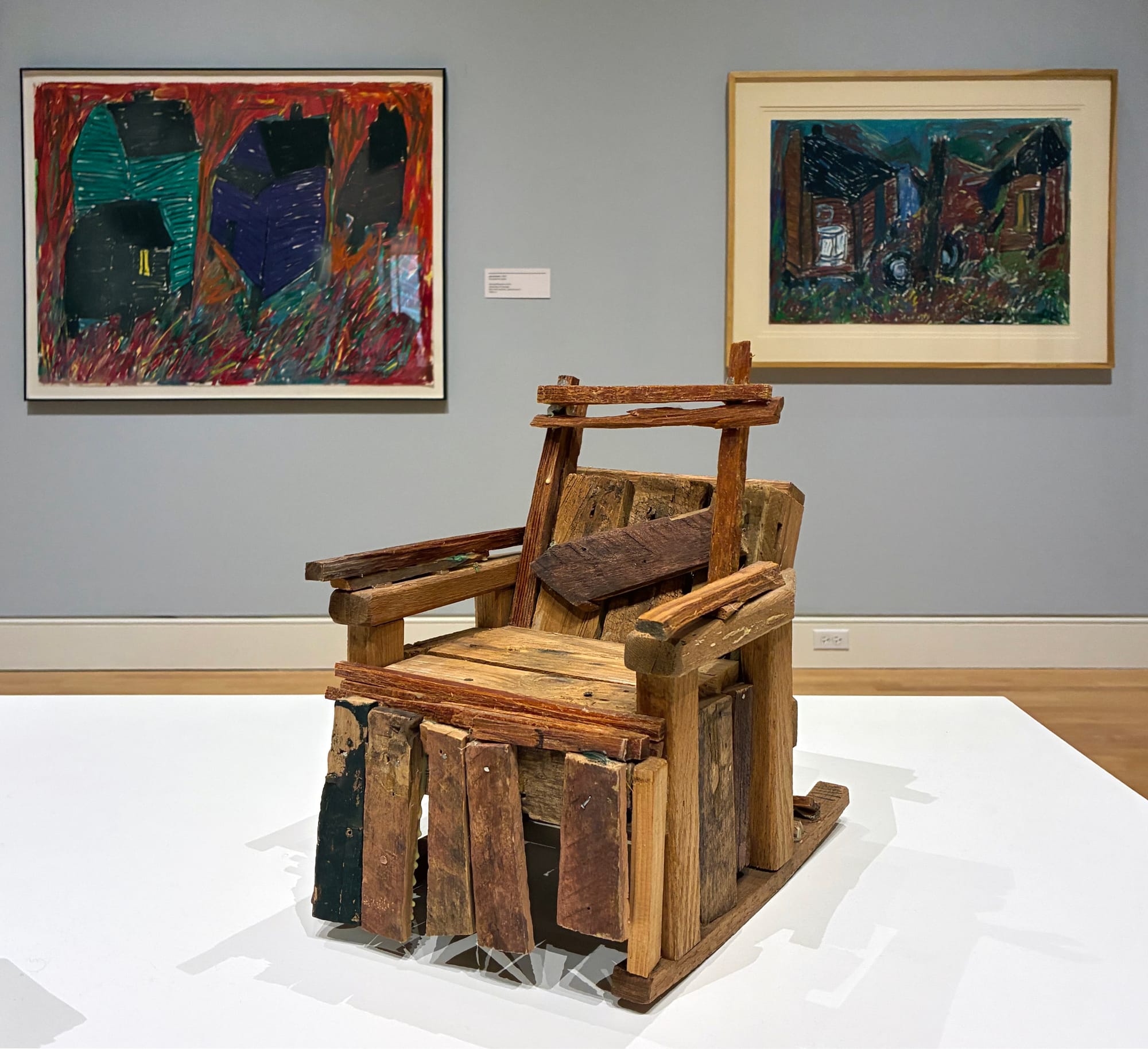
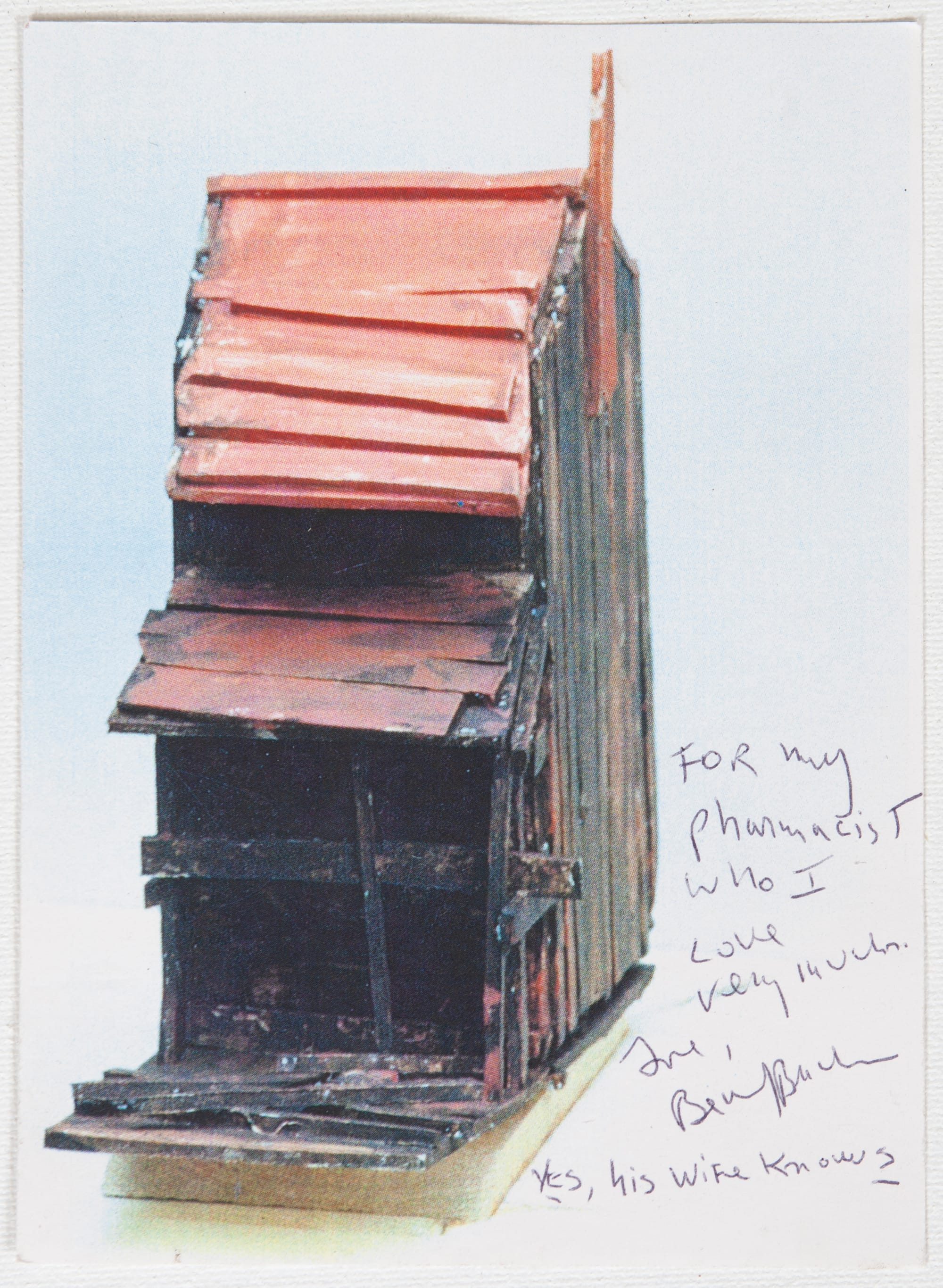
Left: installation view of Beverly Buchanan, "Bubba's Chair" (undated), wood and ink, in the Georgia Museum of Art; right: Beverly Buchanan, "Untitled (For my Pharmacist Who I Love Very Much)" (c. 1990s), color reproduction on cardstock (courtesy private collection)
Buchanan’s experience was one where daily life intermingled with a deeply felt understanding of regional identity. It informed work that embodied a special interpretation of the land and its parts as one jumbled and shifting site. The home, the chair, the garden, the rock — all one labored breath in the Georgia sun.