Brooklyn Museum’s Africa Collection to Get a Brand New Space
The new exhibition space will connect the art and historical legacy of Ancient Egypt and North Africa to that of the rest of the continent.

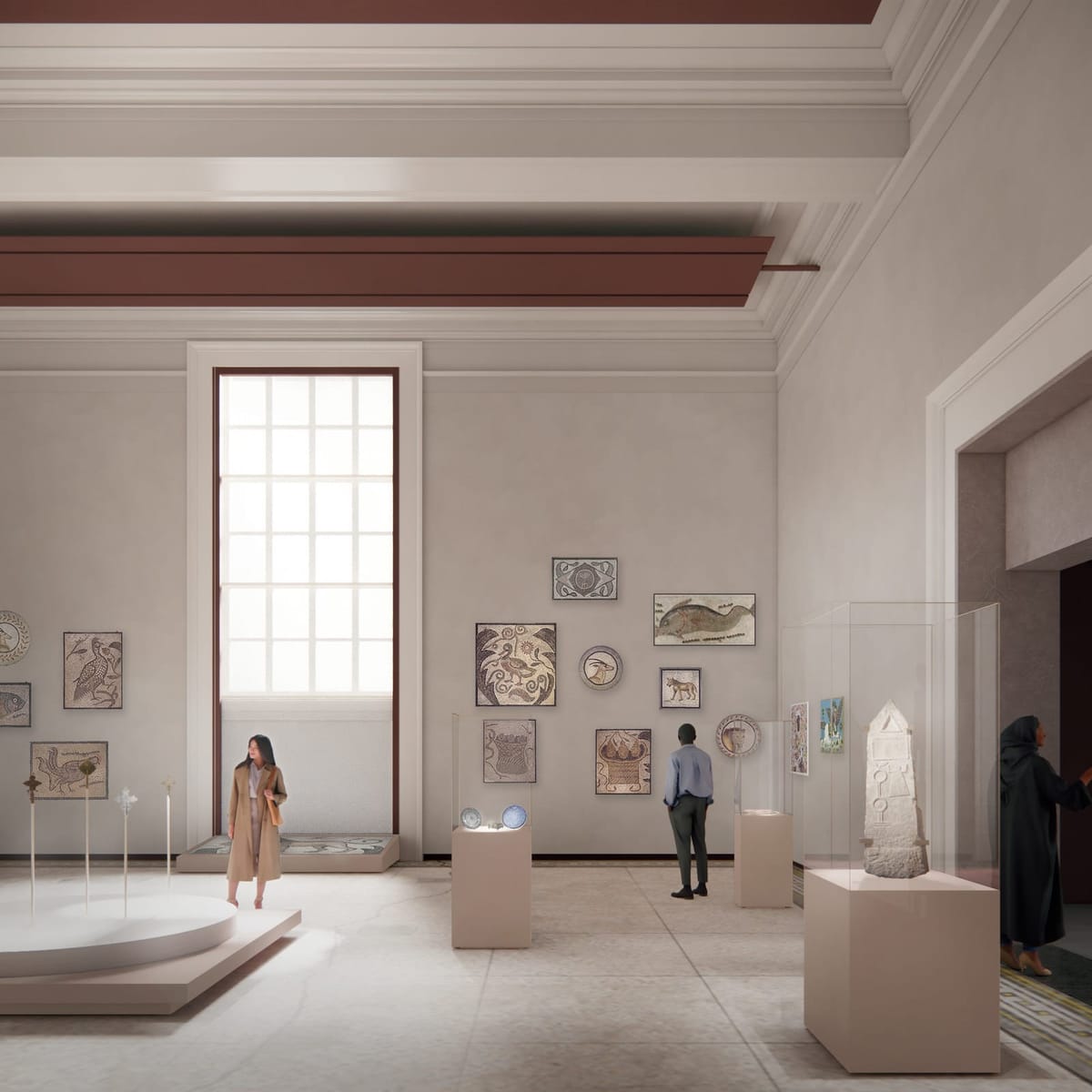
Ten years after Arts of Africa became its own department at the Brooklyn Museum, the institution is embarking on the development of a $13 million permanent home for the collection of over 4,500 objects and artworks.
The museum is transforming underutilized storage areas on its third floor into 6,400 square feet of exhibition space, creating a seamless transition with the Egyptian art galleries to reconnect the art and historical legacy of North Africa with that of the rest of the continent, the institution said in an announcement on March 24.
Peterson Rich Office (PRO), a Brooklyn-based architecture firm behind multiple commercial and institutional exhibition spaces, is leading the site's renovation and development of the galleries in collaboration with the museum's exhibition design team and the department's Curator Ernestine White-Mifetu, Associate Curator Annissa Malvoisin, and Curatorial Assistant Yara Doumani.
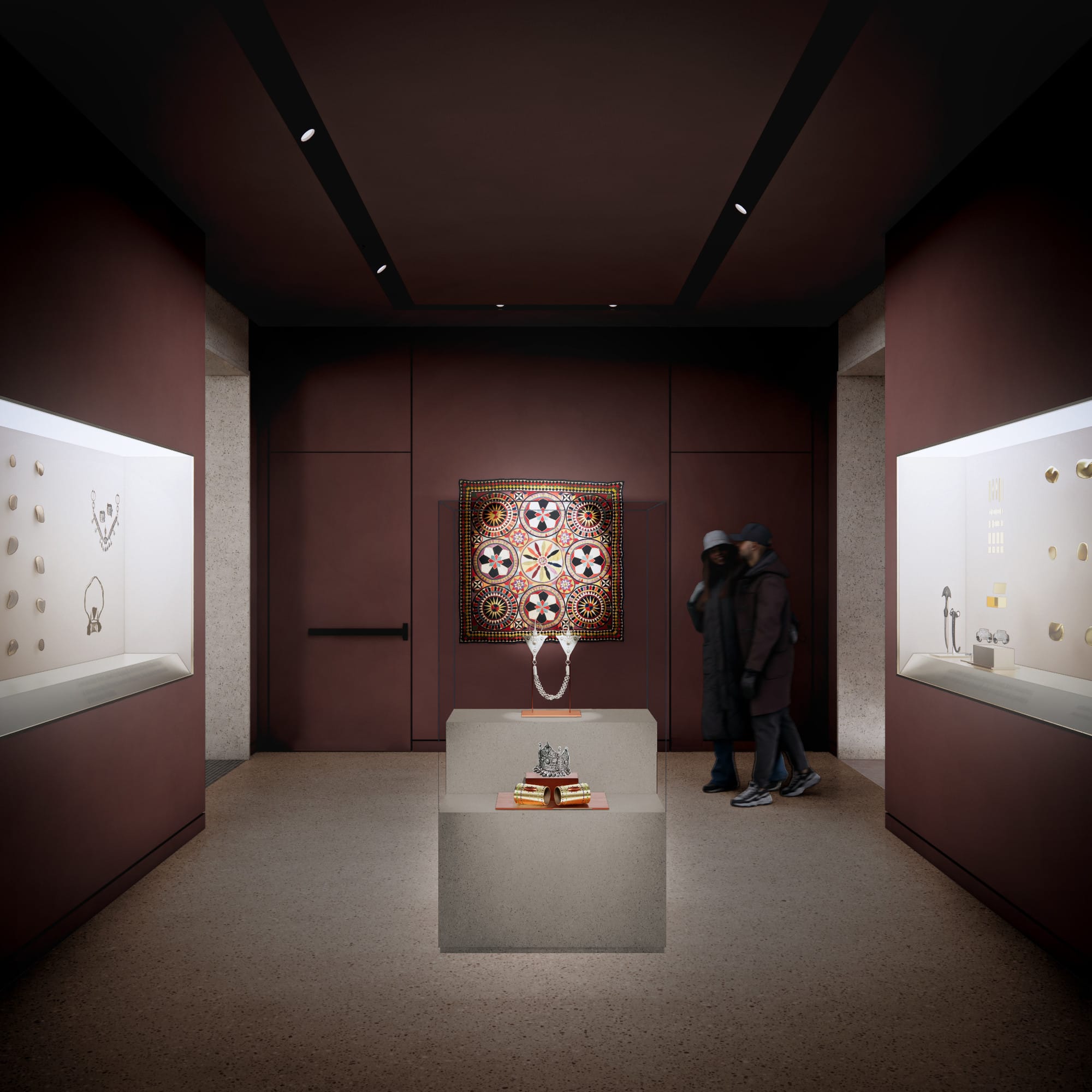
Rendering of the Arts of Africa galleries (images courtesy Peterson Rich Office)
In an email to Hyperallergic, White-Mifetu and Malvoisin expressed their excitement with the new galleries — the former stated that the tall ceilings, as well as the attention to lighting, wall placement, and casework will ensure that the collection will be “beautifully showcased,” while the latter added that “each space was carefully planned through both a transdisciplinary and decolonial lens.”
In anticipation of the new construction, the curators conducted a collection overview and selected several previously unseen works for conservation treatment, as they'll soon be getting airtime in the galleries.
White-Mifetu and Malvoisin have planned an inaugural installation of over 300 works assembled through a framework based on the material and cultural exchange that emerged along the continent's natural pathways over millennia.
Rather than adhering to post-colonial divisions and national boundaries, White-Mifetu and Malvoisin said their approach is to curate across regions, including the Nile and Niger Rivers; the Mediterranean, Loango, and Atlantic coasts; and the Sahara desert, among others.
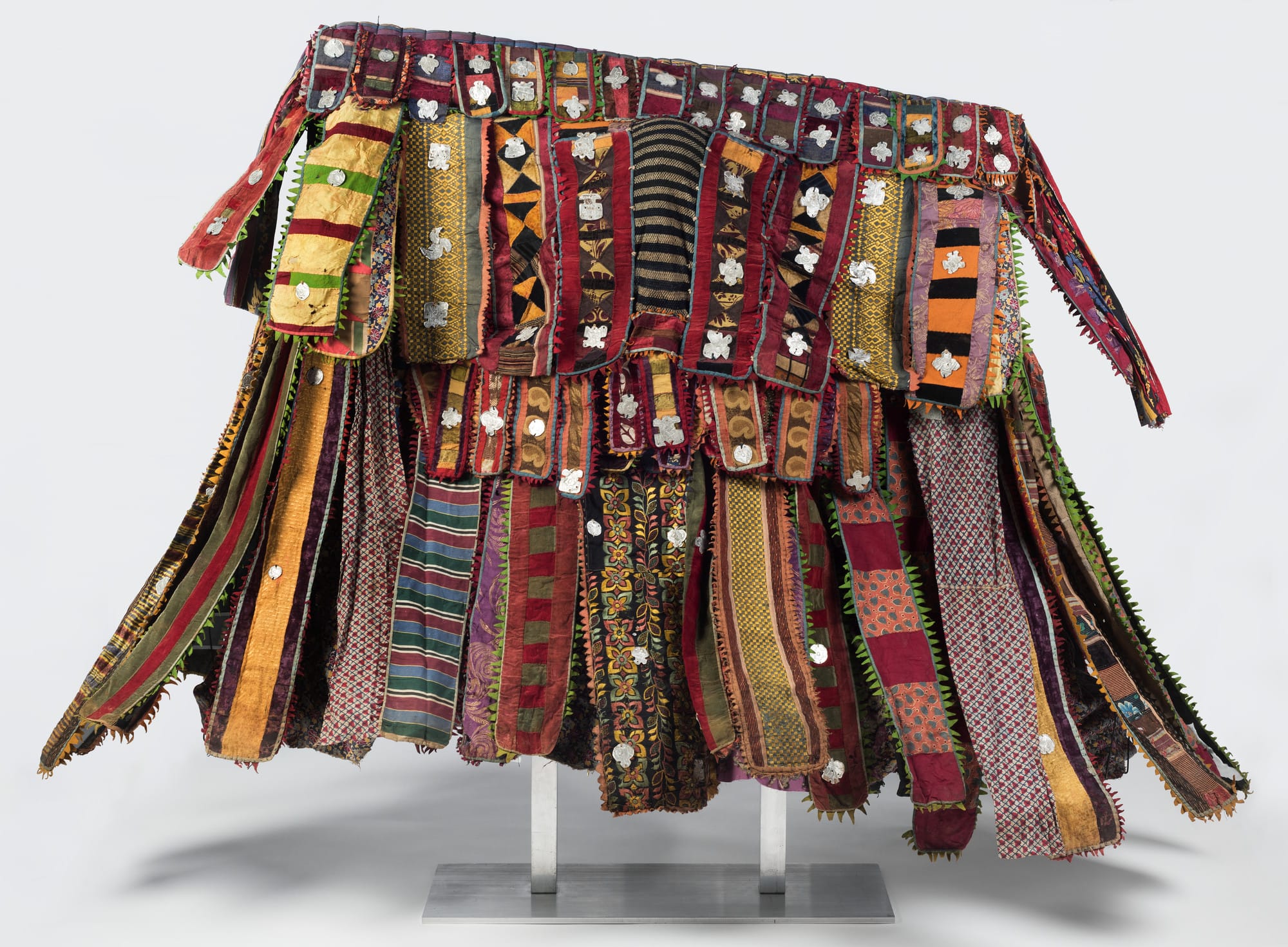
The curators also consulted outside scholars, the Brooklyn Museum's education and visitor engagement departments, and community organizations to understand which collection objects stood out among Black, African, and Afrodiasporic perspectives.
“Syncretized Yoruba Ifa is practiced in Haiti through Voodoo, Brazil through Candomblé, and in Cuba through Santería, so objects that are used in Ifa were spotlit as deeply significant across the Afrodiaspora,” White-Mifetu and Malvoisin told Hyperallergic, illustrating how the collection itself inherently represents varying demographics.
Alongside the Meroitic ceramics of the Kingdom of Kush (now Sudan), Malvoisin is looking forward to displaying the “Bwanga Bwa Cibola,” a 19th-century wooden sculpture of the Lulua people, which she says is one of the collection's major artworks.
The display will feature objects that the museum hasn't shown before, such as a Tuareg traveling sack, which will anchor one of the gallery sections in the installation.
White-Mifetu also pointed to a mask made for an Ordehlay cultural society's masquerade performance in Freetown, Sierra Leone, as a collection highlight, adding that it “feels like a scene from a sci-fi movie.”
The pair clarified to Hyperallergic that while the forthcoming galleries are entirely devoted to the permanent collection, only a fraction of it will be shown at any given time through regular exhibition rotations.
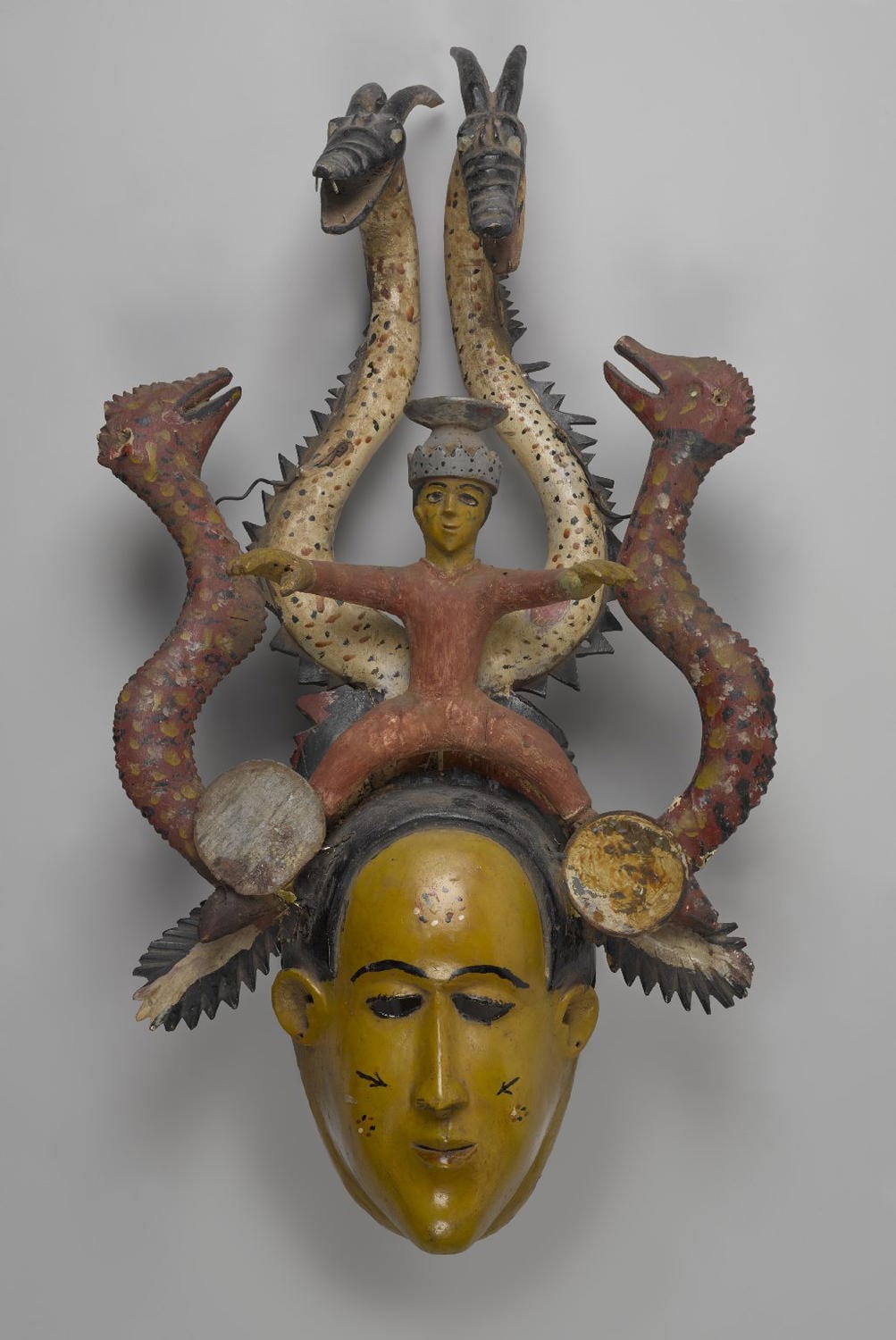
The museum began collecting African art in the early 20th century, and by 2000, its holdings represented 2,500 years of history across the continent, including its first contemporary African artwork, acquired in 1991. The department was assembled in 2016 as the collection grew, though the museum drew criticism in its nascent stages after hiring a White consulting curator in 2018.
Set to open in fall 2027, the new permanent galleries will also amplify the ongoing curatorial fluidity between the Arts of Africa, the Arts of the Islamic World, and the Ancient Egyptian art collections.
“The Museum is already doing this work throughout the building, so this connection feels natural both contextually and realistically,” the curators said.
Though it follows several major expansions and renovations in the museum's recent history, the Arts of Africa collection's permanent space emerges in the wake of a tumultuous period for the Brooklyn Museum.
The 200-year-old institution revealed that it was facing a $10 million deficit last year when it moved to lay off 47 employees and reduce its programming. An infusion of $2.5 million from City Council helped the institution salvage some positions after months of pressure and protests. (Museum Director Anne Pasternak recently told the New York Times that funds raised for the museum's capital projects cannot be redirected to operating costs.)