California Schools Cover Cesar Chávez Statues After Abuse Accusations
Institutions are removing references to the Chicano labor leader, who was accused of sexually abusing girls in a new investigation.

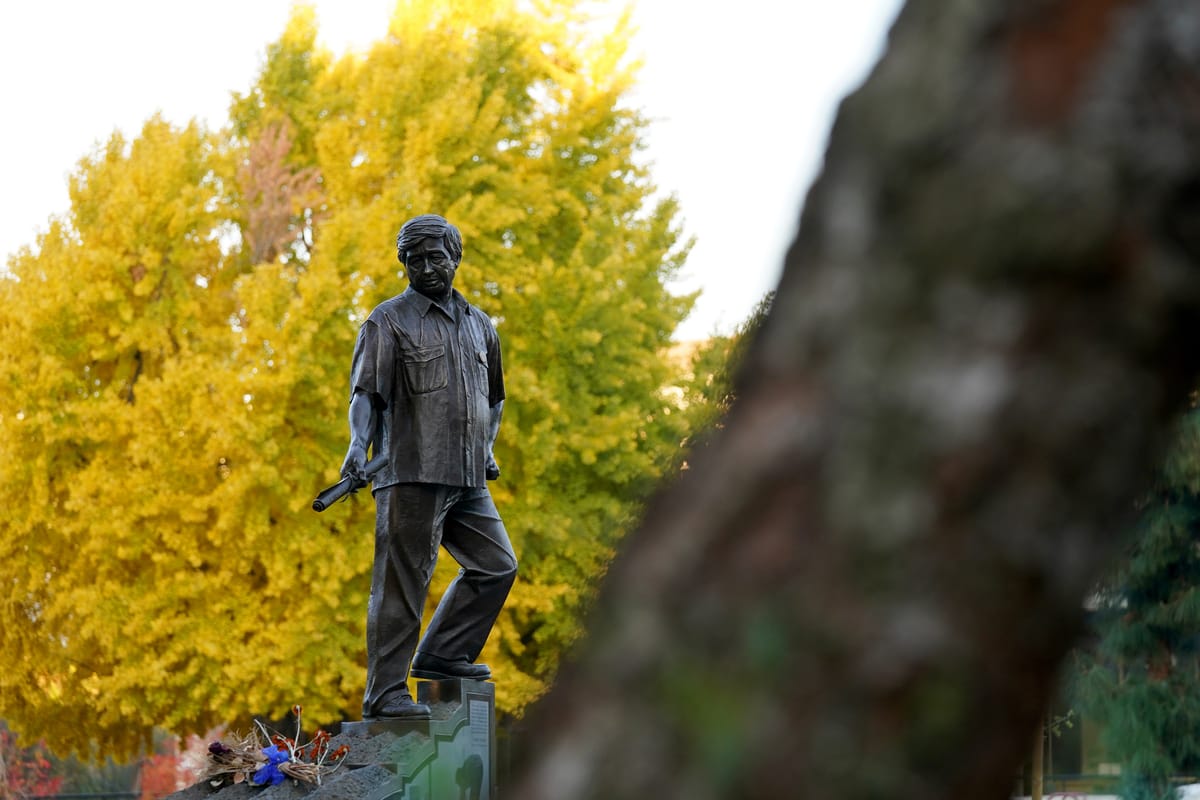
Fresno State University in California will remove its campus monument to Cesar Chávez in the wake of disturbing sexual abuse allegations against the Chicano civil rights leader.
Located not far from where Chávez helmed the farm workers movement in the 1960s, Fresno State erected a statue in his honor in 1996. Since then, the bronze sculpture, created by Paul A. Suarez, has stood among likenesses of other nonviolent movement leaders, including Mahatma Gandhi and Martin Luther King, Jr., in the school’s Peace Garden.
Another public college, California State San Marcos, said it would cover its 1997 sculpture of Chávez created by T.J. Dixon and James Nelson, and would deliberate further actions in the coming days. Cultural institutions across the state, including the California Museum in Sacramento, also pledged to remove laudatory references to the figure from public display. In the Bay Area, San Jose State University said it would evaluate its spaces named after or depicting Chávez, including Judy Baca's “Arch of Dignity, Equality, and Justice.”
The schools’ decision to remove the monuments comes as activists and organizations grapple with harrowing accusations first reported by the New York Times this week.
Two women, Ana Murguia and Debra Rojas, now in their mid-60s, accused Chávez of sexually abusing them when they were young teenagers. Dolores Huerta, who co-founded the influential United Farm Workers (UFW) with Chávez, also accused the labor leader of raping her. Huerta became pregnant twice from her two encounters with Chávez, she revealed in a searing statement on Wednesday.
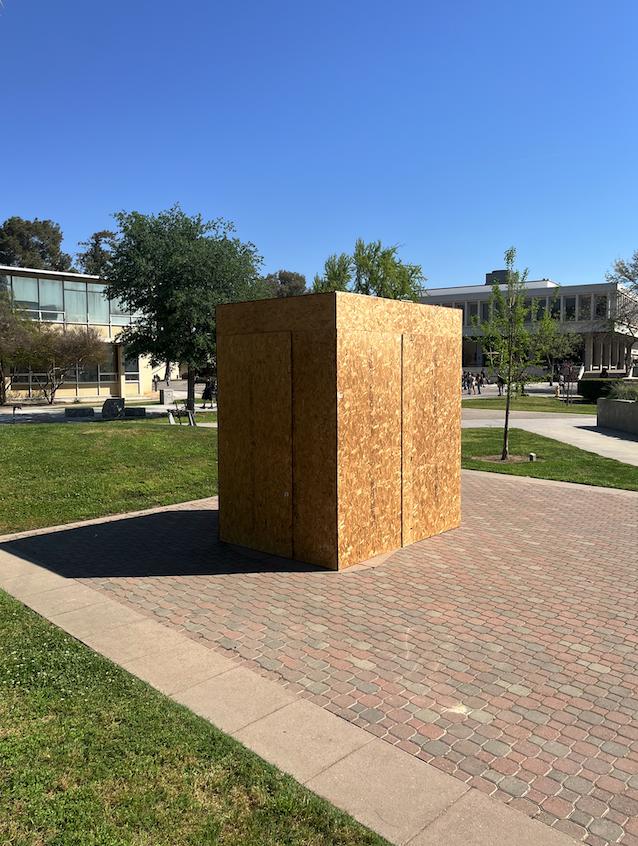
In a letter to the campus, Fresno State University President Saúl Jiménez-Sandoval announced the school would cover up the bronze statue of Chávez until it could be permanently removed. Multiple wooden planks are temporarily concealing the work.
“These profoundly troubling claims about the rape of women and minors call for our full attention and moral reckoning by removing his statue from our campus,” the university leader said.
Suarez, whose bronze bust of Chávez was displayed in former President Biden's Oval Office, has not responded to multiple requests for comment.
For decades, Chávez's likeness has symbolized the historic mobilization of farmworkers against exploitative growers in the 1960s. The organization he co-founded, the UFW, paved the way for major legal protections for farmworkers seeking better working conditions. Its legacy was also deeply influential to the art, visual culture, and graphic heritage of the Chicano movement.
Thirty years after his death, Chávez's embattled name is splayed across schools, monuments, and roadways across the United States, forcing a reckoning for institutions across the country.
In a statement detailing accusations against Chávez, Huerta stressed that “the farmworker movement has always been bigger and far more important than any one individual.”
“Cesar’s actions do not diminish the permanent improvements achieved for farmworkers with the help of thousands of people,” Huerta wrote. “We must continue to engage and support our community, which needs advocacy and activism now more than ever."