Can We Stop Calling South Asian Painting "Miniature"?
A book on 18th-century Pahari painting warns against thinking of these works as “miniatures,” a Western term, instead illuminating the artistic collaboration and ways of life at their heart.

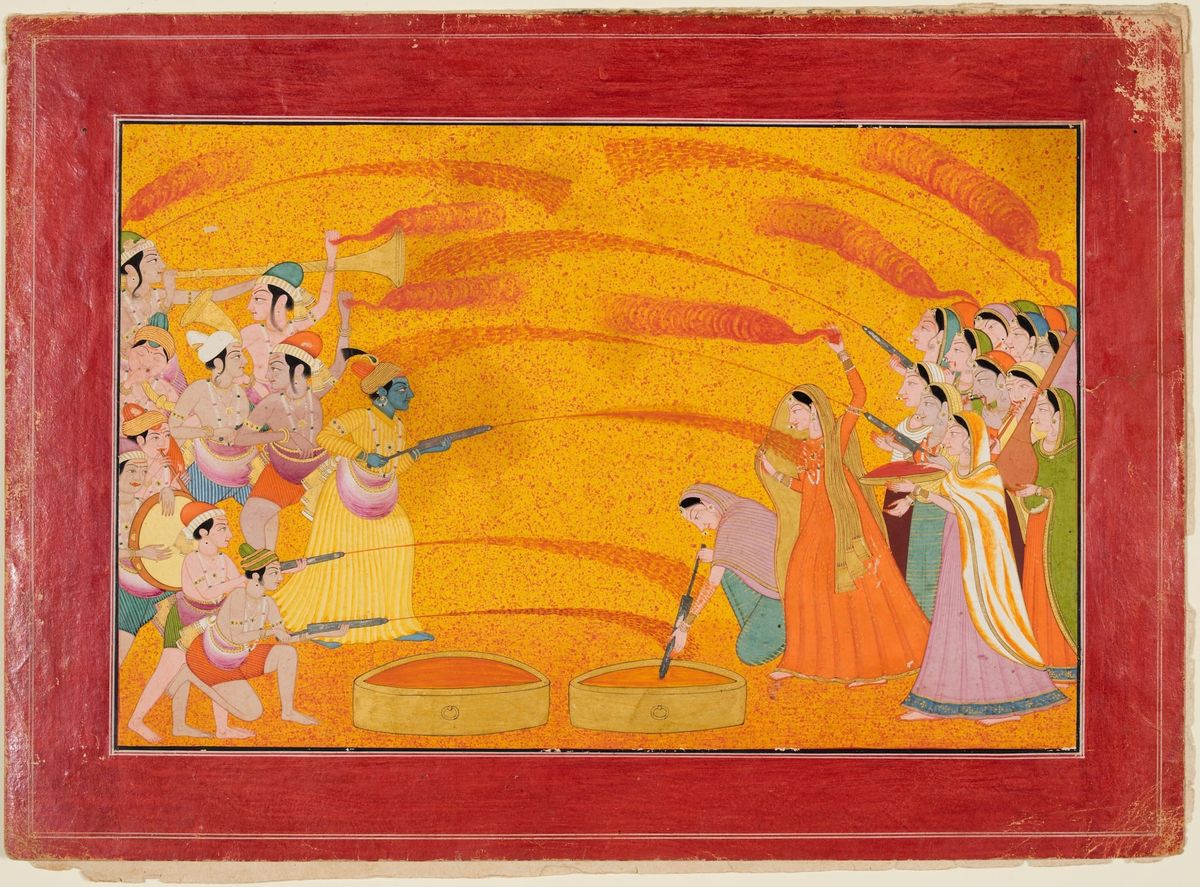
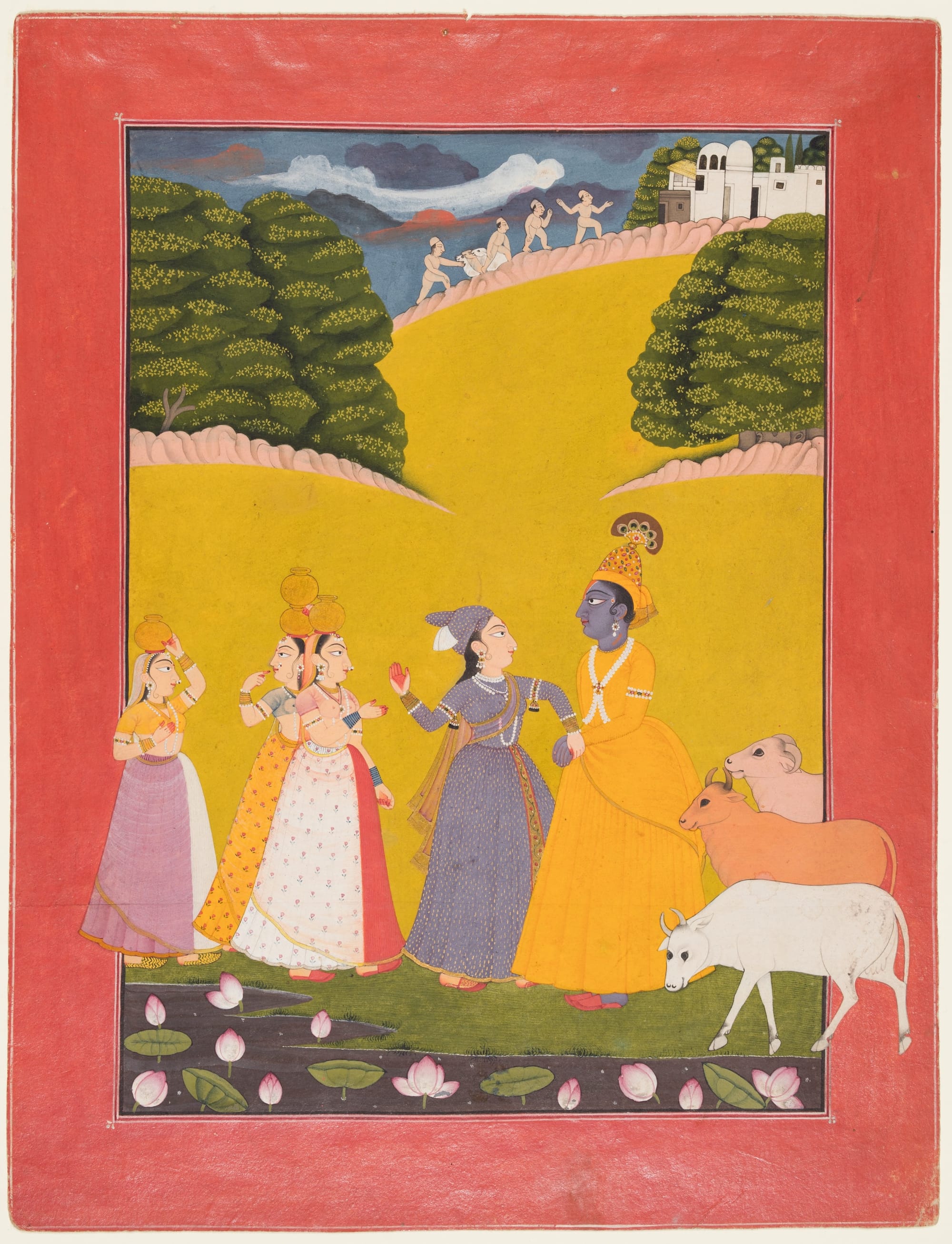
In the vibrant 1760 painting “Taking of the toll (Dana-Lila),” Radha, the Hindu goddess of devotion, arrests a rattled Krishna for stealing toll money from his maiden companions, the gopis. Scholars believe that the work is similar to two other paintings based on a drawing model from a workshop, but they are uncertain about the place of origin. Formal analysis reveals that “Dana-Lila” most likely came from the 18th-century kingdom of Chamba, which then was home to at least 16 established artist families. Chamba, along with Kangra, Nurpur, and others in India, is located where the Himalayas meet the plains of Punjab in the state now known as Himachal Pradesh, together comprising the Pahari region.
The substantial new catalog Pahari Paintings: Art and Stories (2026) is based on now-dispersed works amassed by scholar Catherine Glynn Benkaim, whose collection has been acquired by the Cleveland Museum of Art, the Cincinnati Art Museum, and the National Museum of Asian Art. This full-blooded hardcover catalog includes knockout reproductions, a crisp opening essay by curator Sonya Rhie Mace and art historian Sarang Sharma, and comprehensive analytical entries. Building on pioneering studies on Indian painting by B. N. Goswamy, the book zooms in on the prolific ancestral network of artists and workshop systems in the Pahari region.
Unlike the more widely recognized traditions of Rajput painting from the independent Hindu Rajasthani courts or Mughal (Indo-Persian) manuscript illumination, Pahari painting most often centralized the loving relationship between Radha and Krishna. Painters, such as court artist Sajnu, were highly mobile across the established kingdoms in the Western Himalayas. Art historian Debra Diamond writes that in the folio The goddess Sumukhi, from a Mahavidya (circa 1800), Sajnu and other workshop artists merged styles from Kangra and Mandi, resulting in gods with more pronounced features and jaunt expressions. In the rare cases when artists traveled out of state, we read about Purkhu, who left his family business in Kangra to work for Maharaja Ranjit Singh in present-day Lahore.