Cordy Ryman’s Playful Remix of Minimalism
The son of legendary painters, Ryman has developed his own visual language, transforming aspects of his parents’ work, and Minimalism, into something recognizably his.

Cordy Ryman is in an unenviable position. He is the youngest son of the artist Robert Ryman, who was married to the esteemed critic Lucy Lippard, with whom he had a son, Ethan. After that marriage ended in divorce in 1966, he married the painter Merrill Wagner and they had two children, Will and Cordy. All three sons are artists. Despite this formidable legacy, he has developed his own visual language, transforming aspects of his parents’ work, and Minimalism, into something recognizably his.
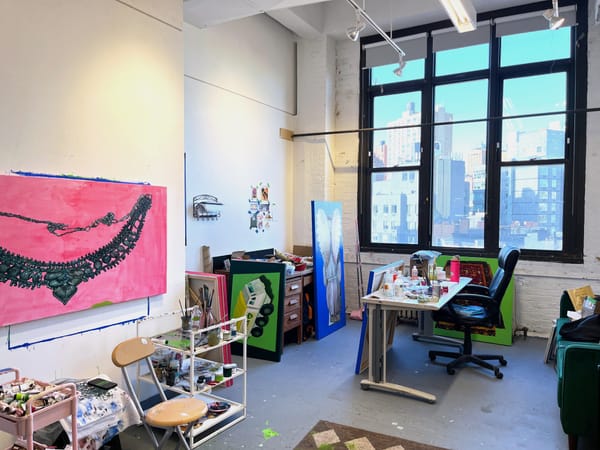
I came to this conclusion while spending the afternoon in Ryman’s Brooklyn studio, discussing his work, all of which he constructs from either 4-by-8-foot sheets or 2-by-4-inch wood boards. From there, he uses every type of acrylic paint, from matte to glossy, and is open to any color. If a piece comes back from an exhibition, he will often use it to make another one. No work is finalized until it finds a new home; everything can be made into something else. His practice is based on keeping all the elements in play while being open to the possibilities of the materials that he has on hand.
According to Ryman, the only advice his father ever gave him was essentially: If you try to do what others are doing, you will always be two steps behind. If you try to anticipate what the art market wants, you will not be doing what is yours. No matter what is going on, you should always follow your own path.
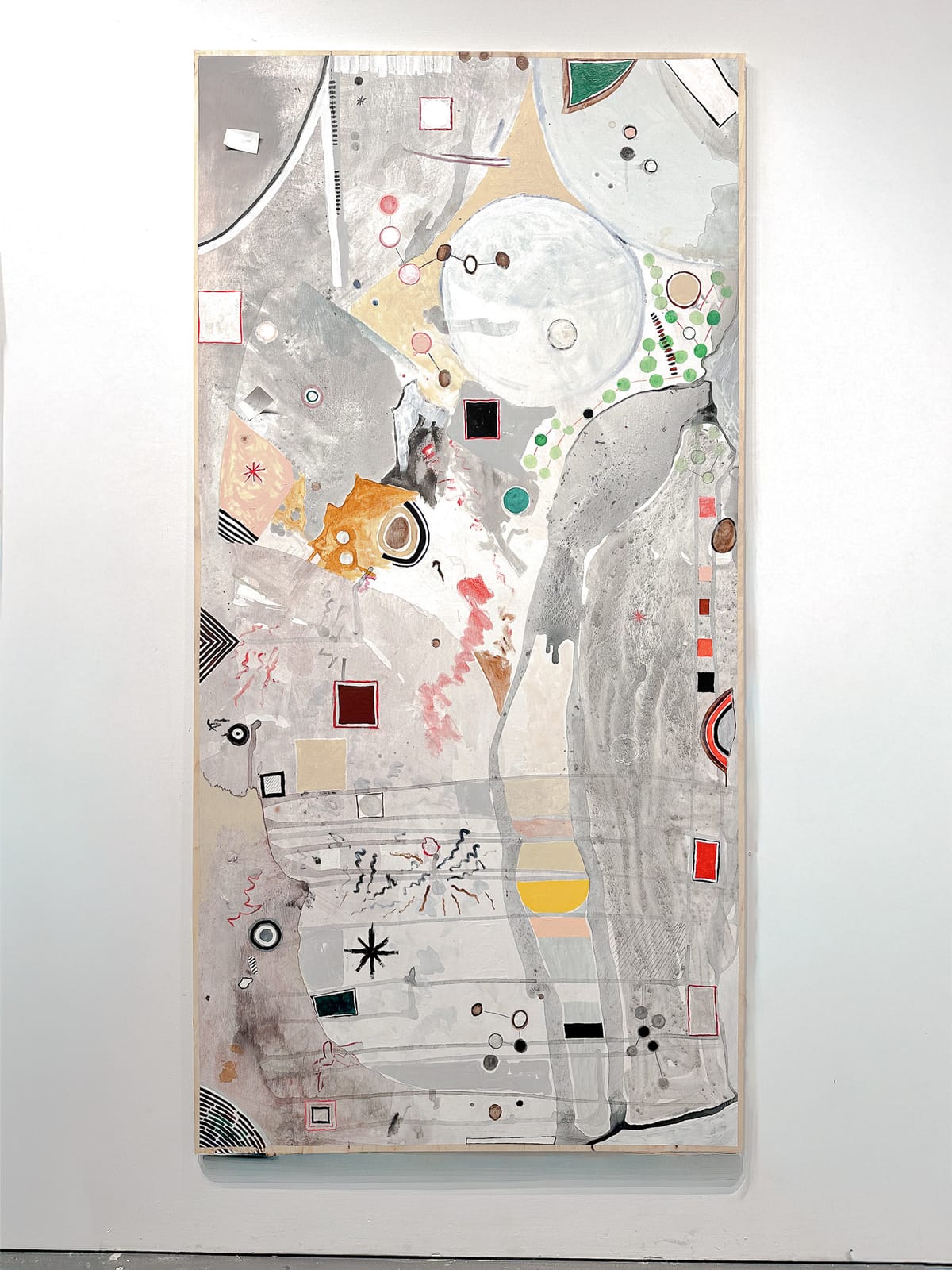
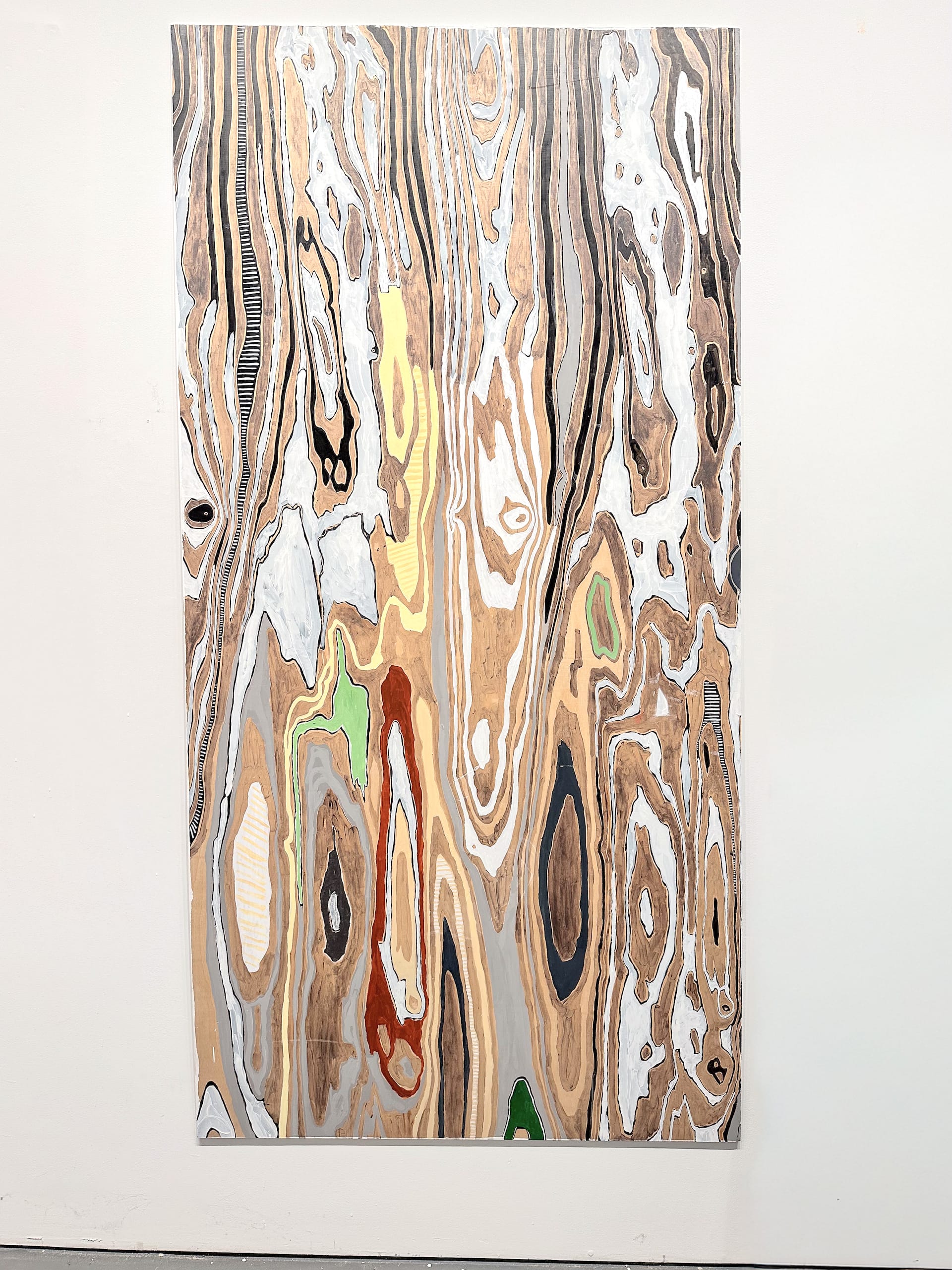
Despite working within the parameters of his materials, his art is playful, inventive, and exuberant. Ryman does not disguise the wood, even when he covers it with paint. One of the first paintings I noticed in his studio was a 4-by-8 sheet of plywood filled with elongated brown, white, and gray shapes pressing against a lichen green and a dried-blood form. Each shape is a vacuole. By having the woodgrain determine where to apply the paint, and being particular about his color palette, Ryman arrived at an original composition.
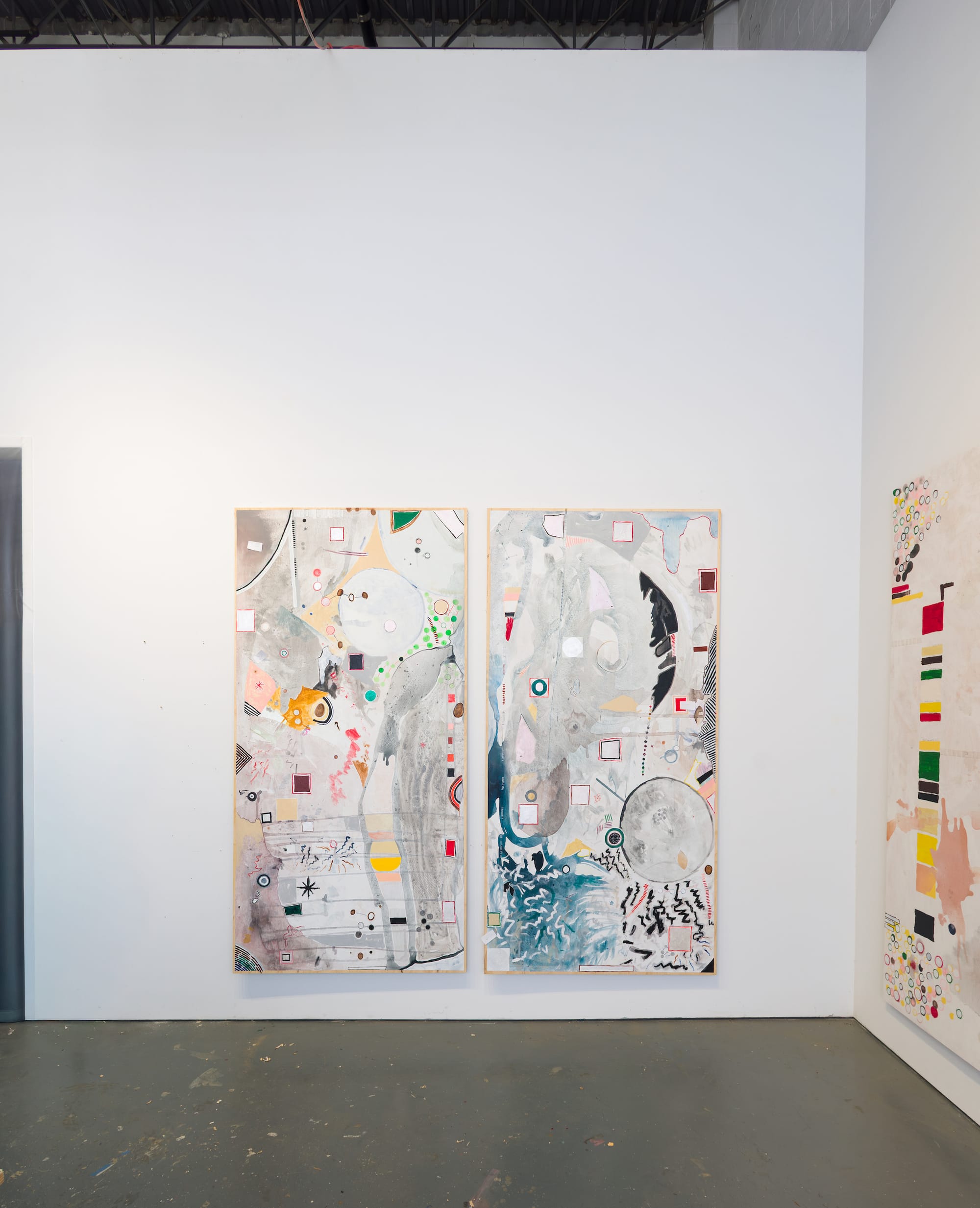
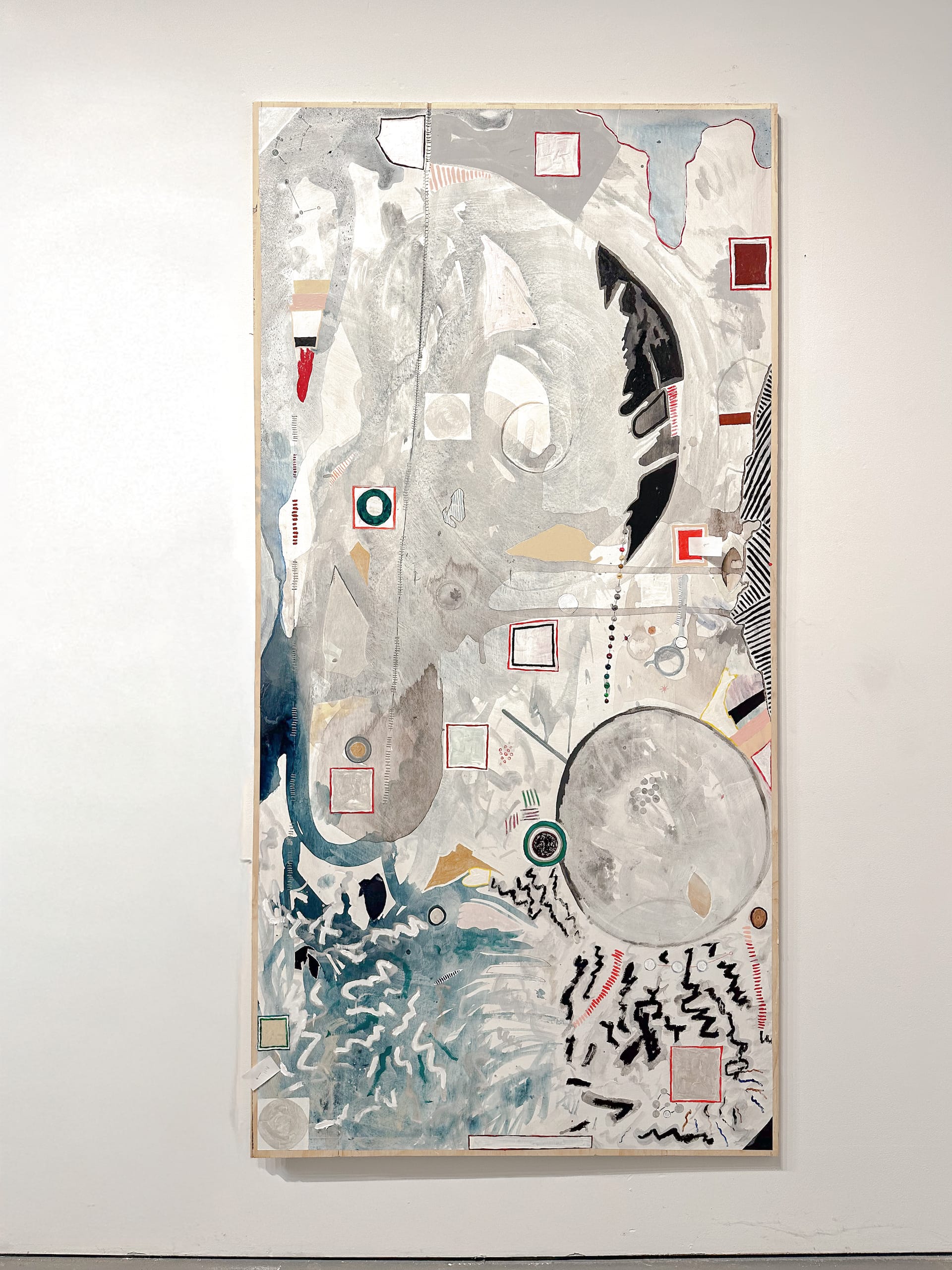
Circles of different sizes covered the other paintings. Some of the larger pieces included clusters of these circles with one hue dominating. For other works, the circles were rendered on blocks arranged in a grid. In others still, he affixed small, painted scraps to the surface. Working only on wood and using an abstract vocabulary of circles and lines, he seemed determined not to repeat himself.
In one section of his studio, dozens of different-sized blocks of wood protruded from a taped-off section of the wall. Many were small enough to fit in the palm of your hand, and each was painted differently. He told me they are for a show this spring at Thomas Park Gallery in Seoul, South Korea.
A group of painted lengths of wood that can be glued together or joined using eye-hooks and an oval ring are another example of the expansiveness of his practice using limited means. In some cases, the latter were arranged in concentric squares and rectangles. When he attached the top part to the wall, the pieces might hang down stiffly, or sit at different angles that can be moved and arranged, depending on how Ryman joined the separate sections. The pieces that can be arranged invite viewers to decide on their orientation to floor and wall. These and other works, such as a stack of open boxes partially covered in paint, seemed to me to undermine the seriousness and self-importance of signature Minimalist works by artists such as Donald Judd. I don’t think Ryman is critiquing historical Minimalism so much as saying, “Loosen up. Don’t take yourself so seriously.”
One artist who came to mind while I was at Ryman’s studio was André Cadere. In 1972, after making paintings that combined folk art and psychedelia, Cadere began constructing bars of precise, tightly joined, rounded wood forms, which he called barres de bois rond (round wooden bars). He would carry them around and place them in different exhibitions by other artists, including On Kawara and Robert Ryman, who bought at least one for his collection. The difference — and it is significant — is that Cadere employed an idiosyncratic mathematical sequence to decide the order of the colors (including a deliberate error in color placement) and number of segments. Cadere’s system had a rigidity to it that one doesn’t find in Ryman’s work.
How do we categorize Ryman’s art? Is it painting or sculpture or both? This is one of its beautiful paradoxes: it is both formally rigorous and openly playful. In his humble materials I see him rejecting the current trend toward costly fabrication, one legacy of a certain strain of Minimalism. And yet I don’t see his work as a corrective because, frankly, he is having far too much fun.