Dice Are 6,000 Years Older Than Previously Believed, Study Says
New research identifies more than 600 objects discovered in the United States as two-sided dice crafted by Native Americans.

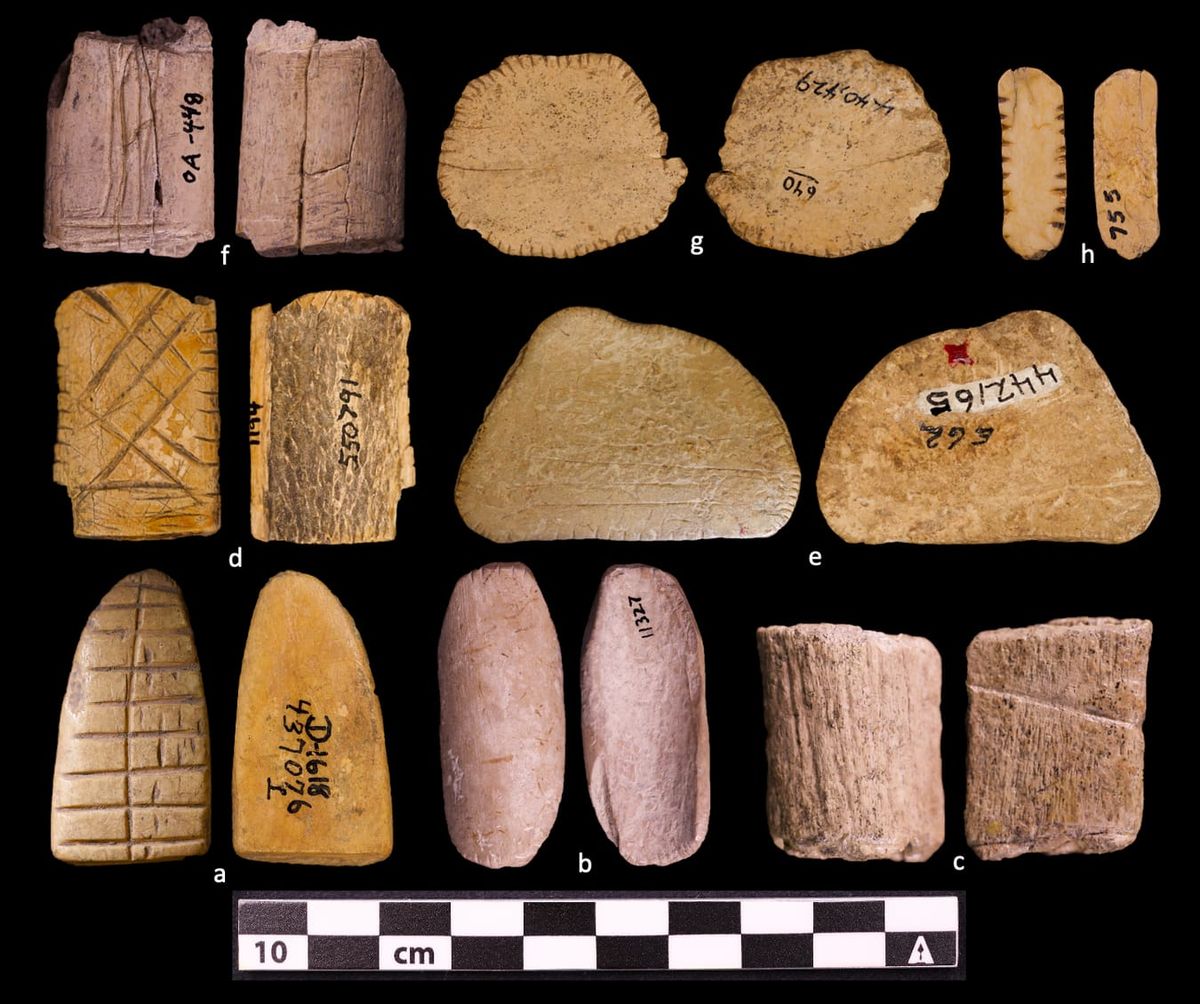
New research published in the journal American Antiquity last week posits that the first dice appeared more than 12,000 years ago, much earlier than previously believed. Made by Native Americans, the Pleistocene-era pieces predate all other archeological findings of dice, most of which come from the Bronze Age, by over 6,000 years.
Dice represent a recognition of randomness; tools that wield unpredictability. “At the end of the last Ice Age, these are not the people we think are going to be diving into complex intellectual concepts. But they seem to be doing exactly that,” Colorado State University archaeologist Robert J. Madden, the author of the study, told Hyperallergic.
Madden’s study is primarily concerned with classification. While there is a historic record of Native American dice dating back 2,000 years, a hurdle stood in the way for archaeologists trying to trace a throughline between smaller, nondescript findings at older sites. “Early in the process, I started finding some of these really early pieces, and there was this sense of, ‘Well, we don’t know what these things are,’” Madden said.
In his research, Madden heavily relied on Stewart Culin’s 1907 book, Games of the North American Indians, which outlined diagnostic attributes for 293 sets of Native American dice from across North America.
Using Culin’s index, Madden developed objective criteria to comb through archaeological archives. In his analysis, he classified over 600 pieces from 57 archeological sites across the American West, primarily in Colorado, Wyoming, and New Mexico, that he believes were used as dice.
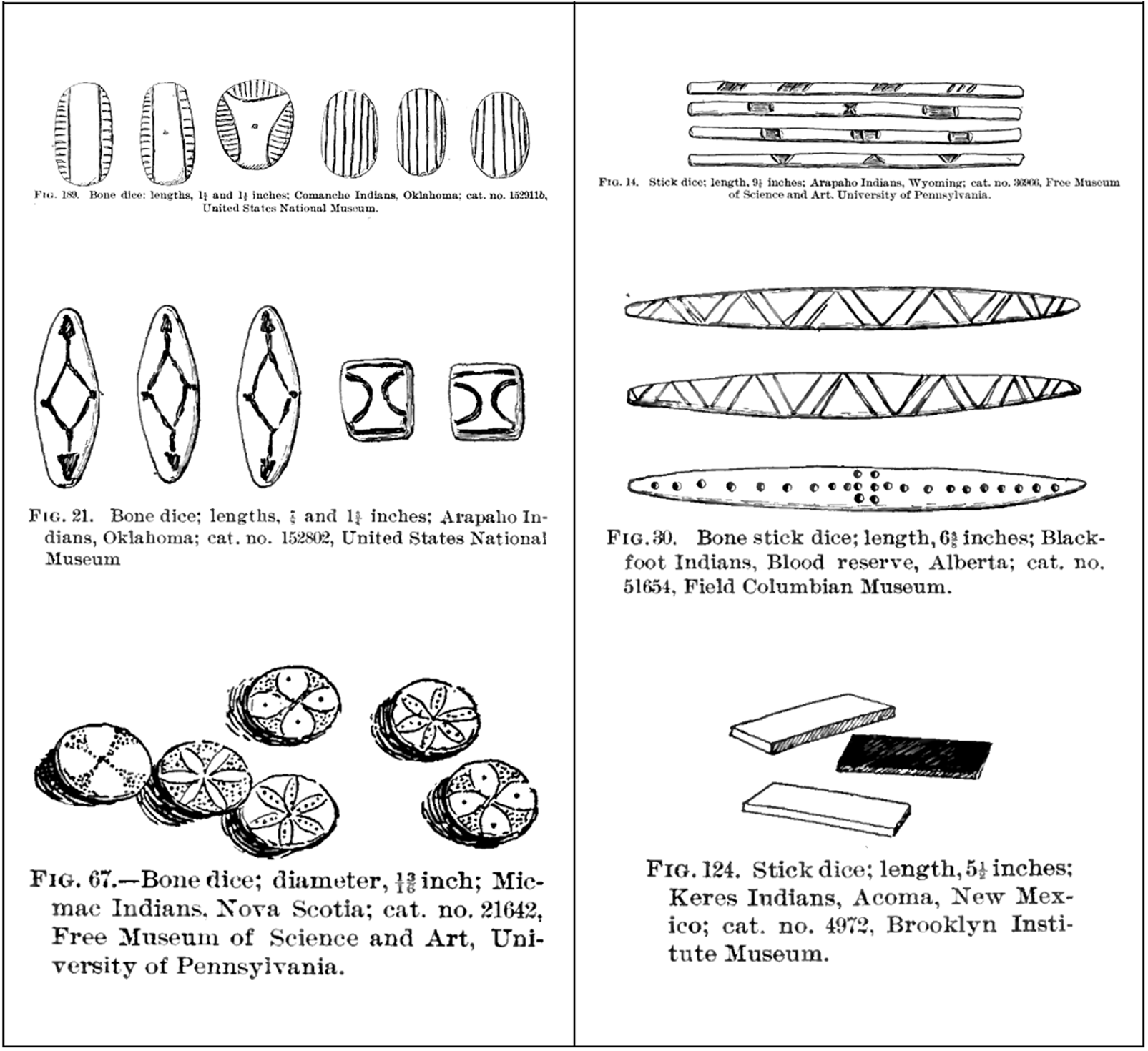
Not all agree with Madden’s findings. Jelmer Eerkens, a professor of anthropology at the University of California, told CNN that she believes more context about the pieces’ locations is needed in order to determine their function.
Unlike the classic six-sided versions, Madden’s prehistoric dice are two-sided, referred to as “binary lots,” and were used for social and cultural exchange between tribes that might be strangers to each other, Madden posits. “The games created a neutral space. Everybody understood they had an equal chance of success,” Madden said.
The pieces are made of wood or bone (and sometimes teeth) and have one marked side and one side left empty. The markings are unusually decorative compared to other artifacts found at Pleistocene sites.
To Madden, this suggests that early concepts of chance invoked an artistic impulse.
“Probability, chance, randomness — these aren’t just ideas,” Madden told Hyperallergic. “They’re real features of the physical world, and through these games the dice bring randomness out into the open, they clean it up, they make it so that you can see these patterns.”