For Sylvia Snowden, Color Is Life
The 83-year-old artist has dubbed her painterly detonations of color, which physically undulate from their surfaces, as “structural abstract expressionism.”
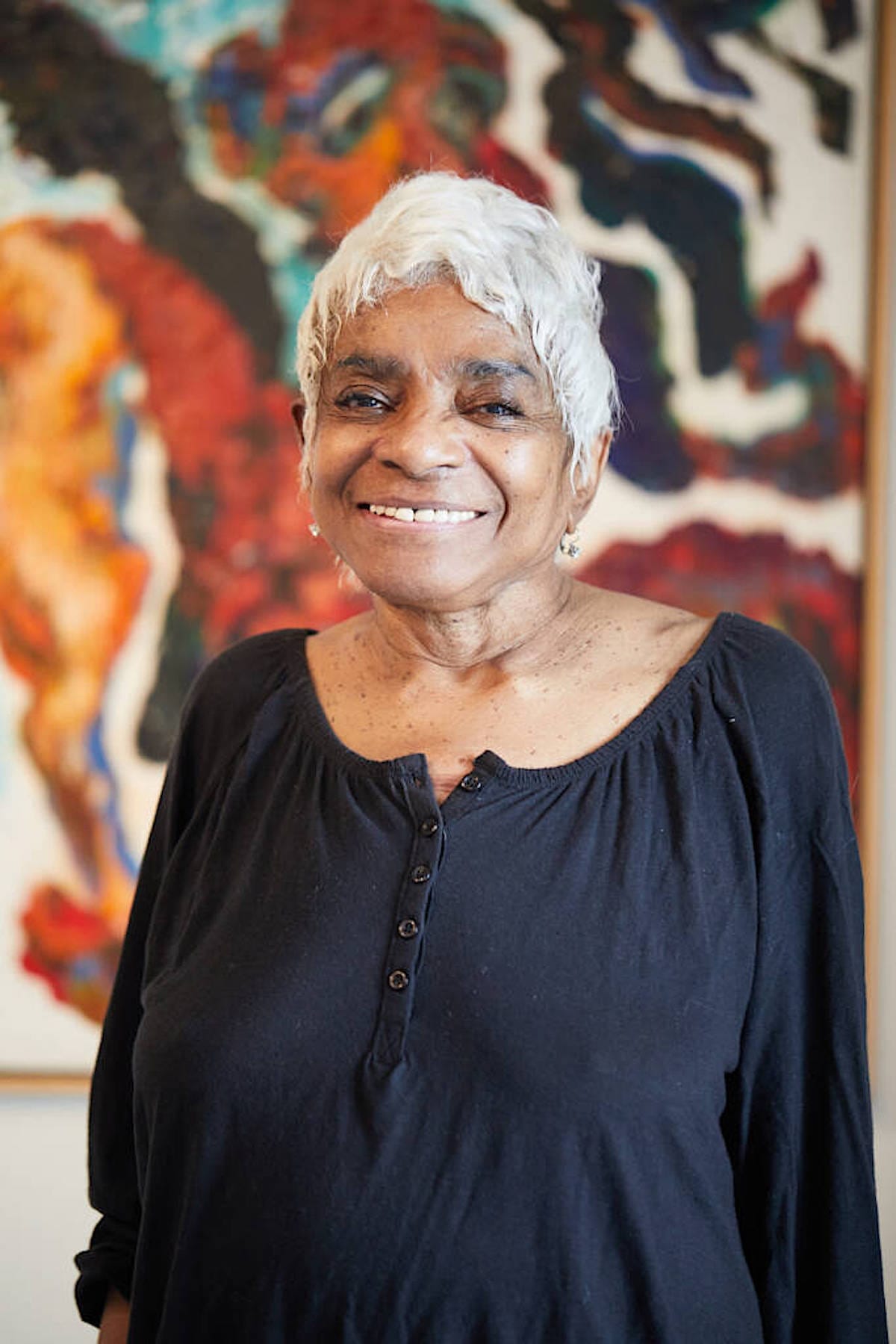
Sylvia Snowden has a curiosity about the human condition that begets active, engrossing paintings. Her canvases hover delicately between figuration and abstraction, evoking abundant movement and energy. Standing before the artworks feels electric — like something in you is being activated, previously suppressed emotions riled to attention.
Snowden and I met in November, after her solo exhibition opened at White Cube New York. On the Verge gathers 20 of her paintings across two floors, on view through December 19. Our conversation began with her affinity for color and its potency, a lesson from childhood imparted by her beloved mother, who adored vibrant hues. “Color is life,” Snowden declared. “Without color, what would you have?”
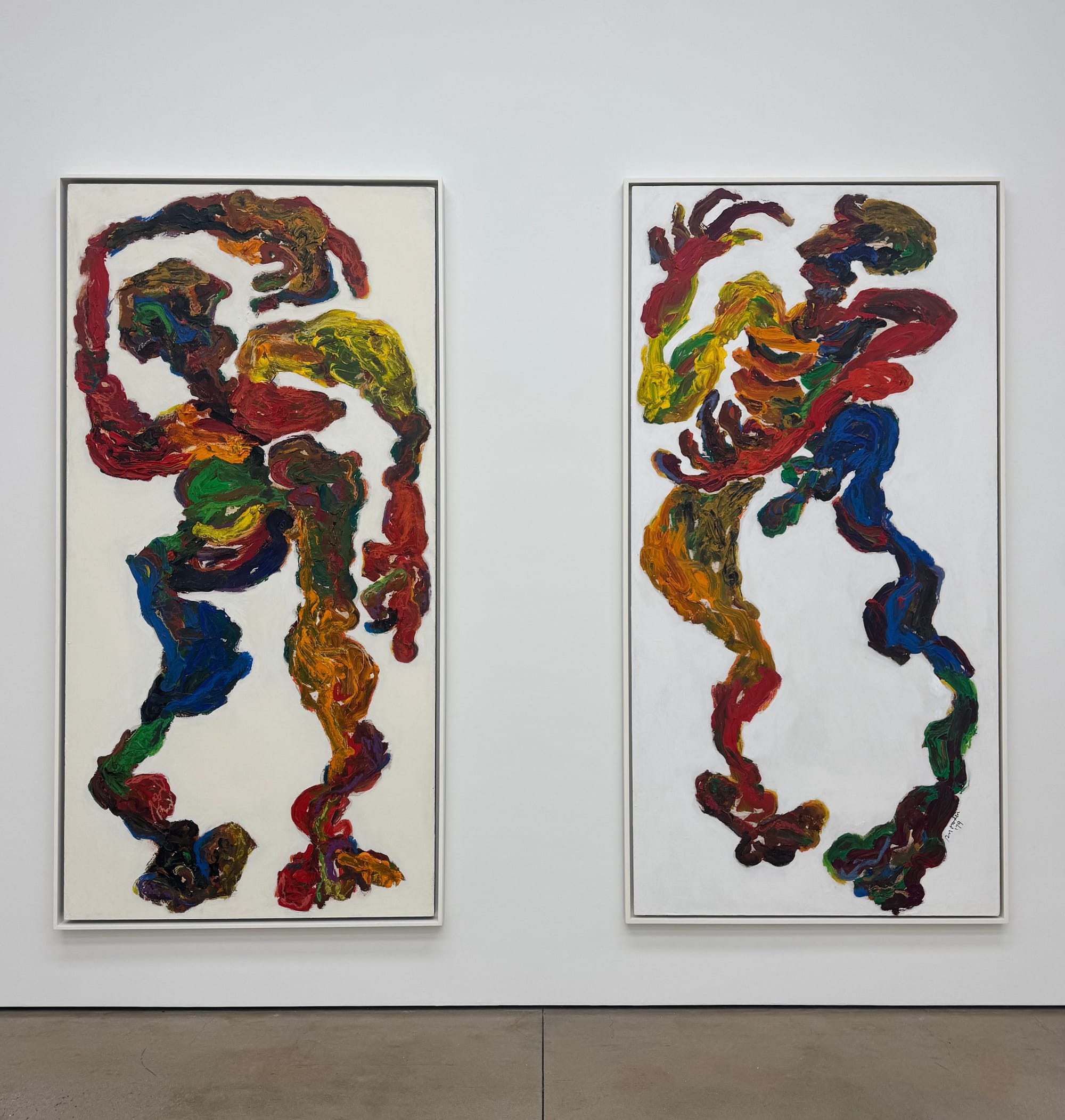
The heart of the exhibition is her M Street series — abstractly rendered portraits of bodies with engorged extremities. While they are not depictions of individual people, they are named after her neighbors from the eponymous street in Washington, DC, where she has lived since 1978 and raised her children. Their purpose, however, illustrates something more universal about the nuances of human emotion.
Snowden was raised on the Dillard University and Southern University campuses in New Orleans by parents who introduced her to artmaking. She received her Bachelor of Arts and Master of Fine Arts degrees from Howard University in the 1960s. There, she studied under James A. Porter, Loïs Mailou Jones, and James Lesesne Wells, titans of midcentury Black art. Her work has been displayed at the National Gallery of Art, Baltimore Museum of Art, and Montclair Art Museum, among others.
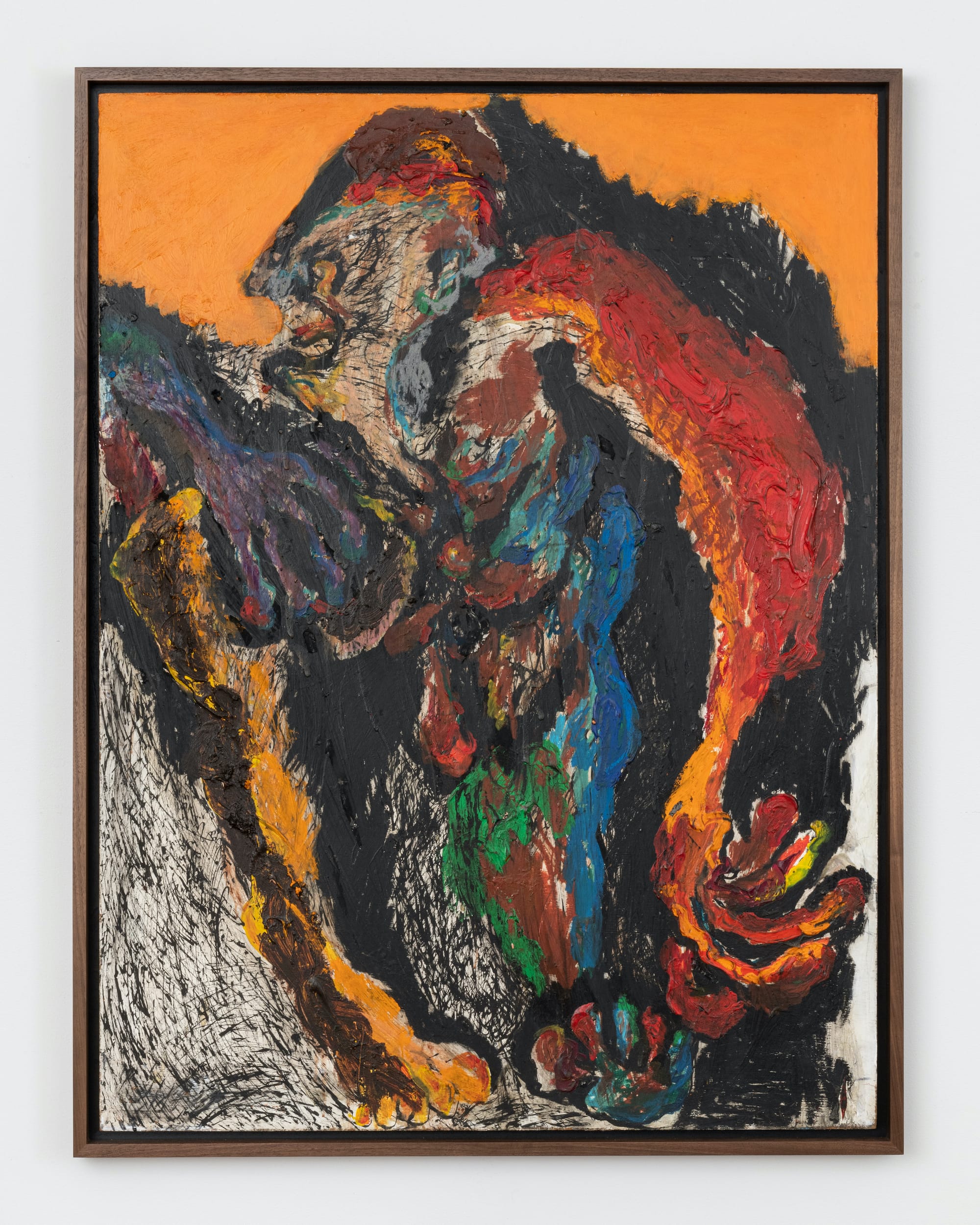
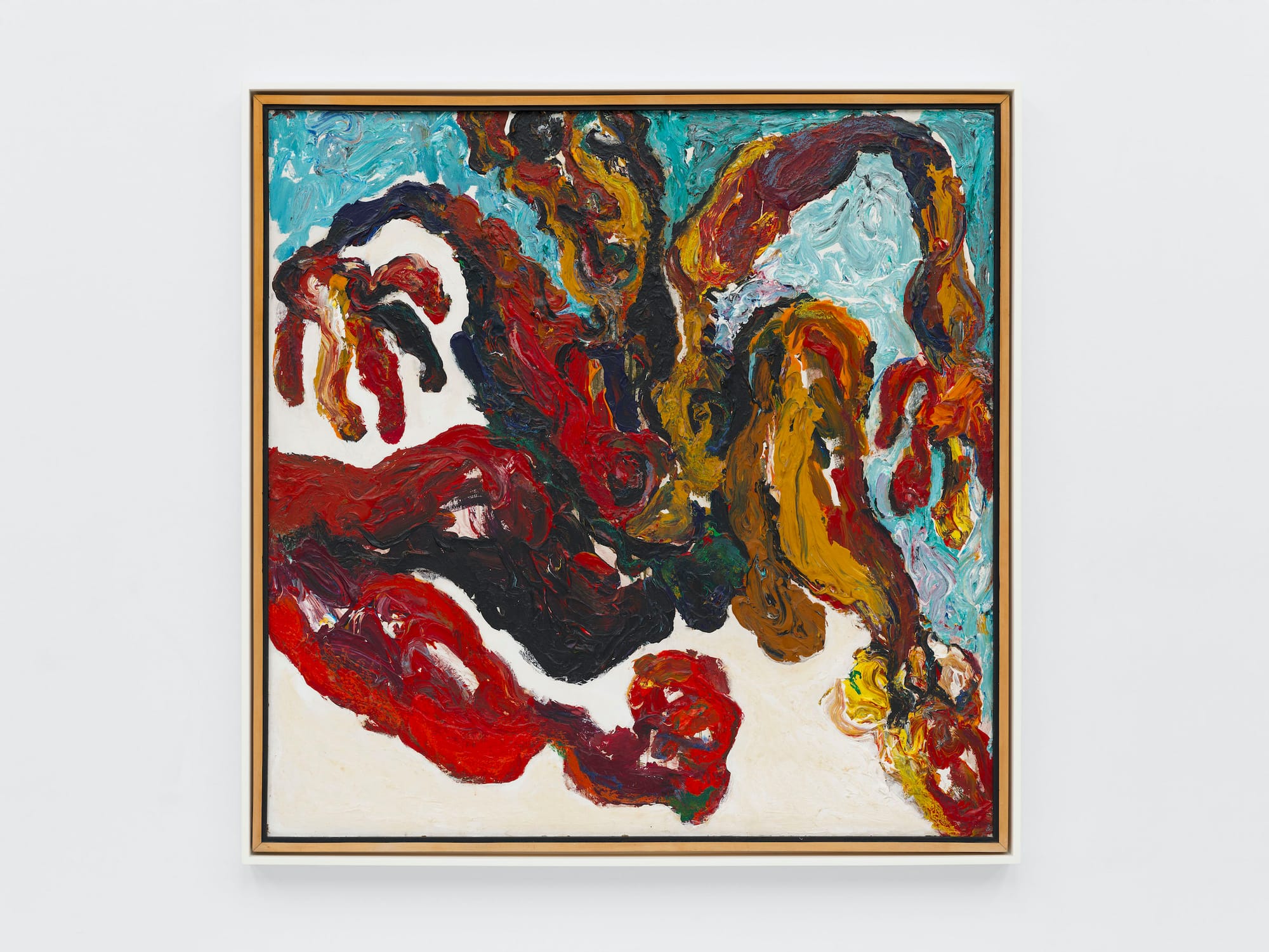
At age 83, she still paints every day. Her approach to texture, which she dichotomizes as both visual and tactile, has been developing since age four. She uses acrylic paint and oil pastels on masonite, an innovation born out of a residency in Australia, where she wasn't able to procure enough oil paint and knew her canvases would not dry in time to be shipped home. (Also, her children “could not stand the smell of turpentine,” she told me.) The resulting artworks are thrilling impastos, sculptural in quality. She has fittingly identified these detonations of color, which physically undulate from their surfaces, as “structural abstract expressionism.”
I spoke with Snowden near White Cube in Manhattan about her schooling, family, and making the first mark on canvas. This conversation has been edited for length and clarity.
Hyperallergic: I would love to start at the beginning and talk about your roots as an artist. So, how did you come to find painting?
Sylvia Snowden: My mother, Jessie B. Snowden, is the one who introduced my brother and me at a very young age — age four — to painting and to color. My mother knew a lot about color and wore color, and she introduced us to it. Now, when I was four, what we did was — I don't know if kids do this now or not — use coloring books.
H: Yeah.
SS: They still do?
H: Yeah. I bet a lot of the time, they do it on their iPad; they color it in on the iPad. [Laughs]
SS: Oh, I see. That didn't happen with me. [Laughs] This was a coloring book with crayons. And so that's how I learned how to make what is known as the “visual texture,” as a texture that you make yourself. So what you make it on remains the same as the feel of it. And I learned how to use color that way. My brother, who did a lot of painting, did what is known as — what we call now — Color Field. His work was really beautiful, but he left that art stuff, kids' stuff, and went on to law, and I sort of stayed in it.
I went to Howard University, the College of Fine Arts, and that was the most beautiful teaching experience about life and art that anybody could ever have. The department of art, which was headed by a man named James A. Porter. Genius, no doubt about it. He wrote a book [Modern Negro Art] that is still used now. He was most articulate and knew everything about American Black artists. I'm not good at talking about my work. I don’t like to do that. I paint, that's the way I communicate. I don't use words. But let me tell you what he told me: He said part of my getting a degree, I had to talk about my work, and he knew I couldn't. And so he told me that if you don't talk about your work, you won't get your degree, because that's part of the requirement. That took a long time for me to swallow. He explained to me, “You're going to be called upon to talk about your art. And you can't say, ‘oh, I can't do it.’ You're going to have to learn how to do it.”
He was really responsible for my going to Skowhegan School of Painting and Sculpture. I got a first-place award. And what they did, Skowhegan, three or four years ago, is they invited all the people who had a first award for that particular summer to come back, and they have a studio and paint, sculpt, whatever you did. And I did that. And some of the people came to the [White Cube] opening last night.
H: Did you know, when you were a student, what type of art you wanted to make?
SS: No. You know, who really pushed me more into that was David Driskell. I like David Driskell. He was a student of all those other people [James A. Porter, Lois Mailou Jones, and James Lesesne Wells].
Amazing things happened with James A. Porter. He wanted us to experience so many things. Our classes did fresco painting. Fresco painting! We had a plasterer come up, and [install] a four-feet-by-four-feet plaque, and you had to do a painting, and it stayed up there for a semester, then it was taken down for the next class. But it was actually fresco painting. A lot of people at some prestigious schools had never even heard of fresco. But at Black Howard, we did it. When I was there, that was the place. In the whole wide world.
H: What's your process of creation when you first start off with a blank Masonite — is it secret? Do you keep it close to the vest?
SS: No, no. Do you know the hardest things to do? Make that first mark on that white canvas. That's the hardest mark, because that can dictate so many things about the painting.
H: From making that first mark to completion, are you letting the artwork take shape as you're creating, or do you go into it with an idea of exactly what you want this to look like?
SS: Oh, no, it expands because I grow within making the art. I don't go in there with a picture in mind, and take from my mind that picture, and put it down. I take an idea, and the use of certain colors, and the idea is expressed through a number of paintings. That's why I do paintings in series. One painting does not fulfill everything I want to think about that particular subject matter. So I keep going some, because I could get a complete look at it from my vantage point.
H: You call your work “structural abstract expressionism.” I'm curious how you would define that, how you would define your work.
SS: Abstract expressionism is subdivided into three areas. There's action painting, like Jackson Pollock. Then there's symbolic, that's painting that's based on symbols that we use in our environment. And then you can use something that's based on the figure of what you see, the structure of what you see. So that is structural abstract expressionism.
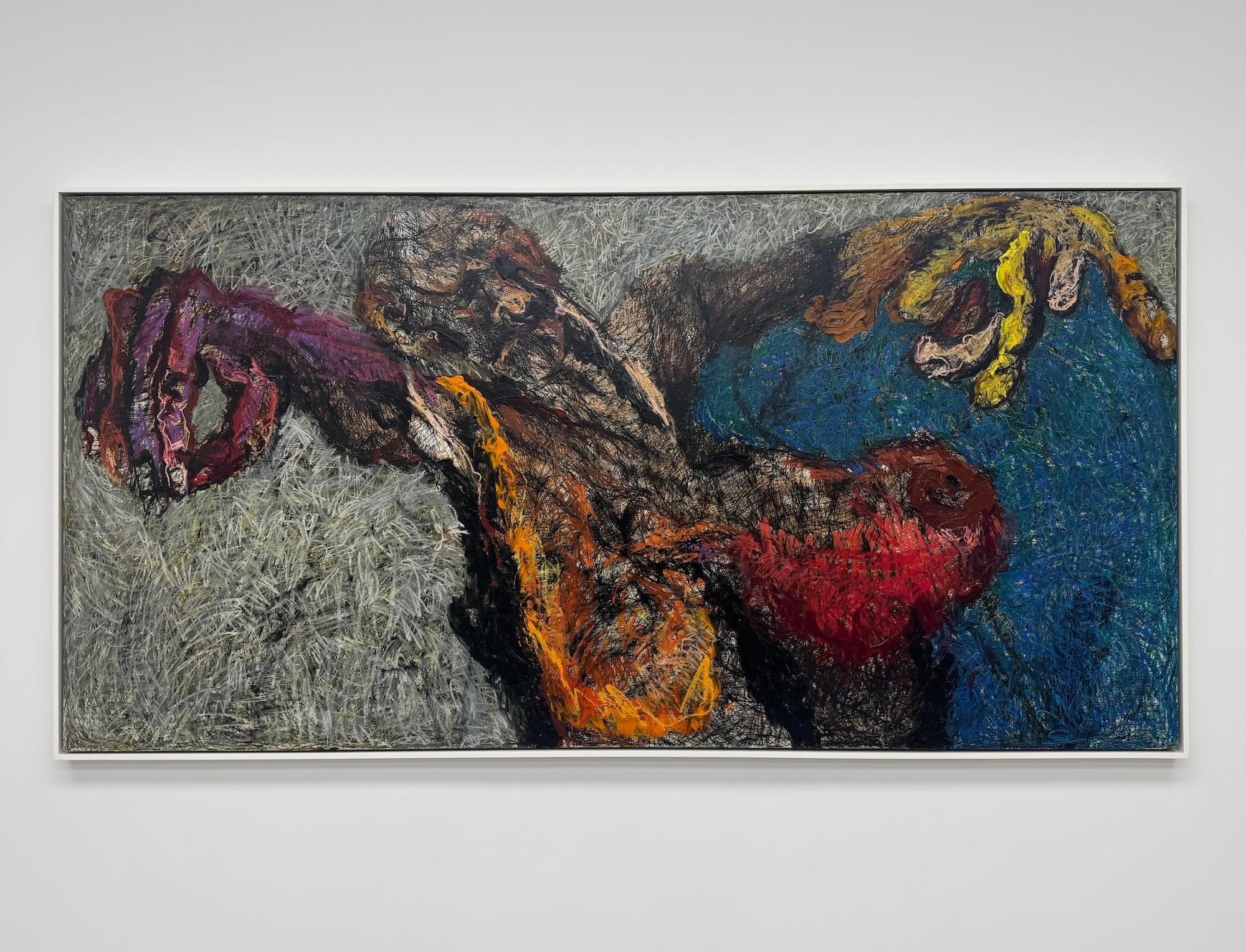
H: The influence of M Street really looms large in the series that you've named after it.
SS: If you don't have a certain status in life, you're forgotten. So I gave those [paintings] names [of] people who were forgotten before they died. The trucks would come in front of the house, and I’d put the names of the people on the back of the painting. They didn't pay attention to the paintings that much, because in order to see abstract painting in this society, we have to be taught. In other societies, the art is related to the people. But not here. But they saw their names on the back: “Oh, that’s me! That’s me!” It gave them a warm feeling. Somebody cares enough of me to represent me. That's the whole idea — that we're human beings and we all have the same feelings. We all have the same personality needs, but they come out differently in the sense that they're more intense in some people than others.
H: I've read that you create work every day.
SS: I paint every day. I do. That's fortunate. I'm very fortunate to be able to do that. I'm fortunate with my kids; they respect that. Shell, my daughter, will call me asking, “What am I doing?” I said, “I'm painting.” “Okay, I'll call you back.” I was painting before she was born, so they grew up with respect for what I do. And I very much appreciate that.
H: You grew up on these university campuses, and your parents were really encouraging you and your brother to make work. Did that continue as you got older?
SS: They didn't encourage me to become an artist. Believe me, they understood. That was laying down poverty lane. But they also understood that it was important to do what you felt passionate about, and they realized that, and they were really supportive. I mean, they bought paint — an enormous amount of paint — for me, even after my kids. I had good parents. Good parents. My brother and I knew we were loved. My kids knew they were loved.