Frank Gillette’s Anthropic Blues
Elegiac, urgent, and infinitesimal, the videos and Polaroids in "Spectra Obscura" express distinct sorts of disappearance, decay, and fleeting natural phenomena.

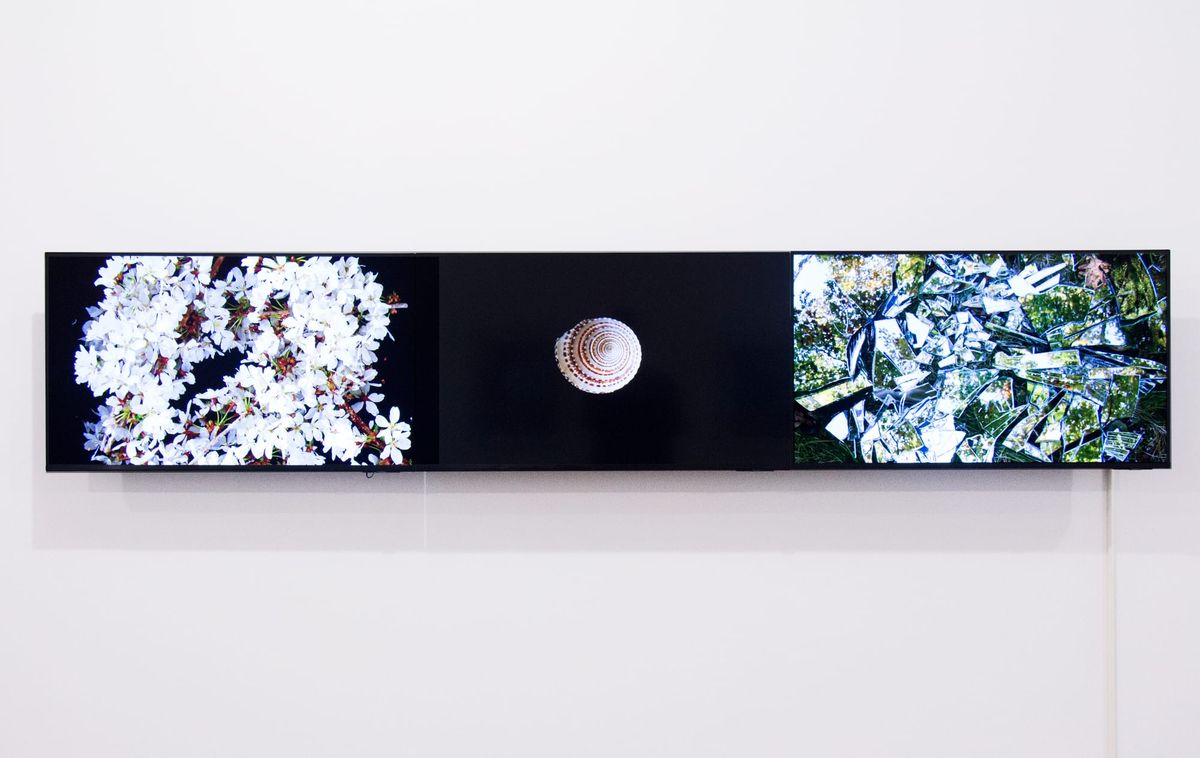
A hushed medley of ambient soundscapes greets the viewer as they enter Frank Gillette’s Spectra Obscura at Microscope Gallery. Field recordings capturing the woodlands and beaches of Eastern Long Island intertwine with percussive elements, melodic tones, and a selection of distorted electronics. Hailing from The Symbiotic Blues (2017–22), a trilogy of three-channel video works that run the length of the gallery’s east wall, this audio resonates subtly throughout the exhibition, creating an acoustic texture that matches the layered visual worlds on display.
Since the 1960s, Gillette has been fashioning an ecology all his own — piercing video and media works full of strata, sharply tuned to the entanglements between nature, culture, and the devastation humans wreak upon the biosphere. Elegiac, urgent, and infinitesimal, the videos and Polaroids in Spectra Obscura express distinct sorts of disappearance, decay, and fleeting natural phenomena. The single-channel video “Symptomatic Syntax” (1981) features close-ups of slowly shifting aquatic milieu accompanied by sounds of running water and an intermittent voice-over delivering lines from J.M.E. Taggart’s 1908 book The Unreality of Time.
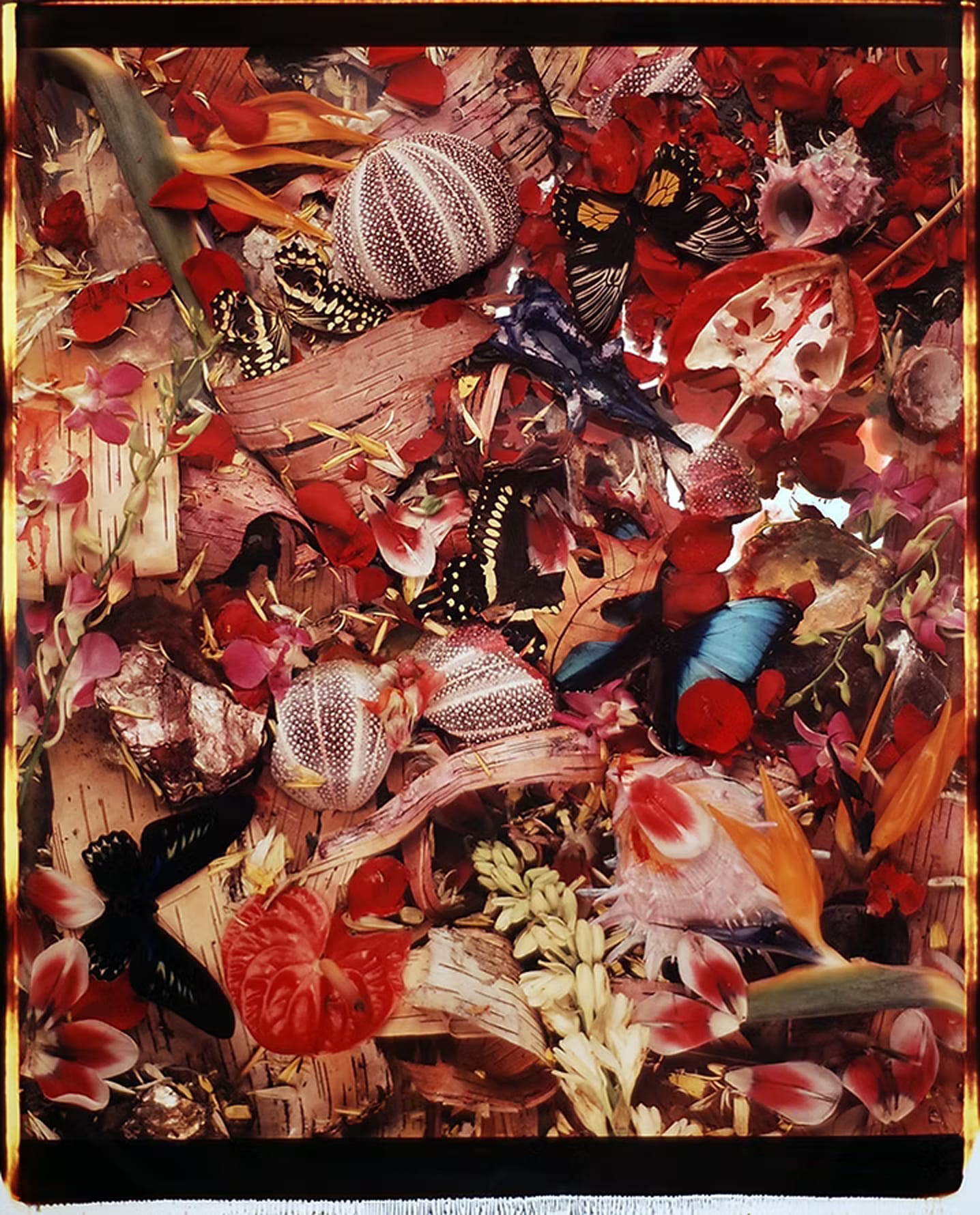
“Chthonic Chimera” (1987), a remarkable set of rare large-format Polaroids, frame dense, painterly arrangements of delicate matter, including tree bark, flower petals, small animal skulls, and a variety of shells. The three video works that comprise The Symbiotic Blues series — “Riverrun” (2017-18), “Spearlight” (2019), and “Blackseer” (2022) — use “still life, landscape, and counter-statement” as the framework for their three channels, exploring the fragile habitats and marine life of Eastern Long Island.
Wandering through the gallery, I kept thinking about Anna Tsing’s book The Mushroom at the End of the World, and about the precariousness of living in a time of “trouble without end.” Intimate and planetary, haunted and haunting, Spectra Obscura is a welcome testament to Gillette’s long-term commitment to sticking with this trouble while continually investigating new artistic pathways that grapple with our aporic environmental condition.
Frank Gillette: Spectra Obscura continues at Microscope Gallery (527 West 29th Street, Chelsea, New York) through October 17. The exhibition was organized by the gallery.