Historic Monument Honors New York's First Arabic-Speaking Community
The public artwork celebrates the literary legacy of the city's storied "Little Syria."
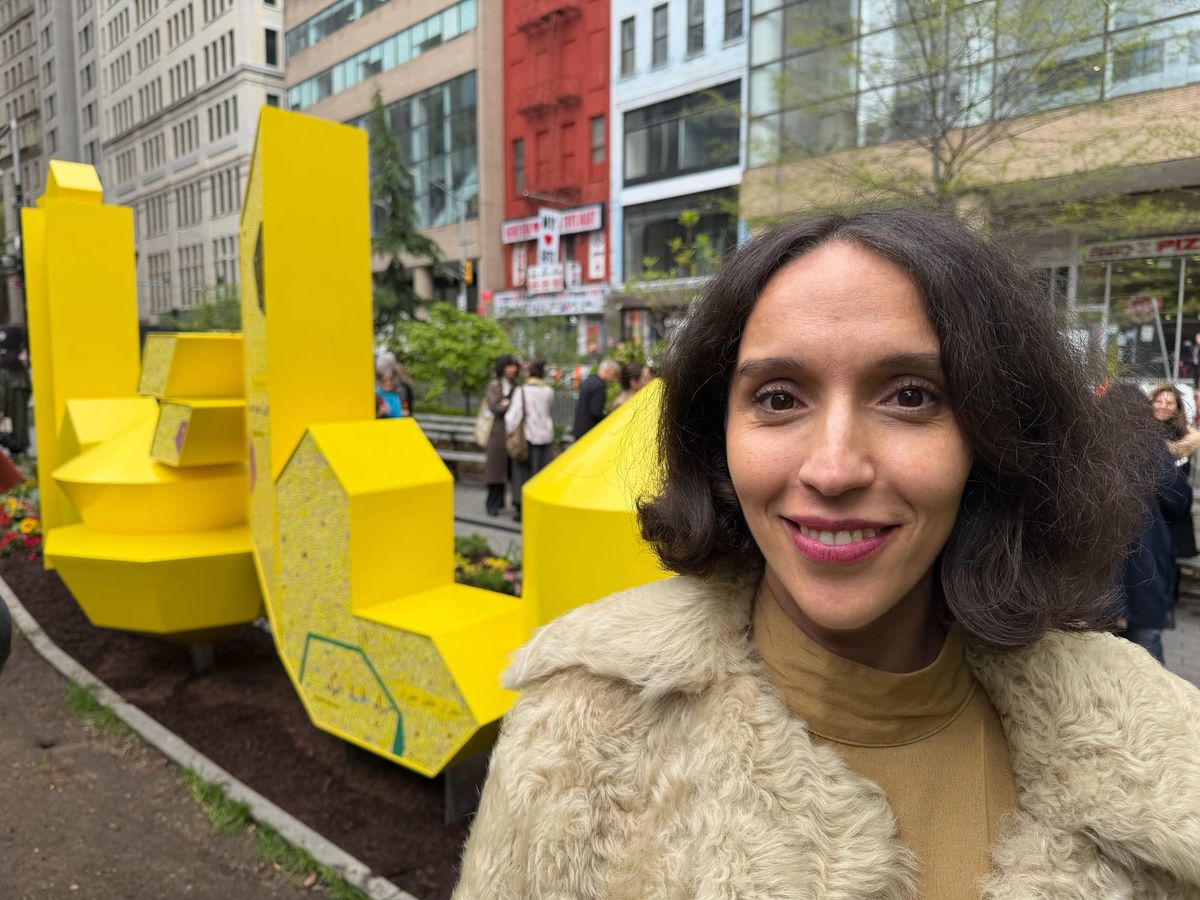
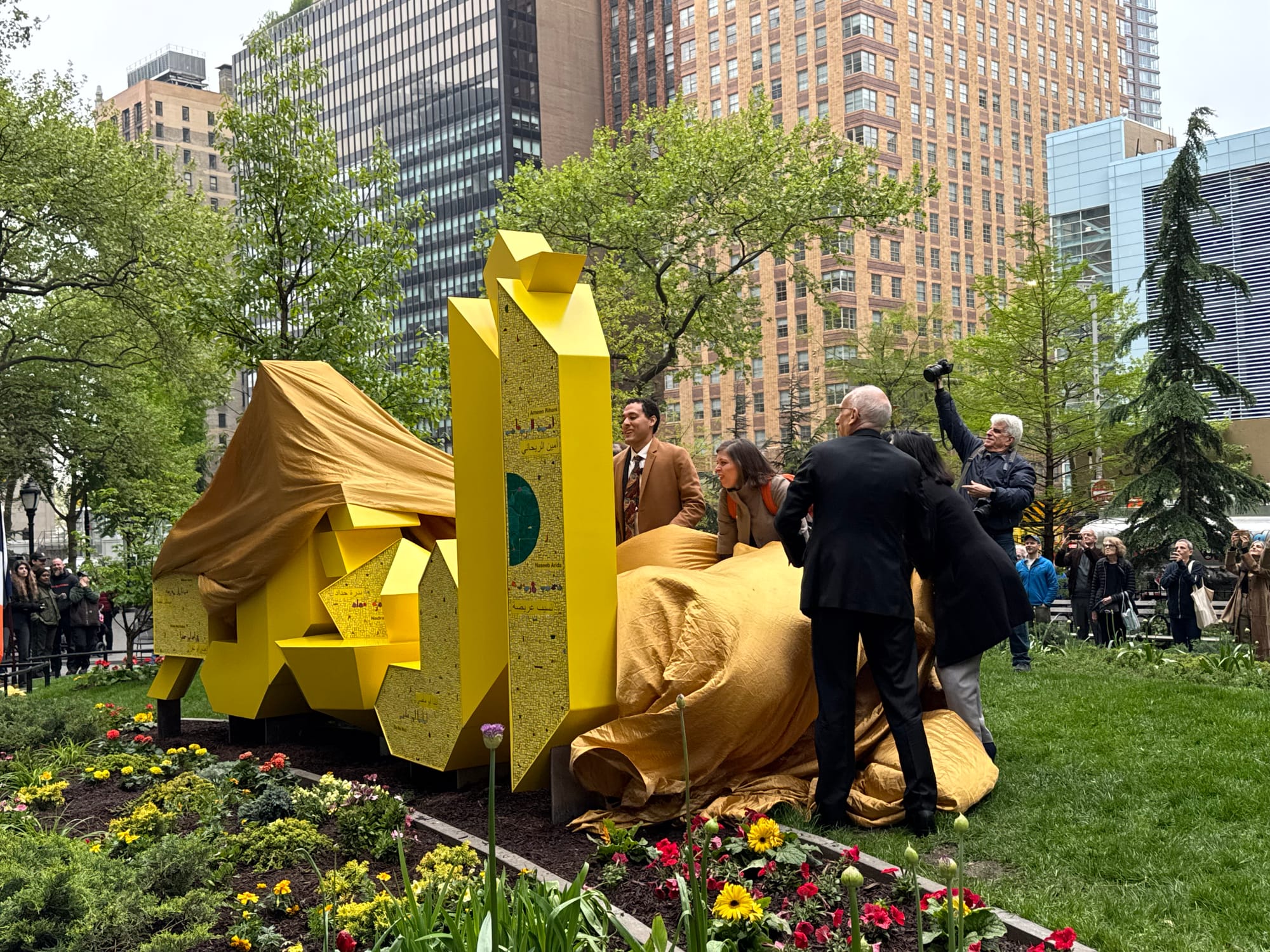
New York City Mayor Zohran Mamdani’s administration unveiled its very first commemorative public artwork on Thursday, April 30, in recognition of Manhattan’s first Arabic-speaking enclave, “Little Syria.”
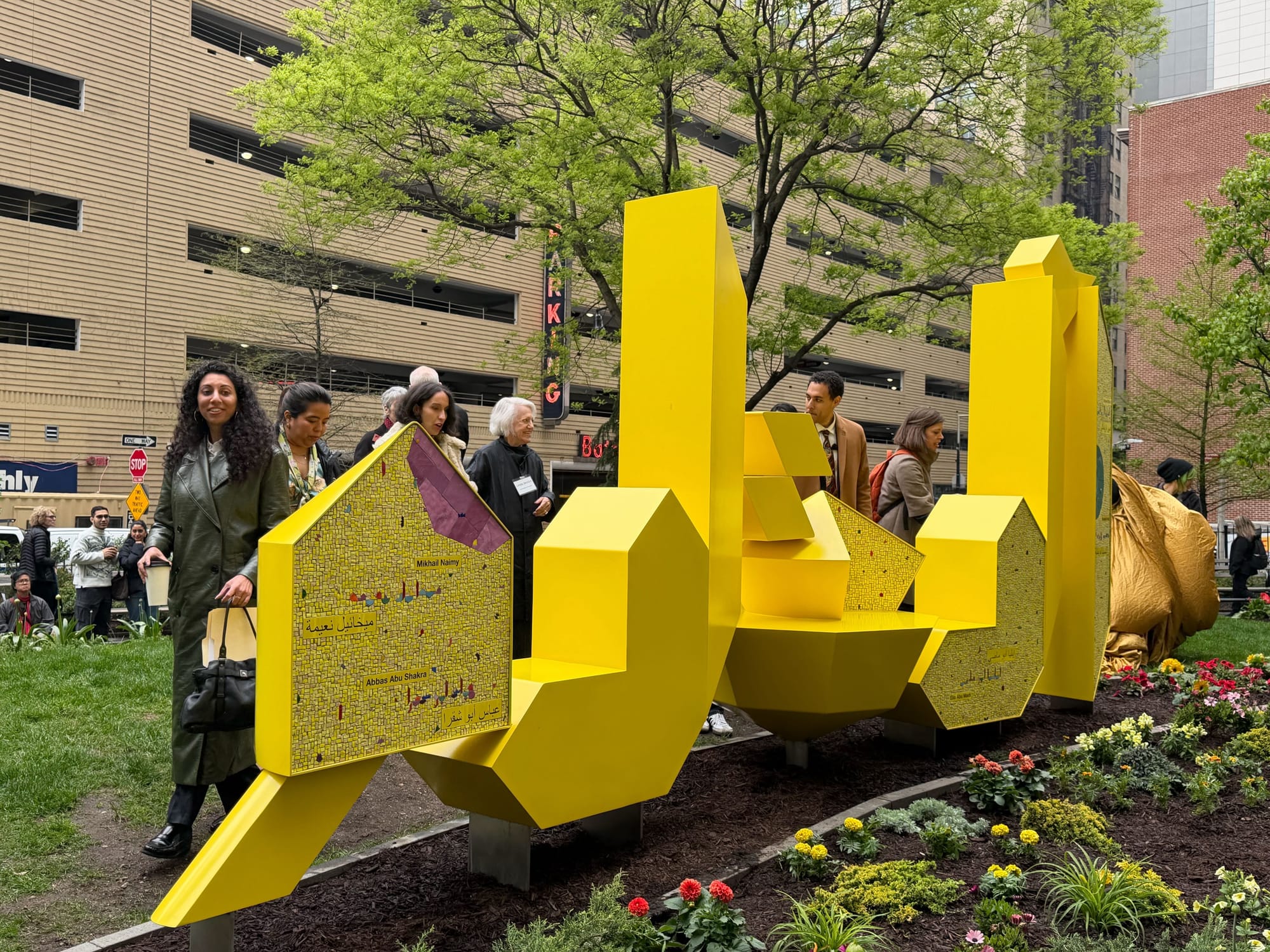
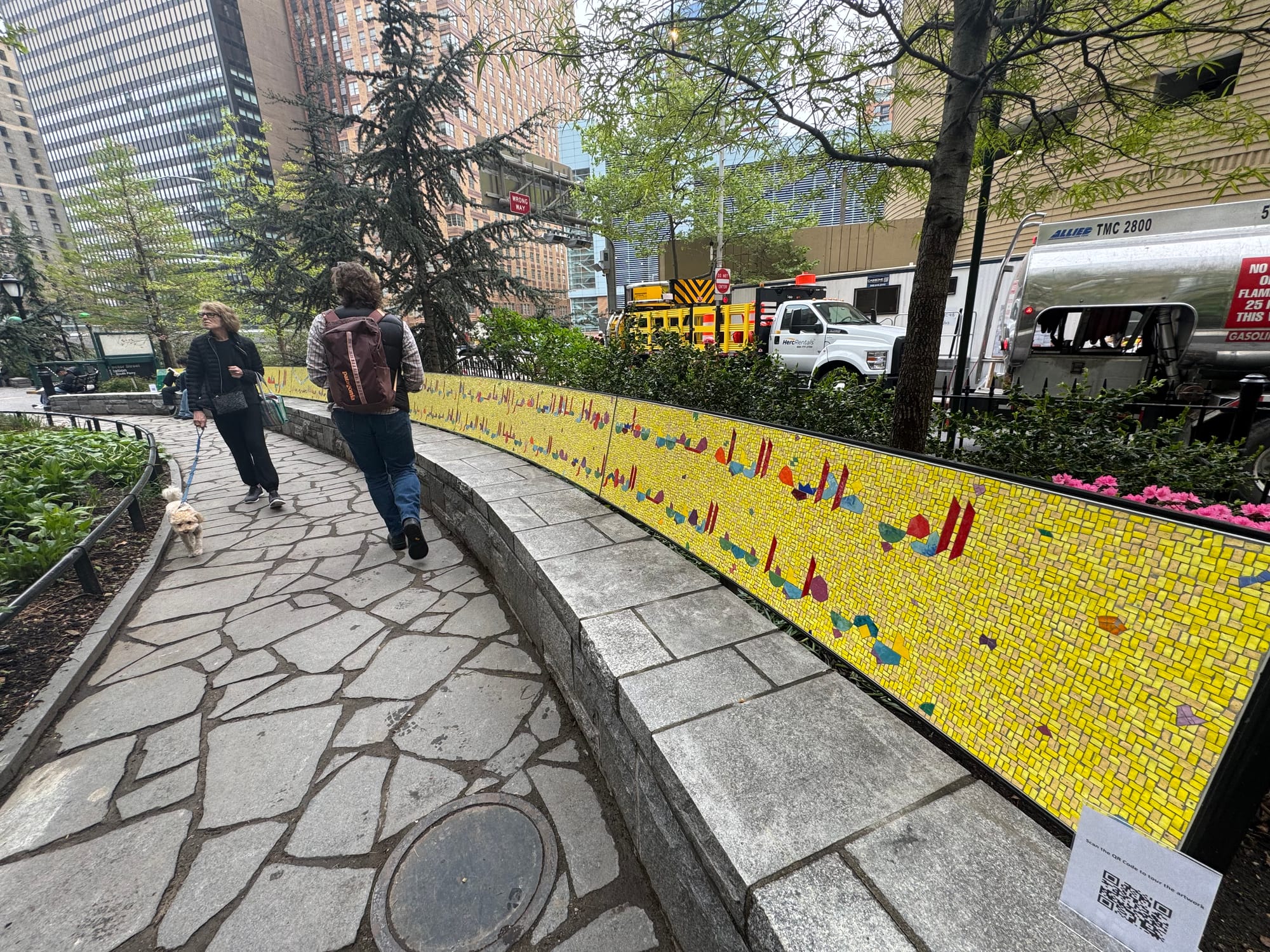
“Al Qalam (The Pen): Poets in the Park,” a mosaic installation and sculpture created by French-Moroccan artist Sara Ouhaddou over the past decade, honors nine members of the neighborhood’s once flourishing literary community. Among the most recognizable figures named in the work is Lebanese-American poet Khalil Gibran, who co-founded the neighborhood's local writers’ association, Pen Bond (al Rabitah al Qalamiyyah), in 1920.
Situated in the Financial District’s Elizabeth H. Berger Plaza, the $1.6 million monument sits within the few blocks where immigrants from Greater Syria, including modern-day Syria, Lebanon, and Palestine, first settled in the late 19th century. By 1900, around 1,500 individuals resided in the enclave, but were abruptly displaced when construction began on the Brooklyn-Battery Tunnel in the 1940s.
Ouhaddou’s public artwork is the city’s newest commemorative monument since the “Women’s Rights Pioneers Monument” was unveiled in Central Park in 2020. Following delays related to the COVID-19 pandemic, the New York City Parks Department finally debuted the long-awaited monument to Little Syria this morning in a ceremony attended by city officials, including new cultural affairs commissioner Diya Vij. The artwork was backed by $1.4 million in support from the Mellon Foundation and a collaboration between the parks department and Washington Street Historical Society.
Ouhaddou told Hyperallergic in an interview that her mosaics nod to the literary and cultural translation that these immigrant writers performed upon their arrival in New York City.
The artist translated quotes from works by nine of Little Syria’s writer tenants into what she described as a “made-up” geometric alphabet, inspired by elements of Islamic architecture, on two curved mosaic benches. Nearby, a large yellow sculpture in the park spells “al Qalam” (“the pen”).
She assigns a geometric shape to individual Arabic phonetics.
“ The idea is to understand, for people who come from a different language, what it feels like to be confronted with another language that you don't even know, that is not part of your life,” Ouhaddou told Hyperallegic.
Born in France to a Moroccan family, Ouhaddou drew upon her experience as a polyglot while devising the monument. She speaks French, English, Spanish, and Arabic, but cannot write in Arabic, she said.
“When [Little Syria’s writers] arrived in America, they had this huge question of translation,” Ouhaddou said. “The question was, ‘Do we continue in Arabic? Or do we translate [our work] into English and share and make it available to others?’”
Little Syria’s residents founded dozens of Arabic-language newspapers, including the first Arabic newspaper in the United States, Kawab America, a daily publication established in 1892 that also published in English.
Just three years after founding the Pen Bond, Khalil Gibran published his most famous work, The Prophet, originally written in English and later translated into 100 languages.
Elia Abu Madi, a Little Syria poet and journalist from Lebanon, was among the nine writers honored in the new monument.
Bob Madey, Madi’s grandson, attended the park’s commission unveiling ceremony on Thursday morning. A selection from his poem “Be a Balm” (c. 1940) is translated into Ouhaddou’s alphabet within the monument.
Madi came to the United States after fleeing British colonial Egypt around 1910, Madey told Hyperallergic. In Little Syria, Madi became editor of the Arab-language newspaper Meraat-ul-Gharb (Mirror of the West).
Madey said he grew up around boxes full of his grandfather’s work, but he does not speak Arabic. “ I like the idea of an abstracted alphabet,” Madey said of his reaction to the new work. “The graphicness of it makes it accessible and maybe provokes you to understand what it actually is.”