How Édouard Manet's Black Cat Became a Symbol of Modernity
Long associated with witchcraft and bad luck, the black feline became an emblem of artistic rebellion and urban life in 19th-century Paris.

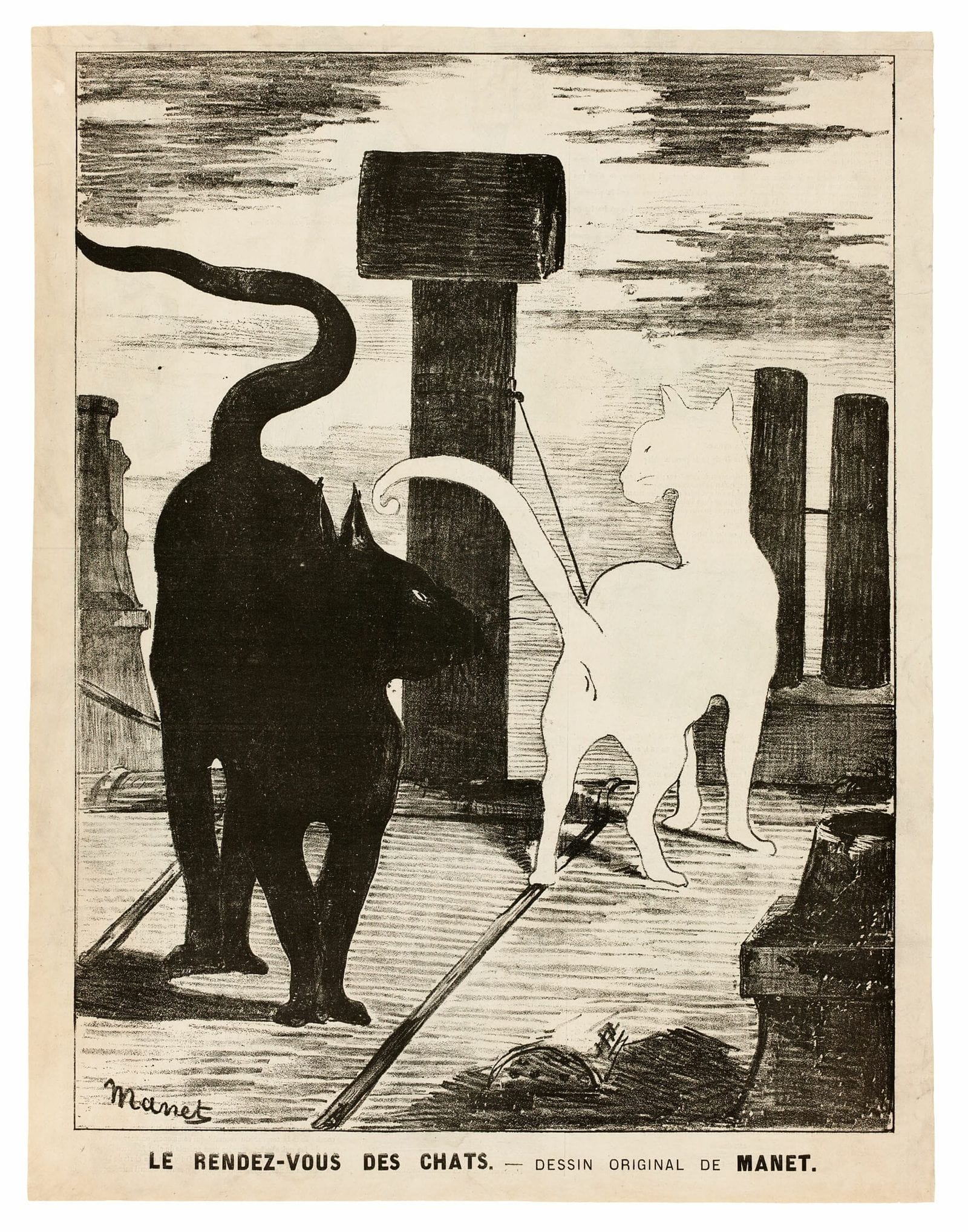
Every Halloween, black cats return as emblems of witchcraft, bad luck, and the supernatural. Their sinister reputations stretch back centuries: starting in the Middle Ages, people associated cats with heresy and sexual transgression, and their perceived affinity with witches intensified during the trials of Elizabeth Francis and Agnes Waterhouse and their cat Sathan between 1565-1579.
But after the Enlightenment, 19th-century French artists and writers began to reclaim the mysterious and devilish qualities foisted onto felines as desirable. Alongside a new bourgeois pet-keeping culture, where caring for animals became associated with progress and enlightenment, bohemian artists and intellectuals began incorporating black cats into their work. The black cat became a symbol of independence and nonconformity, reflecting changing attitudes toward individualism and self-expression amid industrialization and urbanization. French writer and diplomat François-René de Chateaubriand described the cat’s modern independence favorably, stating, “What I like about the cat is his character, independent and almost heartlessness […] The cat lives alone, he has no need of society.” These inherited qualities of eroticism and defiance also became synonymous with the emerging language of modern art.
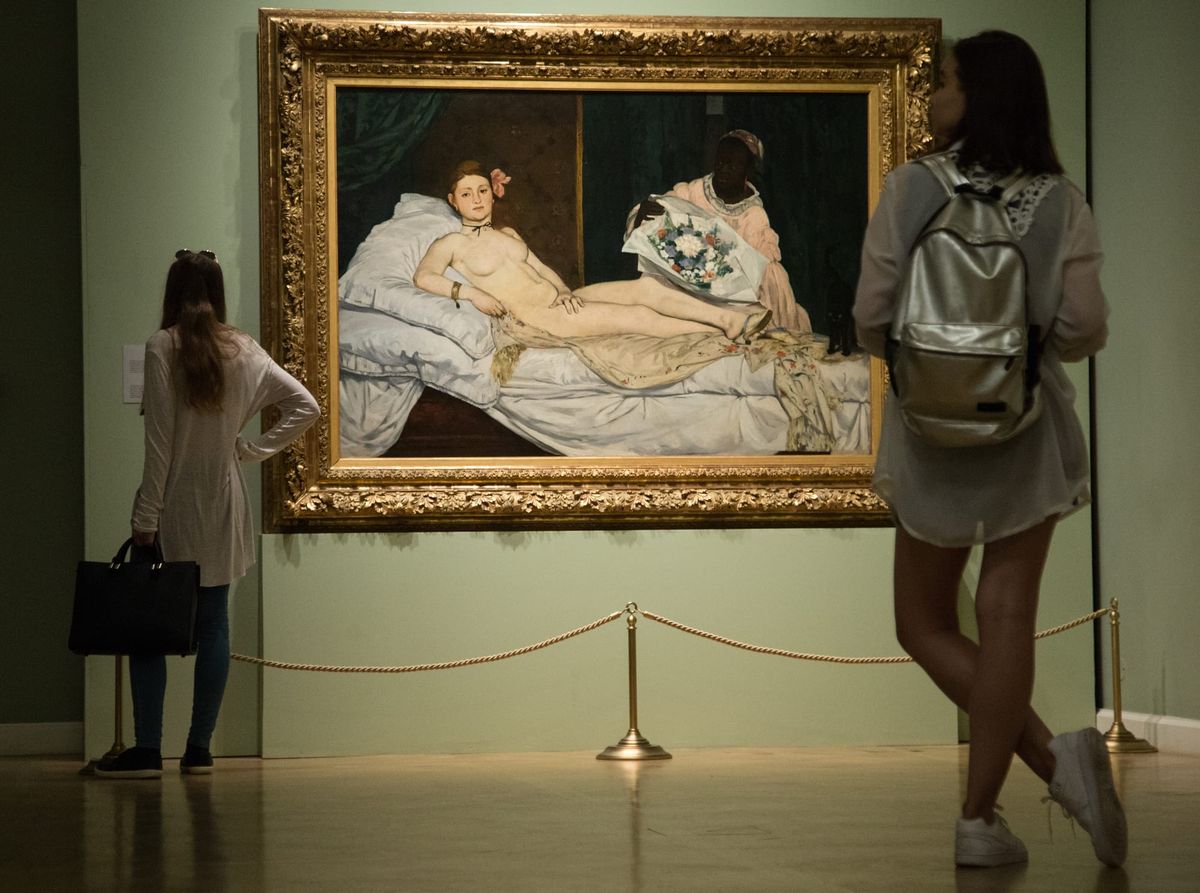
No painting or artist makes this transformation more apparent than Édouard Manet’s “Olympia” (1863). Historians like T.J. Clark have long hailed it as a “founding monument of modern art,” updating Titian’s “Venus of Urbino” (1534) with a stark depiction of a contemporary prostitute, her Black maid, and a black cat. The work provoked outrage at the Paris Salon in 1865: its subject matter, combined with flattened forms, bold color contrasts, and use of black, clearly rejected academic conventions. Critics latched onto the wiry black cat, whose arched back and luminous eyes seemed to embody the painting’s perceived vulgarity by showing what Olympia’s hand covered.