How Much Did It Cost to Paint a Pompeii Room Egyptian Blue?
The price of covering a room in the prized pigment was equal to between 50% and 90% of a Roman legionary's annual salary, a new study estimates.

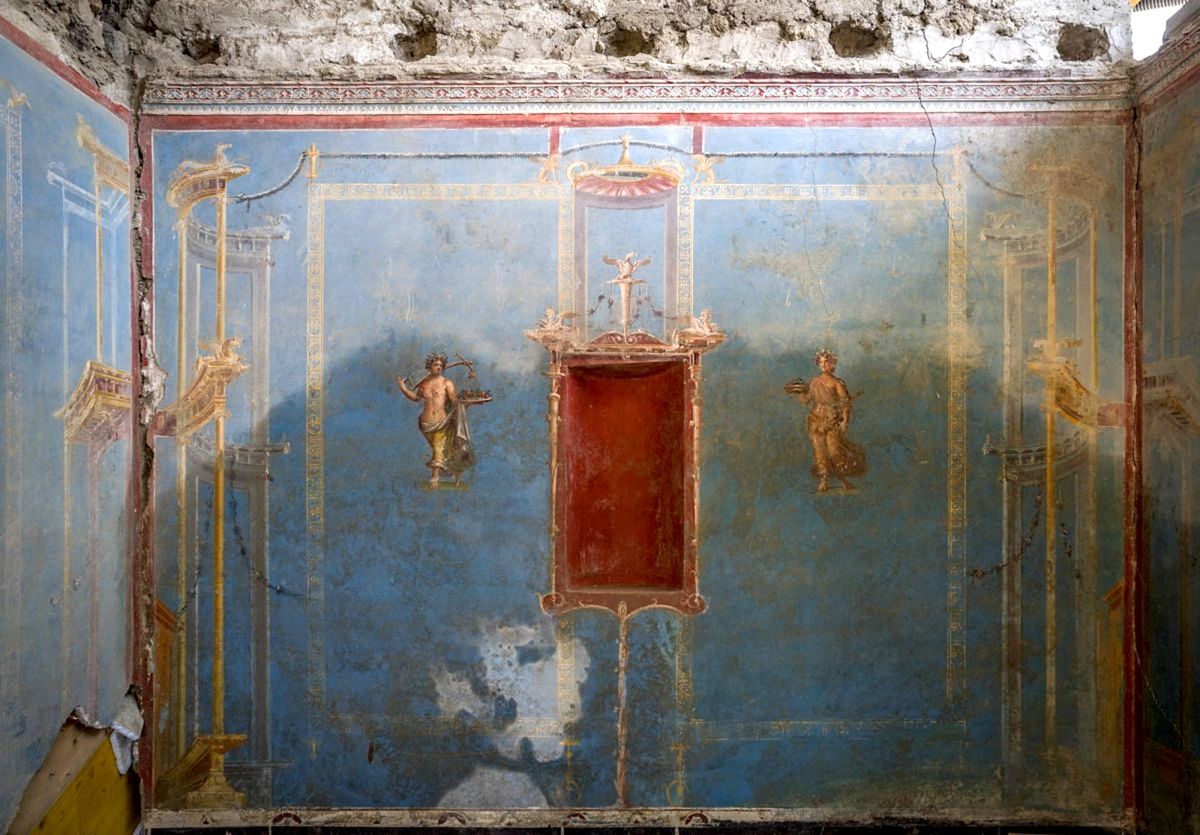
In the summer of 2024, a dazzling “Blue Room” emerged from the ashes of Pompeii during the new and ongoing excavations within the central region (Regio IX) of the ancient Italian city. The striking Egyptian blue that covered its walls immediately indicated to archaeologists that the room was not an ordinary domestic space — it likely served as a sacrarium, a shrine where Romans in the household could undertake rituals or store sacred objects. But how much money did these expensive pigments cost wealthy Romans? A new article published in the journal Heritage Science reveals the splendor of luxury paints and estimates the extravagant price of purchasing Egyptian blue to cover an entire room in the first century CE.
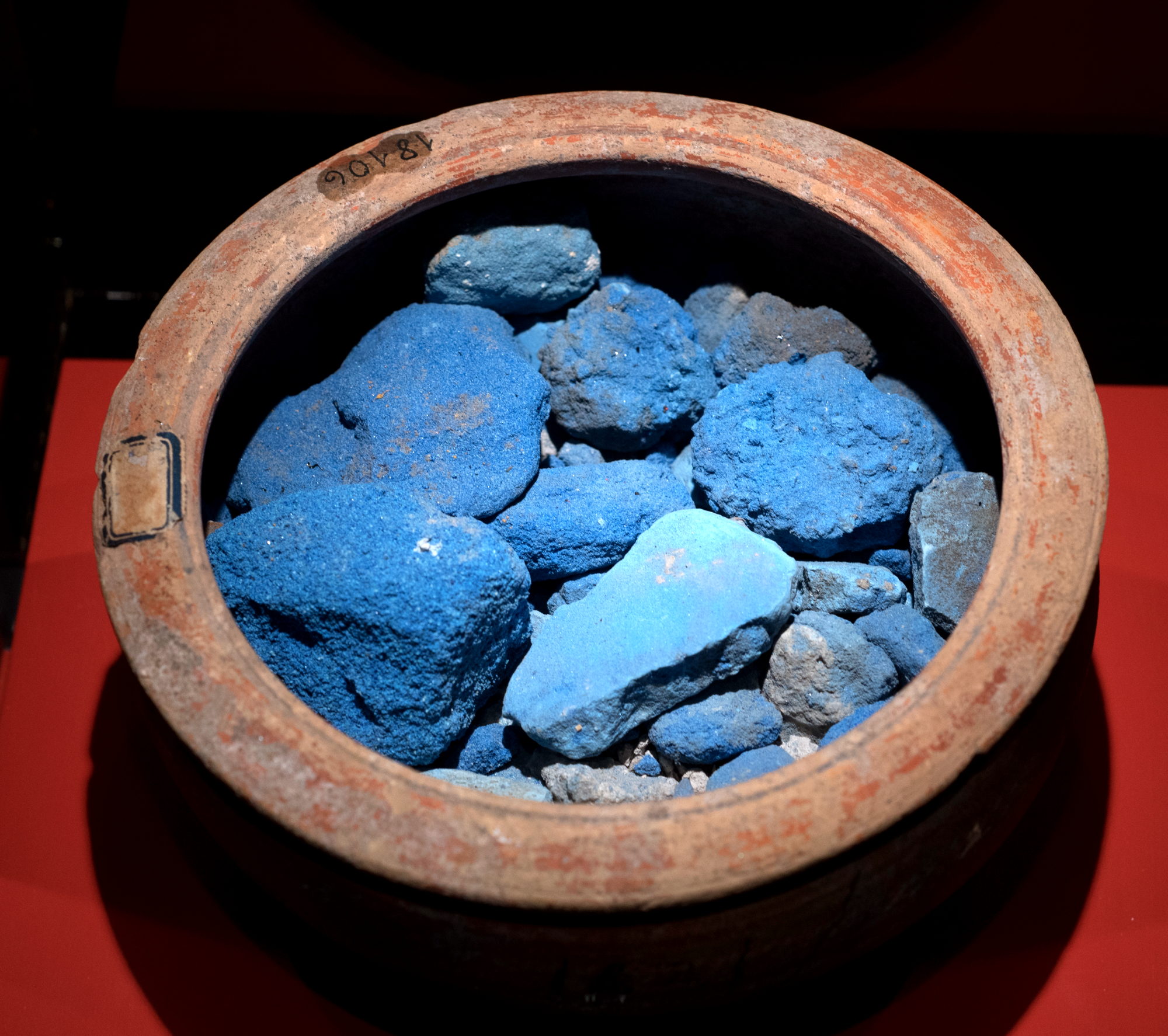
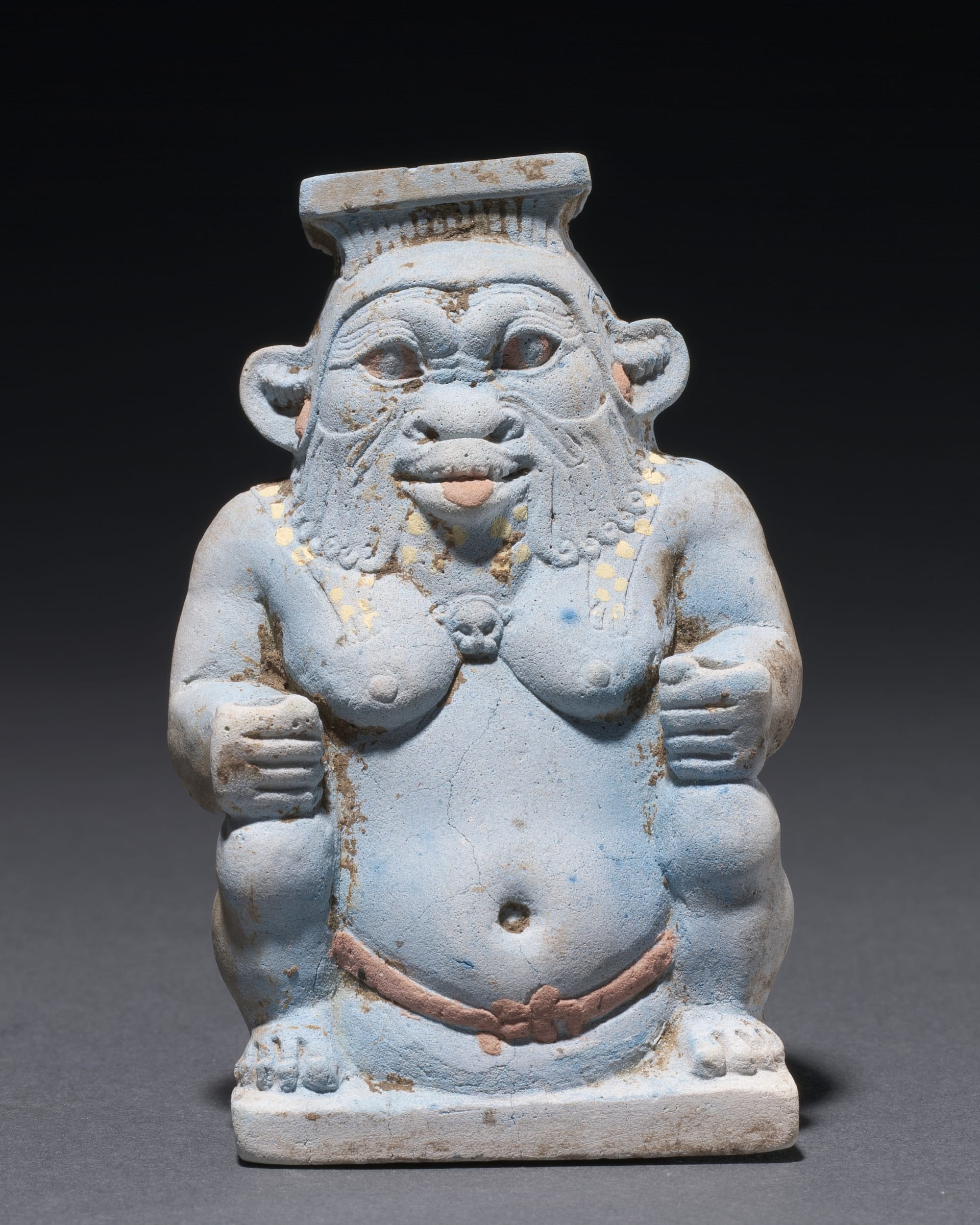
Blue is a beautiful yet difficult hue to replicate in the natural world. The pigment made from Lapis lazuli was difficult to procure, mined from the far-off mountains of Badakhshan in what is today northeastern Afghanistan. It was (and still is) a precious commodity. Necessity bred innovation in antiquity, which is how Egyptian blue came into being. Pigment makers created the color with a mix of heated sand, lime, copper, quartz, and an alkali flux. The artificial blue pigment is attested within Ancient Egypt around 3300–3200 BCE. It later became popular in Anatolia and Mesopotamia. In the first century BCE, the architectural writer Vitruvius noted its existence, as well as the Roman term for it: caeruleum. At that time, Egyptian blue was already being made in Puteoli, a city on the Bay of Naples near Pompeii.
Analysis of Pompeii’s new Blue Room reveals how current studies of the ancient world draw on literature, archaeology, and emerging science. The new study's lead author, Mishael Quraishi, a recent Massachusetts Institute of Technology graduate who majored in material science and archaeology, and her colleagues used a combination of visible (white light)-induced luminescence and spectroscopic and electron microscopy analysis to map the blue within the room. They discovered that the artisans painting the room would have needed between 2.7 and 4.9 kg (5.95 to 10.80 lbs) of the pigment to cover its walls.
The owners of the house with the “Blue Room” were wealthy. Their home had a thermal bath, central courtyard, staircase, an upper level, and a large dining hall that could host 20 to 30 guests. But how much did it cost them to paint their shrine in Egyptian blue? Researchers leaned heavily on the work of Hilary Becker, an ancient historian and pigment specialist currently studying and making the pigment at Binghamton University in upstate New York.
Becker assessed the different grades of Egyptian blue rated by the natural historian Pliny the Elder, who died in the eruption of Vesuvius in 79 CE. Pliny notes that general caeruleum cost 8 denarii per libra, but caeruleum vestorianum, a better grade of Egyptian blue, was priced at 11 denarii per libra. (A libra was a Roman pound, which equals about 0.72 lbs today.)
Quraishi and her colleagues used these Roman literary prices alongside mathematical formulas for the size of the room and paint needed to cover it in order to estimate the cost at between 93 and 168 denarii. For comparison, that amount would have purchased “744 to 1344 loaves of bread,” the authors note.
“For further context, at the time of the eruption of Vesuvius, a Roman foot soldier would have been paid ~187 denarii per year, making our conservative estimate of pigment cost between 50% and 90% of this annual income,” the paper explains. Although the cost of Egyptian Blue was not as high as that of indicum (indigo), often sourced from India, it was still a pricey pigment.
Beyond the cost of the paint, the new research is a valuable window into the labor costs of the painting market in antiquity. Labor was a substantial part of the overall expenses of wall painting. Prior research done by Francesca Bologna estimated grinding times for enslaved and freed workers grinding pigments; her calculations, when applied to the dimensions of the “Blue Room,” suggest that it took between 31 and 56 labor hours just to grind the pigments for the room’s paint, according to the new study.
Research on Pompeii’s Blue Room confirms that wealthy private citizens of the city regularly used Egyptian blue to decorate their abodes — and perhaps engage in a bit of conspicuous consumption. But the study is, as the authors note, also a major step in using new scientific techniques to reconstruct the deeply “polychromatic lives of Pompeiians.” Colors have always had the power to convey meaning. In the ancient Mediterranean, blue hair often pointed to divine identity, for instance. But a whole blue room? That was an azure announcement of Roman affluence.