In “Discipline,” Larissa Pham Explores Predatory Art-World Mentorship
The art critic and former painter reinvents the genre’s well-trod territory in her debut novel, which makes heartbreakingly acute the consequences of teacher-student relationships.

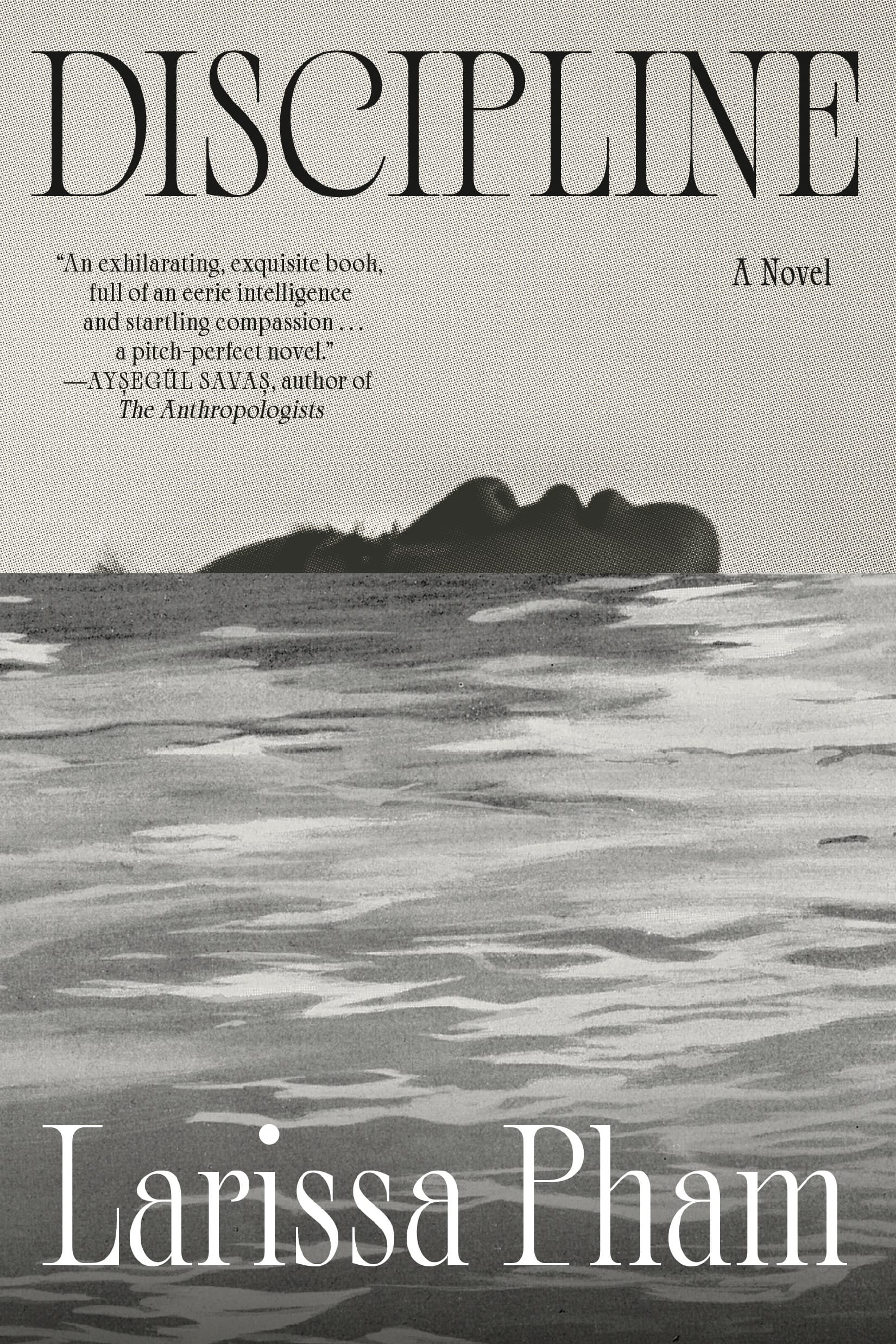
“People are always writing from their own lives,” says Christina, the protagonist of Larissa Pham’s debut novel, Discipline. “You can’t ever change what’s already happened to you, but when you write about it, you can reframe it. Take control of it, maybe.”
This casual self-awareness from both the character and the author will be familiar to most autofiction fans. They might even be tired of it by now. Christina, a 20-something-year-old writer and former painter haunted by a youthful affair with her professor, Richard, is similar to the struggling creatives that headline books by autofiction mainstays — Rachel Cusk, Ben Lerner, Tao Lin, Sheila Heti, et cetera. The first-person speakers in their novels, as in Pham’s, are well-educated, youngish creatives foundering through adulthood, struggling to make the art they so desperately wish to create.
Blurred divisions between writer and protagonist are autofiction’s narrative jet fuel, and Discipline is no exception. Pham herself is an art critic and former painter, like Christina, and she has written about her experiences of sexual assault by older, powerful men, including a faculty member at the Yale School of Art. Discipline’s innovation is to situate a foundational trauma at the center of autofiction’s main questions. That choice ultimately leads the book away from its restrained, minimal plot and headfirst into a fatal collision between art and the people who make it.
Discipline’s opening acts chart a course through well-trod territory. Readers of Rachel Cusk’s Outline trilogy might feel a flash of déjà vu as Pham, too, constructs her protagonist through observations about art and conversations with other people while withholding details of Christina’s history. When the novel begins, Christina has just published her own autofictional novel, a book that, we slowly learn, narrativizes her affair — and is perhaps similar to Discipline itself. As Christina navigates the annals of book promotion, various interlocuters — people she meets on her multi-city book tour, exes, other artists, even paintings — reveal more about her predicament than she herself seems willing to divulge. These encounters offer vague hints at Christina’s fraught relationship to her former professor, lending Discipline’s early chapters a threatening feel — as though, wherever Christina turns, her past is inescapable. On viewing one of Helen Frankenthaler’s AbEx paintings, Christina muses: “Was there ever a way to keep things just as they were… To feel the pierce of first experience again?” Reflecting on Edward Hopper and his overlooked wife, Josephine, she says: “What was the world they had built together — that imagined, lonely place where neither of them was happy, but both could speak?”
Pham’s sparse, unadorned style shifts when Christina confronts the source of her stalled painting career. Where earlier chapters are fragmentary and coy, her eventual confrontation with Richard acts as a springboard into a sensual, taut plot. Pham’s writing slips into the present tense, and Christina becomes grounded in space and time, alight with sensory details that draw more immediate comparisons between art and life. Witnessing a bird fly above her, a newly alert Christina says, “Its body is the shape a pen makes when you drop it on paper. Its path the line.” Later, Christina says that “the quick, alive part of me, the part that has teeth, feels excited... Bites down.”
In Discipline, Pham makes heartbreakingly acute the consequences of teacher-student relationships, even when both parties are over the age of consent: Christina is able to come alive as an artist and as a person only in Richard’s presence. As her former professor’s shoddy mentorship completes its course, Richard seems to have taught Christina more about manipulation than painting — while making her reliant on him both personally and creatively. As the plot surges through its climax, Pham offers a clear-eyed view of how predatory mentors — and perhaps mentors in general — influence their students’ relationships both to themselves and to their art, for better or for worse. “I cannot stop being cruel to him,” Christina remarks near the book’s close.
Autofiction has entered an adulthood similar to that of its typical characters: The young genre is increasingly in conversation with itself, creatively stuck, and primarily set in major American and European cities. Pham doesn’t necessarily break free from these confines, but Discipline still succeeds in revealing the ways in which unequal, painful intimacies shape the stories we tell about ourselves and how we are able to tell them.
By the novel’s end, I was reminded of Marguerite Duras’s The Lover, the French writer’s 1984 account of her teenage affair with a much older man in colonial-era Ho Chi Minh City, a text that now reads like a precursor to autofiction. “The story of myself doesn’t exist,” Duras writes, even as she pens it — a formulation that resonates across Pham’s rendering; “Writing asked me to absent my body, to forget it,” Christina echoes. Duras and Pham circle the same unnamable void within writing, artmaking, and trauma, one that resists narration until it doesn’t.
Discipline: A Novel (2026) by Larissa Pham is published by Random House and available online and through independent booksellers.