Internet Goes Wild for The Met’s Newly Acquired Mannerist Painting
Online reactions to Rosso Fiorentino's recently discovered work might be channeling the very essence of the stylized art movement 500 years on.

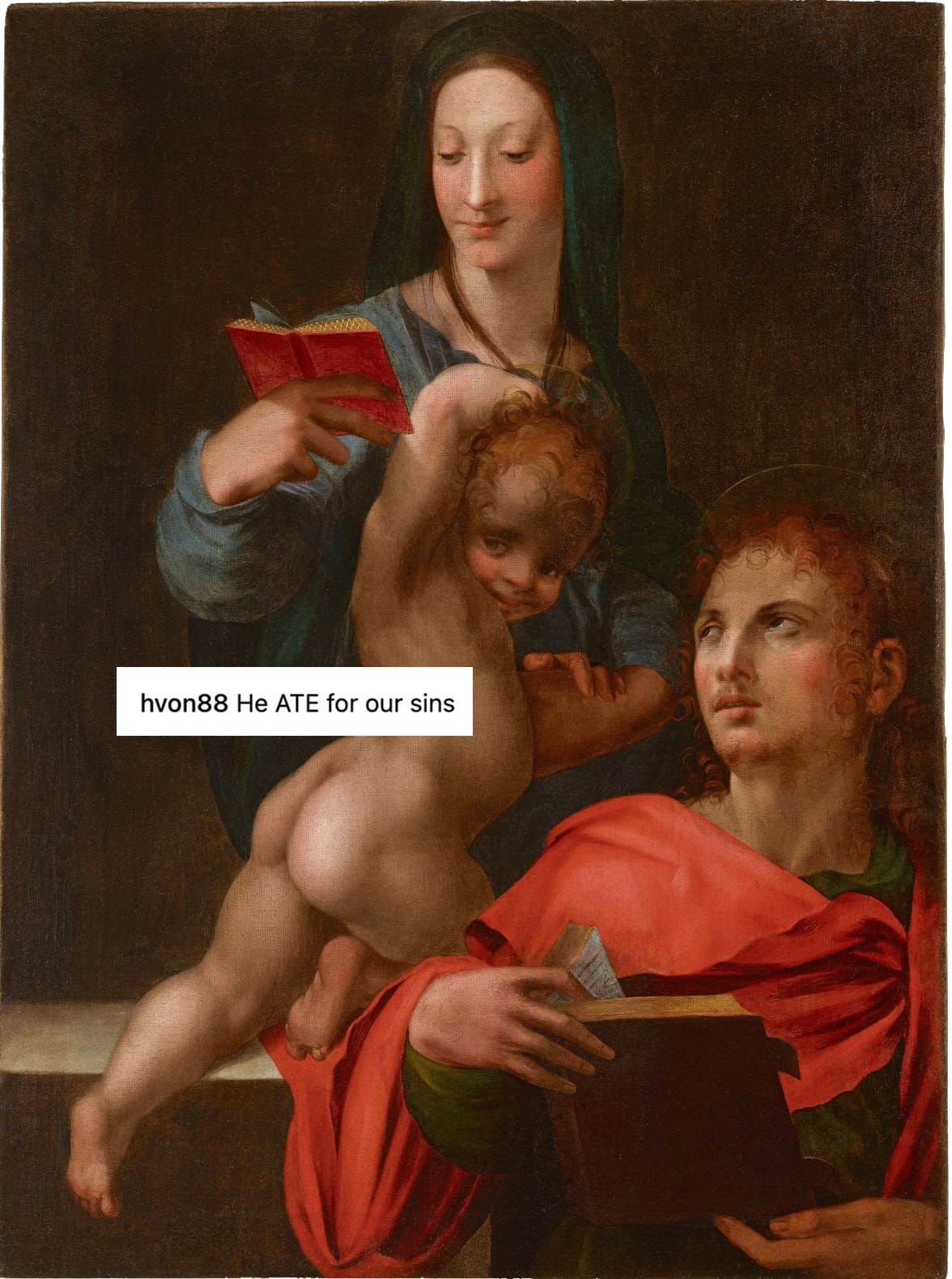
“Looksmaxxing” might not be a word in the Bible, but that hasn't stopped others from using the term in response to the Metropolitan Museum of Art's latest acquisition — a Mannerist painting of an infant Jesus who outshines everyone else in the frame.
That's just the tip of the iceberg in the incredulous comments on the museum's Instagram post of the painting, “Madonna and Child with Saint John the Evangelist” (1512–13), recently identified as a long-lost work by Italian painter Rosso Fiorentino. Others have noted baby Christ's unusually muscular form (particularly his shapely derrière), using nothing but the language of our time...

While toeing the line of irreverence, the online reaction to Fiorentino's recently discovered work might actually be channeling the very essence of the Mannerism movement 500 years on: using stylized language that shirks classical tradition and responds to the turbulences of today. Look at it this way — would we have comments describing the Holy Child as a “baddie,” “yasssified,” and “caked up” if it weren't for the Brazilian Butt-Lift frenzy and explosion of queer media that took over the last decade?
And even in jest, would such explicit hype comments toward religious iconography have been tolerated (let alone celebrated) if we weren't at a point where digital nihilism and relentless overexposure ensured that lowkirkenuinely nothing is sacred or off-limits anymore?

So, what does all of this have to do with Mannerism?
Well, let's focus on the painting at hand. The work, The Met said in a press release, is believed to be the artist's earliest recorded surviving painting. It depicts the Virgin Mary alongside a plump, almost cherubic rendition of baby Jesus, whose naked form is sprawled diagonally across the lower half of the composition. During restoration, conservators uncovered a third figure: St. John the Evangelist, previously obscured by a layer of overpaint, in the bottom-right corner of the work, donning a thin gold halo while gazing upward at Mary and Christ with an expression of devotion.
In the painting, Mary's serenity and stability contrast with the Holy Child's frenetic positioning and curious expression. This asymmetry and exaggeration, emphasized by saturated color palettes and unusual proportions, are quintessential to Mannerism — an art movement that sprang from the harmonious compositions and classical idealism of the preceding High Renaissance. Coinciding with the Protestant Reformation and the Sack of Rome, Mannerism's artificial configurations and unnatural beauty reflected the tension and complexity of the surrounding turbulence in Italy during the early 16th century.
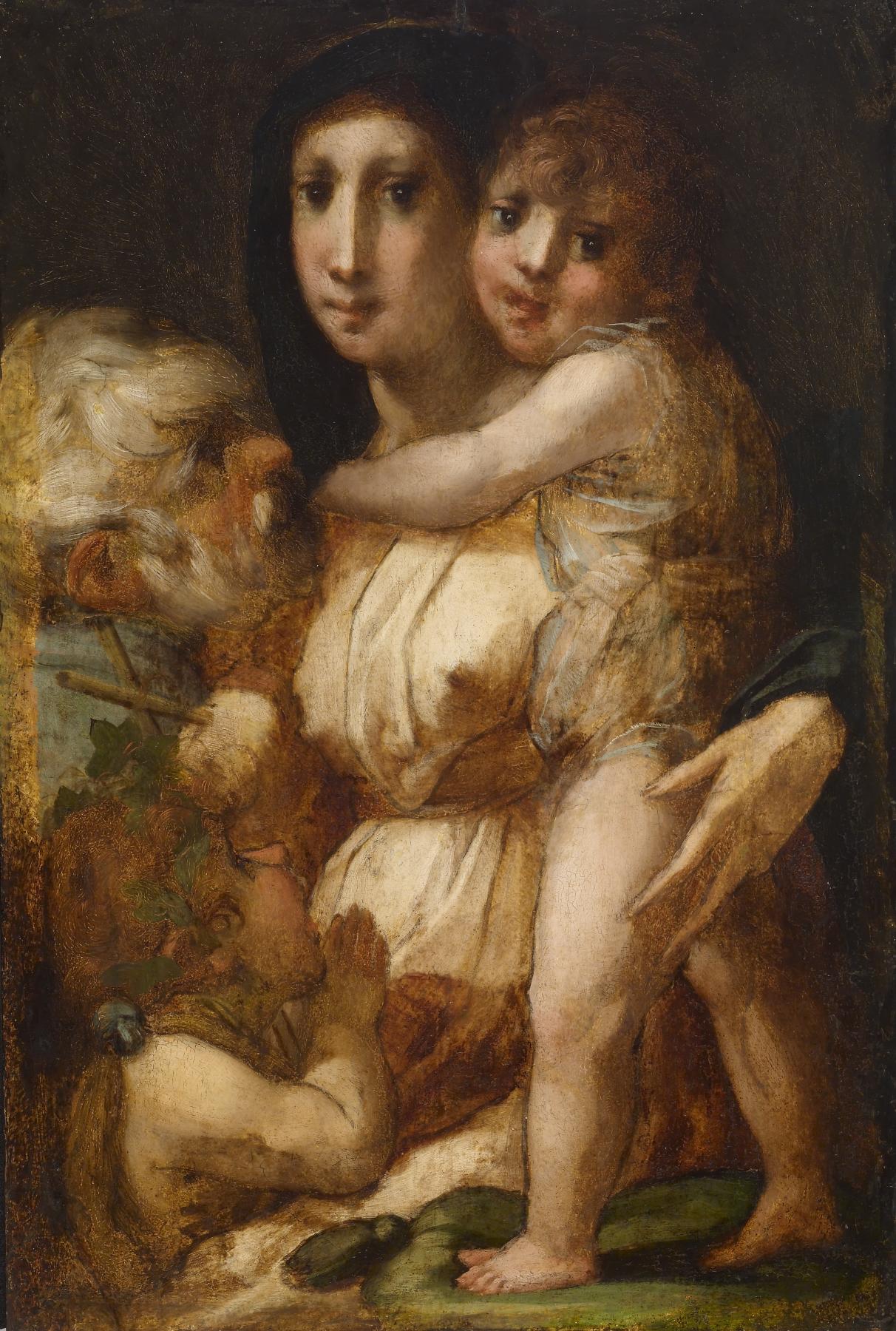
Fiorentino was among the pioneering Mannerists who broke away from the naturalism of the Renaissance. He completed several high-profile commissions in the 1510s, including the “Assumption of the Virgin” (1513) in the Chiostrino dei Voti at Santissima Annunziata, often interpreted as evidence of the early development of the artist's style. In today's terms ... we've got receipts.

“Madonna and Child with John the Evangelist” was identified through its reference in Giorgio Vasari's Lives of the Artists (1550), which included Fiorentino's biography and body of works among dozens of others. Vasari's text outlines that Fiorentino had actually secured the Annunziata by presenting “a painting of the Madonna and Child with a half-length figure of Saint John the Evangelist,” which he would have completed as a teenager.
"This painting is a rare and pivotal early work by one of the most important painters of the 16th century, striking in its experimental ambition and psychological intensity,” said Max Hollein, The Met’s director and CEO.
Or, in other words: “Sweet baddie Jesus 🥹🙏”