Israel-US Strikes Damage Tehran’s Historic Golestan Palace
The Qajar monument contains priceless Iranian art and manuscripts.

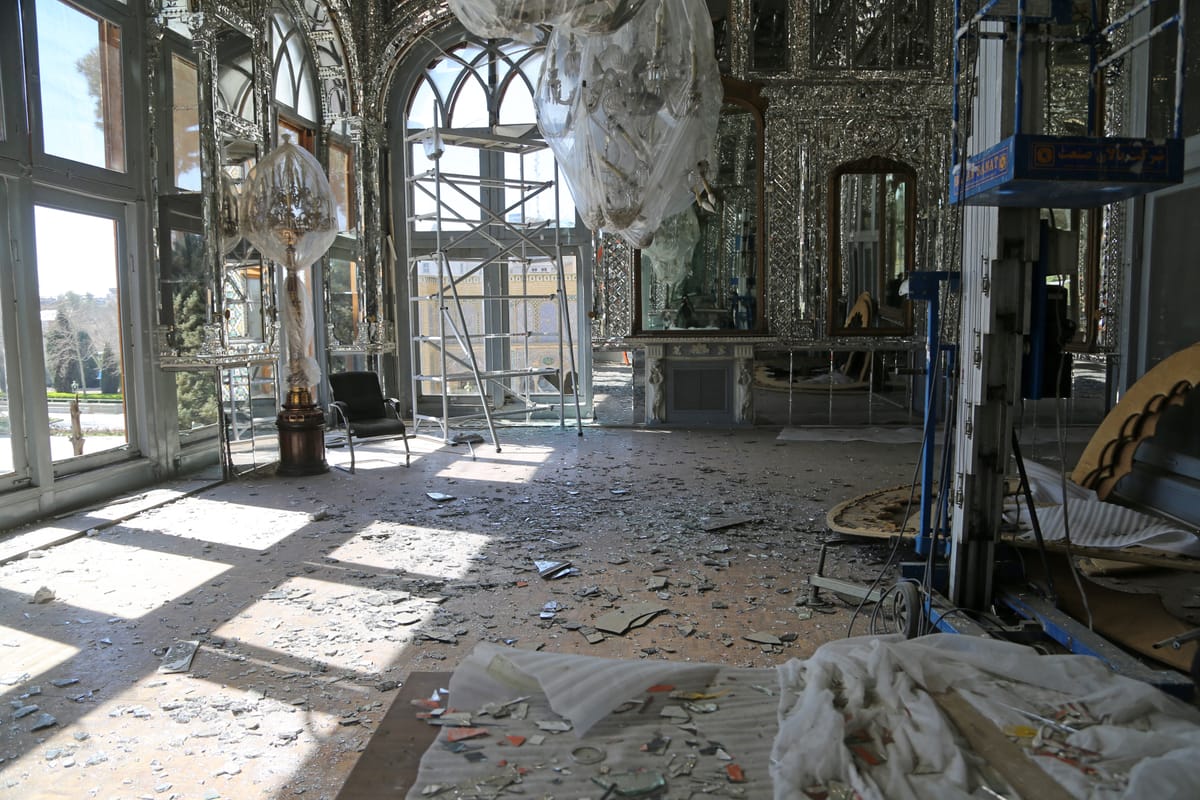
The relentless Israeli and American airstrikes on Iran have caused significant damage to the Qajar-era Golestan Palace, a UNESCO World Heritage Site in the heart of Tehran.
One of the oldest monuments in Iran, the Golestan Palace became a symbol of the Qajar dynasty's power in the 18th and 19th centuries. According to UNESCO, the damage was caused by a shockwave from a nearby airstrike on March 2. Photos from the site show debris of shattered windows, damaged ceilings, and broken marble statues.
As of Friday afternoon, March 5, US and Israeli attacks have killed over 1,300 people in Iran. President Donald Trump launched hostilities against the country last weekend without approval from Congress, killing Iran's Supreme Leader Ali Khamenei.
Sussan Babaie, a professor of Iranian and Islamic arts at the University of London, called the reported damage to the Golestan Palace “extraordinarily worrying.”
“The bombing may not have targeted the palatial site, but the palace is close to the old bazaar and other important 19th-century buildings, including a mosque," she told Hyperallergic in an email. "Together they constitute the core of Tehran as it was built as the capital city in the late 19th century.”
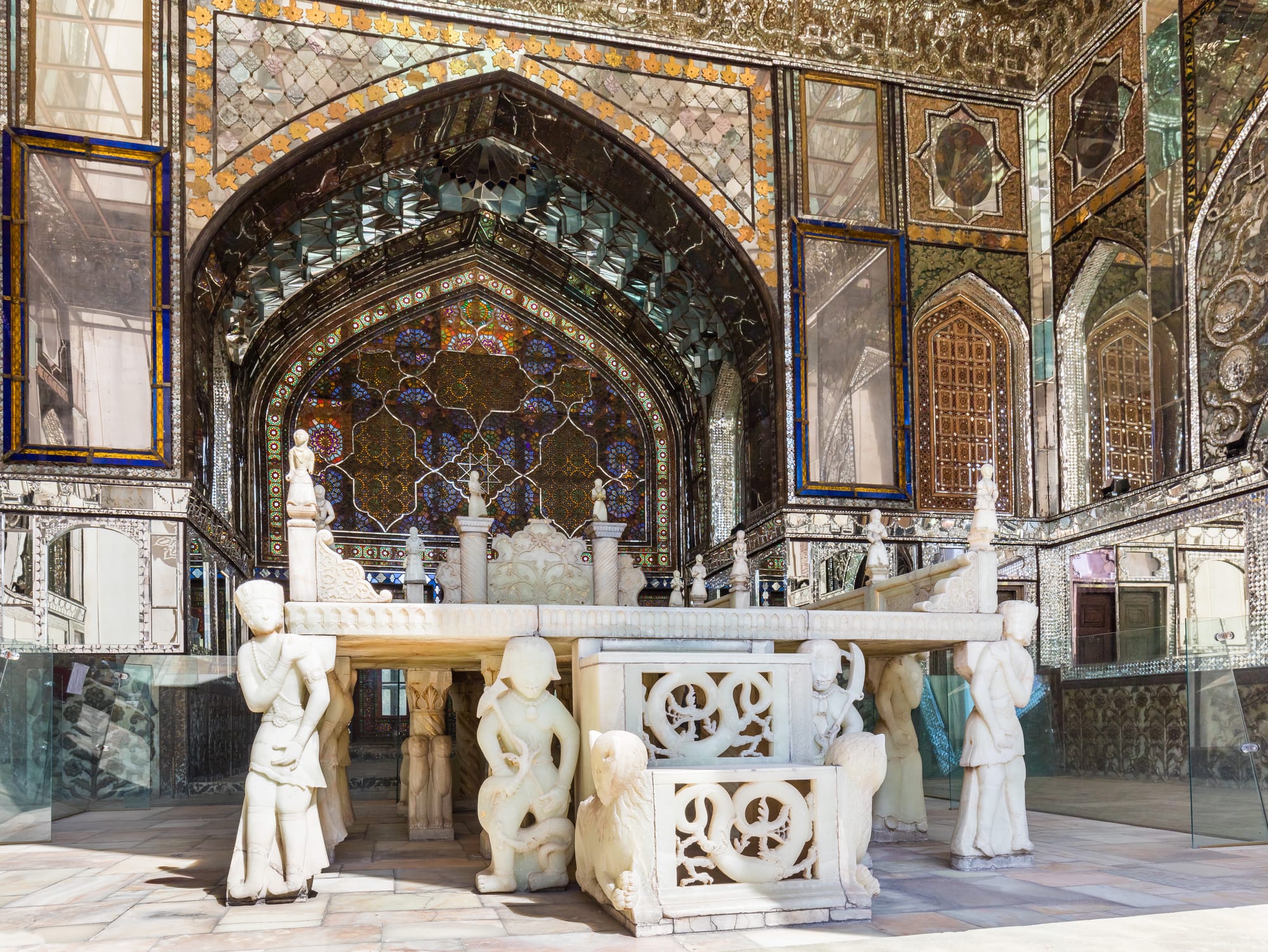
The palace contains a network of courtyards and buildings arranged according to their ceremonial significance, Babaie explained. The more ceremonial areas are closer to the exterior, while the interior has served as a living space for members of the ruling family. Today, the complex includes a museum that houses a significant collection of Iranian art and manuscripts.
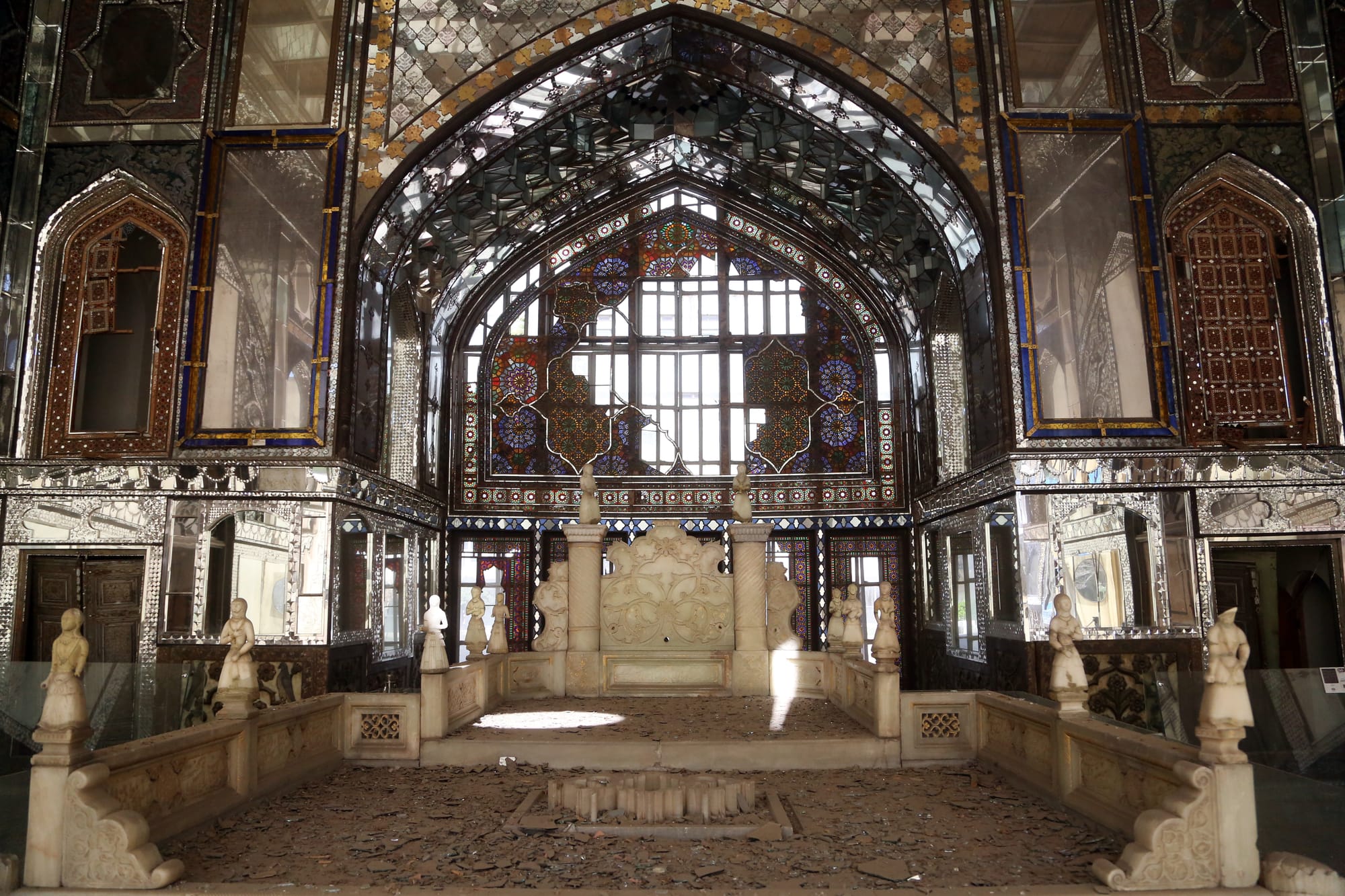
The shockwave appears to have impacted the ceremonial sections of the palace complex, which also contain the most extravagant decorations, Babaie said, noting damage to the Ayvan-e Takht-e Marmar or Hall of the Marble Throne. These areas contained elaborate ayeneh-kari, or mosaic mirror decorations.
“The shattered mirrors, and mosaic mirror-work, the chandeliers, and gilded and painted wood frames of glass and mirrors; these scatter all over the site as seen in images after the bombings,” Babaie wrote. She compared the ornate room to Louis XIV’s Hall of Mirrors at Versailles.
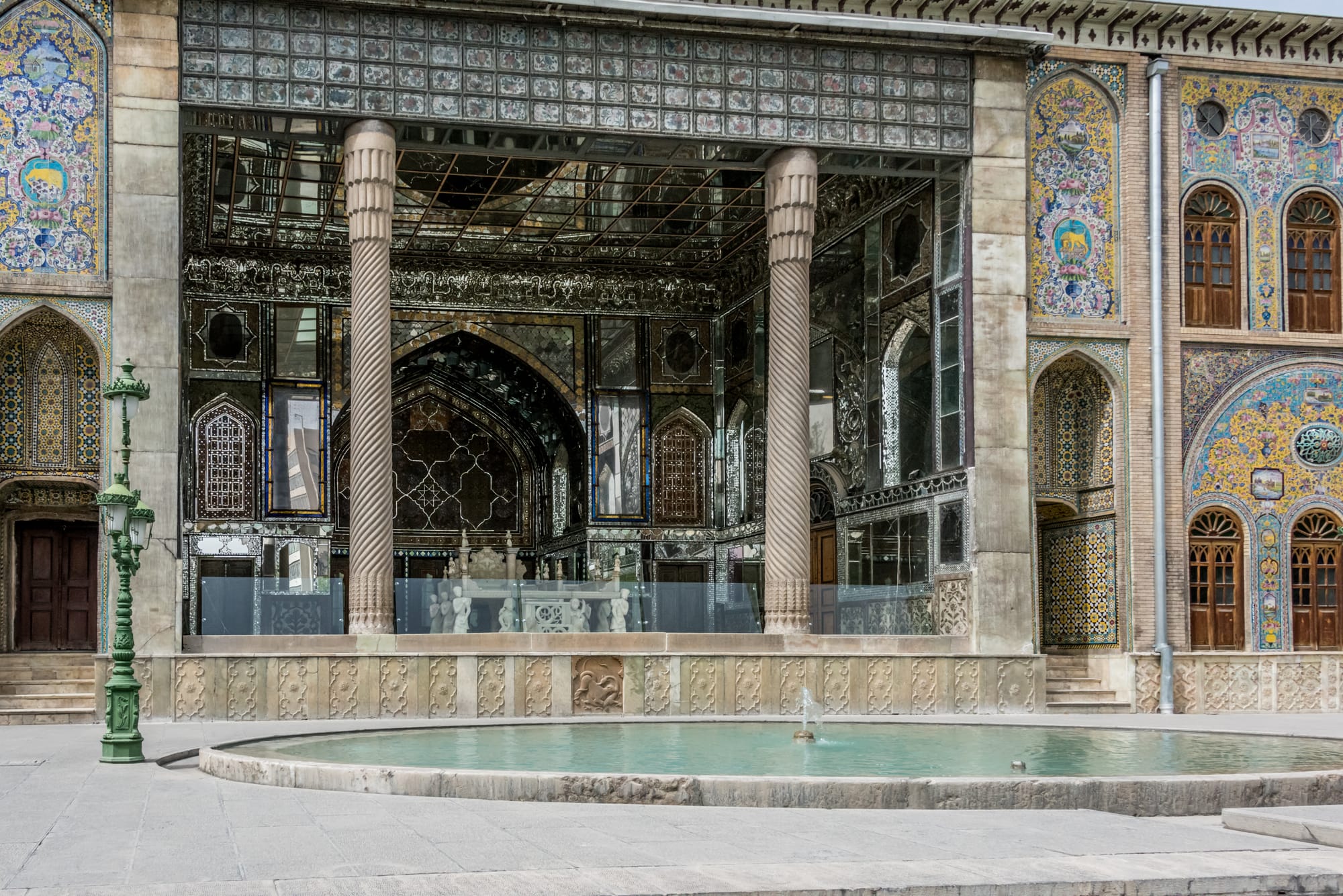
As a museum, Babaie said, the palace holds a collection of “the greatest artistic outputs of hundreds of years of art history of Iran” and of photography that showcases Iran’s early adoption of the technology.
Christiane Gruber, a professor of Islamic art history at the University of Michigan who has worked in the palace, noted that the complex houses a large selection of artworks and one of the world’s most important collections of Islamic manuscripts.
“These manuscripts, many of which include lavish paintings and illumination, represent the cultural, artistic, and intellectual heritage of Islam and Iran stretching back centuries,” she told Hyperallergic in an email.
Gruber recalled that Trump threatened to strike 52 sites in Iran, including those of cultural heritage value, following the US's assassination of Iranian military officer Qasem Soleimani in 2020. That threat, she said, goes against international conventions.
“UNESCO world heritage sites never belong to a particular political ‘regime’ or group of leaders," Gruber said. "They are part of our shared global patrimony, and they demand our collective custodianship and protection, above all in times of war.”