Jan Staller Photographs the Nuts and Bolts of Manhattan's Urban Symphony
The American photographer's new book transforms the city's endless construction sites into otherworldly visions.

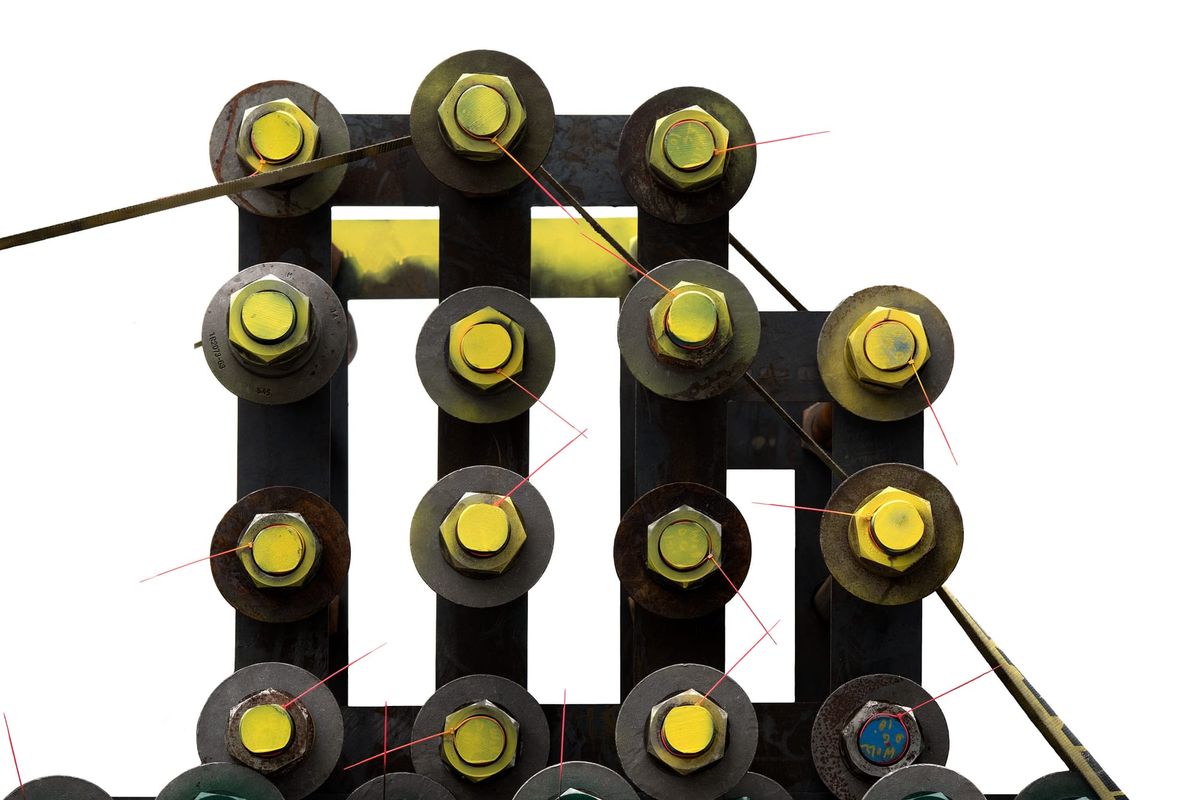
For 50 years, the photographer Jan Staller has been showing us how strange we really are. His images depict humanity’s vast upheaval of the landscape, capturing both its inadvertent lyricism and the towering hubris of our built environment. His groundbreaking night photography from the 1980s and ’90s, shot in color and collected in the 1997 monograph On Planet Earth: Travels in an Unfamiliar Land, transforms industrial sites and New York streetscapes into otherworldly visions — unpeopled, eerily glowing, inscrutable.
Staller’s new book, the slyly titled Manhattan Project, represents both a departure from and a continuation of his fascination with humanity’s drive to build new worlds. The photographer’s formerly moody atmospherics of light and color, the mysterious depths and long-exposure silkiness of his images, give way in more recent work to a hard-edged focus on construction materials — pipes, beams, rebar, cable, augers, and drill bits — hanging midair from cranes. Isolated against a white sky, they appear as if displayed on a gallery wall, like readymades.
In an email to Hyperallergic, Staller explains the technical shift from the dreamlike lushness of his nightscapes to the sharp delineation of single objects in his new work. “Both film and digital capture have a limited dynamic range; they can’t record the full brightness of the sky and the darker subject simultaneously," he wrote. "For some photographers, this loss of detail is a technical problem. For others, it’s an expressive possibility."
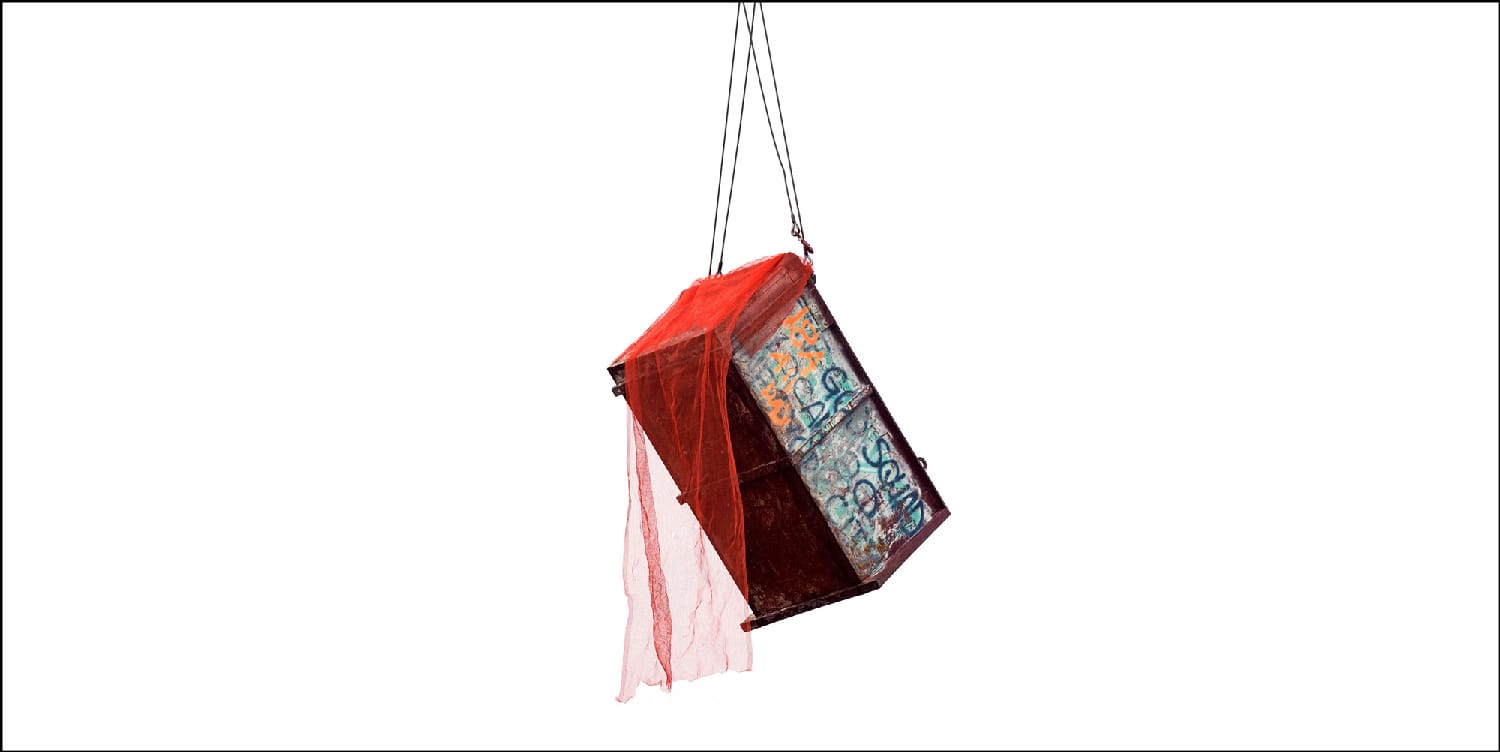
"I use the overcast sky to create that blank, white field behind the structures I photograph," he continued. "Similarly, in my early work I used film’s color response to street lighting to create those ethereal twilight images with lurid blue or red skies.”
The human body only impinges on one image in Manhattan Project’s strange and inanimate parade of scenes from construction sites across the Upper West Side: In “Glove” (2024), an orange-gloved hand reaches to grasp loops of steel-wire cable, and even then, its disembodied, tattoo-sleeved arm is depicted as a quasi-sculptural element. For Staller, aiming a probing lens at the innards of future skyscrapers or underground infrastructure becomes a dual act of revelation: of the aesthetic quality in all things, and of the meanings in what is intended to be hidden.
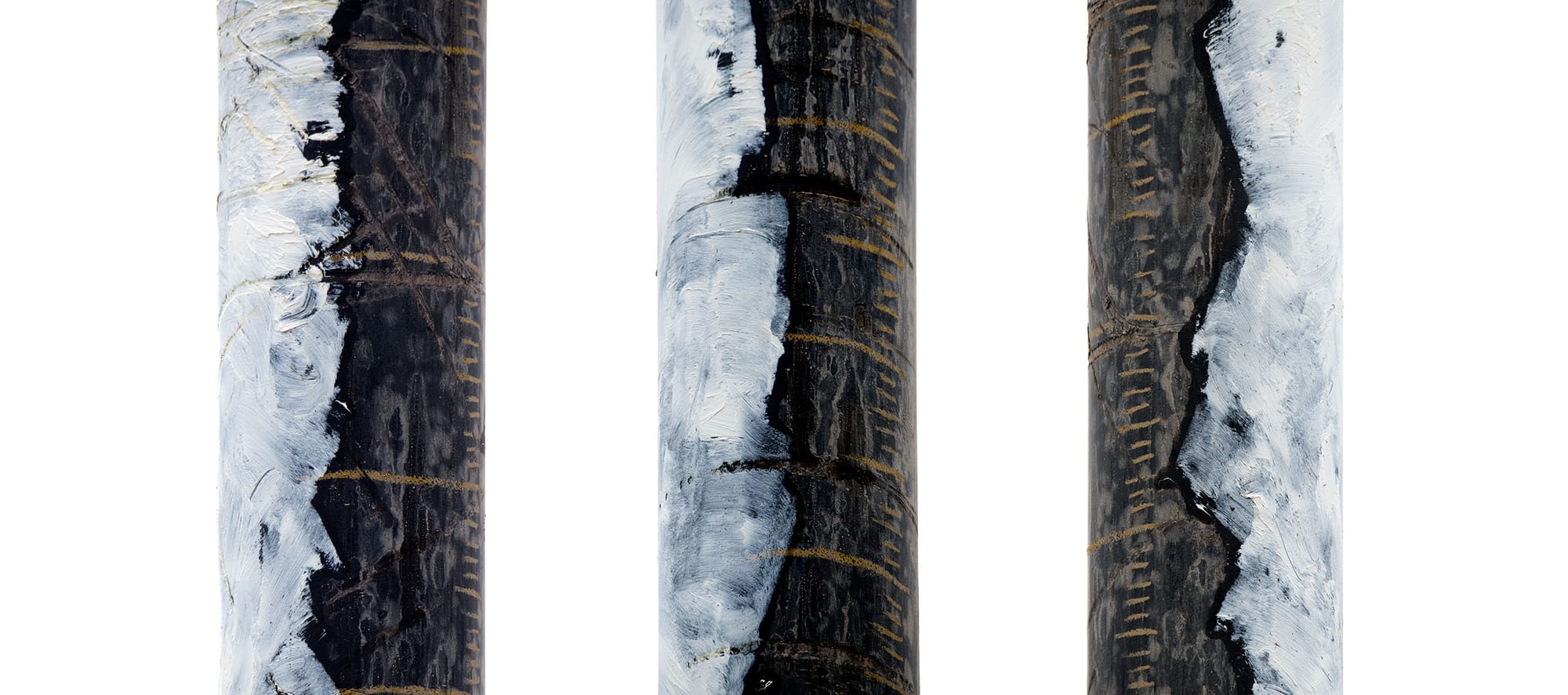
While Neil deGrasse Tyson’s witty foreword considers the interminability of New York City’s construction, curator and art writer Brett Littman, in his essay for the book, finds in these images echoes of artists as varied as Edward Hopper, Ellsworth Kelly, Ed Ruscha, Michael Heizer, and Carl Andre. To other eyes, a photo of weathered corten steel will immediately conjure the artist Richard Serra, whose work is most associated with the muscular medium. And although I-beams are a dime a dozen in institutional sculpture these days, I prefer to find the whisper of a reference here to Chris Burden’s “Beam Drop” (1984), because in summing up his work, Burden also foretold the power of Staller’s photographs: ''There is some violence in this piece, but there is beauty, too.''
One longstanding motif within the series, well-represented in the book, comprises variations of what the photographer calls “rebar drawings.” When these three-dimensional forms composed of reinforcing steel bars are pictured against the blank backdrop of the whitened sky, they appear flattened into two-dimensionality, as in “Cross Hatch” (2014) and “Axonometric” (2019). These purely utilitarian objects are uncannily transformed into geometric line drawings as elegant and precise as any expert draftsperson’s pen and ink. With these examples of an austere, disciplined photographic minimalism, Jan Staller continues to startle us with a necessarily messy truth: Even in the paradoxically destructive impulse that is construction, beauty is everywhere.
Manhattan Project: Photographs by Jan Staller (2025) is published by 5 Continents Editions and is available online and in bookstores.