Long-Lost Rembrandt Goes on Display at the Rijksmuseum
Previously misattributed to a pupil of the Dutch Master, the painting was hidden from public view in a private collection for over six decades.

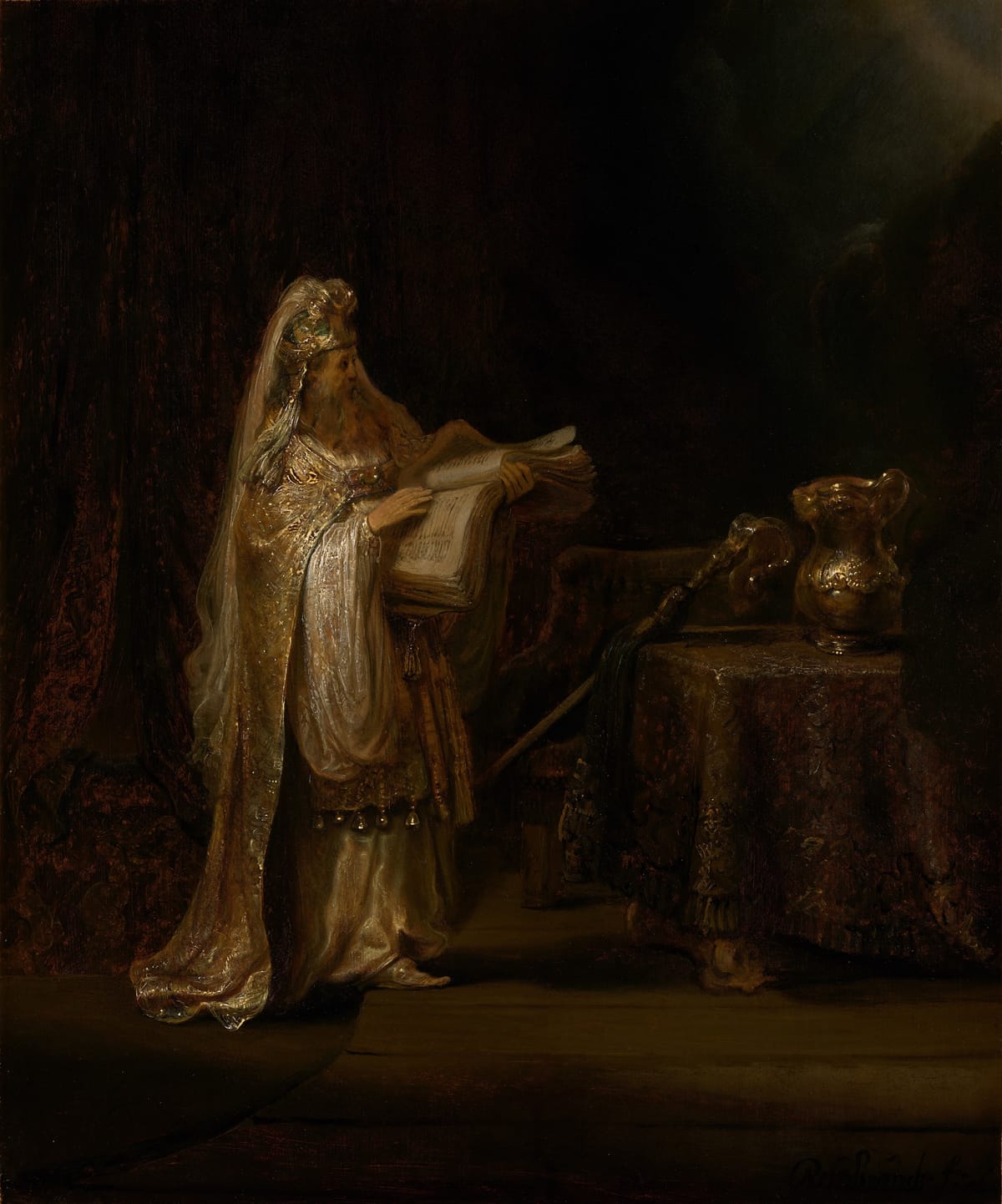
After a two-year study by the Rijksmuseum in Amsterdam, a painting held for decades in a private collection has been attributed to Rembrandt van Rijn.
“The Vision of Zacharias in the Temple” (1633) is currently on display at the museum through a long-term loan from the owner. Hidden from the public eye for over 60 years, the painting was previously misattributed to an anonymous pupil of the Dutch Master through limited analysis of photographic reproductions rather than first-hand examination.
The owners of the work, who remain anonymous, told the Guardian that their father purchased it in 1961 from the late Piet de Boer, an Amsterdam-based art dealer. They contacted the Rijksmuseum and allowed its researchers to restore and thoroughly investigate the painting using the same techniques deployed in the reconstruction of “Night Watch” (1715).
“The painting of Zacharias is worth a close look, not only because it is preciously crafted but also because it is an example of the limitations of authentication,” said Amy Golahny, a Boston College professor and art historian who has published extensive research on Rembrandt, in an email to Hyperallergic.
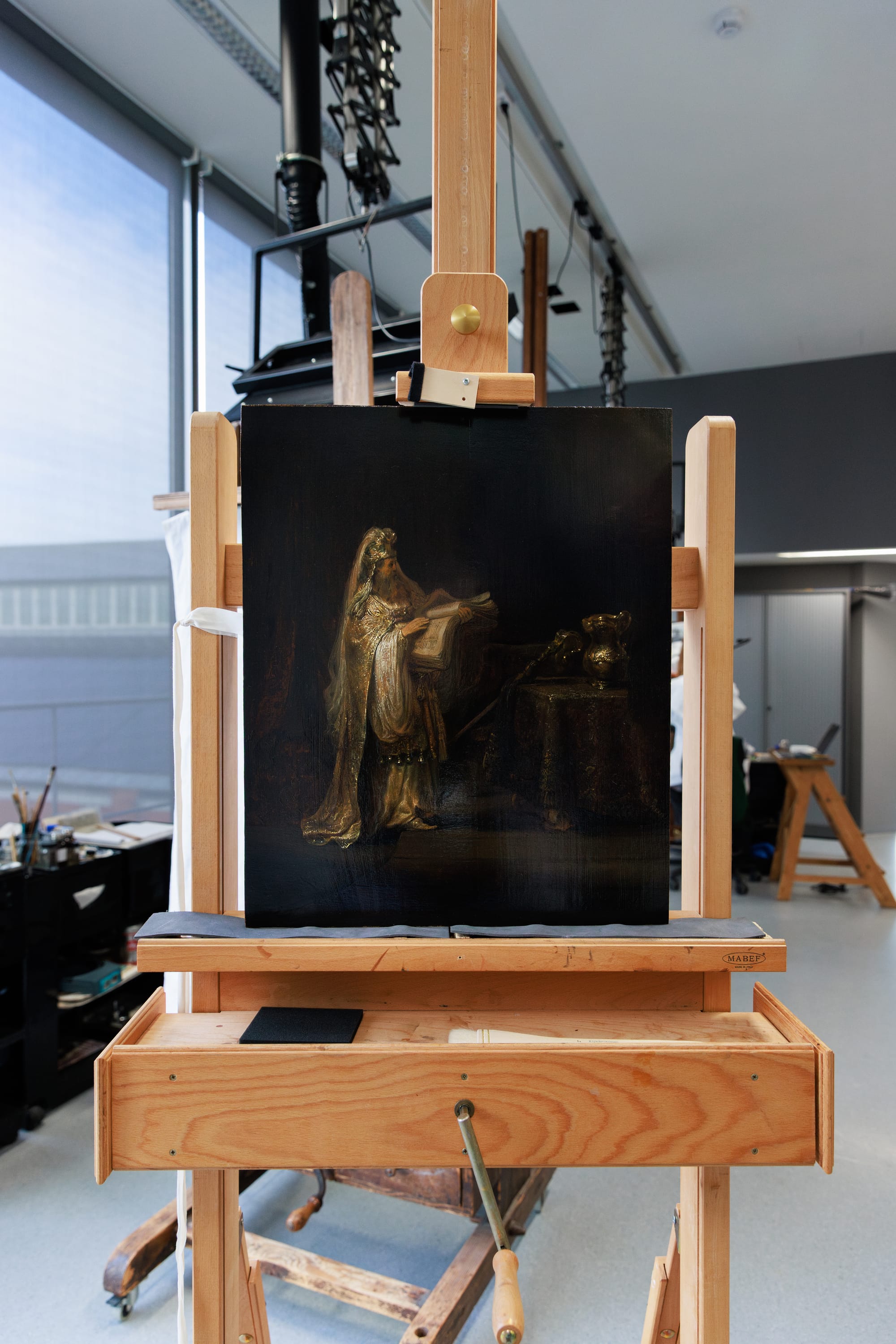
Petria Noble, Rijksmuseum's head of painting conservation, and museum researcher Jonathan Bikker co-authored an article on the findings in the March issue of Burlington Magazine. The research team was able to date the painting's wood panel substrate to around 1625 to 1640, making its completion date plausible. The white chalk ground, light-brown primer, and initial red-brown sketch were also consistent with the Dutch Master's oeuvre, as were the signature yellow-gold highlights glinting throughout the dark composition. Several pigments detected in the painting are present in Rembrandt's other works.
“Dribbly white and yellowish pigments highlight the brocade and tassels of Zacharias's cape, the beard melts into his skin and white robes, and the mysterious shadowy space implies a spiritual power,” Golahny explained, laying out additional stylistic commonalities between this and other Rembrandt paintings from the early 1630s.
Rijksmuseum Director Taco Dibbits told the Guardian that after its restoration, the painting “really looked like the gold was bursting off it — which, of course, is remarkable because he painted with yellow and not with gold. This is what makes the artist a true artist … It is classic Rembrandt.”
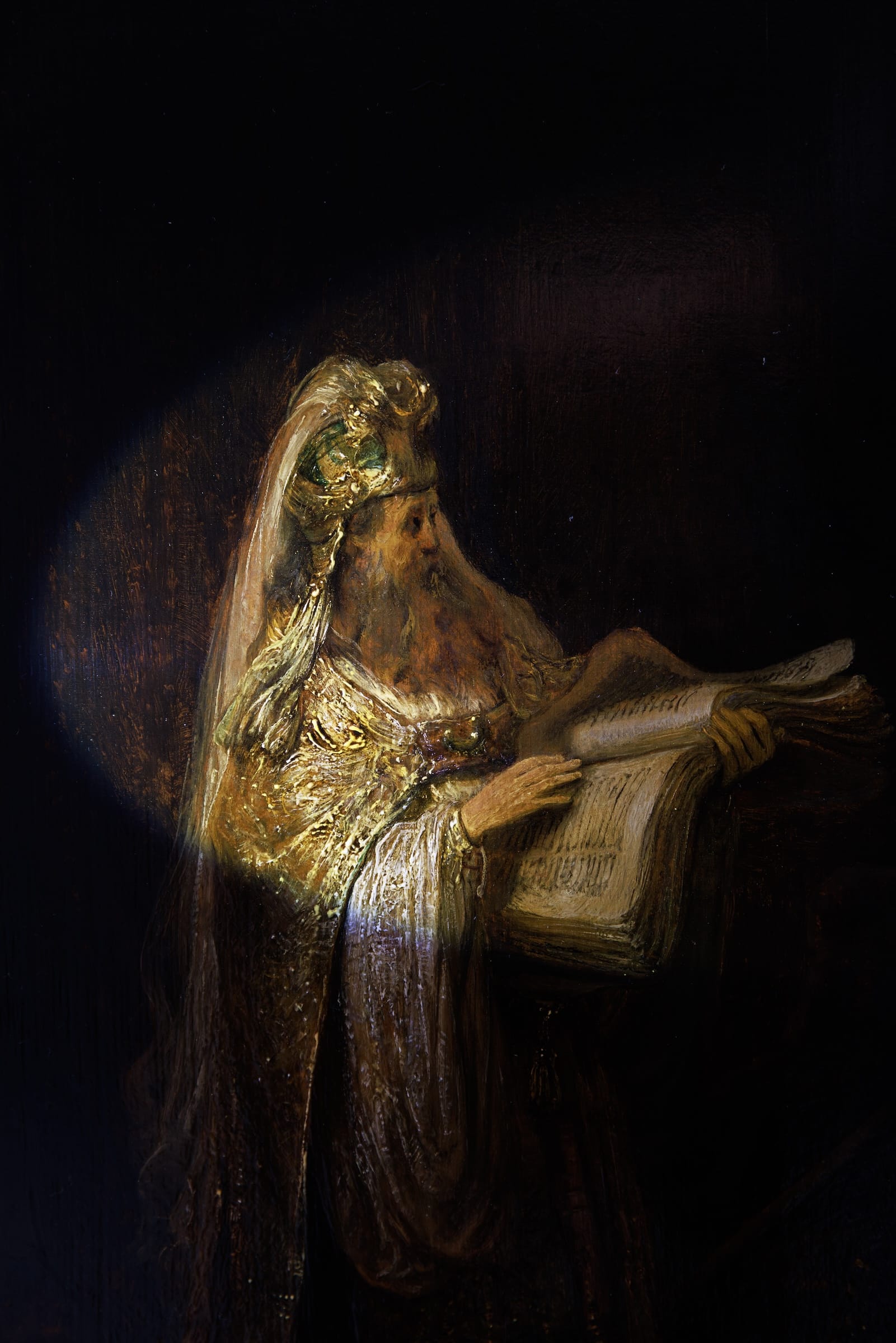
The painting depicts a single moment in the Gospel of Luke, in which the archangel Gabriel appeared in the Temple of Jerusalem and prophesied to Jewish high priest Zacharias (Zechariah) that God had appointed his wife Elisabeth to carry a baby boy who must be named John. Astonished by the news, as the couple had struggled with infertility, Zacharias asked Gabriel if he had made a mistake. The archangel punished the priest by taking away his power of speech until the baby, who would grow up to become John the Baptist, was born and named.
Rembrandt captured Zacharias's shocked expression with two black dots for widened eyes, a stylistic decision he also made in “Daniel and Cyrus before the Idol Bel," another work from the same year. Interestingly, he opted not to render Gabriel in a corporeal form, instead connoting the archangel's presence through a soft yellow light that illuminates incense smoke in the work's top-right corner.
“Rembrandt breaks from all precedent by omitting the messenger, leaving us to imagine Gabriel's appearance in the next moment,” Golahny said.
“The Vision of Zacharias in the Temple” is the latest in a series of works by the artist that have been rediscovered after years in private collections. In 2023, a pair of small oval portraits by Rembrandt went on view at the Rijksmuseum for the first time in nearly 200 years.
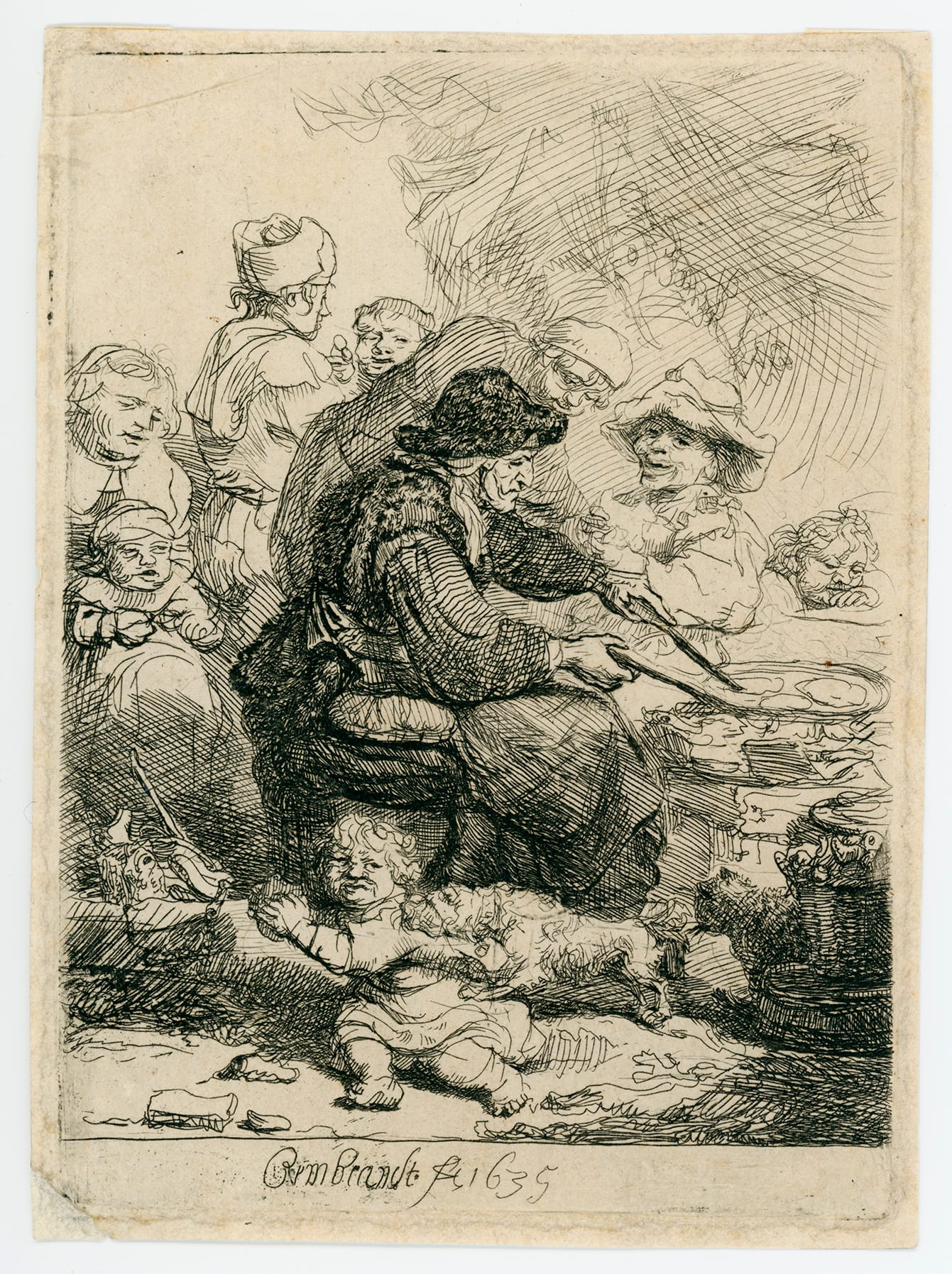
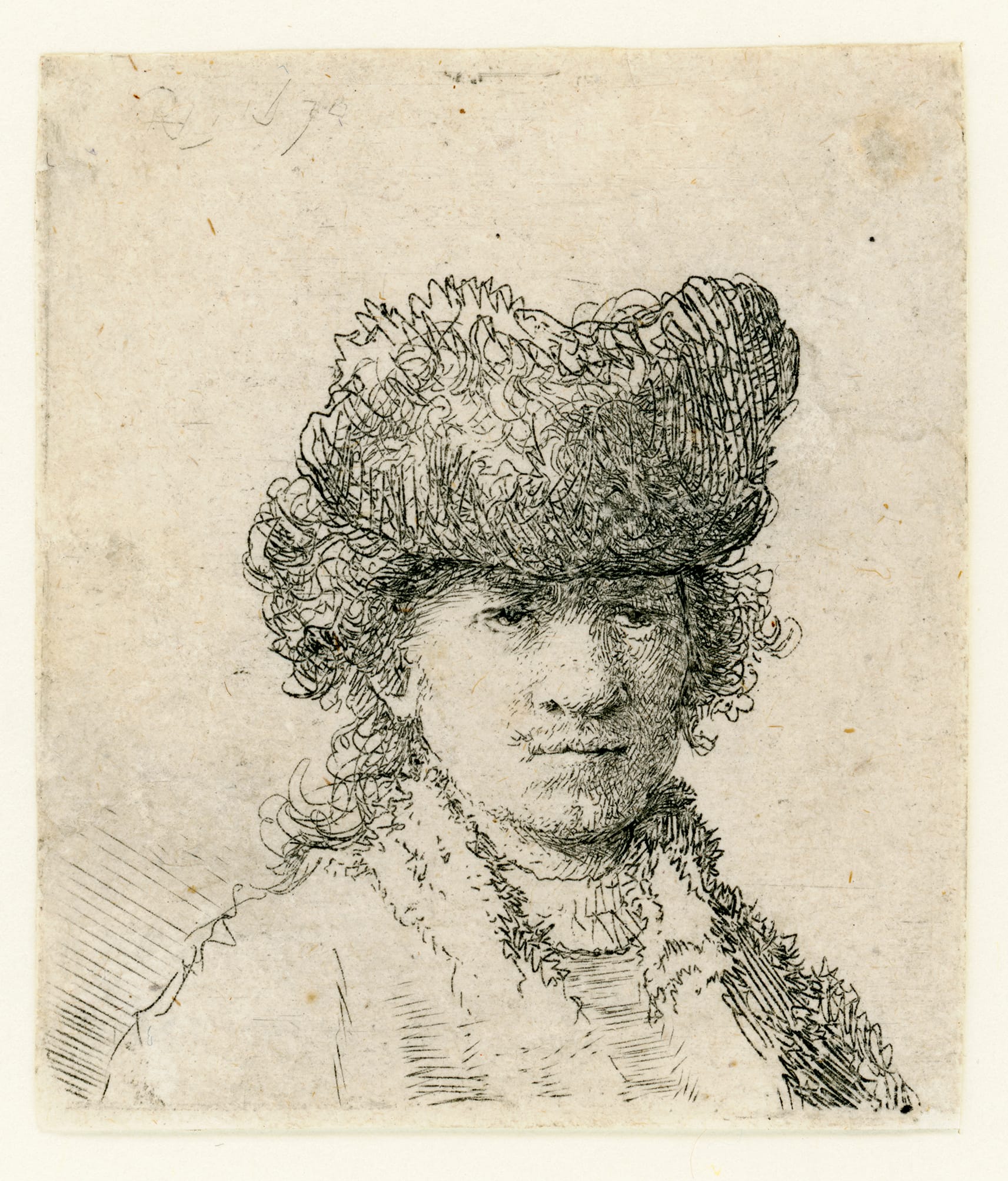
If one new Rembrandt attribution isn't exciting enough, 2026 is shaping up to be a big year for unearthing more unknown works by the artist. At the Stedelijk Museum in Zutphen, the forthcoming exhibition Rembrandt: From Dark to Light will display dozens of newly rediscovered copper-plate etchings that have recently been ascribed to the Dutch Master. The works come from Zutphen resident Charlotte Meyer, who inherited and expanded her grandfather's previously underappreciated collection of 17th-century Dutch etchings. Her collection, which now boasts around 70 certified Rembrandts, will be shown alongside prints from the museum's holdings from March 21 to mid-June.