Michelangelo Drawing of a Foot Could Fetch $2M at Auction
The newly discovered five-inch sketch dates back 500 years.

Christie’s is putting its right foot forward.
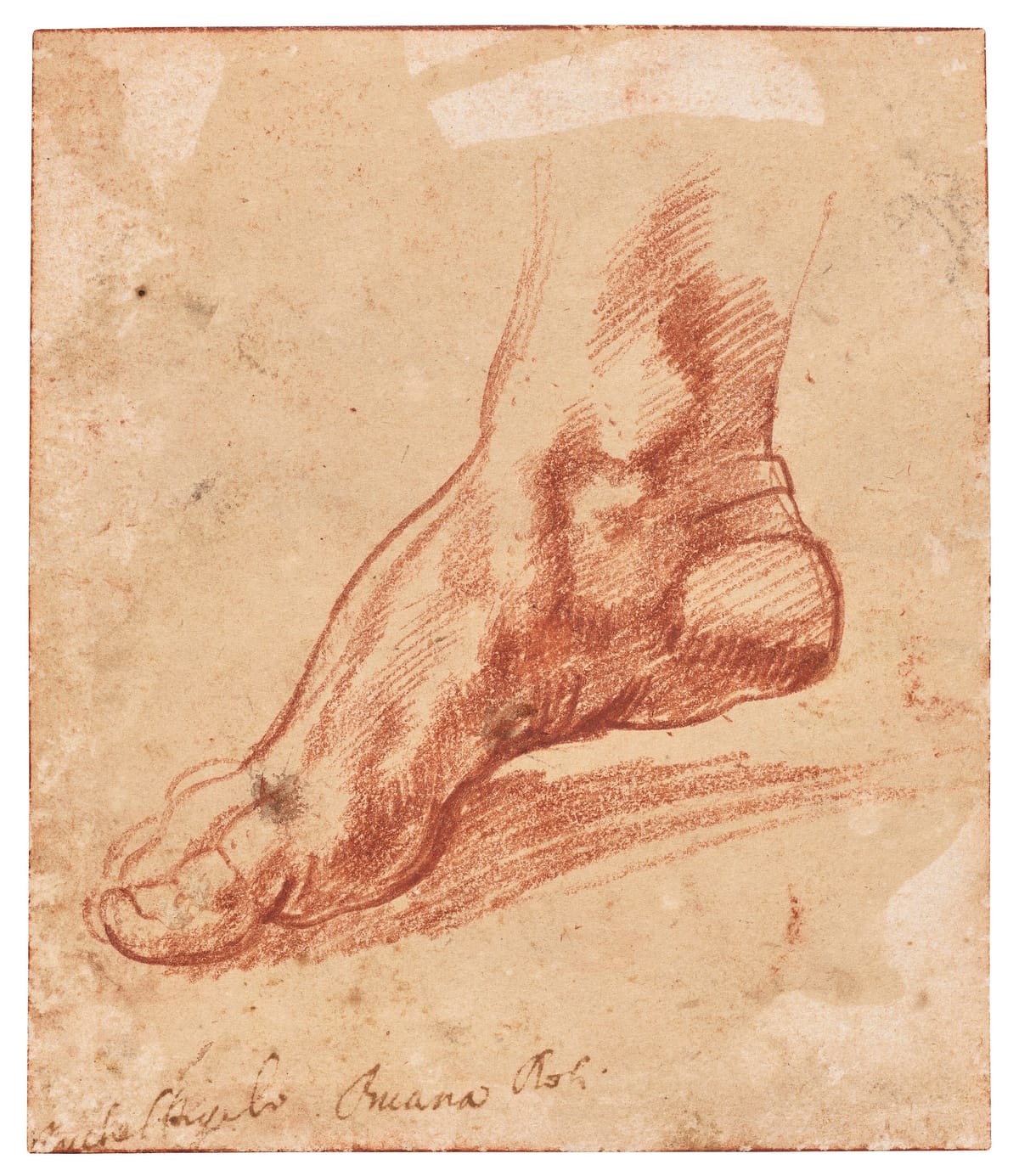
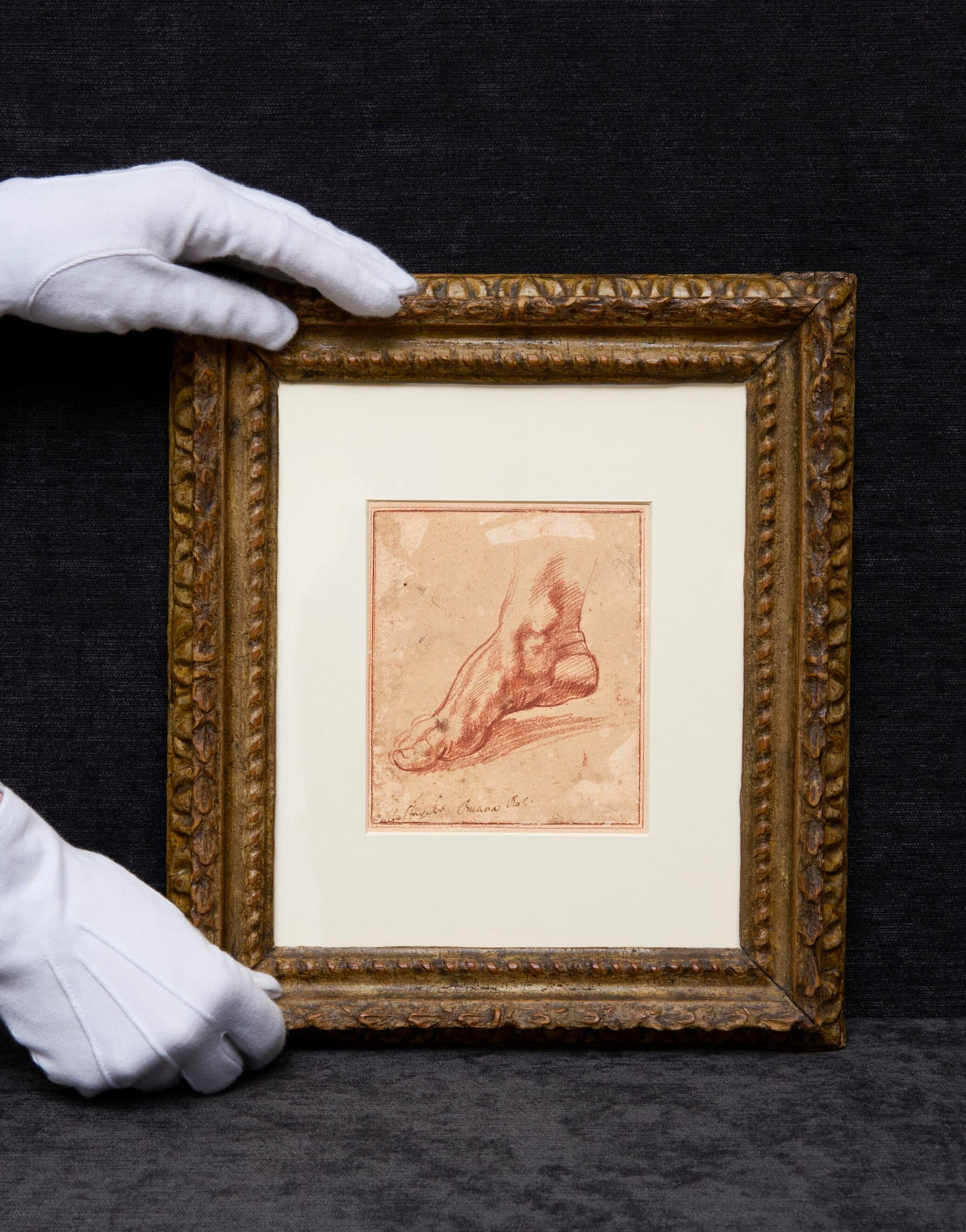
A 500-year-old Michelangelo drawing of a right foot used in a study for a portion of his Sistine Chapel ceiling mural could fetch $2 million at the auction house next February.
The five-inch sketch, “The Libyan Sibyl on the Sistine Chapel ceiling” (1511-1512), has been privately owned by a Northern California collector whose family had reportedly owned the masterwork since the 1700s, passing it down through multiple generations. (The seller's name has not been disclosed.)
Its existence was completely unknown to scholars until a Christie's specialist in the Old Master Drawings department, Giada Damen, rediscovered the red-chalk-on-paper work in a digital photograph sent to the auction house as part of a batch of inquiries before it was authenticated earlier this year.
“It is the kind of story that inspires both the academic and commercial art worlds, while also capturing the imagination of virtually anyone who encounters it, regardless of their background in art,” said Andrew Fletcher, the department's global head, in a statement.
Michelangelo Buonarroti first used pen and ink and black chalk in his earliest studies for the Vatican City frescoes before favoring red chalk for his drawings of live models. He was believed to have produced hundreds of these drawings, although most have been lost to history.
The Sibyl foot figure is one of several red chalk drawings known in existence, including “Studies for The Libyan Sibyl” in the collection of the Metropolitan Museum of Art in New York. These drawings are considered some of Michelangelo’s finest work in the medium, and though around 600 sheets survive, the vast majority — all but about 10 — are held in institutional collections, Christie's said.
“The discovery of a study relating to the Sistine Chapel, a work of art that is arguably the keystone of the Italian Renaissance, has been one of the most memorable moments of my career,” Fletcher said.