POC Arts Nonprofits Face Severe Staffing Challenges, Survey Finds
A new report by Museum Hue sheds light on the difficulties faced by dozens of museums and cultural centers led by people of color in the Northeastern states.

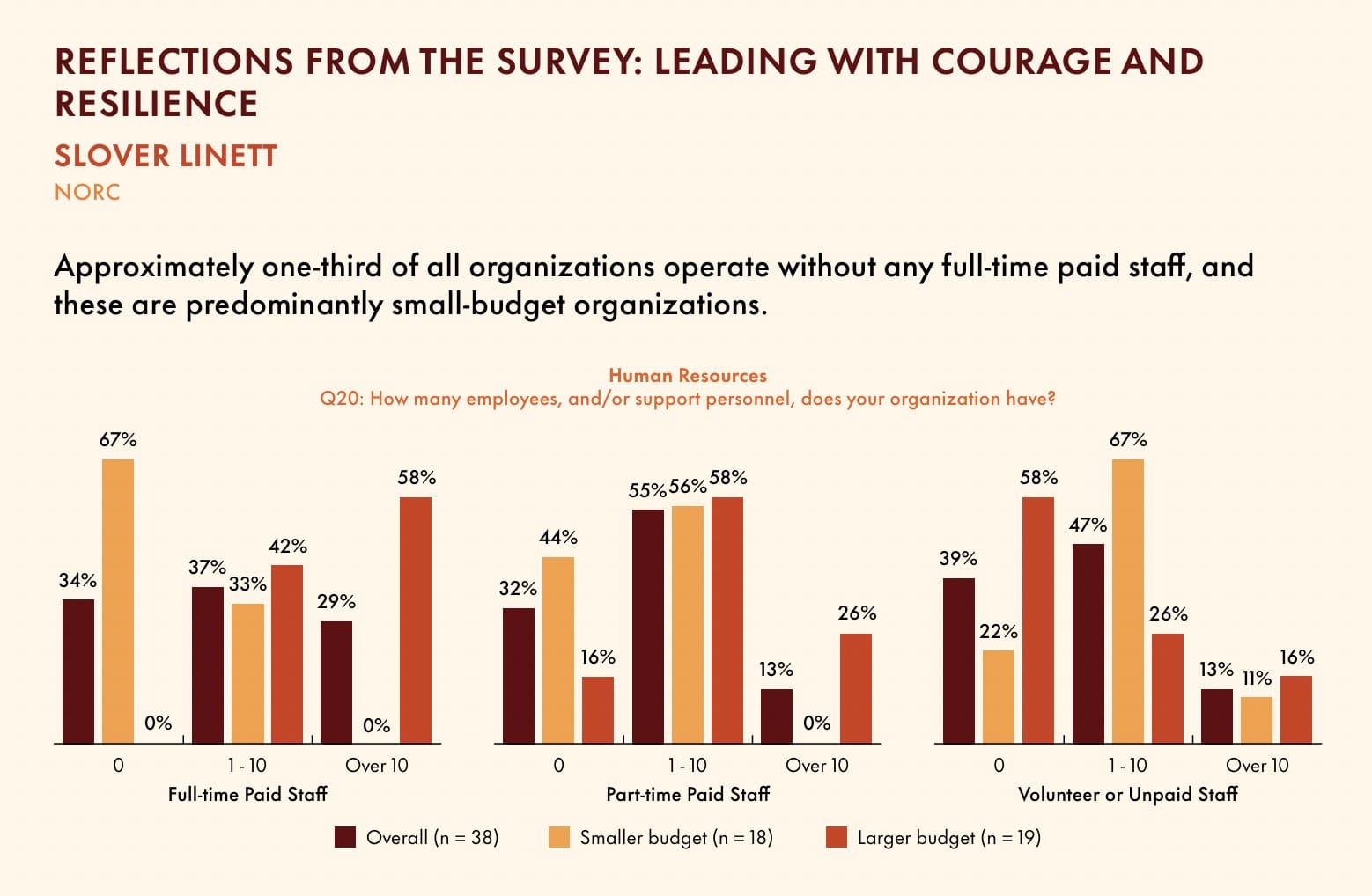
How do you operate a museum or cultural center without any full-time staff? The nonprofit Museum Hue surveyed institutions founded and led by people of color (POC) across the Northeastern states and found that over a third of respondents lacked a single full-time employee.
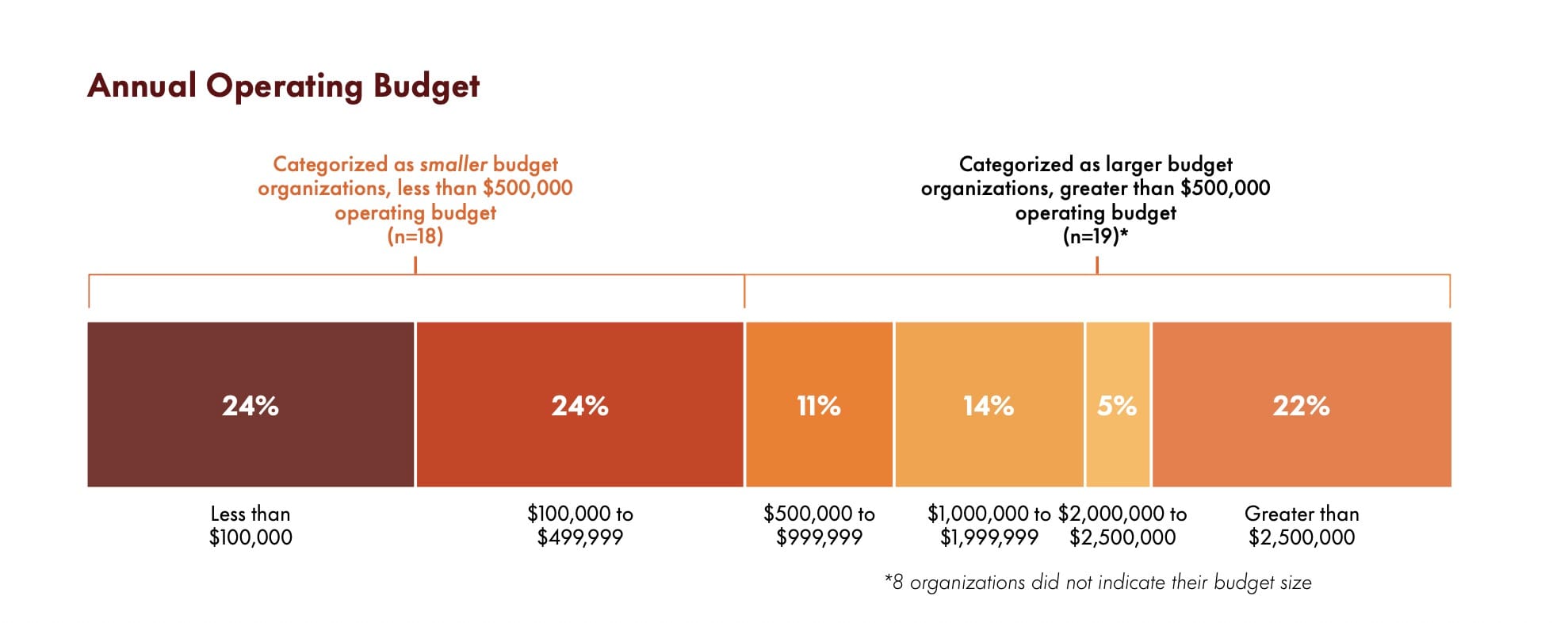
In the new report, 18 of 38 survey participants are described as smaller-budget institutions (with an annual operating budget of $500,000 or less); 67% of these spaces reported not having any full-time staff. In fact, some of them operate on less than $100,000 annually, requiring heavy reliance on volunteer work. This is one of several tough realities that POC-oriented museums and cultural centers face in an effort to serve their communities and raise awareness of previously unsung histories or art practices.
Regardless of available resources, these spaces are critical stewards of arts, culture, and archives among marginalized and minority populations across the region. Of the participating Indigenous, Black, Asian, and Latine-led spaces, 91% of them reported that their collections were specifically devoted to underrepresented ethnic groups or demographics, and 84% identified “sharing under-told stories” as their top strength.
As Robert Lee, executive director at the Asian American Arts Centre, stated for the report about representation as the institution opened in 1974, “it was not done; we were invisible; it was up to us to establish the presence and cultural significance.”
Three years in the making (courtesy of a suspended and restored government grant last year), Museum Hue's “HueArts and Culture Northeast” report visualizes qualitative data gathered by Slover Linnett, an arts-oriented social research practice at the National Opinion Research Center. With a foreword by the Smithsonian Institution Secretary, Lonnie Bunch, the report also includes direct insights from interviews conducted by Yancey Consulting with museum leaders on the current challenges and future goals in the field, as well as recommendations for Museum Hue's forthcoming virtual platform for cross-institutional support.
The research crew distributed quantitative surveys to and requested qualitative interviews from 135 POC-founded and POC-oriented cultural, art, and history institutions across the region, resulting in 30 recorded interviews (roughly 20%) and 45 filled surveys (33%).
Across the board, financial sustainability was among every respondent's top priorities and challenges, even for those with operating budgets upwards of $500,000.
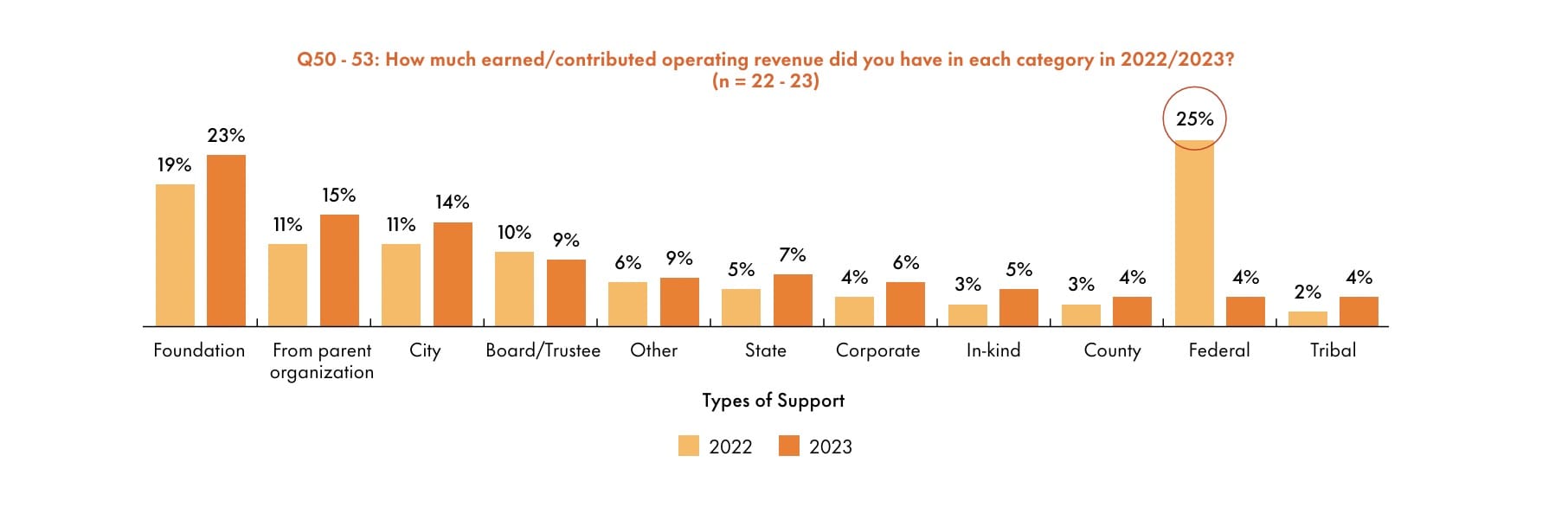
As expected, institutional funding comes from many sources, but those networks are fragile and ever-changing. Based on reported data from both larger- and smaller-budget organizations, federal support for operations dropped from 25% in Fiscal Year 2022 to a meager 4% in FY23 (with smaller-budget spaces coming in at 2%), while foundation-based contributions jumped from 19% to 23%.
Adrienne Lei, Museum Hue's Deputy Director, reminded Hyperallergic that the 2021–22 period brought in unprecedented federal funding “because of contributions from the COVID-related American Rescue Plan and CARES Act.”
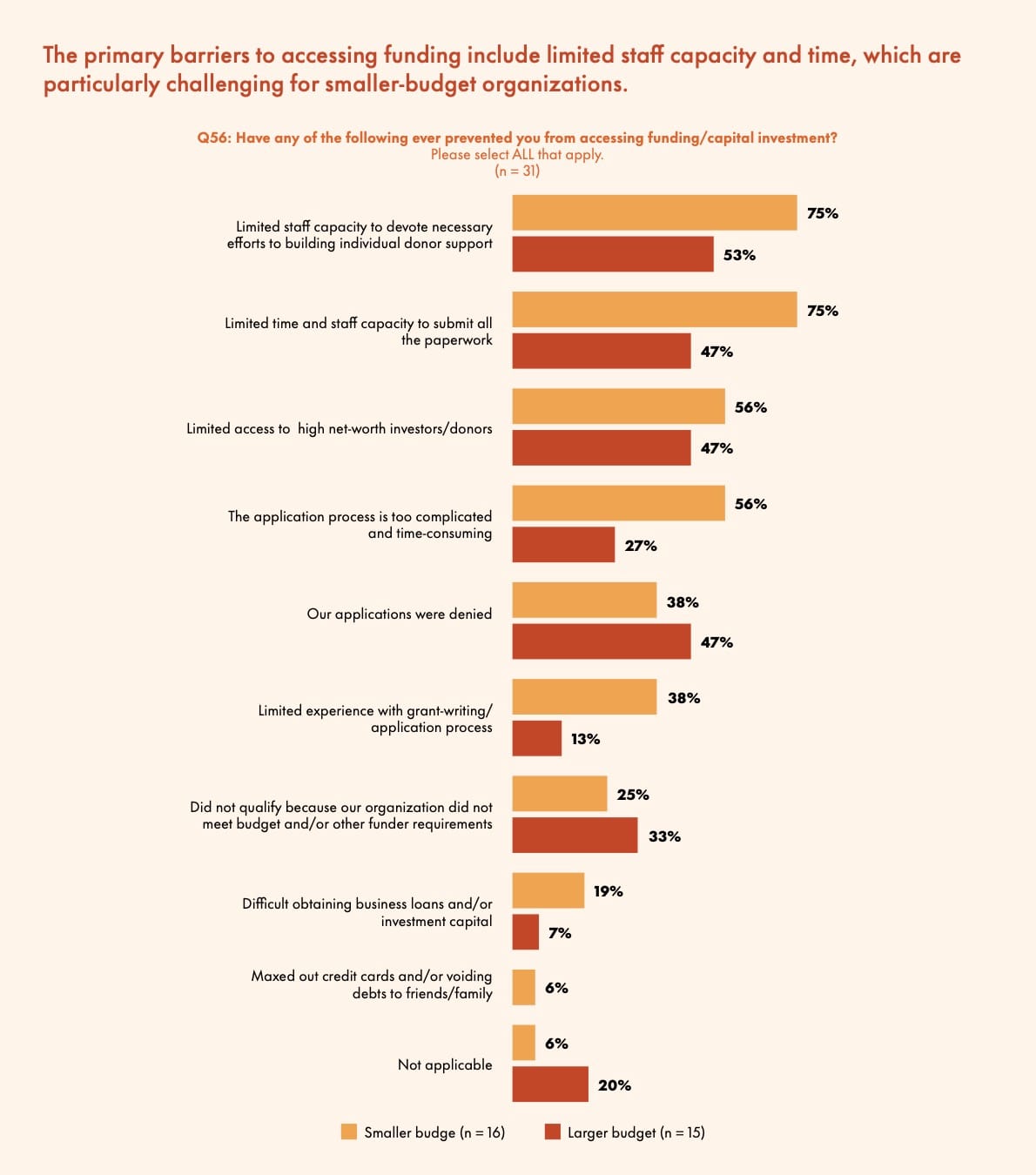
That said, the report also found that access to funding was largely hindered by a lack of staff capacity, with over half of the larger-budget organizations and three-quarters of the smaller-budget institutions mentioning difficulty in devoting the time to the effort needed for building individual donor support.
For the smaller-budget institutions, the same percentage also reported not having enough time to submit the necessary paperwork for grant applications.
“We had to find a way to be self-sufficient,” Yvonne Smart, the education coordinator at the Cape Verdean Museum in Pawtucket, Rhode Island, said in the report. She explained that the museum relied on fundraising and donations from the diasporic community it represented and served to buy its own space, because “you do not qualify for grants if you do not have your own building.”
In an email to Hyperallergic, Museum Hue's Executive Director Stephanie Johnson-Cunningham clarified that the report's findings “highlight much more than just constrained budgets and staffing.”
“It also reveals a perpetuating cycle where institutions of color remain under-resourced, not for lack of vision or relevance, but because they lack the financial stability needed to keep doing their work,” she continued. “They are actually punished in the long-term for doing so much with less.”
Adding weight to Johnson-Cunningham's observations, smaller-budget institutions offer free admission to a large percentage of their events.
While financial stability was among the greatest challenges across the board, Lei also said that the leaders interviewed “did not waver on the importance of keeping their organizations accessible and affordable by offering so much for free.”
“The community can use whatever available space, because it’s theirs,” said Akwesasne Cultural Center Director Justin Cree in the report.