Politicize Your Bookshelf with Colorful, Codified Stickers
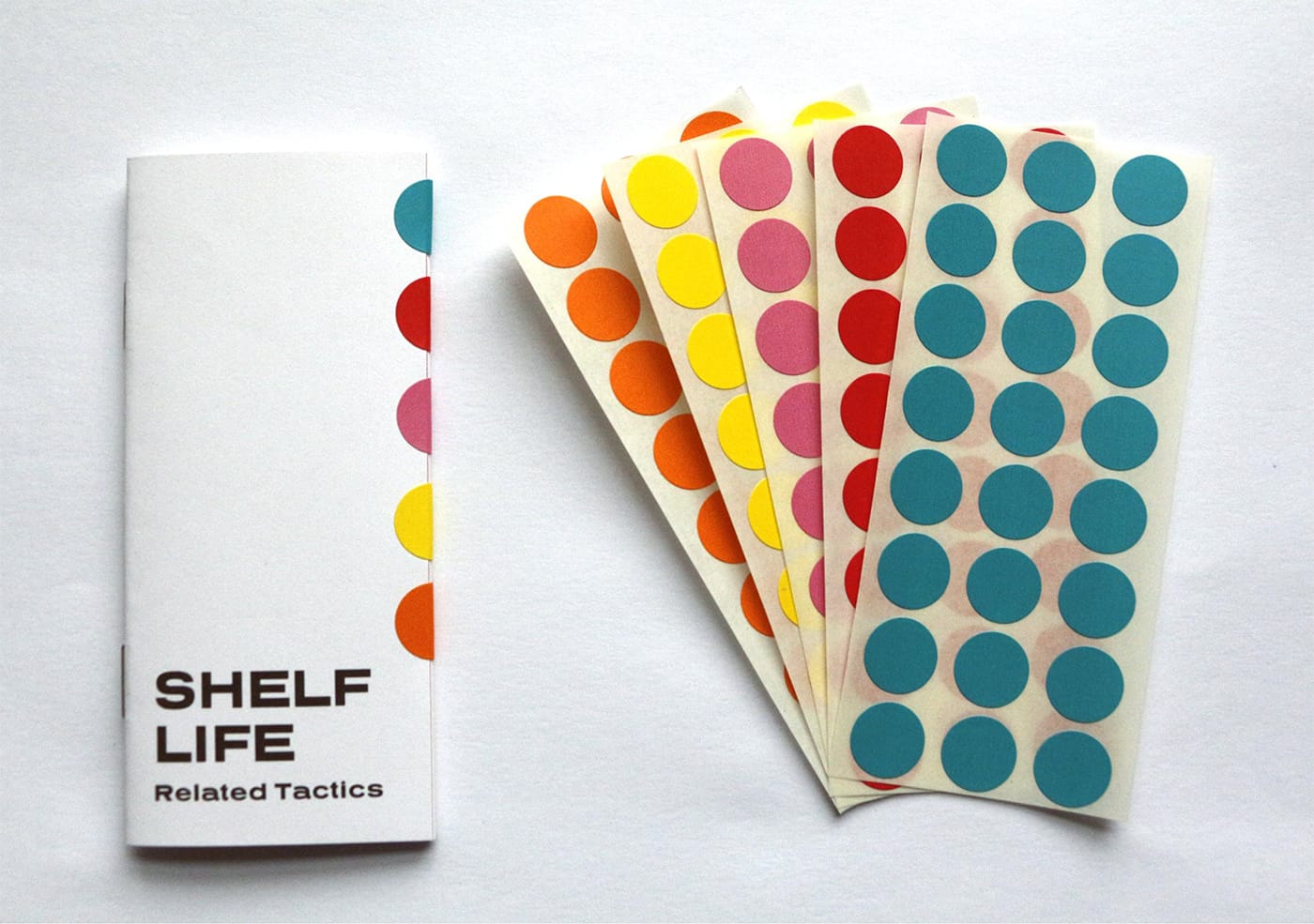
Shelf Life, a take-home exercise, makes you think more deeply about the paradigms you might be absorbing, perhaps unconsciously, from your own book collection.

Any bibliophile can tell you that half the pleasure of a well-curated bookshelf is in the sorting. Some people go by the standard Dewey Decimal System, but most prefer to create personal taxonomies that put works of literature in conversation. For artist collective Related Tactics, comprised of Michele Carlson, Weston Teruya, and Nate Watson, the act of examining one’s collection of knowledge — specifically through books — was raised when they participated in Added Value at the San Francisco Museum of Modern Art (SFMOMA) this past September. The project was lead by artist Stephanie Syjuco, in collaboration with the Public Knowledge program of the San Francisco Museum of Modern Art (SFMOMA), the Friends of the SF Public Library, Rick & Megan Prelinger of the Prelinger Library, and Related Tactics.

“The overall project took the form of a used book sale that was arranged in alternative categories that called into question how taxonomies of knowledge shape our understanding of the world,” said Teruya, in an email interview with Hyperallergic. “Related Tactics’ particular contribution in that process was creating categories that called out the ways these processes of normalizing certain voices and experiences profoundly shape our relationships to ourselves and culture.”
Related Tactics worked with visitors to the book sale, using a series of codified stickers to “make visible the ways unconscious biases and gaps in knowledge become normalized and often invisible.” Participants were supplied with circular sticky labels in different colors and were exhorted to use these stickers to categorize the book collection, based on considerations of race, perspective, and privilege. For instance, the addition of a red sticker indicates if a book is written about a particular culture, people, and/or place — but presumes a readership not of that culture, people, and/or place (this may include histories, artistic forms, travel, cooking, and romance).
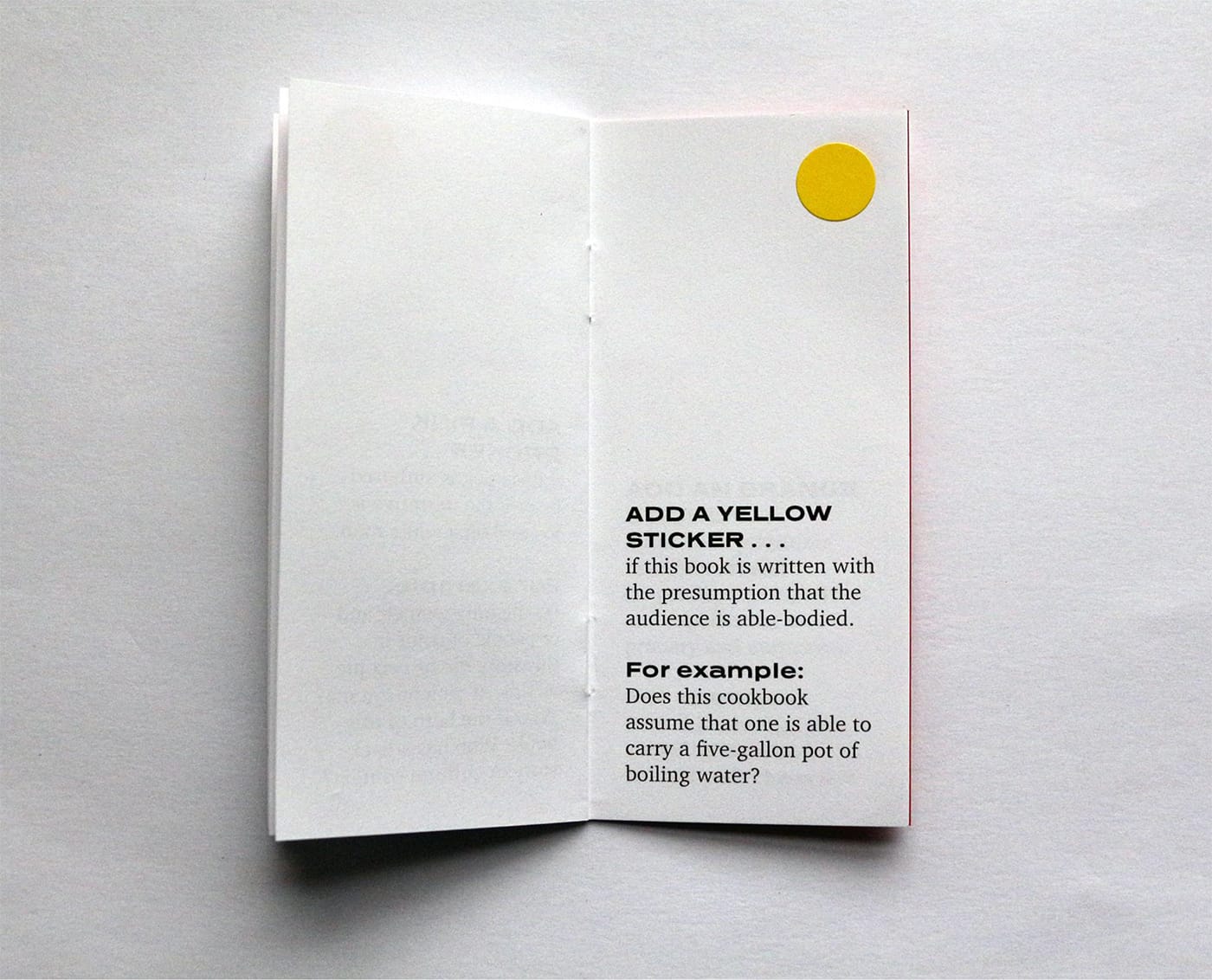
“The sticker colors correspond to categories that ask us to begin looking at who the presumed audiences are for texts, the voices that are centered in narratives, and who is granted the authority to publish,” said Teruya. “We deliberately created categories that ask people to color mark that which is usually normative and therefore invisible, rather than people and their identities that are usually marginalized and hypervisible.”
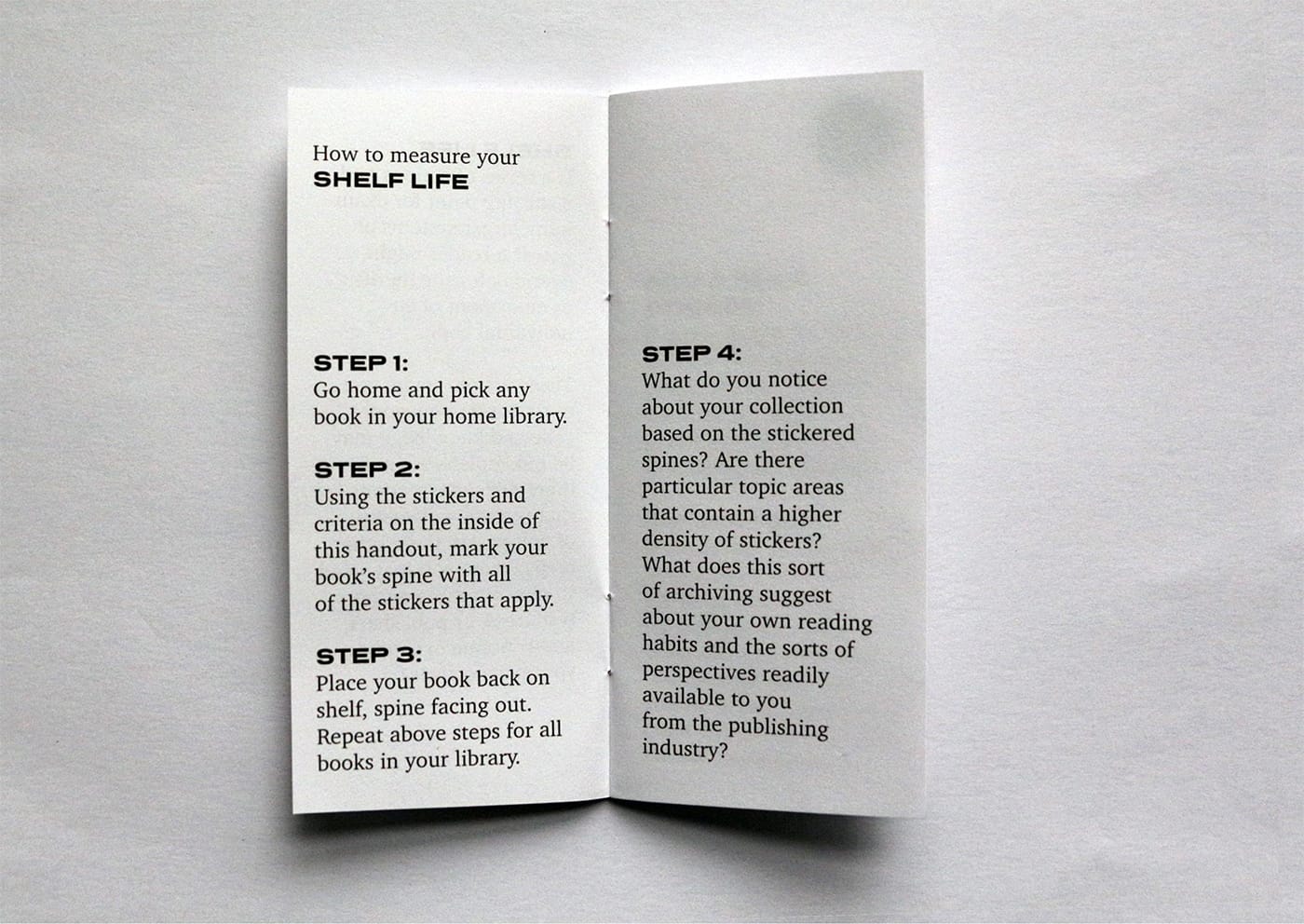
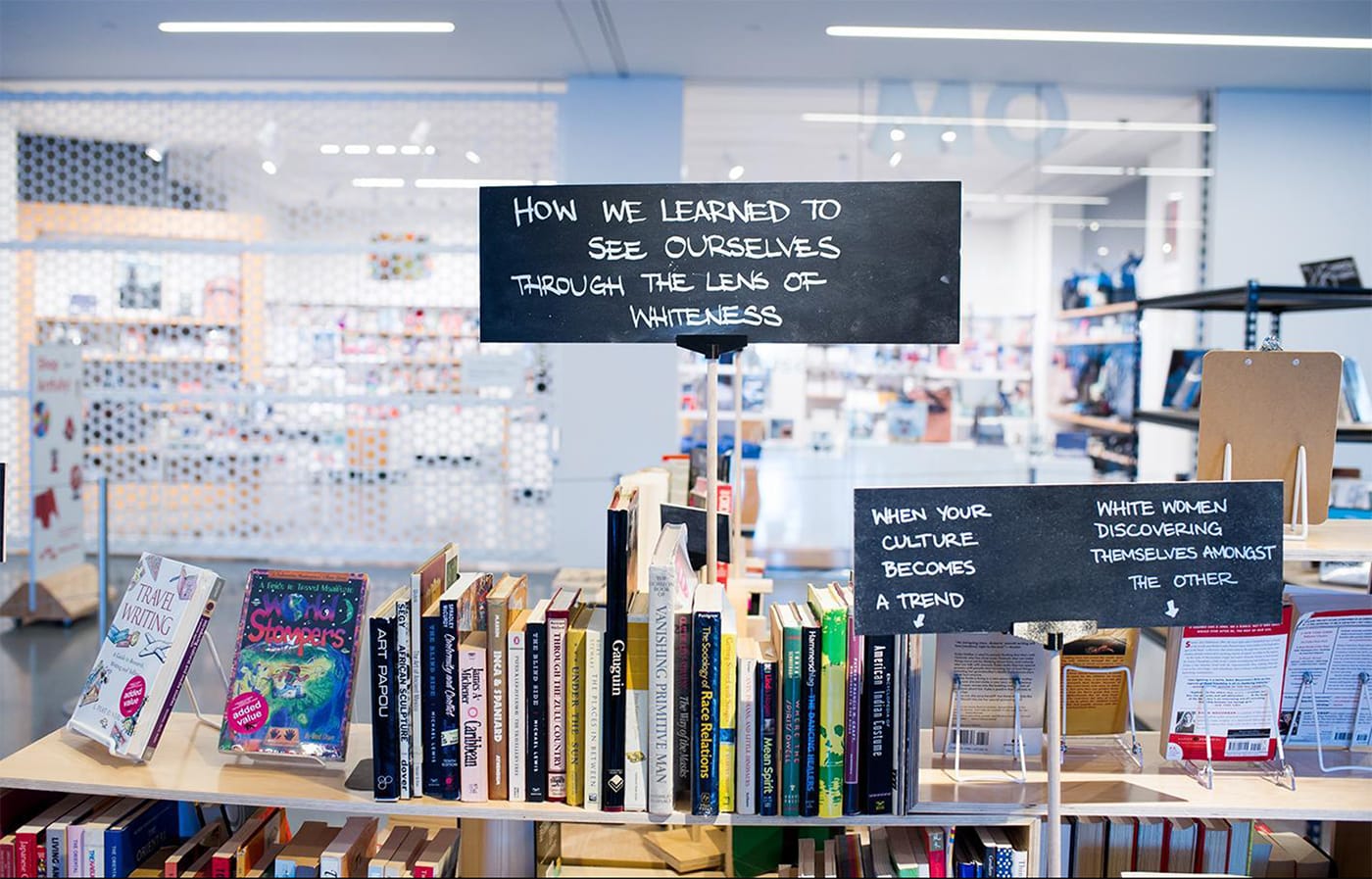
The 2018 Added Value workshop yielded categories for the book sale like, “How We Learned to See Ourselves Through the Lens of Whiteness,” “White Women Discovering Themselves Amongst the Other,” and “Radical Desire(s).” Alongside Added Value, the group was commissioned to expand on the idea in the form of Shelf Life — a take-home version of the exercise designed by Vivian Sming — which offers an overview of the idea, meant to trigger deeper thinking about the paradigms readers are absorbing, perhaps unconsciously, from their own book collection.
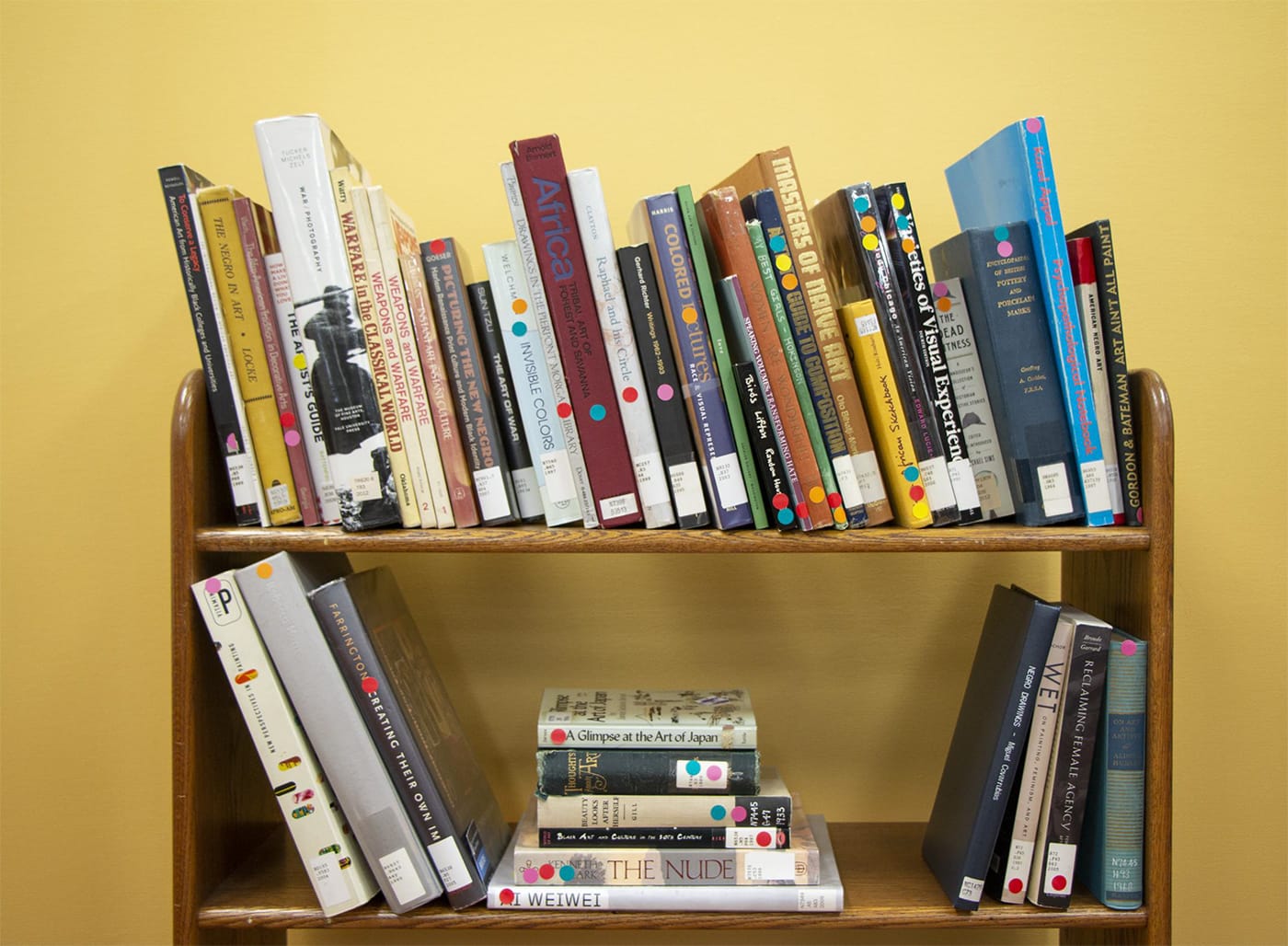
“The redesign by Vivian allowed us to focus the project and disseminate it further,” said Teruya. “We [also] tried to phrase our categories in ways that suggested the identities and positions of the audiences and authors, rather than attempting to take on a universalized, authoritative voice.”
Here in 2019, the collective has already rolled out Shelf Life with students at Augusta University, in a workshop with its library. This represents just one aspect of the Shelf Life concept, which hopes to encourage readers to examine larger systems of power they might otherwise overlook for the merits or enjoyment of an individual book.

“These actions invite you to reflect on how your collected knowledge may be incomplete, even if there are some sections that feature a diversity of voices,” says the Shelf Life introduction. “Are there other areas where you may need to seek out more authors, resources, or publishers, and continue expanding your perspectives?”
Perhaps when it comes to library taxonomy, we’ve moved past Dewey, and on to a more considered approach that tackles authorship, presumption of readership, and access to publishing. A fitting system for an era no longer asking “do we?” but rather “why don’t we?”
Check out the Shelf Life take-home project here. Additionally, Shelf Life can be found at the LA Art Book Fair with Sming Sming Books in April.