Required Reading
This week, self-clicking computers, Saif Azzuz’s hymn to Indigenous plants, RIP Bed-Stuy Aquarium fishies, ugly Renaissance babies, Diwali-ween, and more.

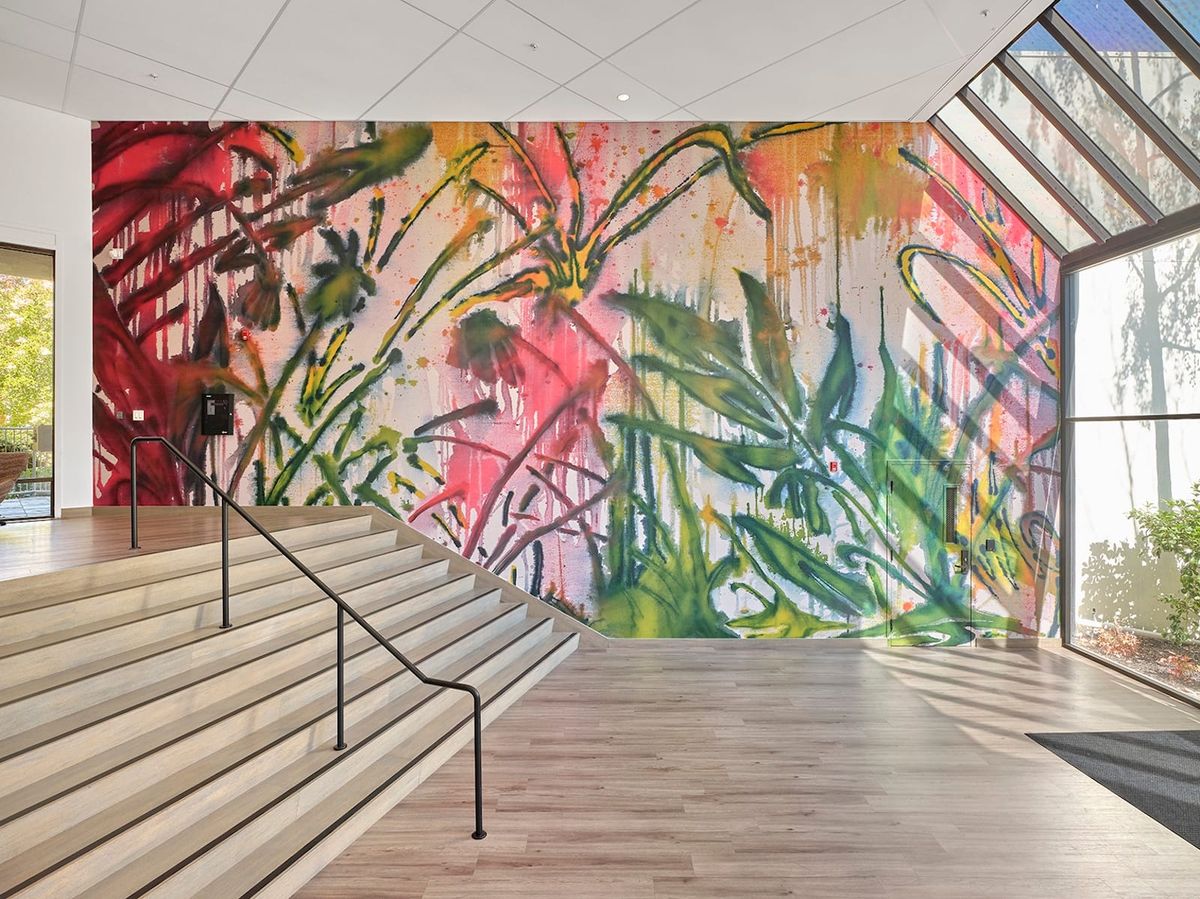
‣ Self-clicking computers have arrived, and the first version of this feature is available for the chatbot "Claude." Of course it's French! John Herrman explains for Intelligencer:
What Claude is able to do here is already surprising, but it depends in no small part on fascinating small deceptions made in the name of productivity. If the goal is to let AI interact with the real world, asking for control of users’ computers is an incredibly useful first step and a shortcut to an enormous range of possible tasks, but it’s also a bold and perhaps risky approach by a firm that, unlike some other players in AI, doesn’t already have access to users’ email accounts or social-media profiles. (In terms of straightforward functionality, it’s worth noting that Anthropic’s computer sse feature has a lot in common with apps known as auto-clickers, macro tools, and key-pressers, which are used to automate humanlike actions on computers and phones and are widely used for producing spam and committing fraud.)
‣ For Electric Literature, artist Naomi Cohn discusses her new book on what she calls "altered sight," Blindness, and embracing braille with Camille LeFevre (her former next-door neighbor):
NC: I choose that term for a practical reason. I wanted the title to be invitational. I have my own baggage about blindness and readers may bring their own baggage. I wanted a term less loaded than “blind,” and with more of a sense of possibility to it. One theme of the book is that I truly feel two things at once that are contradictory: my love of reading and writing, and coming to realize there are different ways of seeing. No one can see everything at once. Some see less well, which means other things come forward, which is also a metaphor for how we exist in the world. Having the capacity to read braille, to take in language through my hands, is expansive. It’s amazing, right? So, my narrative arc of being a sighted person to becoming legally blind in my 60s reflects both a terrible loss and an evolution into different ways of being, and is a way of living and inviting the reader into both those truths.
‣ Artist and Hyperallergic contributor Coco Fusco has an essay in the New York Review of Books meditating on the historical trajectories of migration, labor, and xenophobia in the US, a timely read ahead of what may be a very bad Tuesday:
García Hernández finds similar disparities between our current treatment of refugees from Ukraine and those from Venezuela and Nicaragua. In 2022 the Biden administration created a special initiative to allow Ukrainians fleeing the war to come to the US and work here for up to two years, while many Venezuelans and Nicaraguans have been expelled from the US and others sent to shelters without work permits. It took pressure from activists to force the Biden administration to introduce a parole program that allows Cuban, Venezuelan, Haitian, and Nicaraguan migrants to stay temporarily in the US.
‣ Inuktut (ᐃᓄᒃᑎᑐᑦ) just joined Google Translate, making it the first Indigenous language spoken in Canada on the handy service. Brittany Hobson reports for CBC News:
After Google determined its model could recognize Inuktut, it began to consult with language speakers and organizations.
The company reached out to Inuit Tapiriit Kanatami, a national organization that represents about 70,000 Inuit in Canada, to ensure development of the model was true to the Inuktut language, including the ability to translate both of the language's writing systems.
Inuktut uses qaniujaaqpait, or syllabics, and qaliujaaqpait, based on the Roman alphabet.
Inuit Tapiriit Kanatami has developed its own data set of common characters that can be used to write in any dialect of Inuktut to help ease written communication among the different Inuit regions.
"If we hadn't had their help, we would have just been able to launch in syllabics, which undermines some of their current work," Caswell said.
‣ We New Yorkers were crushed to learn that the fire department paved over the beloved Bed-Stuy Aquarium and cruelly allowed all the fish to die. My inner mermaid-wannabe is in mourning. Clio Chang has the story in Curbed:
While this was playing out in person, the internet, or at least a corner of it, lit up. It was as heated as you might imagine. The pond discourse — which included accusations of racist gentrification and animal abuse — eventually got so out of hand that the moderator of the Bed-Stuy Reddit had to institute a rule of “no more puddle posts.” The fish puddle somehow became a proxy battle for everything else happening in the neighborhood, a historically Black, formerly redlined part of north Brooklyn that has, for some time now, also become home to wealthy college students and white creative directors in search of a brownstone. “They knew what they were doing,” Hajj-Malik Lovick, one of the pond’s creators, said of the Fire Department on TikTok. The people who loved the pond really loved it. It used to be a garbage-y pit that became something sort of nice, if maybe not always for the fish.
‣ ... and speaking of misplaced municipal priorities, New York long discriminated against Black and Hispanic people spotted jay-walking. Now, the crossing method of which everyone is guilty is finally legal in the city, Alana Wise reports for NPR:
Gothamist reported that in the first six months of 2024, the New York Police Department issued 786 pedestrian-related summonses, 77% of which went to Black or Hispanic people.
“We’re seeing discriminatory enforcement of this, but the other thing is that it’s not keeping us any safer,” said Council Member Tiffany Cabán of Queens, who was one of the bill’s sponsors.
The Legal Aid Society, which has long been critical of the jaywalking penalties, praised the City Council for getting the law passed and said it would be monitoring the NYPD to ensure they respected the new legislation.
‣ Ah, the tension between yearning to be a subway muse and harboring a deep fear of strangers on public transportation:
https://www.instagram.com/reel/DAgwzOcyNLH/?utm_source=ig_web_copy_link
‣ Hey look, they used my baby photo (#6)!
https://www.instagram.com/p/DBqlJ6GR8Xt/?utm_source=ig_web_copy_link
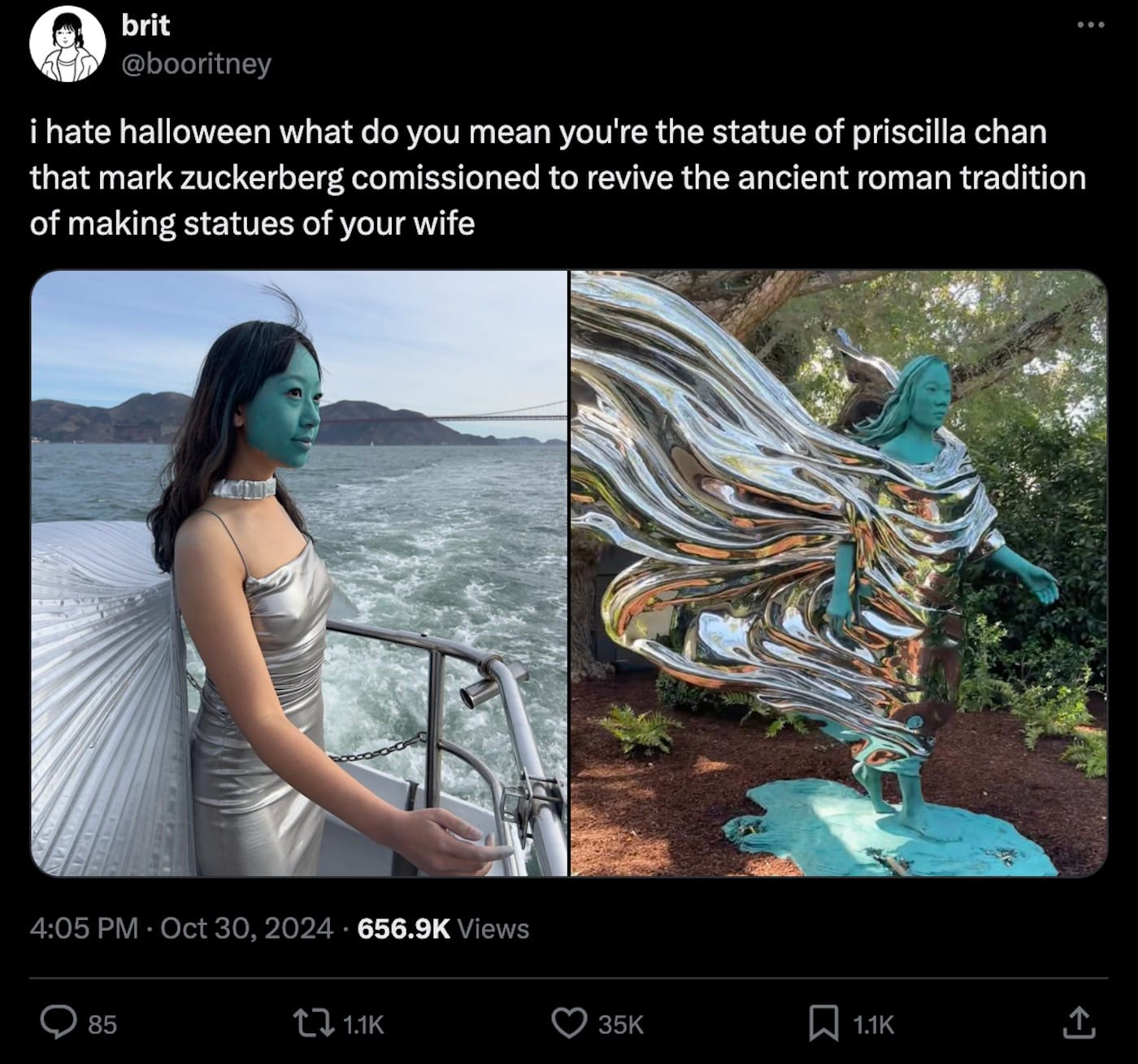
‣ Scariest costume I've seen all week:
‣ Diwali-ween Mubarak to all who celebrate:
https://www.tiktok.com/@min.aaaa1/video/7431759616595348779
Required Reading is published every Thursday afternoon, and it is comprised of a short list of art-related links to long-form articles, videos, blog posts, or photo essays worth a second look.