Required Reading
This week: what art conservators and novelists have in common, Toni Morrison and canonization, celebrating Eid in Gaza, the Lindy West drama, “girl games,” and more.

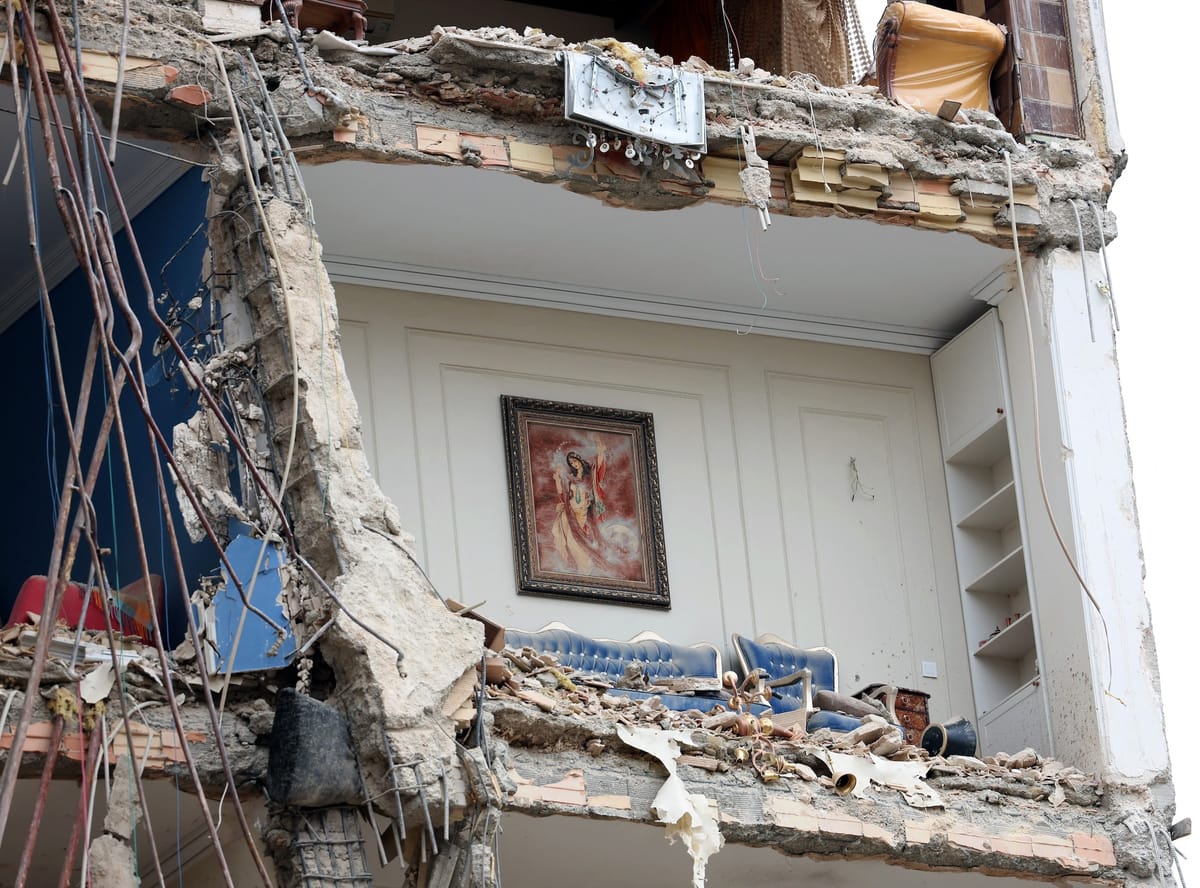
Novelist Karma Brown muses in LitHub about the shared pursuits of art conservation and fiction writing, grounded in a visit to the Art Gallery of Ontario:
I began to view my first draft like a piece of art arriving to the AGO in a wooden packing crate. It already exists, so you’re not creating something from scratch. But it has layers of grime, or holes, that need to be removed or repaired before you can see it clearly. During our many visits, the conservator showed me examples (both her own, and others she didn’t work on) of how it isn’t always possible to restore something to its precise, original state. The goal isn’t perfection, she explained, which is also true for a completed novel on the shelf.
Over my many meetings with the conservator, we discussed art, the role of women in both our industries, as well as what it’s like to be storytellers and stewards of history. She shared personal experiences, too, like how during the pandemic—when the museum was shuttered for months—she and her colleagues worked in shifts. At times, she was the only conservator on the floor, walking through darkened exhibits at night, like a mother quietly peering in on a sleeping child. It was eerie, she said, being alone with the art like that. That story led me to a central question of my novel, which is, “What if some part of the artist lives forever in her painting?”
Nicholas Russell interviews Namwali Serpell, whose new book on Toni Morrison which explores the complexity of her life and work in light of her canonization, for Defector:
I've been a bookseller for a decade now, and in the last couple years I've only seen more and more books about Toni Morrison. You reference some of them, including Toni at Random, about her time as an editor. Her novels are also being republished with new covers. I wonder what you think is going on with this concerted push.
I think it's very much part of the gradual transformation of Morrison into a monument. It's a monumentalization, but it's also an institutionalization. It's funny, I was just thinking about a pun that I think she would have enjoyed, which is: Toni Morrison™. There's a real desire for the kind of clarity, intelligence, beauty of her commentary as a public intellectual. Our desire for that means we are turning to the books to extract quotable, memeable lines. There's also a real desire to look at her career outside of the writing, like her editorial work and her work as an academic. It's easier to process in our attention-starved world than it is to sit down with a Toni Morrison novel and go through that experience. I don't think it's a bad thing for us to be thinking about Morrison, reading her, watching videos of her interviews. It's wonderful, and it's something she merits. My book really is thinking about her as an artist and thinking about the particular experiments and developments, refinements, that she was doing with the novel form, with fiction. I feel that might fall by the wayside if we pay too much attention to her as an icon of black excellence.
AI use is perhaps the most damning accusation you can throw at a writer nowadays. But as Intelligencer's Emma Alpern explains, those speculations often target autistic writers and non-native English speakers:
Chaput is not alone. Ines, a writer in Morocco, learned English as a third language and sometimes wonders if her attention to the rules of grammar has put her work at risk of being mistaken for something spun up by AI. “When I became freelance, I responded to an ad for a ghostwriter,” she says. “They asked me to write 3,000 words, and they gave me five days to finish it. I took my sweet time and I wrote it and I loved it. When I sent it, not even two minutes later, the person I interviewed with responded and told me I was using AI.” Ines isn’t sure why her writing sounded like it was generated by token predictions, but she has theories. Like her, ChatGPT often uses em dashes, and there’s a certain “pattern” both she and AI follow for readability, alternating short sentences with longer ones.
AI detectors have in fact been shown to be biased against non-native English writers. “The irony is maddening: You spend a lifetime mastering a language, adhering to its formal rules with greater diligence than most native speakers, and for this, a machine built an ocean away calls you a fake,” the Kenyan writer Marcus Olang’ said in a Substack post. Trained on a corpus of formal writing, ChatGPT, he thinks, “accidentally replicated the linguistic ghost of the British Empire” — the same ghost haunting the schools where he was drilled in the Queen’s English. There is what you might call a cleanliness penalty. The writers punished are the ones who have a knack for pristine grammar, so different from the clumsy-thumbed way most of us type.
Ali Skaik, an English literature student from Gaza, writes in the Nation about the resistance baked into Eid celebrations this year, the third since the genocide began:
I spent two hours watching a reel of two mothers weeping over their children’s graves, calling it a “Black Eid.” We remembered the journalists Anas al-Sharif and Ismail al-Ghoull, whose children spent Eid without their fathers.
Walking past our destroyed home, I saw a camp of torn tents and smelled the leaking sewage, a scene that reminded me of the year we spent in a tent in Khan Younis.
Despite all of this, we celebrate. They try to turn our Takbeerat into screams of pain. They try to strip us of our faith by leveling our mosques and starving our children. But they do not understand that in Gaza we “love life whenever we can find a way to it.”
India's parliament just passed a dangerous bill that criminalizes and curtails the rights of millions of trans people, Nikita Yadav and Abhishek Dey report for BBC:
The bill removes the right to self-identify and instead limits recognition to those defined by biological or physical traits. This includes people with intersex variations - where a person is born with sex characteristics that do not fit typical definitions of male or female - as well as traditional identities long used among transgender communities in India.
The bill also makes certification from medical boards and district authorities mandatory for those undergoing gender-affirming surgeries.
Activists say the new bill moves away from the self-identification principle of the 2014 court ruling and could reshape how transgender people are legally recognised.
Slate's Scaachi Koul has a shrewd profile of feminist author Lindy West, whose new memoir touches on her polyamorous relationship and overcoming infidelity. (It's worth noting that after this piece came out, her husband sent Koul a nasty email that suggests he doesn't understand how journalism works.):
West attempts to address this in the book, that they never had a fallow period in their relationship, even during Oluo’s ostensible cheating. “We’ve never stopped being very close and loving each other really hard,” she says. “But he’d leave for hours. Then he would come back and he’d be drunk.” Often, West calls Oluo’s behavior “chaos,” while also admitting that she had acquiesced to his chaos before they even married. She was willing to initially look away while he dated around, resentful of having to keep it a secret in the first place. “I’m not trying to do Aham PR—or, I mean, I always am. But it was just like he couldn’t be relied upon. I didn’t know where he was, and then he was angry at me for asking,” she tells me now. “I was indignant. Like: I’m a really good wife. Why are you doing this?”
Amirsoleymani is the newest entrant to West’s public world, and the most private of all three of them. Her perspective on the parasocial intensity of West’s readership is more academic, maybe because she’s the only one with distance. “As much as a certain segment of Lindy’s fan base might think they’re coming from a place of care and support for her, that has been borderline possessive, even kind of abusive,” Amirsoleymani told me over the phone. “That has denied her a level of agency and autonomy in self-determining her existence and her relationships."
For Aftermath, critic Bee Wertheimer pens a love letter to so-called "girl games," bastions of whimsy in the overwhelmingly misogynistic and violent world of video games (though this still raises some questions about essentialism for me):
In our present day, the “video games are for boys” stereotype that began in the 80s still persists, despite the considerable presence of women and other gender-marginalized people in the industry. Games that were marketed toward boys by default became the canon of game studies, while games marketed toward girls were lost to obscurity.
I studied game design in university, where I sometimes found critical discussions to be suffocating. All of our lessons revolved around games like Bioshock and Portal — titles my male peers apparently grew up playing — and while I did end up loving Portal, there wasn’t any space left to talk about the games that made me want to become a developer in the first place. When I learned programming, my skills were built on the foundation of conventionally masculine genres: it was easier for me to make a platformer and a first-person shooter than it was to make a dress-up game. That’s not just because of a university program. If you want to learn game design on your own, you’ll be hard-pressed to find a tutorial online that doesn’t tell you to start with the “basics” — making a character move and attack. But these are only the basics for a certain kind of game.
These absolute queens refused anonymous, multi-million-dollar offers on their family land in Kentucky to make way for a data center:
Architect Lauren Sinclair breaks down the problems with the OMA-designed new New Museum, which is already worn out less than a week into its run:
May this type of friendship never find me:
@mates.rates Good to see those data centres are being put to good use #ai #hangover #datacentre #sketchcomedy #matesrates ♬ original sound - MATES RATES
Required Reading is published every Thursday afternoon and comprises a short list of art-related links to long-form articles, videos, blog posts, or photo essays worth a second look.