Revisiting Rosa Parks's Arrest Documents
This past Monday, December 1, marked the 59th anniversary of Rosa Parks’s Montgomery arrest.

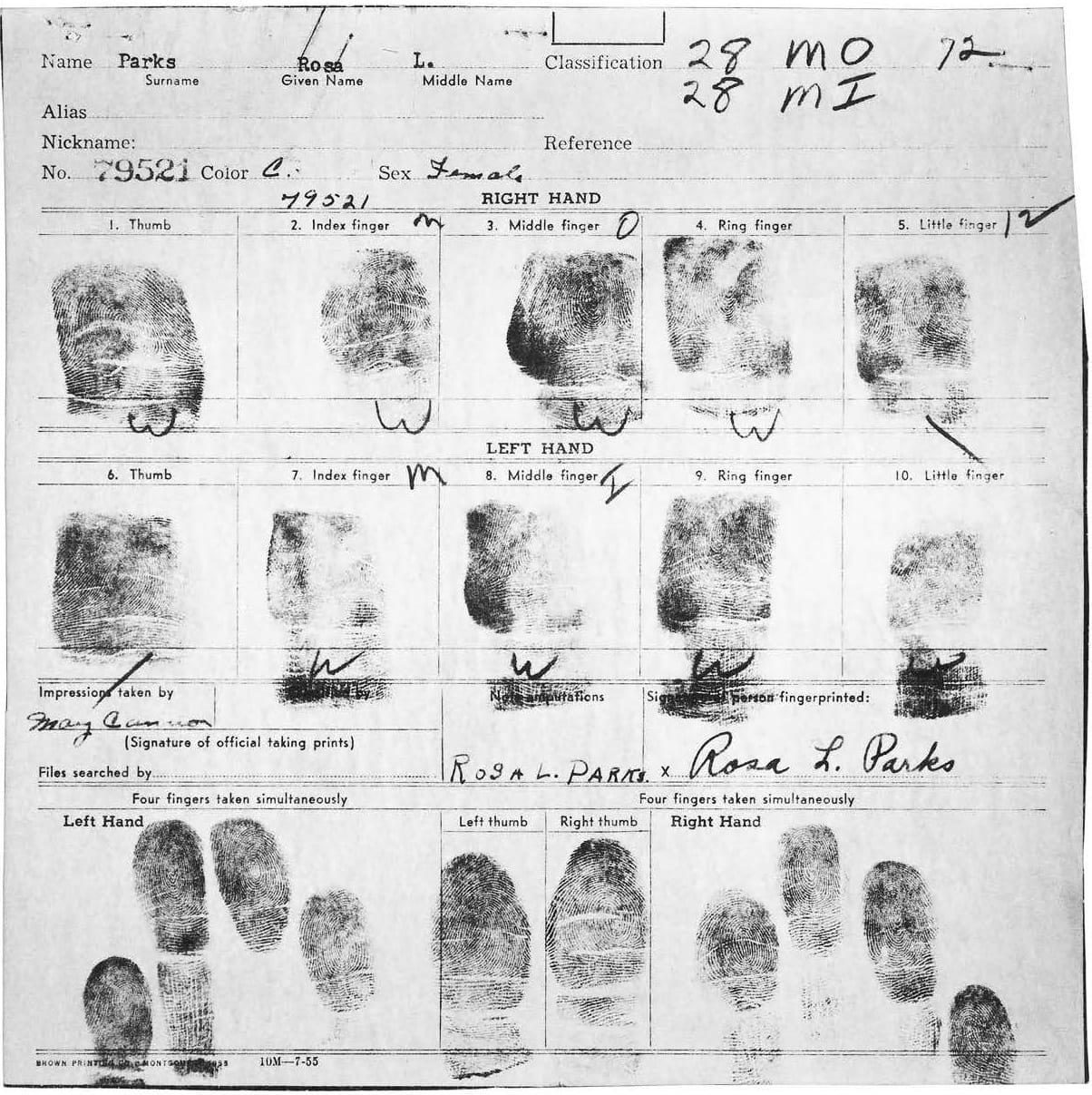
This past Monday, December 1, marked the 59th anniversary of Rosa Parks’s Montgomery arrest. Nearly six decades after Parks’s refusal to give up her seat on a segregated bus, it’s still worth examining her arrest documents, which are available to the public as part of the United States Government National Archives, to understand the story they tell.
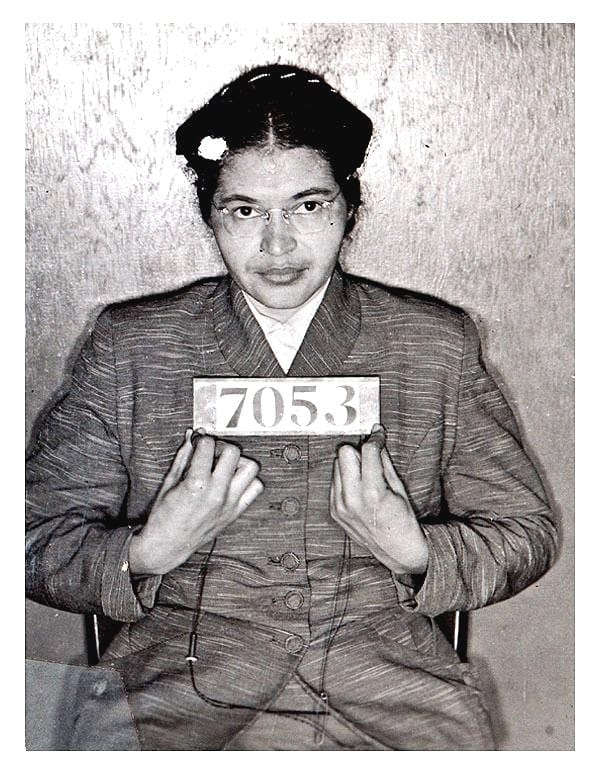
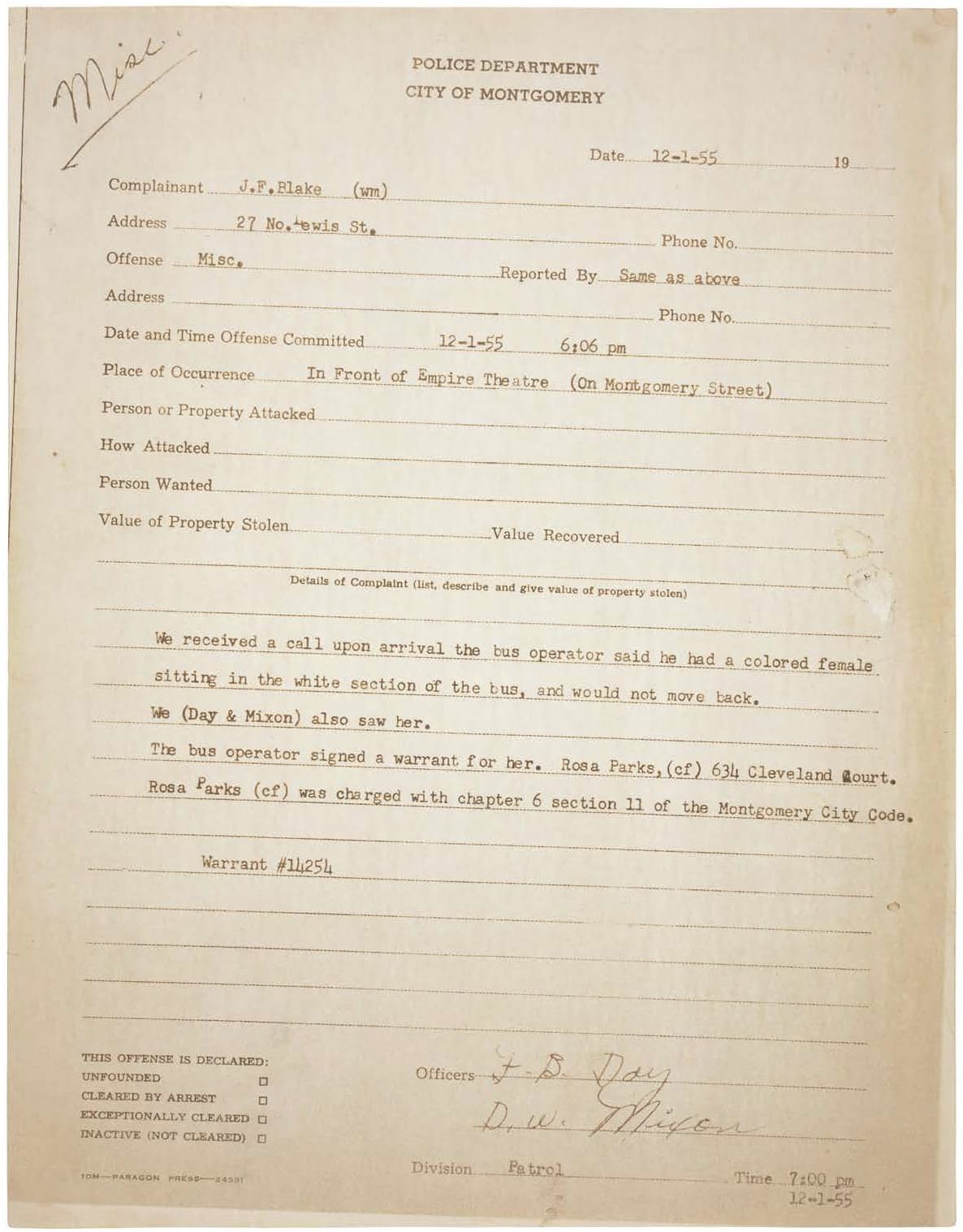
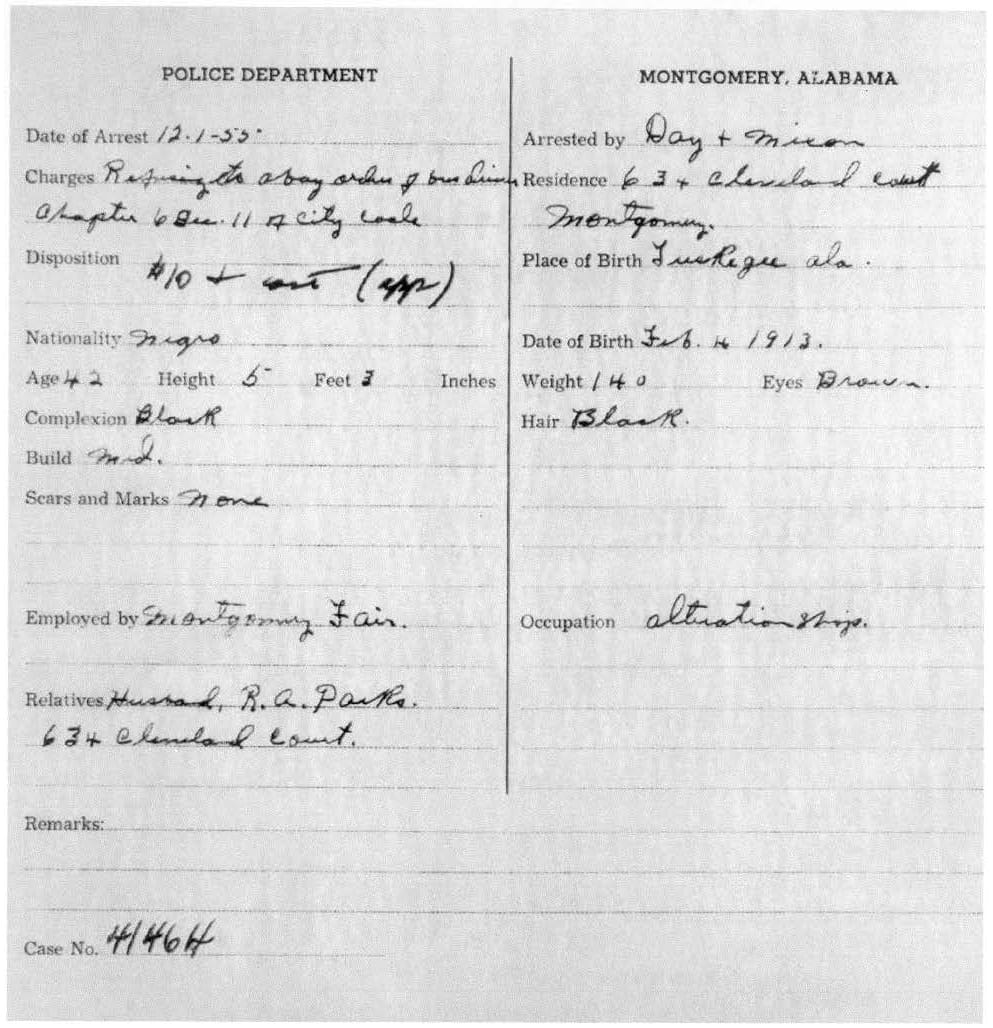
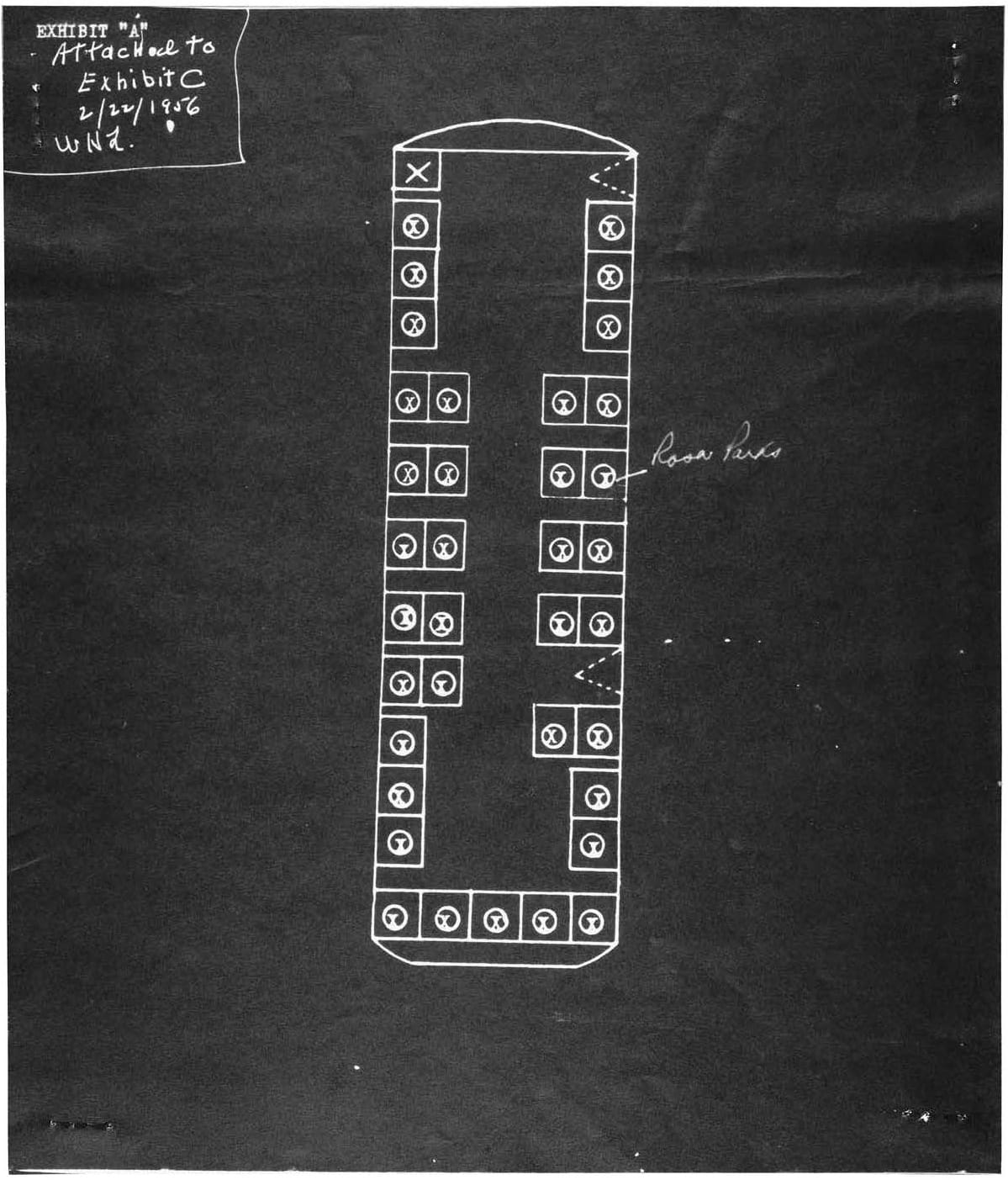
The first page of the police report summarizes the date, time, and location of the “offense”: “12-1-55, 6:06pm, In Front of Empire Theatre (On Montgomery Street).” A brief description outlines the reason for the police call. The second page of the report summarizes the charges: “refusing to obey order of bus driver/Chapter 6 Sec. 11 of city code.” Parks had technically not been sitting in the first ten rows of the bus, the section designated “whites only” under Alabama’s segregation laws; she was therefore charged for not giving up her seat to a white passenger when the bus driver told her to. The report lists Parks’s birthplace as Tuskegee, Alabama, but her nationality as “Negro,” not American. “Exhibit A” shows a diagram of the bus; another document reproduces her fingerprints. Her iconic mug shot demonstrates the calm but firm stare of a woman profoundly weary of injustice.
These documents are a powerful record and reminder of the fact that the letter of the law is by no means just or logical. In the shadow of the recent killings of Trayvon Martin, Michael Brown, and Eric Garner, among countless others, the idea that “the law has spoken” has neither historic nor moral credibility.