Sabri Sundos Faces Catastrophe With Flowers
“I am obsessed with autonomy and movement,” the Palestinian-American artist tells Hyperallergic in an interview.

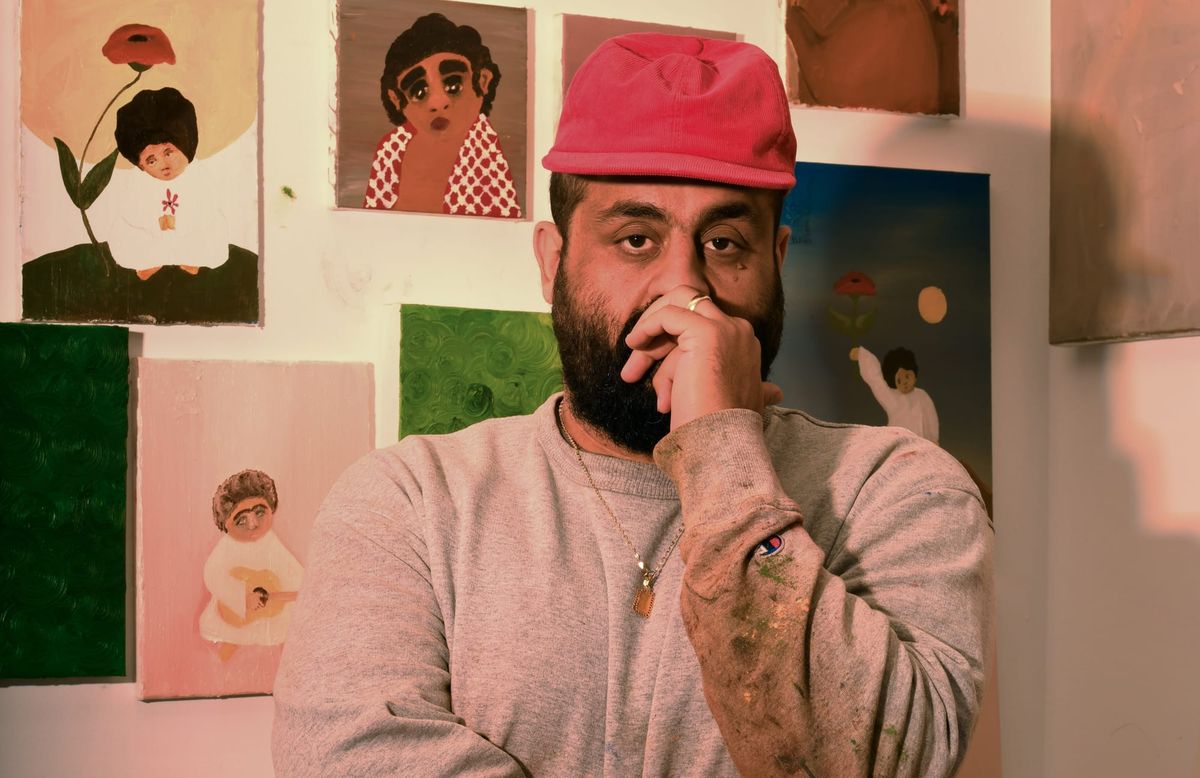
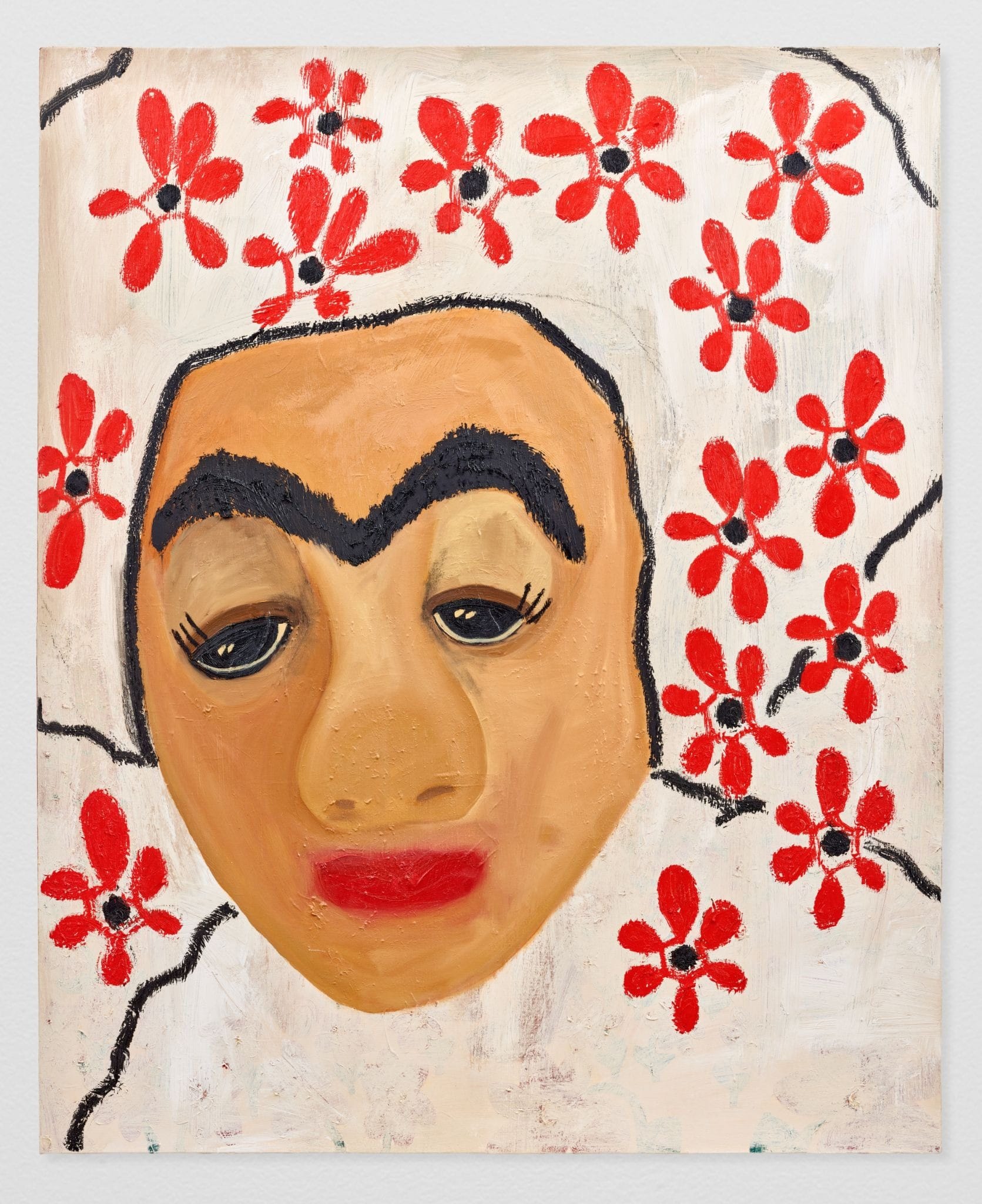
"It's the one thing in the world that is just there to make things beautiful," Palestinian-American artist Sabri Sundos says of flowers. The motif appears throughout Chasing Flowers, his solo exhibition at Fisk Gallery in Portland, Oregon, where dancing figures and floral forms become vehicles for exploring freedom, longing, and Palestinian diasporic identity.
Yet painting is a relatively recent chapter in Sundos' creative life. Before turning to visual art in 2018, the Brooklyn-based artist spent years making music, touring, and performing, only picking up a paintbrush while designing an album cover.
“The first time I painted, I remember how good it made me feel,” he recalls in an interview with Hyperallergic. Unlike in music, where collaboration often mediates the outcome, painting offered him a direct line between his thoughts and the final image.
In recent years, Sundos’ understanding of what art is and can do has continued to evolve. In 2024, he and his artist collective, Unibrow Sun, designed the “Somebody I Love is Palestinian” t-shirt as part of a fundraising campaign for Gaza Mutual Aid Solidarity, helping raise money for displaced families in Gaza. The phrase emerged from a simple conviction: If someone you love is Palestinian, how can you remain silent? By grounding the message in love, Sundos hoped to expose the absurdity of the hostility it provoked, while also demonstrating how even a small act of design could build solidarity, foster community, and translate empathy into tangible support.
As a son of immigrants raised in San Diego, Sundos grew up navigating a complicated sense of identity. He spent much of his childhood in neighborhoods populated by surfers, skaters, and alternative subcultures. As one of the few people of color in his community, he often struggled to understand where he fit. While his parents encouraged assimilation and success in America, his teta ensured that Palestine remained central to his identity. Visiting for long stretches, she would tell him stories of the Nakba, grounding him in a history that might otherwise have faded. “She put Palestine in me,” he says.


Sundos’ practice exists now across two distinct bodies of work: paintings and tatreez-inspired embroidery. His embroidery pieces are deliberate, conceptual, and meticulously planned. He begins by knowing the colors, composition, and ideas he wants to communicate. For Sundos, tatreez carries a particular responsibility. It is a way to participate in a centuries-old Palestinian tradition while also helping to secure its place in the contemporary art history canon. Painting, by contrast, is intuitive and exploratory. “Painting is having fun,” he says. “It’s like being a kid.” The canvas for him becomes a site of discovery, where images emerge through experimentation.
A dancing figure recurs throughout Sundos' work. The motif emerged from a series of continuous-line drawings he created while studying photographs of Alvin Ailey dancers. Over time, Sundos gave the figure curly hair and a unibrow, making it distinctly his own. Yet the figure remains intentionally ambiguous. It could be a child, a parent, a woman, a man, or none of those things. Sundos wants it to remain open enough for anyone to see themselves within it. The figure carries traces of his childhood, where his father sang, and his mother danced at family gatherings. His parents were often the life of the party, and those memories continue to resonate in the work. The figure also speaks to broader ideas of liberation. “I am obsessed with autonomy and movement,” he says. “Freedom of movement.” For an artist deeply conscious of borders and displacement, dance is one of the ultimate expressions of freedom.

Sundos describes his painting process as one of “finding” a figure rather than creating one. He rarely begins with a fixed image in mind, instead painting intuitively until a face or body emerges. Rooted in the subconscious, spontaneity guides his work. While some viewers interpret the resulting figures as sad or melancholic, Sundos sees them as hopeful, thoughtful, and waiting. “As Palestinians, we're constantly asked to wait,” he says. His figures embody the tension between patience and frustration & resilience and uncertainty.
For Sundos, the work is not simply an exploration of personal identity. He hopes viewers will recognize something of themselves in it. Growing up, he often felt pressured to choose between different parts of himself: between being Arab and being a skater, a musician, or simply himself. Through his work, he hopes to offer younger generations a broader sense of possibility. He wants people to understand that cultural inheritance and individuality are not mutually exclusive, that one can be both deeply connected to their heritage and entirely themselves.

Flowers are another recurring motif throughout Sundos' work and serve as the conceptual foundation for Chasing Flowers. Initially drawn to flowers as symbols of beauty and attraction, Sundos began painting them in the colors of the Palestinian flag, allowing them to subtly evoke Palestine memory and identity. In Chasing Flowers, beauty becomes more complicated. As the exhibition text explains, the works explore “the tension between escape and engagement, attraction and apathy,” asking how we can continue to pursue beauty without turning away from the realities that surround us.
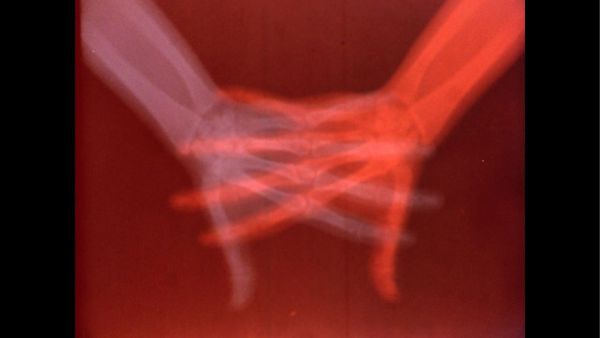
Alongside the paintings, the exhibition includes a series of drawings and animations featuring Sundos' recurring dancing figures. The animations, accompanied by piano music composed by Sundos, extend many of the exhibition's themes into moving image and sound, further connecting his visual practice to his musical beginnings.
Running throughout Sundos' practice is a persistent and radical sense of hope. Raised on stories of Palestine, Sabri understands both the weight of inherited histories and the resilience required to carry them forward. His ancestors' struggles continue to sustain that hope, along with the life he has built in New York with his wife, children, and community. He speaks about the ability of Levantine cultures to move fluidly between joy and grief, laughter and sorrow, which is a duality that permeates his work. He does not center pain, but rather makes space for beauty, movement, humor, and possibility. His work reminds us that Palestinian identity is not defined solely by hardship, but also by creativity, celebration, endurance, and the ongoing pursuit of freedom.