Is GTA VI the Art Miami Deserves?
Miami-based artists Leo Castañeda and misael soto join Hyperallergic in a conversation about the tensions of a game that portrays a changing city locked in time.

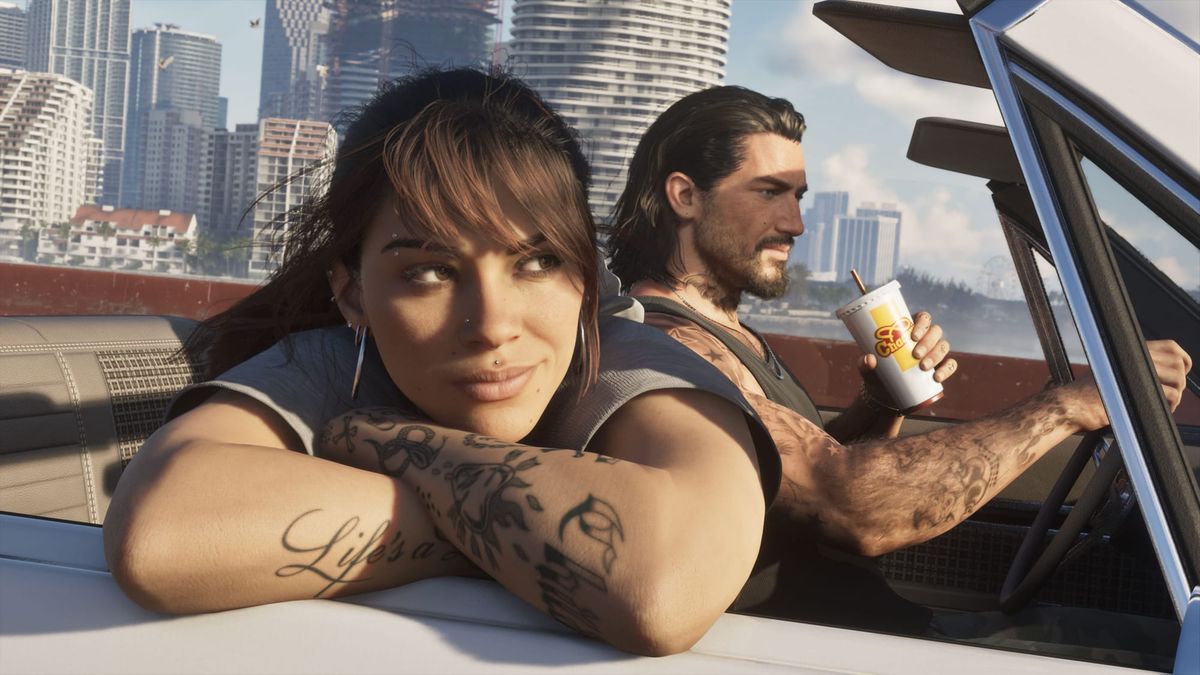
“Driving at rush hour. SIGNIFICANTLY less cars on the road.” The text from Miami-based artist, educator, and organizer misael soto sent yesterday, November 19, a few hours after the release of Grand Theft Auto VI, encapsulated many of my complicated feelings about the long-awaited game. We’d come full circle: The traffic hell that Miami, the city I once called home, has now become notorious for — in no small part due to overdevelopment, climate change, and strained infrastructure — was being alleviated by a video game that kept people at home, inside a simulation of the same city locked in time.
The premise of GTA VI is simple on the surface. The game follows Lucía Caminos and Jason Duval in the criminal underworld of Leonida, a fictionalized state based on South Florida: Miami becomes Vice City, the Everglades are the Grassrivers. But its portrayal of real-life hardships, socioeconomic inequality, and even Lucía and Jason’s love story, among other elements, has elicited deeper reflections and responses across our increasingly blurred online and physical worlds.
To help make sense of these tensions, I got on a phone call with soto and Leo Castañeda, two Miami-based artists whose work I admire. Castañeda is an artist and video game designer exploring Latin American Surrealism in the digital age, and soto co-leads Artists for Artists: Miami, which is leading a boycott of Art Basel next month, and works in the overlapping arenas of labor rights, public infrastructure, and conceptual and social practice.
Our conversation was edited and condensed for clarity. I hope you enjoy it.
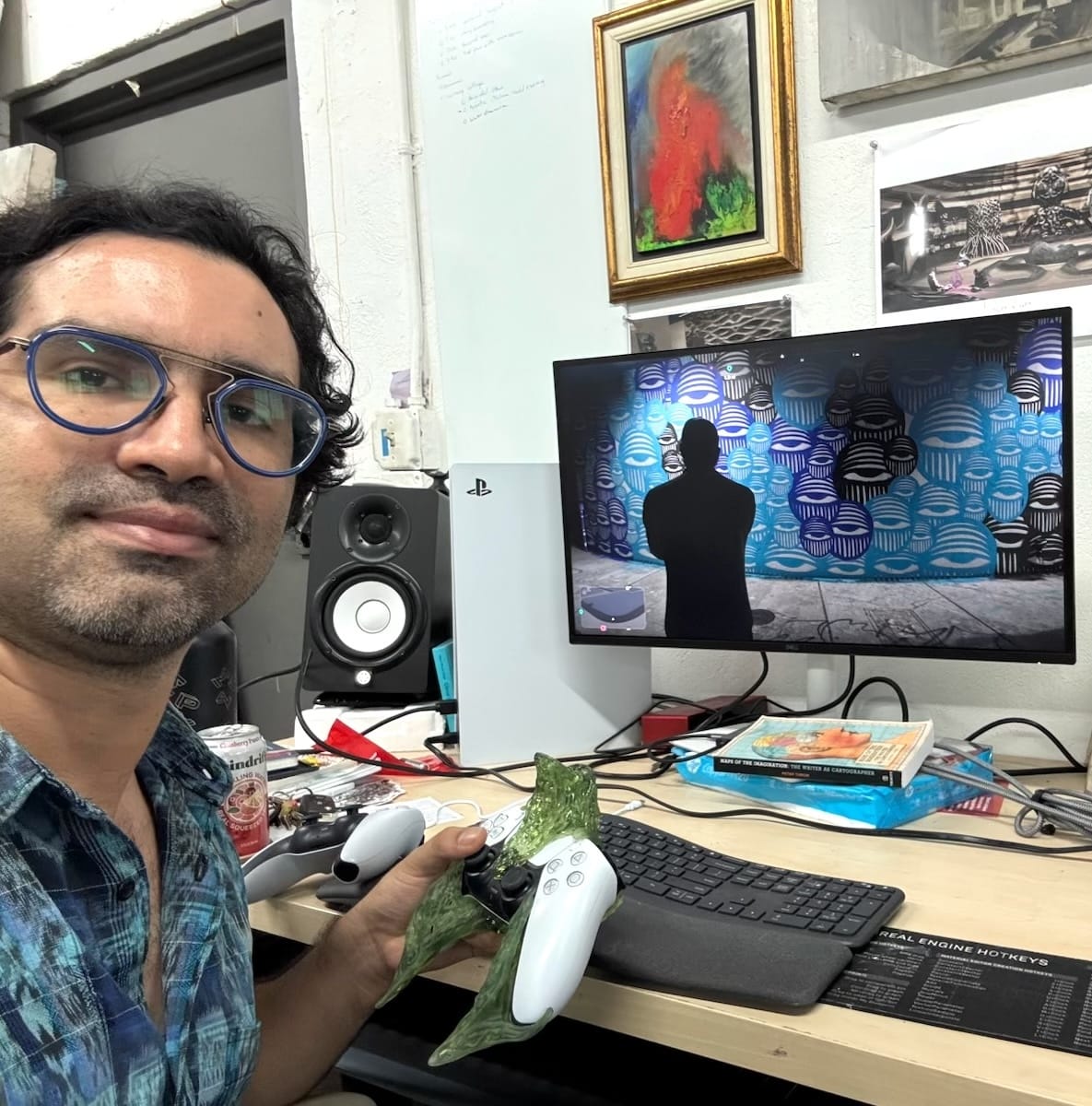
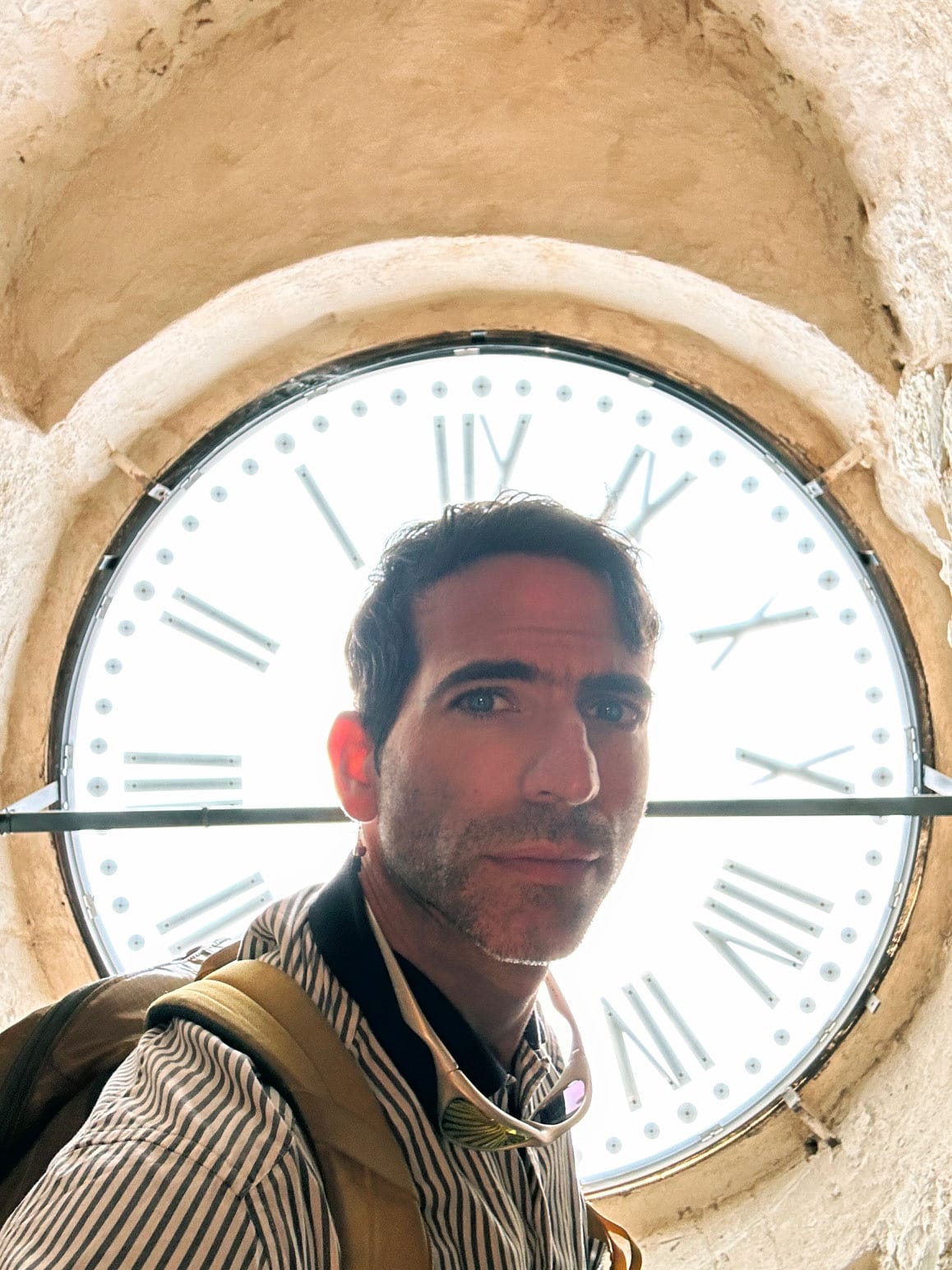
Left: Leo Castañeda playing GTA VI, with a mural by Ahol Sniffs Glue included in the game. Right: misael soto's selfie in front of the inside of the clock tower in Assisi (photos courtesy the artists)
Hyperallergic: Before we even get into GTA, I was hoping each of you could tell me a little bit about your relationship to Miami — how long you've been there? How do you feel about living there now?
Leo Castañeda: I moved to Miami first when I was 11. My parents first moved to New York [from Colombia], and then they thought it was too cold, so they moved to Miami. I went to middle school and high school here, then I moved to New York for college, and I moved back in 2015. When I first moved back after college, it was mostly because of the cost of living in New York. And then, within the 10 years that I've been here, it became the same cost of living as New York, except with Florida salaries.
I do feel grateful, though, to be part of the Bakehouse Art Complex, where I have an affordable studio. I live in the North Beach area, and I was able to find a sustainable rent. Miami has a lot of arts nonprofits that help over time. I do feel that, as complicated as the Miami arts ecosystem is, it is pretty supportive — but at the same time, it is tied to all the different layers of money that have come in and dominate the arts, which are very present here.
misael soto: I moved here right after undergrad. I grew up in South Florida, originally from Puerto Rico, and Miami was always la locura, down south. We would visit my cousins and whatnot from time to time. As I became more and more interested in starting my own practice, I moved down here and have continually been sucked back in. I try to leave, and it pulls me back for whatever reason. Since COVID, everything's changed. Miami became the second most expensive city in the country. The influx was palpable: All of a sudden, there were Texas and California and New York license plates, Teslas zipping around town, and rent just started skyrocketing. There's more flooding. But at the same time, it's gorgeous, and it's special. I live in Mid-Beach. I can go to the water, I can breathe in some sea air, I can hear 10 different languages at once.
It's a really complex relationship with Miami. Especially, I think, both of us make complicated art — we both make art that is unconventional and perhaps even, you could say, difficult to collect. I don't know if you describe yourself that way, Leo, but I definitely do. And making this kind of work in a hyper market-driven neoliberal city like Miami, on the one hand, it gives me a lot of fodder, a lot of material, a lot of things to talk about, as we're doing right now. But at the same time, it can be really frustrating and alienating and lonesome, ultimately.
H: I moved from Argentina to Miami when I was little because my mom got a job there. We lived in the Doral neighborhood, where most people I knew were also from Latin America, until I left for Chicago for college at 18. I've lived in New York for over a decade now, but I still feel a strong pull to Miami, I feel seen, surrounded by people whose identities are a bit fractured the way I feel mine is.
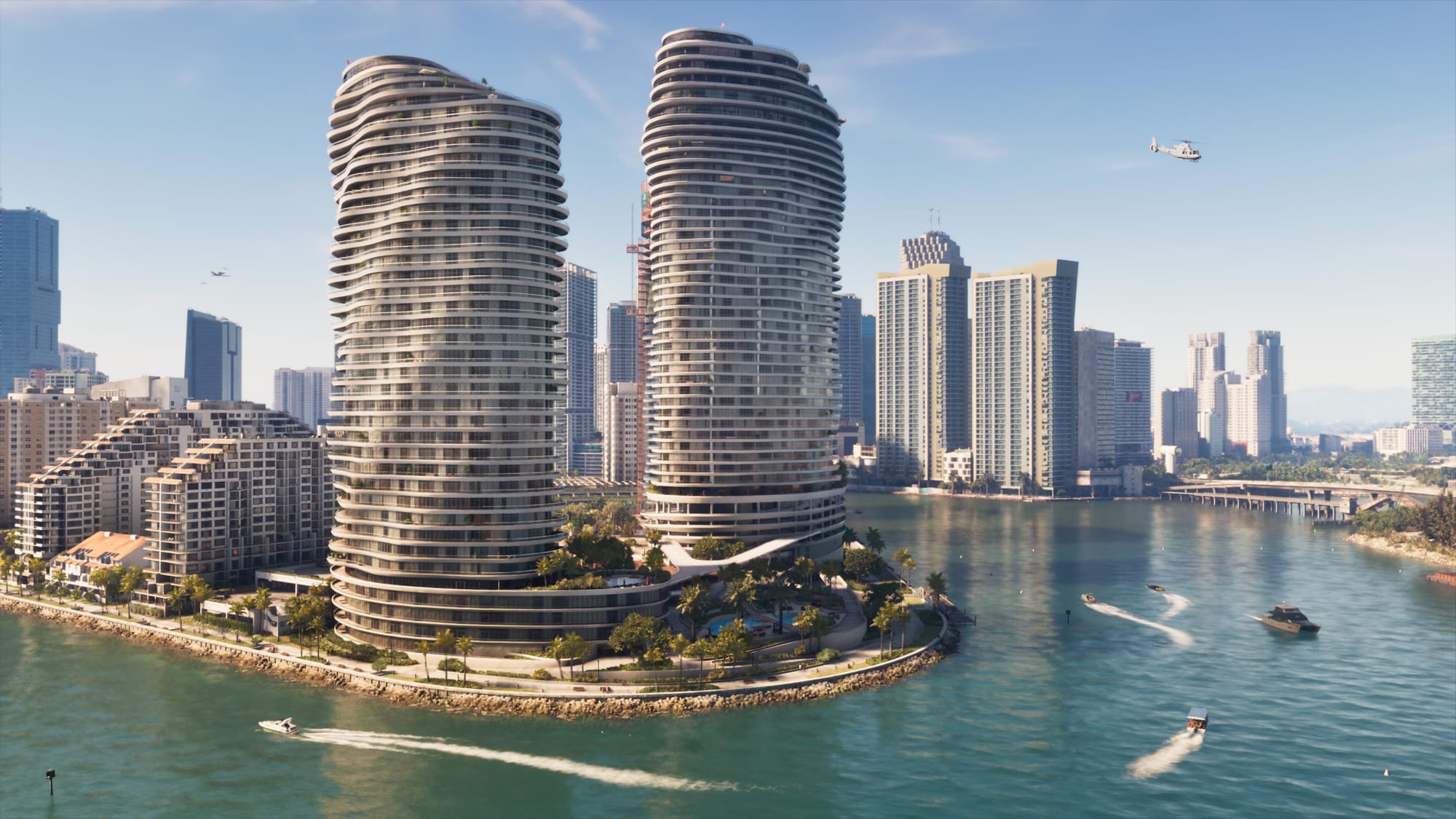
And on the note of nostalgia, GTA is a game that was made over the last 13 years, so it chronicles a Miami that’s partly gone. For example, users say Lucía's home is based on a cute salmon-pink, 13-unit condo in Edgewater that was demolished in 2022 to build a 55-story tower, yet it lives on in the game. What does it mean for a video game to preserve a place that no longer exists?
LC: Well, a few thoughts. During that 13-year development, I would assume the map design was one of the first things they did. But there are also aspects of the chronicling of Miami, or Miami becoming this satire through the game, that have evolved in a shorter time period. For example, this morning I woke up, and there was a Miami Instagram influencer saying that in the fictional version of the Cuban coffee shop Versailles, which is called Antoinette, the bakery has a sign posted outside that says something like, “any politician must pay for all the food when they leave.” That's a reference from a few years ago, when Trump reportedly went to Versailles, ordered food for everyone, and then didn't pay and just walked out.
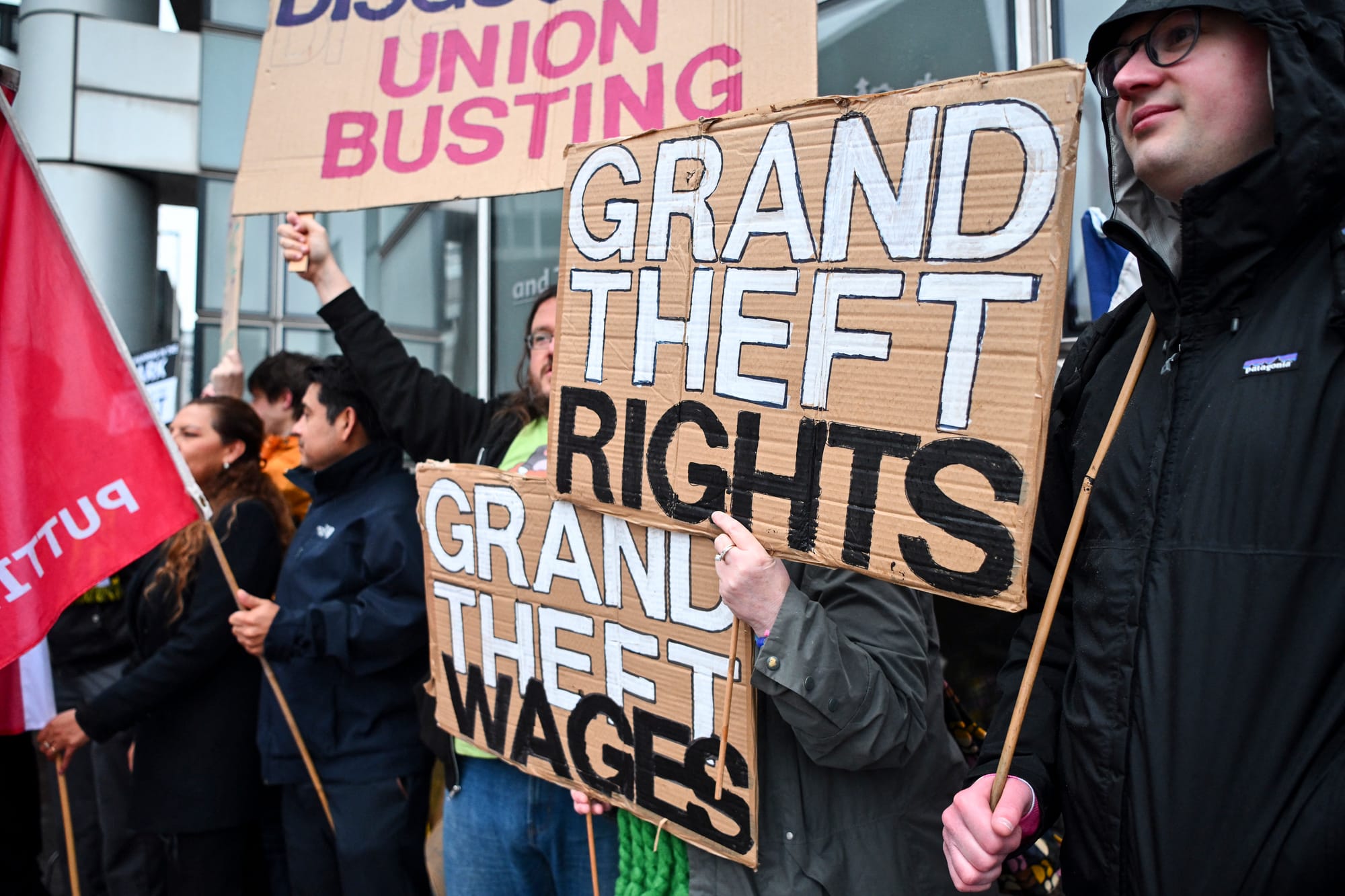
So it does seem like a video game takes a long time to make, and this one is probably the most ambitious one ever made — 4,500 people working really, really hard, to the point of even having the union situations that they have in the UK branch of the company. But at the same time, I feel like they studied Miami extremely well, and the integration with some local businesses and local artists in particular — I've seen a few street artists like Ahol Sniffs Glue, Soak, Tatiana Suarez, Typoe, as well as musician Nick León. One restaurant is based on Juvia on Lincoln Road, which doesn't exist anymore — they got priced out, and now there's a record of it. The game takes so long to make, but it lives in an ever-present, because it doesn't matter if you made an asset 13 years in the past, like Lucía's apartment, or now; they feel like the present. It's an interesting amalgamation. I would have to spend more time with it to really know: Does this feel like Miami in 2014 or Miami in 2026, or a hybrid?
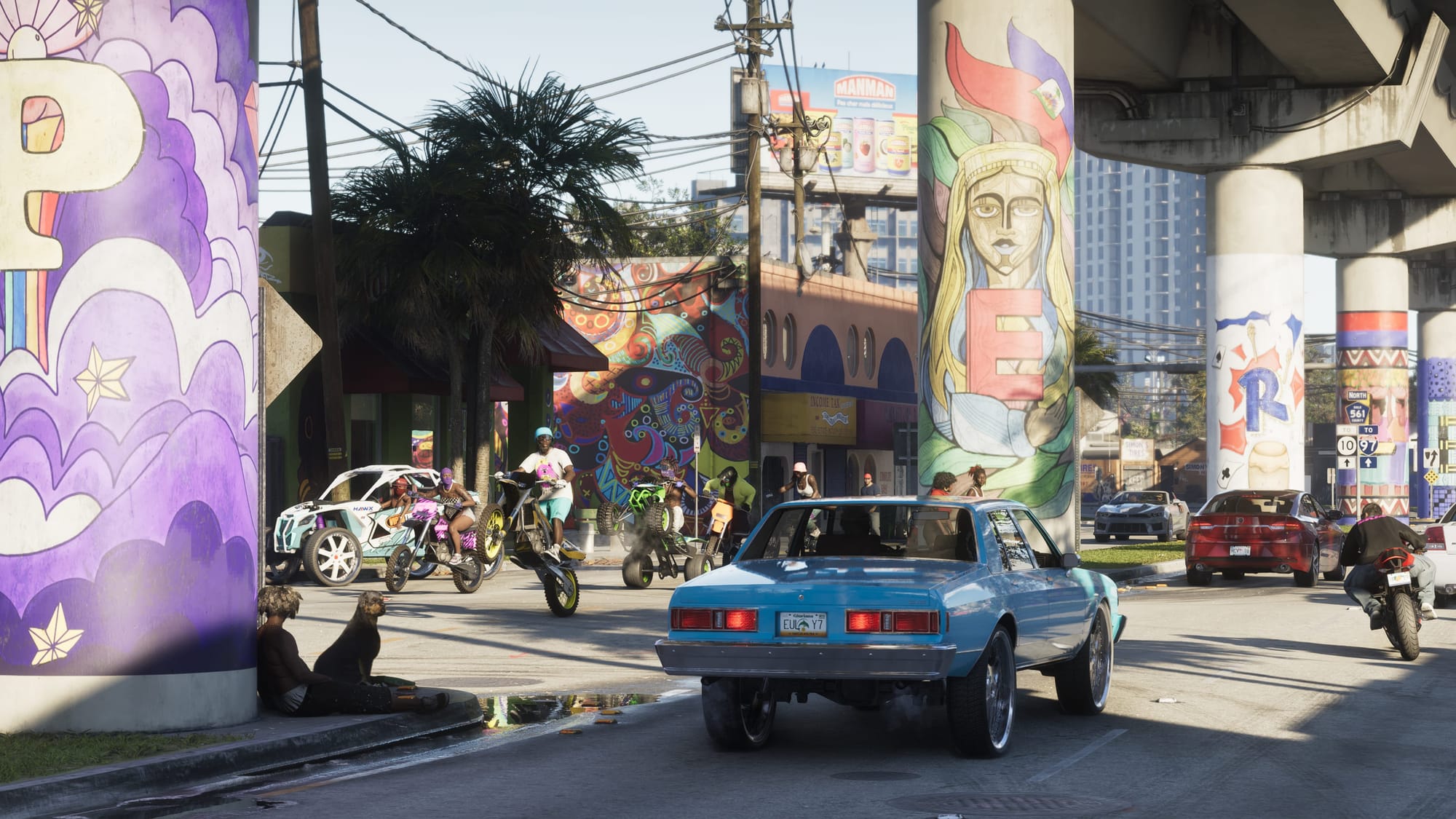
H: To get into the politics of the conversation around GTA, I have a lot of icky feelings about one narrative that's taking hold online, which is that the game is “Woke 3.0,” and that the incels and Trump supporters are pissed about it. I only played for a few hours last night, and I went into a gun shop and bought a shotgun. That, to me, panders much more to the NRA hawks and the pro-gun community than to anything that could be considered woke, you know?
MS: Hmm. I see it the other way around, actually. To me, it's like pretending in order to pacify, in some ways. It's a very complex thing. On the one hand, I remember seeing the woman twerking on the top of a car as the sun came up over the MacArthur. Now that's in the game. And I remember the “face eater” on the MacArthur. I see a man in a thong skateboarding weekly, and now there's a character like that in the game. I teach art history, and I do a whole week on postmodernism and poststructuralism and simulacrum, and the consequences of that, which I think have led us into some really dangerous flattening territory in terms of the role of the artist in the late 20th to early 21st century. I see this game and the way that it's taken over the city in real life and in gameplay, and it makes me think about how much of this is pacifying the role of the artist, or is it pushing through to the other end and becoming a meta-modernist critique that has some gems in there, if you're willing to find them?
It ultimately makes me feel a bit sad in terms of what we deserve. I texted you yesterday, Valentina, when we were talking about having this conversation, and I said, “Well, maybe this is the kind of art the city deserves.” It's not the art that I want for Miami. But in so many ways, Miami is the perfect place. It's been the city for continual use by image makers, from Hollywood to video games.
H: There is some talk about the fact that the game does seem to have an awareness and sensitivity around identity. Cygnus, the curator at the Vice City Museum of Art, is the first non-binary character in Grand Theft Auto history. The actor cast for the role, Jesse James Rose, said that to prevent anti-trans violence, GTA made it so players would not be able to harm their character. Does this feel like an honest gesture, though?
MS: I was just talking to a friend who's been playing it, and she was like, “Where are all the Haitians?” I remembered there was this huge lawsuit against GTA and Vice City, the one set in the ’80s, from about 20 years ago. Haitian groups sued Rockstar over their portrayal. I did some research, and it seems now the company has shifted. They're saying, “We now punch up as opposed to punching down.” That feels, once again, so uncanny in comparison to the ways in which corporate America has shifted. It makes me think of the phrase, “Black faces in high places won't save us.” I don't want to be lobbing grenades at Rockstar. I think it's fantastic that these changes have been made, especially with such an influential game. But at the same time, it feels like the video game, in its attempt to replicate reality, is lagging in this area.
H: GTA has a long history of racism. We shouldn't forget that Black characters have been associated with criminality throughout all editions of the game. I haven't played enough to say whether that's the case in the latest version. There is also the question of how the company actually treats its workers, and the labor disputes that are going on behind the scenes. Nestor Uriarte, an animation programmer for Rockstar, wrote an opinion piece for the Guardian where he asked, why is it that with this game that generated billions of dollars, we are still fighting to get union recognition?
MS: I'm curious, Leo, as someone who has been playing games for as long as you have, how you feel about this. I'm a cinephile — I've been one since I was 18, and watched my first Kubrick film the summer before college. And I am dying to see Avengers: Doomsday (2026). I've been following the Marvel Cinematic Universe (MCU) and have been consistently floored by the way they built out this world and the interconnected films. It's history, and it's been making history. But we all know how terrible Disney is. And even with the MCU, they tried to bring in more diversity, and the public didn't respond, so they backtracked on it. I don't know if that analogy holds. But it feels pertinent. It feels similar.
LC: Of course, I have to play more to fully understand it. There's the ads of the game and the game itself. I would say that the Netflix special did feel like it was perpetuating some of the stereotypes of the Haitian community. But at the same time, having played, or seen the range of minority characters so far in the first couple hours, it feels like they have a wide range of personalities, body types, and interests. It's not like they're all criminals. And I also found out that local Haitian muralist Serge Toussaint has his work featured in the game, which I think is an amazing thing. But in terms of artworks in other mediums that really relate to this, this is kind of like, let's say, South Park, or Euphoria — shows that are a mirror to the world that's very explicitly showing you both the best and the worst, and it's making fun of and critiquing everyone. But then how does it flip to show a new perspective or a solution?
I've seen a lot of people, especially women game critics and game developers, celebrating the relationship of Jason and Lucía being a central situation in the game, as opposed to a cast of different men from different backgrounds, or, in GTA IV, the Eastern European guy in the seedy underground. Having the relationship and the cultivating of the relationship be a core mechanic, almost in a Sims-like way — and even the learning of emotional labor, or doing kind things around the house, or the game having a really interesting reward mechanic for the nonviolent interactions ... At least in my experience so far, three hours in, I haven't shot a single shot.
H: Wait, how did you save Donnie in the first mission without shooting people?
LC: Oh, by hiding. It was saying, “Crouch around to make sure no one sees you.”
H: I think it's fascinating how different players can make these different decisions. I'm not very good at gaming, so I gave my husband the controller. I was like, “Get us out of here as quickly as possible. I want to get to Vice City!”
LC: Yeah, and usually my criticism of Rockstar Games and also Naughty Dog, two big companies that have these cinematic, movie-like games, is that the story missions often have a path where you fail if you don't take a violent action. The emergent gameplay — which happens just by walking around, the dynamic gameplay that's not in a story mission — is usually extremely layered and nuanced and can go in any direction, violent or not. Again, I'm only three hours in with GTA VI, but so far I appreciate that it is giving the choice of not using violence, and kind of rewarding it. There's something interesting about that. Because usually in those Rockstar games, I'm like, okay, there's this emotional tale, and now there's a mission, and I have to kill 20 minions.
MS: Leo, I'm thinking about your work and playing your pieces, immersing oneself in these worlds that you create, and there's a kind of mystery in the expansive potential that you create in your installations that at first can be a little overwhelming, but you have to just dive in. And this is the nature of games, or video games. There's a kind of trust fall. And I'm thinking about — let's just go there — the emancipatory potential of that. Because video games, to me, the potential in them as works is the building of awareness, the fostering of empathy, literally embodying someone who has a different way of life or a different body, a different perspective. Especially in our era of political correctness, and a lot of it is warranted, we're asked to speak from our own perspective and not assume things of others. And so this allowance — I wonder how you see the potential in that, especially in something like this game that is so immersive.
LC: I think games as artworks are, to a certain extent, some of the most affordably accessible. Yes, you need to have a PC or PlayStation or Switch or something, but they could be pieces of art that are globally accessible in an immediate way, and they really can affect culture. In terms of empathy, you're controlling a being that you identify as “I”: “I” drove the boat today, or in my game, “I” was camouflaging with the environment to gain energy. There's something there about the mutability of the body, or how one could shift one's self-identity into multiple beings, that is interesting in games, and also interaction and choice as a place that could be art, in a way that performance art also does, and maybe theater. And visual arts in general, maybe in a less touch-based way. But in terms of the empathy, I've been seeing a lot of reviews of GTA VI saying it's actually leading people towards that. Perhaps it is through the romantic relationship [between Jason and Lucía], or maybe by having so much freedom to do whatever you want and kill whoever you want, but then developing these characters and NPCs to a level where they feel like real people.
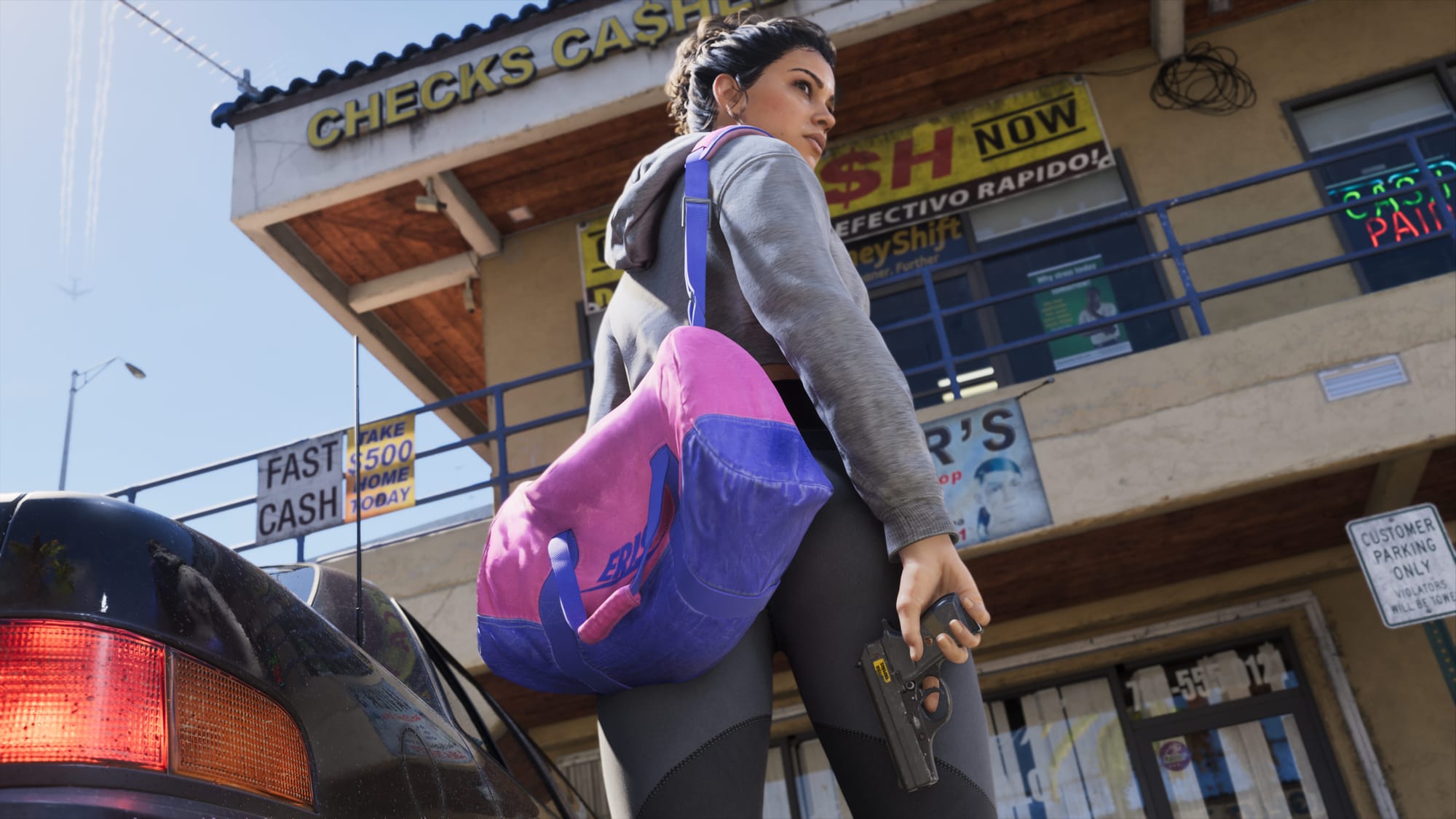
H: There is one moment in the game that was very emotive in a way that might provoke empathy, and it certainly did for me. At the very beginning — so this is not really a spoiler — we're shown the backstory of how Lucía gets arrested. She's been sitting at a cafe, a little Cuban cafecito, and she's just ordering ice water. The server keeps coming up to her and asking if she wants something else, and she's like, “No, no, just ice water for me.” It's clear that she just can't afford anything else. So in an act of true desperation, and from a place of deep poverty, she decides to rob a payday loan store nearby, and she gets caught. At one point, you can hear the cops saying, “She's saying she left something at the cafe.” And then we see the owners of the coffee shop taking care of her baby, who is then taken by social services.
We're not shown Tomás, her little baby, at the beginning. It's something that the game surprises us with. To me, it was such a thoughtfully articulated moment.
LC: The beginning is so strong. And then having the tutorial on how to walk and use the camera be her nine months later in prison. Out of overcapacity, the prison is letting some people who have lower sentences perhaps have probation, so she's gonna be let go, but the woman who works there says she doesn't know if or when Lucía will see her baby again. That works as a narrative tool, a teleology, giving purpose to the game beyond, “Oh, she's just a digital girlfriend.” Now there's this question of what the rewards of behavior are that the game's gonna have when one is part of the criminal underworld, but there is a child in foster care that could be taken back or not. That's gonna be so interesting if that ends up being a fork in the road within the narrative, because many of these games have multiple endings.
MS: This is so fascinating to me in regards to something we were talking about earlier — whether reality is informing the simulacrum and vice versa. It makes me think of how, living in Miami, it continuously feels like maybe the most neoliberal city I've ever lived in. But in so many ways, it oftentimes feels like when you're on the road or when you're at a cafe, you're alone. You really have to fend for yourself in this city. Of course, there are these moments where you break through, or if you're a regular at Enriqueta's, you know who to talk to, this and that. It makes me wonder how the game might change the way that we see ourselves. And, following that thread, how might it actually make us more united?
I don't know if that's a bit of a stretch, but there are just so many people playing this game. And I think over time it's really going to show, as visitors come and reflect their years of gameplay back to the city. In the same way that folks experience Paris syndrome, what will the GTA Miami syndrome be? How might that change us? I was thinking about it for the worse, but how might it change us for the better? Because I don't know a Miami where that childcare situation in the GTA story would happen. Of course, I'm not a caregiver. I'm not a parent. But I don't know that Miami — and I've been here long enough and I have a lot of family here, chosen family. So that makes me, in a weird way, hopeful.
LC: I think it's interesting, let's say with Pop art and conceptual art — if you use a urinal or a fluorescent light, you think of urinal, Duchamp; fluorescent light, Dan Flavin, etc. These artists are claiming this thing from the world. And it's interesting to have this very fluid cycle of, let's say, the Only in Dade Instagram account becoming almost a live feed of GTA, or us within Miami filtering our experience — when there's a very special or odd moment, it being a rehearsal for the game, or the game getting reflected back in the world.
If the game is marketing itself as this debauched, wild place, and that lures millions and millions of people in, but then it ends up being this profound story that actually shows how South Florida has issues of income inequality and climate change ... There's a hurricane system in the game, so there's a very strong chance that there will be flooding. Will that situation, where violence and comedy, or things that are not explicitly telling people what the values should be, actually make them more subtle and implicit? Does that create change or not?
H: We've been speaking over an hour, we could probably talk for two more hours. This feels like a beautiful note to end on. But I want to ask if there are any burning observations you want to share.
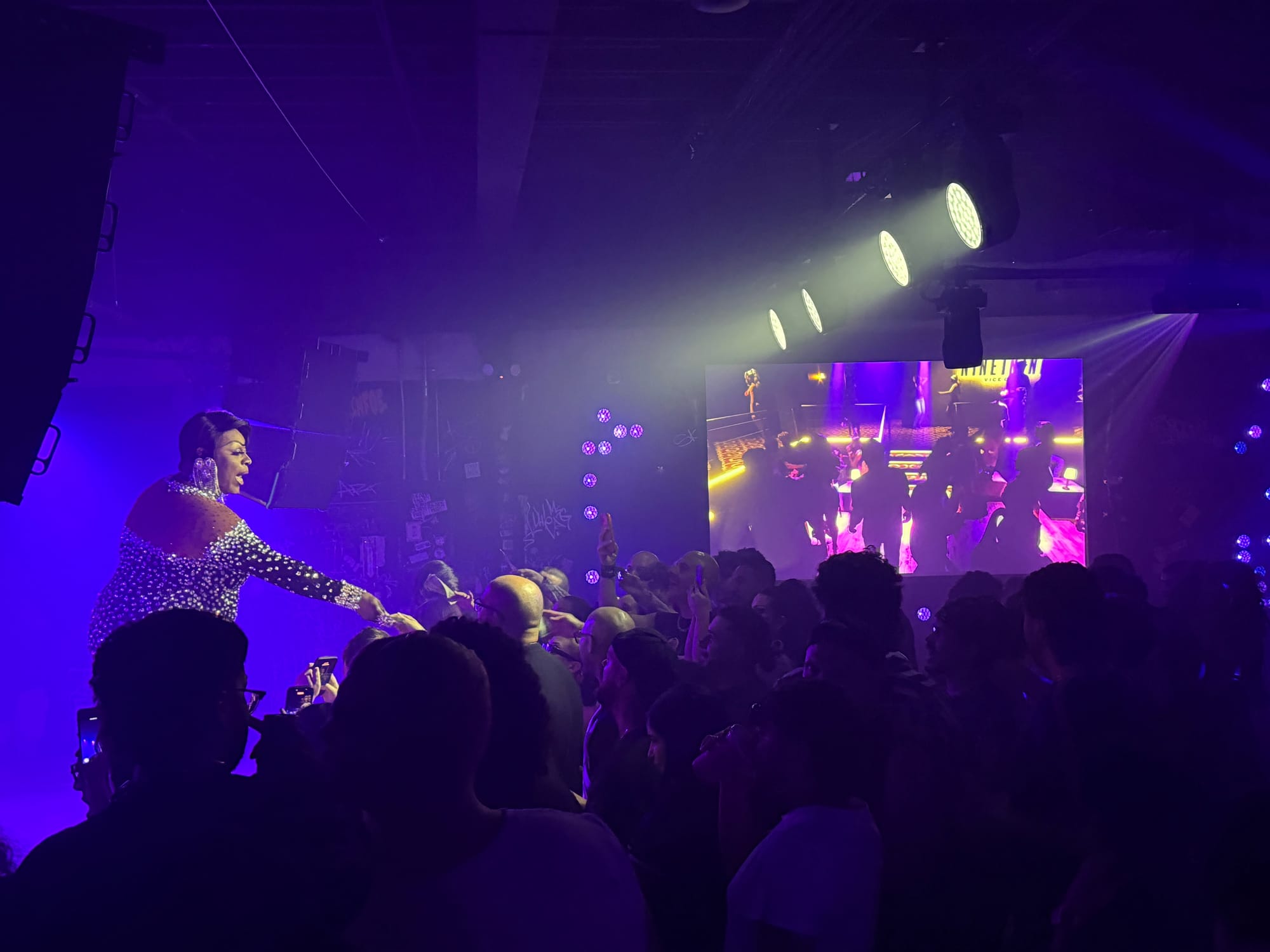
MS: I feel like we should speak about the takeover of Miami in the real world, physically. Anybody trying to do anything — F1, Art Basel, all these people who come in and take over the city, as they've done for decades — if they want to gain favor with locals, just look at what they did with GTA. Because the amount of free advertising — I mean, I went to this GTA VI-themed drag night, and it was not sponsored by them. It was at Las Rosas. They had a pool table and some neons, and they had the beer from the game available for purchase, but the event itself was fully done just to hop on the bandwagon, and everybody was lapping it up. Morphine Love Dion was playing the video game while people were dancing. It layered some uncanny feelings for me. But at the same time, I'm just very, very impressed, and scared, by the power of putting it everywhere to the point where it was inescapable. It's been inescapable for the last week. It's very impressive.
LC: Yeah. I've met at least two or three people who have been working on some of the release parties. So they're employing local artists and local musicians and local businesses, as opposed to, as misael was saying, these people arriving out of nowhere, renting a place for really exaggerated prices, and not giving back to the local community. At least through employment. We'll see over time if and how it leads to other forms of sustainability locally. I have a photographer friend who, similarly to that drag show, started doing GTA-style photos in front of one of the new signs and probably made some money through that, unofficially. So that's interesting.
MS: I think there's many ways to be a capitalist, or to do this kind of thing and take over the city in this way. And I've never seen something so thoughtful. It honestly reminds me to some degree of the first couple years of Art Basel, when they would do a lot of public programming and free concerts and they really seduced us ... But that's another conversation. I'll stop there.
H: Well, it's a perfect aperitif for Miami Art Week and the Basel boycott and everything else. And then the G20 summit hosted by Trump in Miami the following week.
MS: Wow, I forgot about that.
H: Yeah, we're going from GTA VI to G20. It's just a perfect pipeline, really.
MS: It doesn't get any more Miami surreal than that. Truly Vice City.