
Seeing Art Is Good for Your Nervous System, Study Finds
The new research posits museums and galleries as “accessible, non-clinical spaces for preventive health promotion,” per the study’s authors.


Supporting existing research on the benefits of viewing original artwork versus reproductions, a new study found that seeing authentic art can help drop cortisol levels, among other positive effects on the nervous system.
Still in pre-print since its submission last October, “The Physiological Impact of Viewing Original Artworks vs. Reprints: a Comparative Study” was conducted by researchers from the Department of Psychological Medicine at King's College in London working in collaboration with the Courtauld Institute of Art.
Fifty adults between the ages of 18 and 40 participated in the experimental study — one half was made to view five authentic paintings with their wall labels in a gallery setting for a 20-minute period, while the other half was shown high-quality reproductions of those paintings in a similarly curated setting. All participants had their heart rate and skin temperature monitored, and they provided saliva samples before and after the viewing sessions.

The selected works (and subsequent reproductions) were all late 19th-century figurative paintings by European artists from the Courtauld's collection: “Jane Avril in the Entrance to the Moulin Rouge” (c. 1892) by Henri de Toulouse-Lautrec; “A Bar at the Folies-Berère” (1882) by Éduoard Manet; “Banks of the Seine at Argenteuil” (1874) by Éduoard Manet; “Self-Portrait with Bandaged Ear” (1889) by Vincent van Gogh; and “Te Rerioa (The Dream)” (1897) by Paul Gaugin.
The recorded data showed that those who viewed original artwork had higher heart rate variability patterns compared to the reproductions group, indicating that authentic viewing experiences contribute to a more receptive and adaptable nervous system. The post-viewing saliva samples also yielded a 22% cortisol decrease among the original art group, as well as a measurable drop in two of four recorded inflammatory proteins.
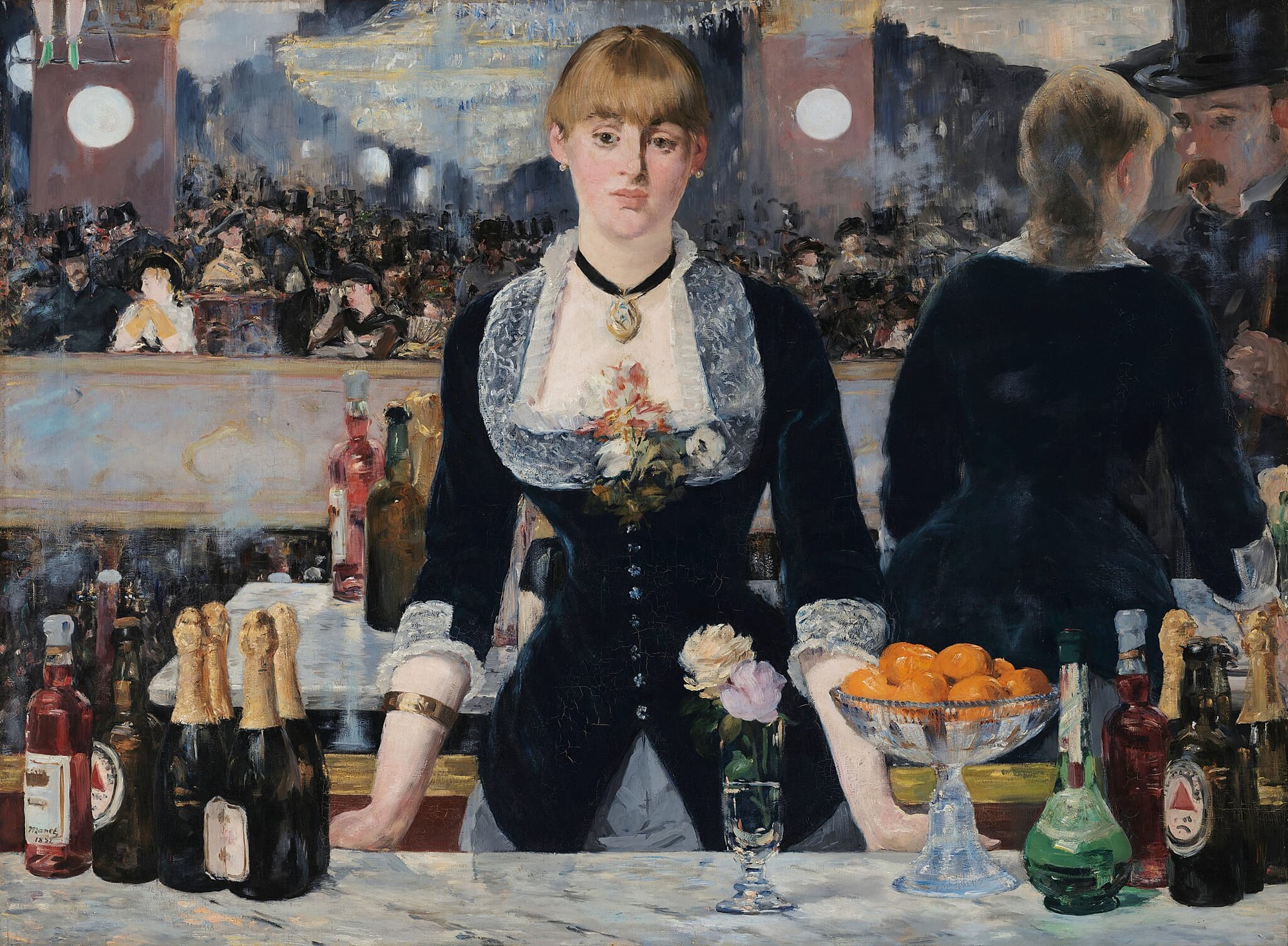
While developing research finds that museum visits and other authentic aesthetic experiences are effective in reducing anxiety and stimulating cognitive and emotional responses, the King's College researchers explain in the introduction that there haven't been any studies that “examined how these responses integrate across autonomic, endocrine, and immune systems, or whether they depend on the authenticity of the artwork itself.”
“By identifying art viewing as a natural means of promoting vagal tone and reducing inflammatory load, this work highlights museums and galleries as accessible, non-clinical spaces for preventive health promotion,” they wrote, likening the stimulated but calming response elicited to that provoked by exercise or meditation.




.jpg?ref=hyperallergic.com)