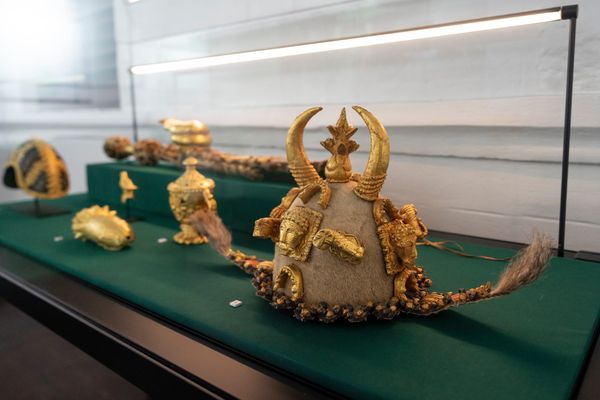
Book Review
Why Won’t Britain Return Looted Gold to Ghana?
In “The African Kingdom of Gold,” Barnaby Phillips explores how British colonial forces plundered the Asante people and expertly traces the stolen artifacts’ afterlives in museum storage.

Book Review
In “The African Kingdom of Gold,” Barnaby Phillips explores how British colonial forces plundered the Asante people and expertly traces the stolen artifacts’ afterlives in museum storage.
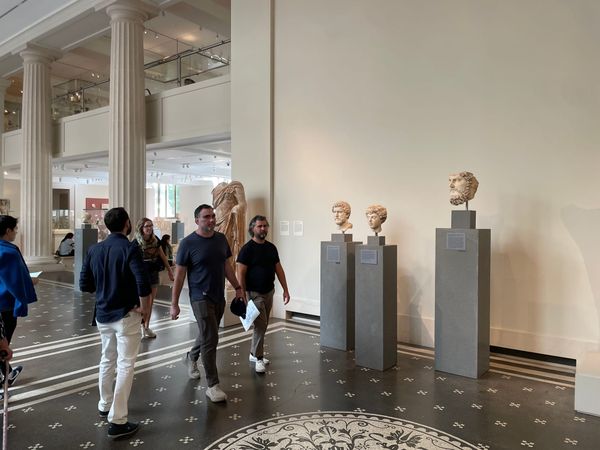
Feature
After The Met returned a Roman bust connected to Phoenix Ancient Art, the question of what will happen to other works sold by the gallery to dozens of US institutions remains open.
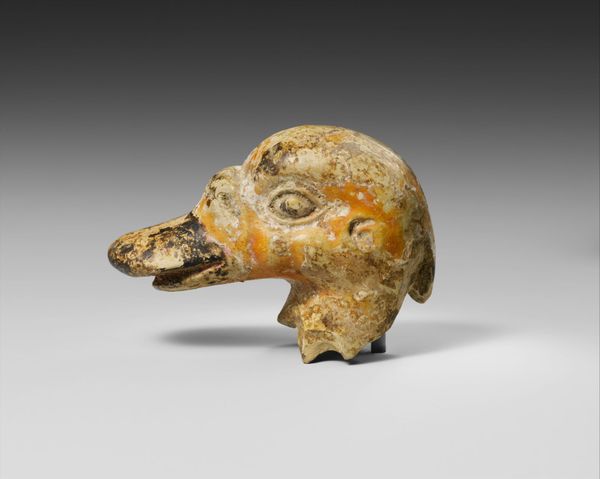
News
Several ancient sculptures and vessels acquired between 1971 and 2001 were among the objects extracted from The Met's collection this June.

Film Review
The two-part documentary asks us to rethink what we know about looting, art restitution, the art market, and who the war’s heroes and villains really were.
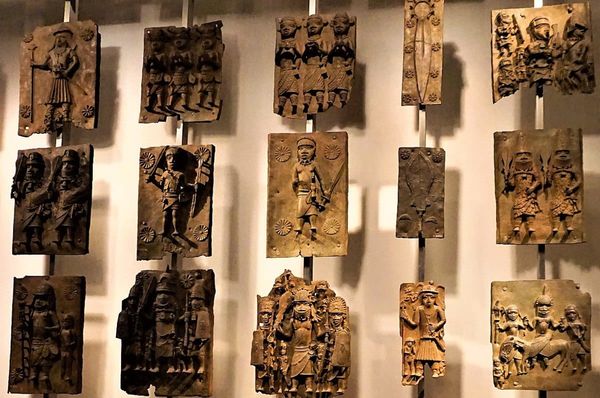
News
The law will apply only in "rare cases," one expert says, but nevertheless signals a shift from past legal restrictions.
News
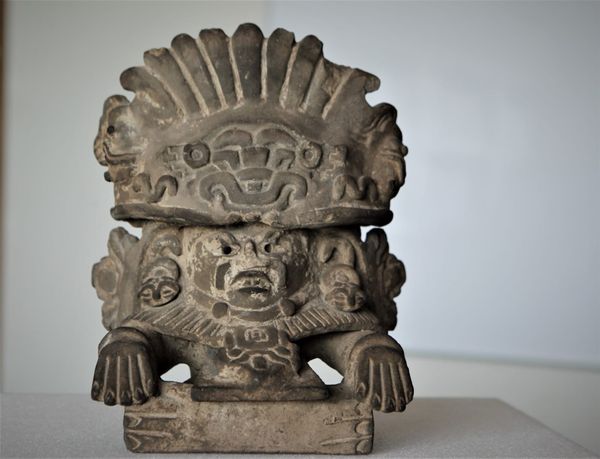
Mexican officials said the objects were “voluntarily returned” by citizens from Austria, Canada, Switzerland, and the US, but have not provided further details.
Opinion
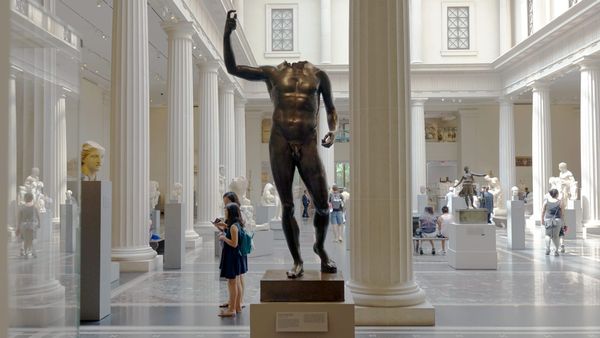
Some US museums will overlook the dubious origins of acquisitions if it suits their purposes.

Opinion
And no, Cambodia doesn't need the Metropolitan Museum's help in preserving its cultural heritage.
Opinion
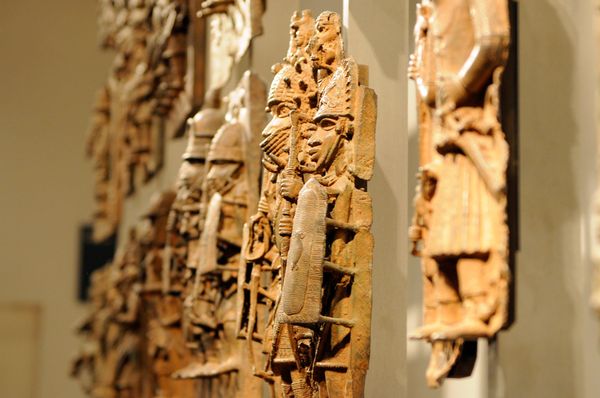
“The work of cultural restitution must be about what we give up, not just what or how we give back,” writes Dan Hicks in response to Arts Council England’s new restitution guidelines for museums.
News
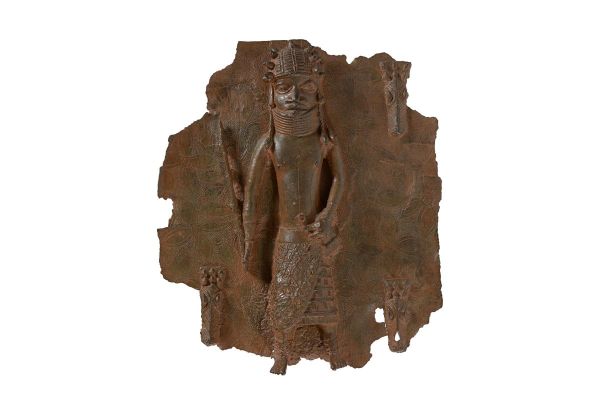
It is the first national museum in England to agree to restitute looted Benin items, increasing pressure on the British Museum to do the same.
Opinion
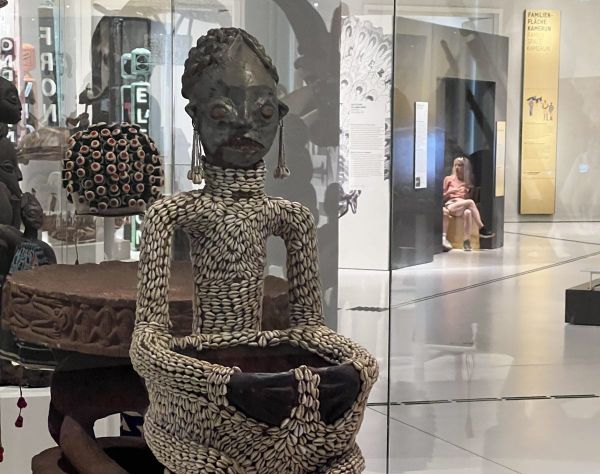
As the global consensus on restitution passes the tipping point, some skepticism towards these sudden, improbable Damascene conversions towards restitution is probably justified.
News
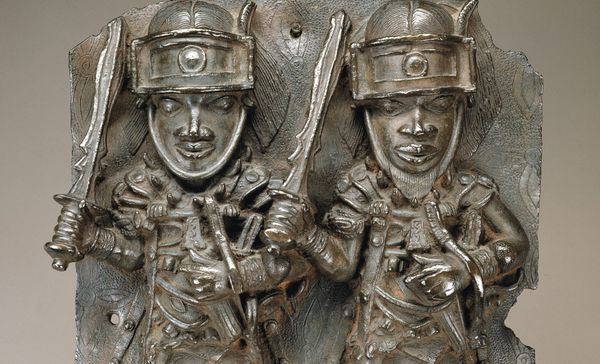
Previously, the Smithsonian held that its museums were entitled to retain an artifact so long as its provenance rested on solid legal ground.